Slippery Elm Tea: Benefits, Side Effects and How to Brew
Slippery elm tea has been valued for centuries as a natural remedy for soothing irritated throats, calming the digestive system, and supporting overall wellness. Made from the inner bark of the Ulmus rubra tree, this herbal tea develops a unique gel-like consistency when steeped in water. That thickness comes from mucilage, a soluble fiber that coats and protects mucous membranes in the throat, stomach, and intestines.
Historically, Native American communities used slippery elm bark both internally and externally for burns, wounds, coughs, and stomach troubles. Today, it remains popular in natural medicine for people dealing with acid reflux, sore throat, or chronic digestive discomfort. Unlike stronger herbal remedies, slippery elm tea is generally mild and soothing, making it an approachable option for everyday use when consumed responsibly (1).
What is Slippery Elm Tea?
Slippery elm tea is prepared from the inner bark of the slippery elm tree, which is native to North America. To make the tea, the bark is carefully harvested, dried, and ground into a fine powder or cut into strips. When combined with hot water, it releases mucilage — the thick, gel-like substance responsible for its soothing effects.
Unlike traditional teas made from Camellia sinensis, slippery elm tea has no caffeine and carries a mild, earthy flavor with a slightly slippery mouthfeel. It is not only consumed as tea but also available in lozenges, capsules, and throat sprays for targeted relief. What sets the tea apart is its ability to coat the digestive and respiratory linings, offering gentle protection and comfort with every sip.
Nutritional and Phytochemical Profile
Slippery elm bark is not rich in macronutrients like proteins, fats, or carbohydrates, but it contains unique compounds that give it therapeutic value. The most notable is mucilage, a soluble fiber that becomes a gel when mixed with water. This mucilage helps coat the throat, stomach, and intestines, providing soothing relief.
In addition, slippery elm bark offers polyphenols and tannins with antioxidant and mild anti-inflammatory properties, along with trace minerals such as calcium, magnesium, potassium, and manganese. Together, these compounds make the tea more than just a comforting drink — it acts as a natural protector for the body’s mucous membranes and may help reduce irritation.
Here’s a simplified look at the compounds found in slippery elm tea:
| Compound / Nutrient | Role in the Body |
|---|---|
| Mucilage (soluble fiber) | Forms a protective coating over mucous membranes, easing throat pain and digestive irritation |
| Polyphenols & tannins | Provide antioxidant and anti-inflammatory effects |
| Calcium & magnesium | Support bone health, muscle function, and relaxation |
| Potassium | Helps maintain fluid balance and supports heart function |
| Manganese | Plays a role in metabolism and antioxidant defense |
Because slippery elm tea is made from water extraction, it delivers mainly the soluble compounds (like mucilage and polyphenols) rather than the full nutritional profile of the raw bark. This makes it light but highly effective for its primary purpose — soothing irritation.
Here are the health benefits of Slippery Elm Tea

1. Soothes Sore Throat and Cough
Slippery elm tea is best known for its ability to ease sore throats and calm persistent coughs. The inner bark of the slippery elm tree is rich in mucilage, a gel-like fiber that coats the throat and forms a soothing barrier over irritated tissues. This coating reduces friction, making swallowing less painful and helping to calm the raw, scratchy sensation that comes with colds, flu, or even vocal strain.
In addition to physical protection, the mucilage also reduces the “tickle reflex” that triggers coughing, allowing the throat to rest and heal. That’s why slippery elm is a common ingredient in herbal lozenges and cough remedies. Studies confirm that mucilage-containing herbs like slippery elm can significantly relieve throat irritation by creating a protective film on mucous membranes (2).
2. Supports Digestive Health (IBS, Acid Reflux, Heartburn)
Another key benefit of slippery elm tea lies in digestive support. When consumed, the mucilage forms a soothing layer along the esophagus, stomach, and intestines. This helps buffer the effects of stomach acid, making it especially valuable for individuals suffering from acid reflux, GERD, or frequent heartburn. By reducing acidity and protecting the lining of the gut, slippery elm provides relief from burning and discomfort.
It has also been studied as a complementary therapy for irritable bowel syndrome (IBS). Its anti-inflammatory and coating effects can calm spasms, reduce cramping, and make digestion more comfortable. Research suggests that demulcent herbs like slippery elm may improve gut health by reducing irritation and inflammation while promoting better intestinal function (3).
3. May Protect the Stomach Lining and Help Ulcers
Slippery elm tea has long been used as a natural remedy for soothing the stomach lining and supporting ulcer healing. By coating the gastrointestinal tract, mucilage protects sensitive tissues from the corrosive effects of stomach acid. This action not only reduces pain and burning but also creates an environment where healing can take place.
While it should not replace medical treatment, slippery elm has been studied for its role in reducing symptoms of gastritis and peptic ulcers. The bark’s antioxidants and protective fibers may help limit further tissue damage while promoting recovery. Research highlights that herbs with mucilage compounds, like slippery elm, can play a valuable role in gastroprotective strategies (4).
4. Acts as a Gentle Laxative for Constipation
Slippery elm tea may help relieve mild constipation thanks to its mucilage content. When mixed with water, mucilage expands and takes on a gel-like consistency, which adds bulk to stools and promotes smoother bowel movements. Unlike harsh stimulant laxatives, it works gently, making it suitable for people with sensitive digestive systems.
Because it coats and soothes the intestinal lining, slippery elm can also make bowel movements less painful for individuals with conditions like hemorrhoids or anal fissures. Herbalists often recommend it as a natural, non-irritating option for occasional constipation relief (5).
5. Anti-Inflammatory Effects for Gut and Urinary Tract
Beyond its coating action, slippery elm tea has demonstrated anti-inflammatory properties that may benefit both the gut and urinary tract. The mucilage and polyphenols in the bark help calm inflamed tissues, reduce oxidative stress, and limit irritation caused by chronic digestive or urinary conditions.
For people with inflammatory bowel disease (IBD), including Crohn’s disease and ulcerative colitis, slippery elm has been studied as part of complementary management. Its antioxidant and soothing properties may help reduce flare-up severity. Some studies also suggest it could benefit urinary tract health by easing irritation along the urinary pathways (6).
6. Boosts Hydration and Coats Mucous Membranes
Another overlooked benefit of slippery elm tea is its ability to enhance hydration while simultaneously protecting mucous membranes. Because mucilage holds water, the tea delivers both fluid intake and a moisture-retaining coating over the throat, stomach, and intestines. This combination is especially useful during illness, when dehydration and throat dryness often worsen symptoms.
By supporting hydration, slippery elm tea indirectly helps the immune system, as adequate water intake is vital for cellular repair and the removal of toxins. Traditional use in herbal medicine highlights its role not only as a remedy but as a supportive tonic for overall resilience (7).
7. Supports Wound Healing (Historical Topical Use)
Slippery elm is not just consumed as tea — historically, the inner bark was also applied externally to help wounds, burns, and skin irritations heal more quickly. When prepared as a poultice or compress, the mucilage created a moist protective barrier over the skin, shielding it from infection and promoting natural repair.
While modern use of slippery elm tea focuses more on internal benefits, the same compounds that soothe the throat and stomach can aid the skin by reducing inflammation and keeping tissues hydrated. Evidence shows that mucilage-rich plants like slippery elm can assist wound healing by reducing irritation and protecting damaged tissues (8).
Side Effects and Risks of Slippery Elm Tea
While slippery elm tea is considered safe for most healthy adults, there are a few important precautions to keep in mind:
- Interference with Medications
- The mucilage in slippery elm can slow the absorption of certain oral medications.
- To avoid this, it’s best to take your medicines at least 1–2 hours before or after drinking the tea.
- Pregnancy and Breastfeeding
- Slippery elm bark has been traditionally associated with stimulating uterine activity.
- Because safety data is limited, pregnant and breastfeeding women should avoid slippery elm tea unless cleared by a doctor.
- Possible Allergic Reactions
- Though rare, some individuals may be allergic to slippery elm or related plants.
- Symptoms could include skin irritation, rash, or breathing difficulty.
- Digestive Discomfort in High Doses
- Drinking excessive amounts may cause nausea, diarrhea, or bloating due to its high mucilage content.
- Moderation is recommended to avoid these effects.
- Not a Substitute for Medical Care
- While slippery elm can soothe symptoms, it should not replace medical treatment for conditions like ulcers, GERD, or inflammatory bowel disease.
- Always use it as a supportive therapy, not a standalone cure.
Who Should Avoid Slippery Elm Tea?
Although slippery elm tea is safe for many people, there are specific groups who should use extra caution or avoid it altogether:
- Pregnant and Breastfeeding Women
- Slippery elm has historically been linked to uterine stimulation, which could pose risks during pregnancy.
- Due to a lack of safety data, it is generally not recommended for women who are pregnant or nursing.
- Individuals Taking Oral Medications
- Because mucilage slows absorption in the digestive tract, slippery elm may interfere with prescription drugs such as blood pressure medication, diabetes medication, or antibiotics.
- Those on regular prescriptions should consult a healthcare provider before use.
- People with Tree Bark Allergies
- Rarely, slippery elm may trigger allergic reactions in those sensitive to trees or plant barks.
- If you have a history of plant-based allergies, proceed with caution.
- Children Without Medical Guidance
- While sometimes given to soothe sore throats, safety in children has not been well established.
- It should only be used under the advice of a pediatrician.
How to Brew Slippery Elm Tea
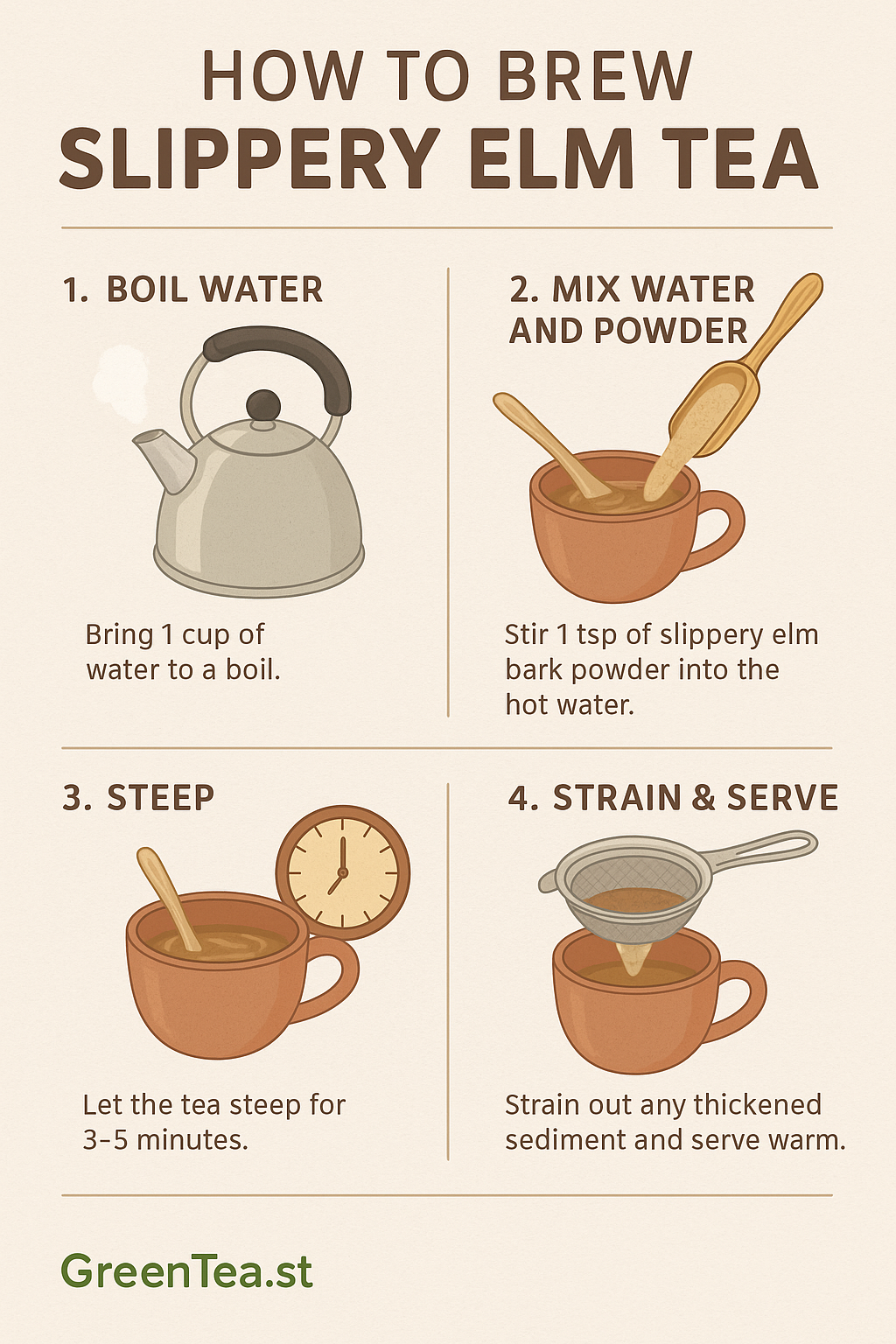
Brewing slippery elm tea is simple, but because of its mucilage, it develops a thicker consistency than most herbal teas. Here’s how to prepare it properly for maximum soothing benefits:
Ingredients
- 1 teaspoon powdered slippery elm bark (or 1 tablespoon cut bark)
- 1 cup hot water (not boiling)
- Optional: honey, lemon, or ginger for flavor
Method (Powdered Bark)
- Add 1 teaspoon of powdered slippery elm bark to a cup.
- Pour warm to hot water (about 190°F / 88°C) over the powder. Avoid boiling water, which can degrade beneficial compounds.
- Stir well until it dissolves and forms a slightly thick, smooth mixture.
- Let it sit for 3–5 minutes before drinking.
- Add honey or lemon if desired for taste and extra throat-soothing effect.
Method (Cut Bark Infusion)
- Place 1 tablespoon of cut slippery elm bark in a saucepan.
- Add 1 cup of water and bring to a gentle simmer.
- Cover and let it simmer for 10–15 minutes.
- Strain into a mug and enjoy warm.
Tips
- Slippery elm tea naturally has a mild, earthy flavor and a slightly slippery texture. Adding honey or cinnamon can improve taste.
- Drink up to 2–3 cups daily, spaced between meals or medications.
FAQs About Slippery Elm Tea
Yes, but in moderation. Most people tolerate up to 2–3 cups daily. However, it should not replace medical treatment, and long-term use should be guided by a healthcare professional.
Yes. The mucilage coats the esophagus and stomach, creating a barrier that reduces irritation from acid. Many people with GERD or frequent heartburn report symptom relief.
It is sometimes given to children for sore throats, but because safety data is limited, it should only be used under a doctor’s supervision.
No. Due to its traditional use in stimulating uterine contractions and lack of safety research, it is best avoided during pregnancy and breastfeeding.
Yes. Because it slows digestion, it can reduce the absorption of oral medications. Always space it at least 1–2 hours apart from prescription drugs.
It has a mild, earthy flavor with a slightly slippery or gel-like texture from the mucilage. Many people add honey, lemon, or cinnamon to enhance taste.
Yes, it contains no caffeine, making it safe to drink in the evening or for those who are caffeine-sensitive.
Conclusion
Slippery elm tea is a soothing herbal infusion valued for its ability to calm sore throats, ease digestive discomfort, and support gut health. Thanks to its mucilage content, it coats and protects mucous membranes, offering gentle relief where it’s needed most. While generally safe, it should be avoided by pregnant women and those on certain medications. Enjoyed in moderation, it can be a comforting addition to your wellness routine.