
Roasted Dandelion Tea: Benefits and Side Effects
Roasted dandelion tea has been gaining popularity as a wellness drink, often praised as a caffeine-free alternative to coffee. Made from the roasted roots of the common dandelion plant, this herbal infusion has a rich, slightly bitter, and earthy flavor that resembles coffee but without the jitters or acidity.
For centuries, dandelion has been used in traditional medicine across Asia, Europe, and North America. Folk healers relied on it for digestive complaints, liver support, and urinary health. Today, roasted dandelion tea is enjoying a revival in holistic health circles, appealing to those looking for both flavor and function in their daily cup (1).
What is Roasted Dandelion Tea?
Roasted dandelion tea is made by cleaning, drying, and roasting the roots of the dandelion plant (Taraxacum officinale). The roasting process deepens the flavor, producing a dark infusion with notes of caramel, cocoa, and roasted nuts, making it an excellent stand-in for coffee. While some blends may also include dandelion leaves or flowers, the root remains the star ingredient due to its high concentration of beneficial compounds like inulin, flavonoids, and terpenes.
Historically, dandelion roots were consumed as both food and medicine, and in some cultures, roasted roots served as a coffee substitute during times when real coffee was scarce. Today, this tradition continues, but with an added focus on its potential health benefits. Unlike true tea from the Camellia sinensis plant, roasted dandelion tea is naturally caffeine-free, making it suitable for any time of day and for those avoiding stimulants.
Nutritional and Phytochemical Profile
Roasted dandelion tea is not nutrient-dense in the way whole foods are, but it does provide an array of bioactive compounds that contribute to its reputation as a functional beverage. Roasting the roots alters their chemical composition, creating new antioxidant compounds such as melanoidins, which are also responsible for its rich coffee-like flavor.
In addition to these, the roots naturally contain inulin (a prebiotic fiber), sesquiterpene lactones (bitter compounds linked to digestive support), and trace minerals like potassium, magnesium, and calcium. While water infusion does not extract all fiber content, it draws out many phenolics, antioxidants, and soluble minerals that support health (2).
Here’s a simplified snapshot of roasted dandelion root’s key compounds:
| Compound | Category | Potential Benefits |
|---|---|---|
| Inulin | Prebiotic fiber | Supports gut microbiome, digestion |
| Sesquiterpene Lactones | Bitter phytochemicals | Stimulates bile flow, may aid liver function |
| Melanoidins (from roast) | Antioxidants | Reduces oxidative stress, gut microbiota effects |
| Potassium | Mineral | Electrolyte balance, heart health |
| Magnesium | Mineral | Muscle and nerve support, metabolism |
| Calcium | Mineral | Bone support, metabolic balance |
| Phenolic Compounds | Antioxidants | Anti-inflammatory, protective for cells |
This profile shows why roasted dandelion tea has long been valued as more than just a coffee substitute.
Health Benefits of Roasted Dandelion Tea
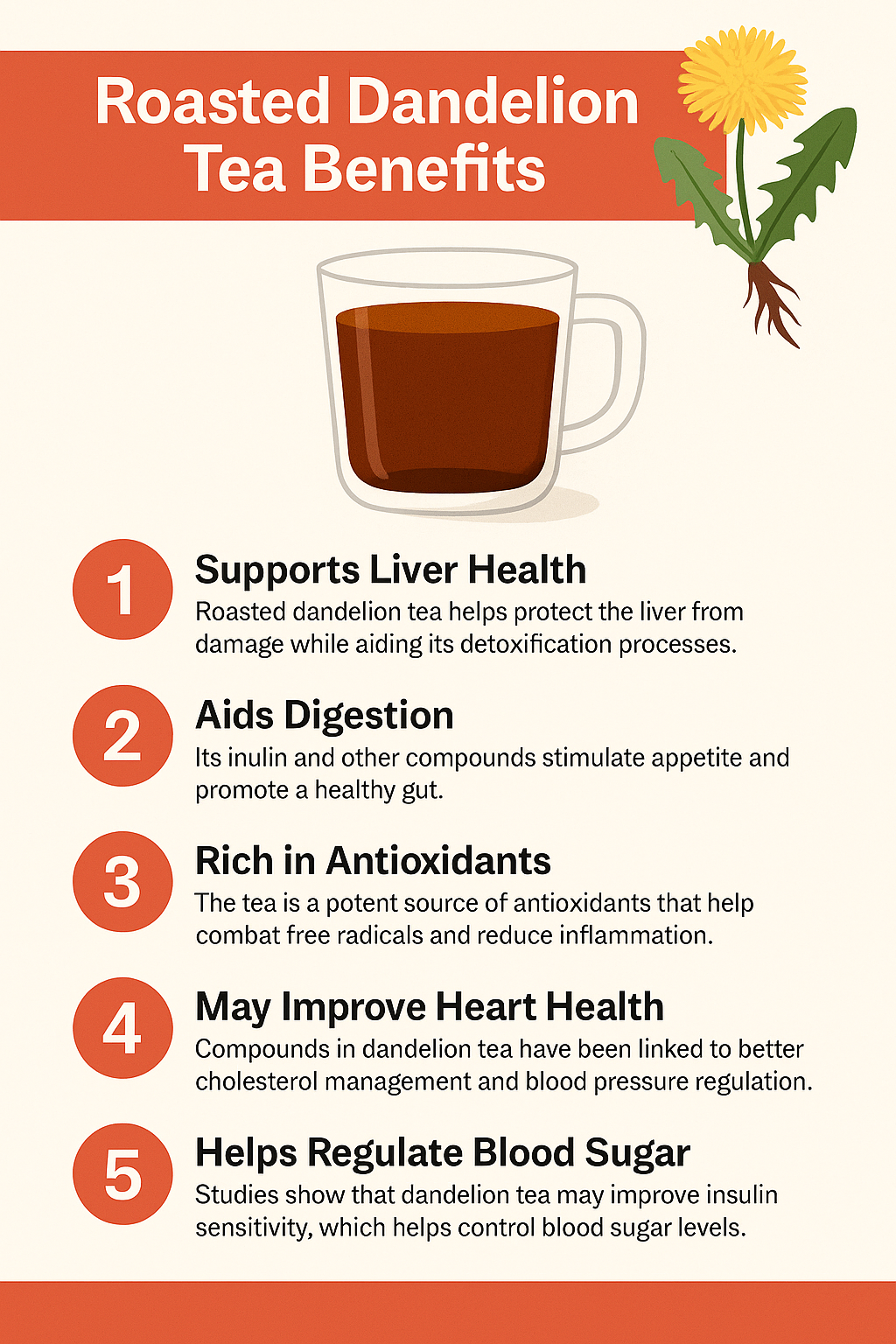
While roasted dandelion tea is often enjoyed as a coffee alternative, its true value lies in the compounds extracted during brewing. From aiding digestion to supporting the liver, research and traditional use highlight a range of benefits that make this earthy beverage more than just a warm drink.
1. Supports Liver Health
Dandelion root has long been used in traditional herbal medicine as a liver tonic. Compounds such as sesquiterpene lactones and phenolic acids may help increase bile production, which supports the liver’s role in breaking down fats and flushing out toxins.
Modern studies suggest that dandelion extracts may protect liver cells from oxidative stress and chemical damage by boosting antioxidant defenses. Drinking roasted dandelion tea regularly provides a gentler, food-based way to gain some of these protective benefits, making it a valuable daily ritual for those seeking natural liver support (3).
2. Aids Digestive Health
The inulin found in dandelion root acts as a prebiotic, feeding beneficial bacteria in the gut and encouraging a healthier microbiome. Roasted dandelion tea, while not as fiber-rich as the whole root, still releases soluble compounds that may help reduce bloating, stimulate digestion, and improve nutrient absorption.
Additionally, the bitter compounds in dandelion tea can stimulate the appetite and encourage the release of digestive juices. This makes it especially useful for those who struggle with sluggish digestion or discomfort after meals.
3. Helps Regulate Blood Sugar
Roasted dandelion tea may play a role in balancing blood sugar levels. Compounds in the root, particularly inulin, can help moderate glucose absorption in the gut while also encouraging the growth of beneficial bacteria that support metabolic health.
Animal and preliminary human studies have shown that dandelion extracts may reduce blood sugar spikes and improve insulin sensitivity. While roasted tea is less concentrated than extracts, incorporating it into a daily routine may offer supportive effects for those monitoring their blood sugar (4).
4. Supports Heart Health
The potassium found in roasted dandelion root makes the tea naturally supportive of heart and vascular health. Potassium helps balance sodium levels in the body, which may aid in regulating blood pressure. This is particularly beneficial for individuals looking to maintain cardiovascular wellness through diet and lifestyle.
In addition, the antioxidant compounds in roasted dandelion tea can help reduce oxidative stress on blood vessels, supporting their flexibility and function. Over time, this may contribute to improved circulation and reduced cardiovascular risk.
5. Provides Anti-Inflammatory Support
Roasted dandelion tea contains several phytochemicals, such as polyphenols and sesquiterpene lactones, that may help reduce inflammation in the body. These compounds interact with inflammatory pathways, lowering the production of cytokines that contribute to chronic conditions like arthritis and digestive discomfort.
Regular consumption of dandelion-based beverages has been studied for its potential to calm systemic inflammation, offering relief for those dealing with mild joint pain, stiffness, or gut irritation. While it is not a substitute for medical treatment, roasted dandelion tea can be a gentle, supportive addition to an anti-inflammatory diet (5).
6. May Support Weight Management
Dandelion root has mild diuretic properties, meaning it can help reduce water retention and bloating. While this does not directly equate to fat loss, many people find it helpful for feeling lighter and more comfortable. The tea’s natural bitterness may also encourage better digestion and metabolism of fats.
In addition, prebiotic compounds like inulin support gut balance, which plays a role in energy regulation and body weight. By aiding digestion, improving satiety, and supporting gut health, roasted dandelion tea may indirectly support weight management goals when paired with a balanced diet and active lifestyle.
7. Strengthens Immune Function
Roasted dandelion tea contains antioxidants such as phenolic compounds and flavonoids that can help defend the body against free radical damage. These antioxidants also play a role in modulating immune activity, potentially helping the body respond more efficiently to infections and environmental stressors.
Some research suggests that dandelion extracts may have antimicrobial properties, which could provide additional immune support. While roasted tea is a milder preparation than concentrated extracts, it can still contribute to an overall routine that nurtures immune resilience (6).
8. Acts as a Natural Detox Aid
Dandelion root has a long history as a detoxifying herb in traditional medicine. Its ability to stimulate bile flow and support liver and kidney function makes it a natural choice for cleansing the body of accumulated waste and toxins.
Roasted dandelion tea provides a gentle way to tap into these properties without the harsh effects of stronger detox remedies. When consumed regularly, it may aid the body’s natural detox pathways, promoting digestive comfort, clearer skin, and a sense of lightness.
Side Effects and Risks of Roasted Dandelion Tea
Although roasted dandelion tea is generally considered safe, there are some important precautions to keep in mind:
- Allergic Reactions
- People allergic to plants in the Asteraceae family (such as ragweed, marigolds, or daisies) may experience itching, rashes, or breathing issues.
- If you have such allergies, avoid dandelion tea.
- Medication Interactions
- Dandelion may interact with diuretics, lithium, or medications that affect blood sugar or blood pressure.
- Always consult your doctor before adding it to your daily routine if you take prescription drugs.
- Digestive Discomfort
- For some, drinking too much dandelion tea can cause mild digestive issues such as bloating, gas, or stomach cramps.
- Start with small amounts to assess your tolerance.
- Pregnancy and Breastfeeding
- Safety data is limited, so pregnant and breastfeeding women should use caution and consult a healthcare professional before consuming.
- Kidney or Gallbladder Concerns
- Because dandelion can increase bile flow, it may worsen gallstone issues. It also has a mild diuretic effect, which could be risky for those with kidney problems.
How to Make Roasted Dandelion Tea

Roasted dandelion tea is simple to prepare at home. You can use either pre-packaged roasted dandelion tea bags or loose roasted roots.
Hot Roasted Dandelion Tea
- Measure the tea
- Use 1–2 teaspoons of roasted dandelion root (or 1 tea bag) per cup of water.
- Boil water
- Bring fresh water to a boil, then let it cool slightly to about 95°C (200°F).
- Steep
- Pour hot water over the tea and let it steep for 5–10 minutes, depending on your taste preference.
- Strain and enjoy
- Strain the roots if using loose tea, then sip as is or add honey and lemon for flavor.
Iced Roasted Dandelion Tea
- Make a strong brew
- Double the amount of tea (about 2 tablespoons per 2 cups water). Steep as above.
- Cool down
- Let the tea cool to room temperature, then refrigerate.
- Serve over ice
- Pour into a glass of ice, garnish with a slice of lemon or mint for a refreshing twist.
Tips for Best Flavor
- Roasted dandelion tea has a naturally bitter, coffee-like taste. For a smoother cup, add a dash of cinnamon, ginger, or a spoon of milk.
- If you prefer a nutty-sweet balance, pair it with roasted chicory root for a homemade herbal coffee blend.
FAQs About Roasted Dandelion Tea
Yes, most people can drink 1–2 cups daily. Just monitor for side effects, especially if you’re on medications.
No, it is naturally caffeine-free, making it a popular substitute for coffee.
It has a rich, earthy, slightly bitter flavor that resembles coffee with nutty undertones.
Yes, thanks to its mild diuretic and digestive support properties, it may reduce water retention and ease bloating.
Generally, it is not recommended for children without medical guidance, since safety data is limited.
Conclusion
Roasted dandelion tea is more than just a caffeine-free coffee substitute. It provides unique health-supporting compounds like inulin, phenolics, and melanoidins that may benefit digestion, liver health, and immunity. Its rich, earthy taste and versatility—served hot or iced—make it an enjoyable ritual for many.
While it offers potential health advantages, it is not without precautions. Individuals with allergies, certain medical conditions, or those on specific medications should consult a healthcare professional before adding it to their daily routine.
For most, roasted dandelion tea can be a comforting, functional beverage that brings both flavor and gentle wellness support.


