
Loose Leaf Tea: Benefits, Types, Flavors, and How to Brew
Loose leaf tea has been cherished for centuries, but in recent years it has found a renewed spotlight among tea drinkers looking for quality, variety, and wellness. Unlike the quick convenience of tea bags, loose leaf tea is valued for its superior flavor, fresher aroma, and higher nutrient retention. Each cup feels more intentional, turning the simple act of brewing into a mindful ritual.
What makes loose leaf tea so appealing is the combination of health benefits and the freedom it gives to explore blends, flavors, and brewing methods. Whether you enjoy the grassy sweetness of green tea, the bold depth of black tea, or the calming comfort of herbal tisanes, loose leaf tea offers a personalized experience with every cup.
What is Loose Leaf Tea?
Loose leaf tea refers to whole or partially broken tea leaves that are sold without being packed into tea bags. This difference is more than cosmetic — it affects the flavor, nutrition, and overall experience. Because the leaves are larger, they expand more fully during brewing, releasing a greater range of natural oils, antioxidants, and aromatic compounds into the water.
By contrast, tea bags often use broken fannings or dust — the smallest particles left over after higher-quality leaves are sorted. These small particles lose freshness quickly and can result in a flatter taste. Loose leaf tea, on the other hand, is less processed, allowing it to retain a higher concentration of polyphenols, catechins, and other beneficial compounds that support health (1).
This fuller, fresher extraction is why loose leaf tea is often preferred by enthusiasts who want a richer, more authentic tea experience.
Health Benefits of Loose Leaf Tea
One of the main reasons tea lovers prefer loose leaf over bagged tea is not just taste but also the health benefits. Because loose leaves are generally fresher and less processed, they retain higher levels of bioactive compounds like catechins, flavonoids, and essential oils. These compounds have been widely studied for their positive effects on heart health, brain function, and overall well-being (2).
1. Rich in Antioxidants
Loose leaf tea is one of the best natural sources of antioxidants, particularly polyphenols and catechins. Because the leaves are typically larger and less processed than tea dust or fannings found in most tea bags, they retain more of their natural compounds. These antioxidants help protect the body from free radical damage, which contributes to aging and chronic illnesses like heart disease and diabetes.
Research highlights that catechins, especially epigallocatechin gallate (EGCG), may improve cellular health and support long-term wellness by lowering oxidative stress (3). Drinking fresh loose leaf tea ensures a higher intake of these protective compounds compared to mass-market bagged tea.
2. Supports Heart Health
Regular consumption of loose leaf tea can benefit cardiovascular wellness. The flavonoids in tea help improve endothelial function, promote better blood vessel flexibility, and may lower LDL cholesterol levels. Green and oolong loose leaf teas, in particular, have been linked to improved circulation and reduced risk of heart disease.
Studies suggest that habitual tea drinkers tend to show improved lipid profiles and lower blood pressure compared to non-tea drinkers. These effects are tied to the higher concentration of bioactive compounds that are better preserved in whole loose leaves (4). Making loose leaf tea part of your daily routine could be a gentle but effective way to support long-term heart health.
3. Better Digestive Support
Loose leaf teas, especially herbal varieties like peppermint or chamomile, are widely appreciated for their natural ability to soothe the digestive tract. The essential oils and polyphenols present in these larger, unprocessed leaves help reduce bloating, relieve indigestion, and calm intestinal spasms. Unlike many commercial bagged teas that lose volatile oils during processing, loose leaf tea preserves more of these active compounds.
Research has shown that herbal teas rich in phenolics can support gastrointestinal comfort by promoting healthy gut bacteria and reducing inflammation in the digestive lining (5). This makes loose leaf tea a more potent and natural choice for those seeking better digestive balance.
4. Enhances Mental Focus and Relaxation
Loose leaf green and white teas are rich in L-theanine, an amino acid that promotes a state of calm alertness. When combined with the moderate caffeine content of tea, L-theanine helps improve focus, attention, and mental clarity without causing jitters. This synergy is one reason tea has been used for centuries in meditation practices.
Scientific studies confirm that the L-theanine–caffeine combination found in tea can improve cognitive performance, reaction time, and mood while reducing stress and anxiety (6). Because loose leaf tea undergoes minimal processing and retains higher levels of amino acids, it is particularly effective in supporting mental well-being.
5. Stronger Immune System
Loose leaf teas, particularly green and oolong, are packed with catechins and flavonoids that help strengthen the immune system. These antioxidants protect immune cells from oxidative stress, support faster recovery from illness, and may even enhance the body’s natural defenses against viral and bacterial infections. Because loose leaf teas contain larger, unbroken leaves, they generally retain higher levels of these protective compounds compared to heavily processed tea bags.
A review of tea polyphenols found that regular consumption of catechin-rich teas can improve immune regulation and reduce inflammation in the body (7). This makes loose leaf tea not just a beverage of pleasure, but a daily ritual for wellness.
6. Helps Manage Blood Sugar Levels
Some loose leaf teas, including green, black, and herbal blends like cinnamon or fenugreek, have been studied for their potential role in supporting healthy blood sugar balance. Tea polyphenols may slow carbohydrate absorption and improve insulin sensitivity, which can benefit those at risk of type 2 diabetes. Loose leaf brewing allows for stronger extraction of these compounds compared to dust-filled tea bags, which enhances their effectiveness.
Clinical findings suggest that catechins and flavonoids in green tea can help regulate blood glucose and improve metabolic health when consumed consistently (8). For people managing sugar levels, a daily cup of loose leaf tea may provide a gentle but meaningful support.
Types of Loose Leaf Tea
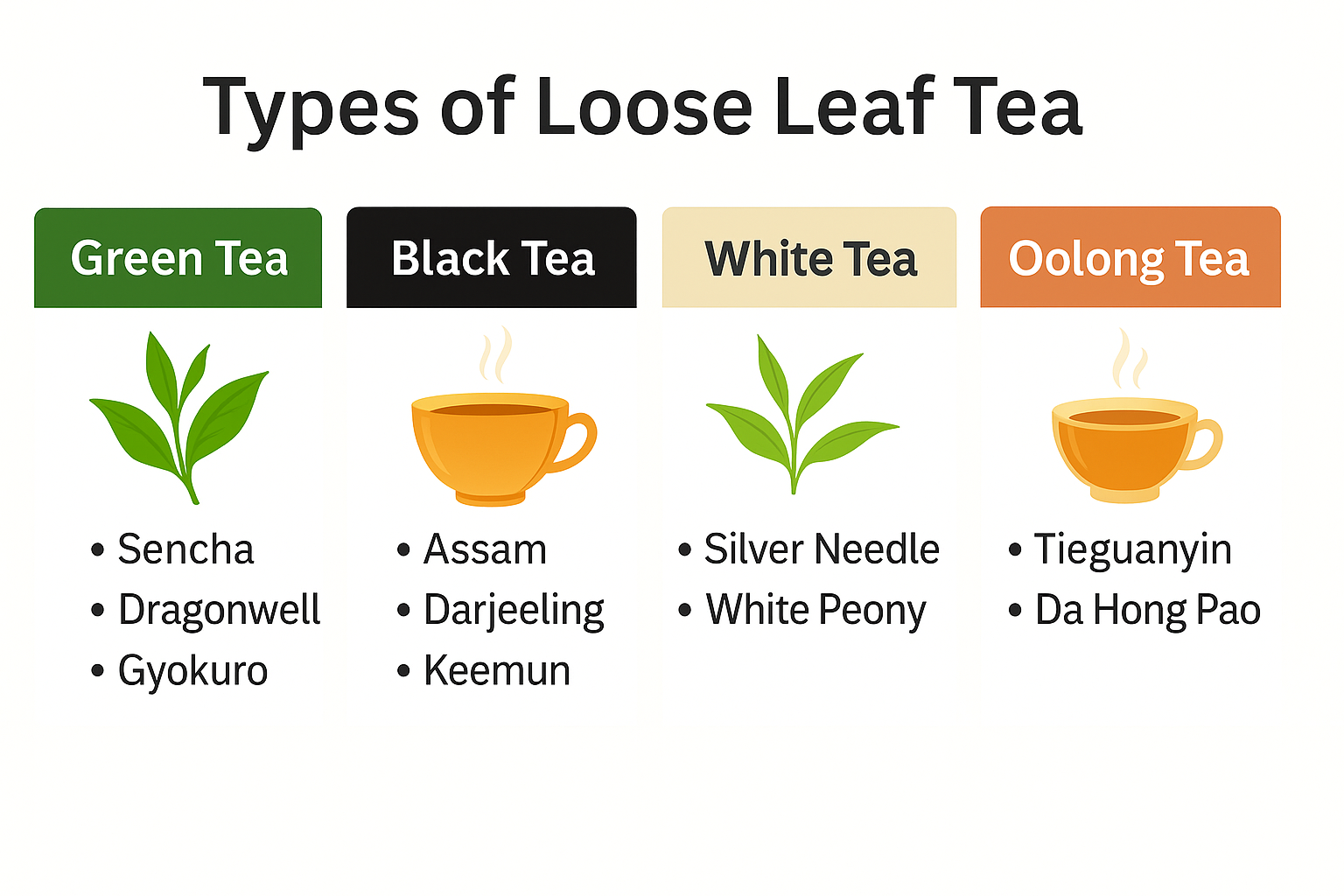
Loose leaf tea comes in many varieties, each with its own character, flavor, and health profile. Unlike generic bagged teas, which often contain broken leaves and “dust,” loose leaf retains its structure, offering a richer taste and higher concentration of antioxidants, amino acids, and essential oils. The type of tea you choose determines not only the flavor but also the wellness benefits you get from each cup.
Here are three of the most popular categories of loose leaf teas and examples within each:
Green Tea: Sencha, Dragonwell, Gyokur
Green teas are minimally oxidized, which helps preserve their high levels of catechins, known for their antioxidant and fat-burning properties.
- Sencha: The most popular green tea in Japan, sencha is steamed to stop oxidation, giving it a grassy, slightly sweet flavor. It is known for boosting energy and concentration while being gentle on the stomach.
- Dragonwell (Longjing): A famous Chinese green tea pan-fired to give it a toasty, nutty flavor. It is rich in L-theanine and catechins, making it both calming and invigorating.
- Gyokuro: A premium shaded Japanese tea with high levels of chlorophyll and the amino acid L-theanine, known for its deep umami flavor and strong antioxidant content.
These green teas are ideal for anyone seeking energy, focus, and metabolic support.
Black Tea: Assam, Darjeeling, Keemun
Black teas are fully oxidized, giving them bold flavors, higher caffeine content, and robust polyphenols.
- Assam: Grown in India, Assam tea is malty, strong, and perfect for breakfast blends. It’s rich in theaflavins, which support cardiovascular health.
- Darjeeling: Known as the “champagne of teas,” Darjeeling has a musky-sweet flavor with floral notes. It contains both theaflavins and thearubigins, compounds that support digestion and gut health.
- Keemun: A Chinese black tea with a smooth, slightly smoky profile. It’s often used in English breakfast blends and is noted for its antioxidant and mood-supporting qualities.
Black teas are great for morning energy, digestive health, and heart wellness.
White Tea: Silver Needle, White Peony
White tea is the least processed of all teas, with delicate flavors and very high antioxidant content.
- Silver Needle: Made from young tea buds, Silver Needle is subtle, sweet, and floral. It contains high levels of polyphenols, which may support skin health and anti-aging.
- White Peony (Bai Mudan): A fuller-bodied white tea that includes both buds and leaves. It has a mellow, slightly fruity flavor and provides a balance of antioxidants and mild caffeine.
White teas are prized for their gentleness and are often chosen by those who want a soothing cup packed with anti-aging compounds.
Oolong Tea: Tie Guan Yin, Da Hong Pao, Milk Oolong
Oolong teas sit between green and black teas in terms of oxidation, giving them a broad spectrum of flavors and health benefits. They can range from lightly floral to deeply roasted, offering something for every palate.
- Tie Guan Yin (Iron Goddess of Mercy): A famous Chinese oolong with a floral aroma and smooth, creamy taste. It is rich in polyphenols that may support weight management and digestion.
- Da Hong Pao (Big Red Robe): One of the most prized teas from China’s Wuyi Mountains, it has a roasted, mineral-rich flavor. Da Hong Pao is often used in traditional Chinese medicine for its ability to aid digestion and balance energy.
- Milk Oolong: Known for its naturally creamy, buttery flavor, this oolong is lightly oxidized and rich in L-theanine, offering both relaxation and focus.
Oolong teas are especially valued for supporting metabolism and aiding in fat oxidation, making them a popular choice for wellness enthusiasts.
Herbal Loose Leaf Teas
Unlike true teas from the Camellia sinensis plant, herbal loose leaf teas are made from dried flowers, fruits, seeds, or herbs. They are naturally caffeine-free and often chosen for specific wellness purposes.
- Chamomile: Known for its calming properties, chamomile loose leaf tea helps reduce stress and may improve sleep quality.
- Peppermint: A refreshing option that can aid digestion, ease bloating, and freshen breath.
- Rooibos: From South Africa, rooibos is rich in antioxidants and has a naturally sweet, nutty flavor. It’s caffeine-free, making it suitable for all-day sipping.
Herbal loose leaf teas expand the options for those who want the ritual and flavor of tea without the caffeine. They also carry plant-specific benefits, from better digestion to immune support.
Comparison of Loose Leaf Tea Types
| Type | Examples | Flavor Profile | Caffeine Level | Key Health Benefits |
|---|---|---|---|---|
| Green Tea | Sencha, Dragonwell, Gyokuro | Fresh, grassy, umami, slightly sweet | Low–Moderate | Rich in antioxidants, supports heart health, aids metabolism |
| Black Tea | Assam, Darjeeling, Keemun | Bold, malty, brisk, sometimes fruity | Moderate–High | Boosts energy, supports heart health, improves focus |
| White Tea | Silver Needle, White Peony | Delicate, floral, lightly sweet | Very Low | Anti-aging antioxidants, skin health, gentle energy lift |
| Oolong Tea | Tie Guan Yin, Da Hong Pao, Milk Oolong | Floral to roasted, smooth, complex | Moderate | Supports weight management, digestion, and energy balance |
| Herbal Tea | Chamomile, Peppermint, Rooibos | Herbal, floral, fruity, caffeine-free | None | Stress relief, better sleep, digestive support, immune boost |
Loose Leaf Tea Flavor Variations and Popular Blends
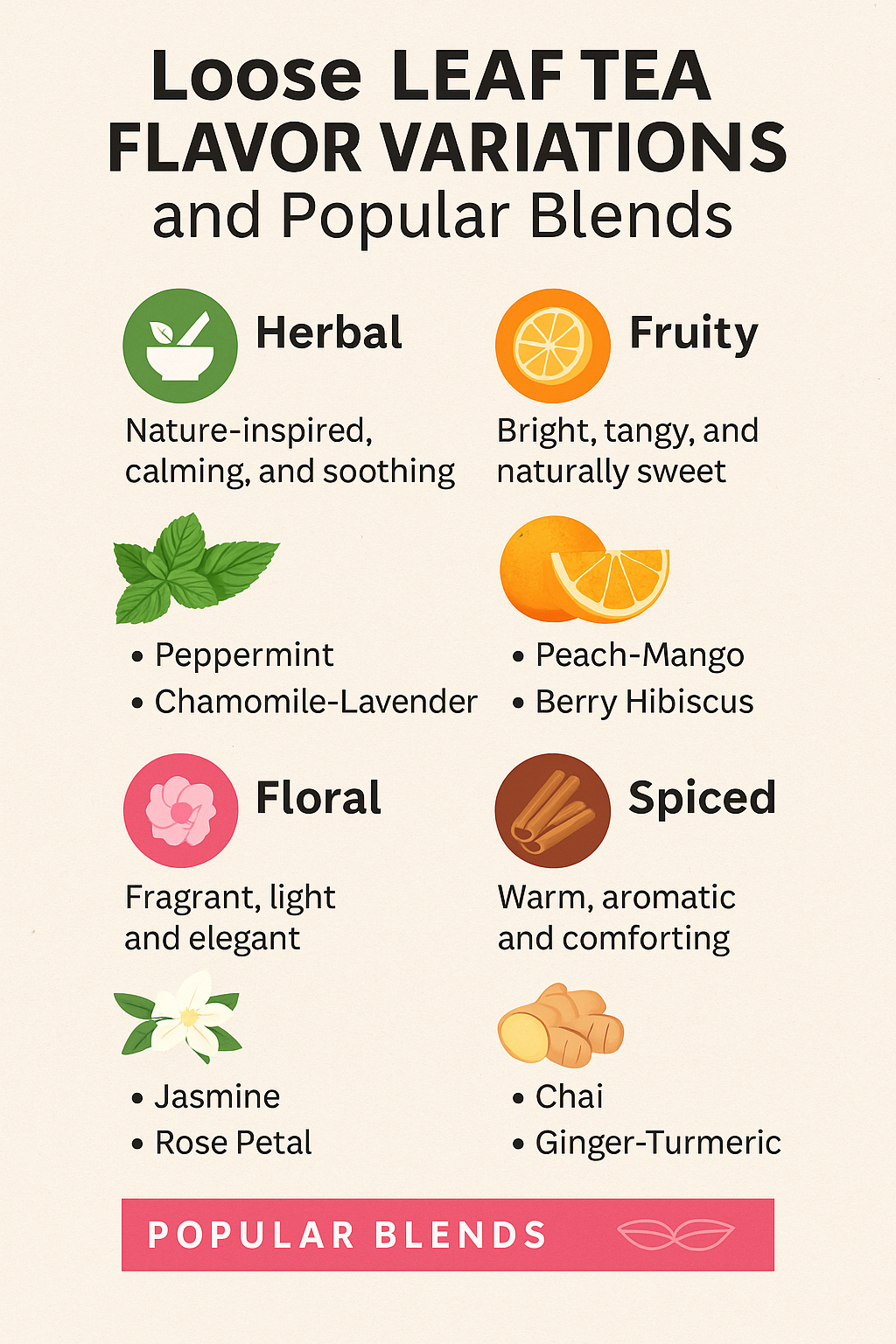
One of the reasons loose leaf tea remains so popular is the endless variety of blends and flavor infusions it offers. Unlike bagged teas, which often rely on artificial flavorings, loose leaf blends usually use whole ingredients like dried flowers, spices, herbs, and fruit peels to create naturally complex and aromatic brews.
Floral Blends
Loose leaf teas are often enhanced with dried flowers for a softer, fragrant cup. Jasmine green tea is among the most famous, where delicate jasmine blossoms are layered with green tea leaves to infuse their aroma. Lavender black tea is another option, combining the boldness of black tea with calming floral notes.
Spiced Teas
Spices bring warmth and depth to loose leaf teas. Chai blends typically feature Assam or Darjeeling tea combined with cinnamon, cardamom, cloves, and ginger, creating a robust and invigorating drink. Spiced rooibos is a caffeine-free alternative that still delivers the comforting flavors of chai.
Fruity Infusions
For a refreshing twist, loose leaf teas can be blended with fruit peels or dried berries. Citrus oolong combines zesty orange or lemon peel with floral oolong, while berry green teas offer a tart yet smooth flavor profile. These fruity blends are often enjoyed iced, making them perfect for summer.
Nutty and Sweet Notes
Some loose leaf teas naturally carry nutty undertones, but they can also be enhanced with additions like almond slices, coconut shavings, or vanilla beans. A popular example is vanilla rooibos, which combines the naturally sweet red rooibos with creamy vanilla for a dessert-like cup.
These flavor variations allow tea drinkers to tailor their experience, whether they’re seeking something calming, energizing, refreshing, or indulgent.
How to Brew Loose Leaf Tea
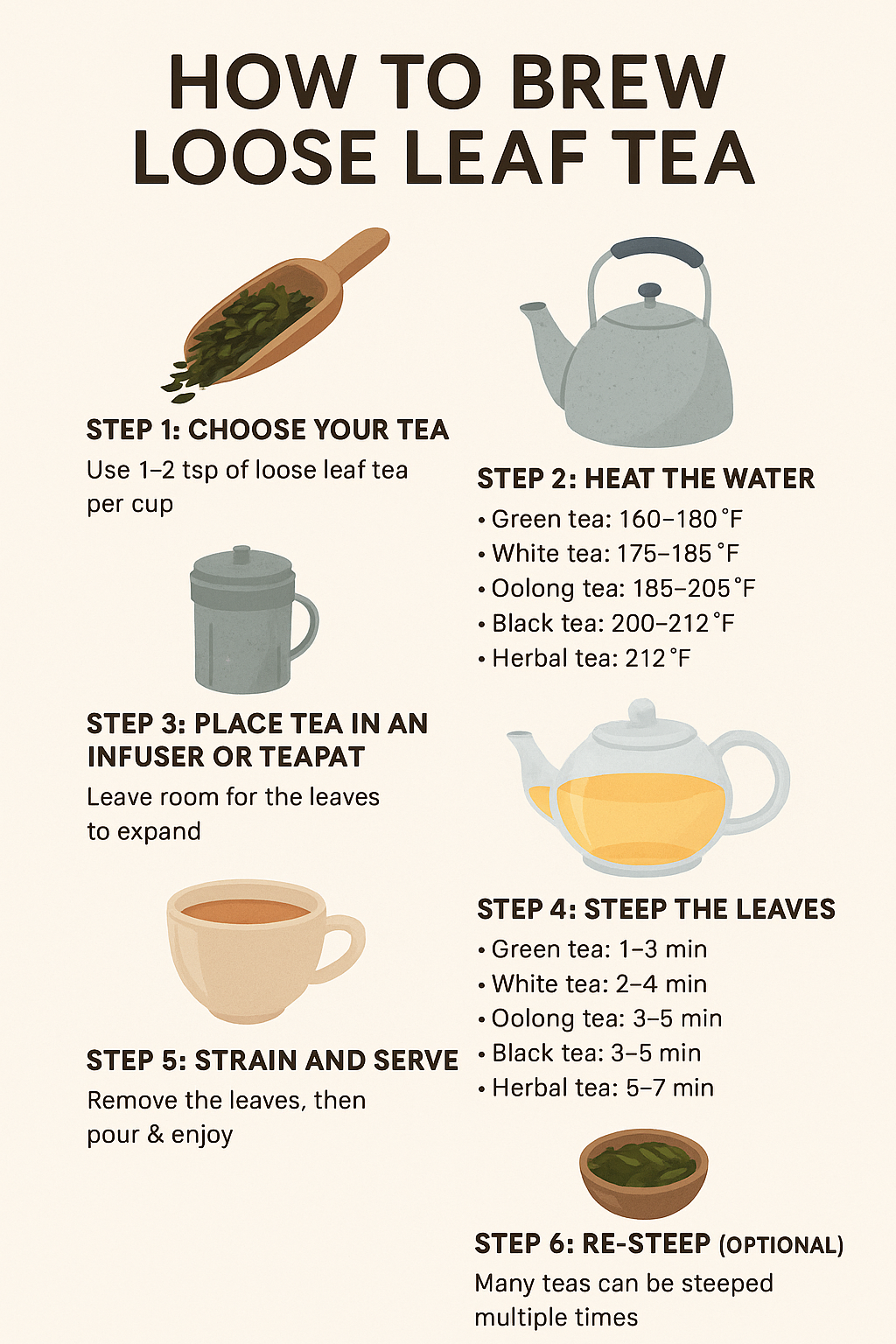
Brewing loose leaf tea is simple, but it does require a bit more attention than bagged tea to get the best flavor. The key is allowing the leaves space to expand, releasing their natural oils and antioxidants into the water. Here’s how to do it:
Step 1: Choose Your Tea
Select your desired loose leaf tea and measure 1 to 2 teaspoons per 8-ounce cup of water. Larger leaf teas (like oolong or white) may need slightly more.
Step 2: Heat the Water
Bring fresh, filtered water to the appropriate temperature. Different teas brew best at different heat levels:
- Green tea: 160–180°F (70–80°C)
- White tea: 175–185°F (80–85°C)
- Oolong tea: 185–205°F (85–96°C)
- Black tea: 200–212°F (93–100°C)
- Herbal tea: 212°F (100°C)
Using water that’s too hot can scorch delicate teas, while too cool may leave them weak.
Step 3: Place Tea in an Infuser or Teapot
Put the leaves into a tea infuser, strainer, or teapot with a built-in filter. Make sure the leaves have plenty of room to expand. Avoid stuffing them tightly, as restricted movement can dull the flavor.
Step 4: Steep the Leaves
Pour hot water over the leaves and steep for the recommended time:
- Green tea: 1–3 minutes
- White tea: 2–4 minutes
- Oolong tea: 3–5 minutes
- Black tea: 3–5 minutes
- Herbal tea: 5–7 minutes
Taste as you go. A shorter steep gives a lighter, more delicate flavor, while a longer steep makes it stronger and bolder.
Step 5: Strain and Serve
Remove the leaves to avoid over-brewing, then pour the tea into your cup. You can enjoy it plain, or enhance it with honey, lemon, milk, or spices depending on the type of tea.
Step 6: Re-Steep (Optional)
High-quality loose leaf teas can be steeped more than once. In fact, oolong and pu-erh teas often taste better on the second or third infusion, as the leaves unfurl fully and release new layers of flavor.
Side Notes: Storage & Freshness
Loose leaf tea is delicate and highly sensitive to its environment. To preserve its aroma, flavor, and health-promoting compounds, proper storage is essential. Always keep your tea in an airtight container to protect it from moisture and outside odors, as tea leaves easily absorb scents from spices, coffee, or even nearby food. Choose containers made of opaque tin, dark glass, or non-reactive ceramic rather than clear jars that let in light. Ideally, store the container in a cool, dark, and dry place away from direct sunlight, heat sources, or humidity.
When stored correctly, most loose leaf teas can remain fresh for 6 to 12 months, although some varieties like pu-erh or aged oolong can actually improve with time under controlled conditions. Compared to bagged teas, which often lose flavor more quickly due to broken leaves and exposure to air, loose leaf teas maintain their richness and complexity for longer. Checking aroma and taste periodically is a good way to gauge whether the leaves are still vibrant. If the tea smells flat or brews a weak, dull cup, it’s a sign the leaves have gone stale.
FAQs About Loose Leaf Tea
Yes, loose leaf tea is often considered healthier because it usually contains whole or larger tea leaves, which retain more antioxidants, polyphenols, and flavor compared to the smaller, broken pieces in many tea bags.
It depends on the type of tea. Green and white teas usually steep for 2–3 minutes, black teas for 3–5 minutes, and oolong for 4–7 minutes. Oversteeping can make tea bitter, so it’s best to follow type-specific guidelines.
Yes. Many high-quality loose leaf teas, especially oolong and green, can be re-steeped 2–3 times. Each steeping reveals new flavors and aromas, though the caffeine and antioxidant levels may lessen with each brew.
Not necessarily. While teapots with built-in infusers or reusable strainers are convenient, you can also use a simple French press, a reusable tea ball, or even strain the leaves manually with a fine mesh sieve.
Keep it in an airtight container away from light, heat, and moisture. A cool, dark cupboard works well. Avoid clear jars or containers near stoves, as exposure to sunlight and heat can reduce freshness and flavor.
Conclusion
Loose leaf tea stands out as a healthier, fresher, and more flavorful alternative to bagged teas. Its larger, intact leaves preserve essential oils, antioxidants, and nuanced flavors that make every cup more rewarding. With countless varieties — from grassy sencha to bold Assam and delicate silver needle — there’s a type of loose leaf tea to suit every taste and occasion.
Beyond flavor, brewing loose leaf is also a mindful ritual. With the right storage and brewing practices, you can enjoy tea that not only tastes superior but also supports wellness with every sip. Whether you’re just starting to explore tea or looking to elevate your daily routine, loose leaf tea offers a rich and enjoyable journey worth embracing.


