
6 Herbal Tea for Better Sleep
If you’ve ever spent the night staring at the ceiling, mind racing while the clock ticks toward dawn, you’re not alone. Millions of adults struggle with poor sleep, and many are turning to herbal teas as a gentle way to unwind. Unlike sleeping pills or alcohol, these natural brews encourage relaxation without dependency or grogginess the next morning.
Herbal teas have been used for centuries in traditional medicine systems—from chamomile in Europe to passionflower in South America—for their ability to calm the nervous system and promote rest. Today, research continues to explore how plant compounds interact with neurotransmitters that regulate sleep quality and circadian rhythm (1).
Whether you’re battling insomnia, nighttime anxiety, or simply want a peaceful bedtime ritual, herbal tea can help signal to your body that it’s time to rest.
Why Sleep Matters
Sleep isn’t just a time for rest—it’s when the brain cleanses itself, hormones reset, and the body repairs tissues damaged throughout the day. Without enough restorative sleep, everything from memory to metabolism can suffer. Chronic sleep deprivation has been linked to increased risks of heart disease, diabetes, and depression, as well as premature aging and poor immune response (2).
A nightly tea ritual can play a small but powerful role in improving sleep hygiene. The act of brewing, the warmth of the cup, and the natural plant compounds within herbal teas all work together to create a sense of calm. For many people, it becomes less about forcing sleep and more about easing into it naturally.
The Science Behind Herbal Sleep Teas
Herbal teas work primarily by influencing the body’s natural sleep-wake cycle, also known as the circadian rhythm. Many herbs used in sleep blends contain compounds that act on the GABA (gamma-aminobutyric acid) receptors in the brain — the same neurotransmitter responsible for promoting calm and reducing neural activity. When GABA levels increase, the body’s stress response slows, allowing the mind to transition smoothly into rest.
For example, apigenin, a flavonoid found in chamomile, binds to benzodiazepine receptors in the brain, promoting relaxation similar to mild sedatives but without dependency. Similarly, herbs like valerian root contain valerenic acid, which helps prevent GABA from breaking down, enhancing its natural calming effect. Other teas, such as lavender and lemon balm, contain essential oils and polyphenols that reduce cortisol levels and balance serotonin — both crucial for mental calm and sleep stability (3).
These biological effects, combined with the warm temperature and ritual of drinking tea, create a holistic experience that prepares both the body and mind for restful sleep.
Best Herbal Teas for Sleep (with Benefits)
When it comes to natural sleep aids, few remedies are as gentle and effective as herbal teas. Their soothing aromas, mild flavors, and therapeutic properties make them a perfect nighttime ritual. Below are some of the most trusted herbal teas for promoting relaxation and better sleep.
1. Chamomile Tea – The Classic Calming Tea
Chamomile is the most popular herbal tea for sleep — and for good reason. It contains apigenin, an antioxidant that binds to certain brain receptors, reducing anxiety and inducing mild sedation. This gentle action helps you fall asleep faster and stay asleep longer.
Regular chamomile tea consumption has also been linked to lower stress and improved heart rate variability, indicating a deeper parasympathetic response. Beyond sleep, it soothes digestion and eases muscle tension, making it a perfect all-in-one evening beverage (4).
2. Valerian Root Tea – Nature’s Sleep Enhancer
Valerian root has been used for centuries as a natural sedative. It’s rich in valerenic acid, which interacts with GABA receptors to promote calm and relaxation. Unlike prescription sleep aids, valerian doesn’t cause grogginess the next morning, though it may take several days of consistent use to show full effects.
Some studies suggest that valerian root can shorten the time it takes to fall asleep and improve overall sleep quality, especially for people struggling with mild insomnia. Its earthy, slightly bitter taste is often balanced by blending it with lemon balm or chamomile for a more pleasant experience (5).
3. Lemon Balm Tea – Gentle Mood and Sleep Support
Lemon balm, a member of the mint family, carries a light citrus aroma that calms the mind and lifts the mood. Its compounds — particularly rosmarinic acid — have mild anti-anxiety effects that reduce restlessness and promote relaxation before bed.
It’s especially effective for people who experience racing thoughts or nervous tension at night. Lemon balm can be enjoyed on its own or combined with chamomile or valerian root for a balanced bedtime blend (6).
4. Lavender Tea – Soothing Aromatherapy in a Cup
Lavender tea doesn’t just smell wonderful — it also helps slow heart rate and lower cortisol levels. The linalool in lavender has mild sedative and anti-anxiety properties, easing mental fatigue and promoting emotional stability.
Brewing lavender tea before bedtime creates a sensory relaxation ritual, as its aroma directly interacts with the limbic system, which regulates emotions and sleep patterns. It’s ideal for people dealing with restlessness, mild depression, or post-stress insomnia (7).
5. Passionflower Tea – Deep, Restorative Sleep
Passionflower tea works as a gentle sleep aid by boosting GABA levels in the brain. It’s especially effective for those who wake up frequently during the night, as it promotes sustained relaxation rather than immediate drowsiness.
Passionflower also helps relieve mild anxiety and tension headaches — issues that often interfere with restful sleep. When combined with chamomile or valerian root, its effects can be even more pronounced (8).
6. Peppermint Tea – A Soothing Nightcap for the Stomach and Mind
While peppermint tea doesn’t directly induce sleep, it helps the body prepare for it by relaxing muscles and aiding digestion. Its menthol content provides a cooling, calming sensation that reduces discomfort from bloating or indigestion — two common causes of nighttime restlessness.
Peppermint tea is caffeine-free, refreshing, and works well as a gentle digestive tonic after dinner, setting the stage for more peaceful sleep (9).
How to Brew Herbal Tea for Sleep (Step-by-Step Guide)
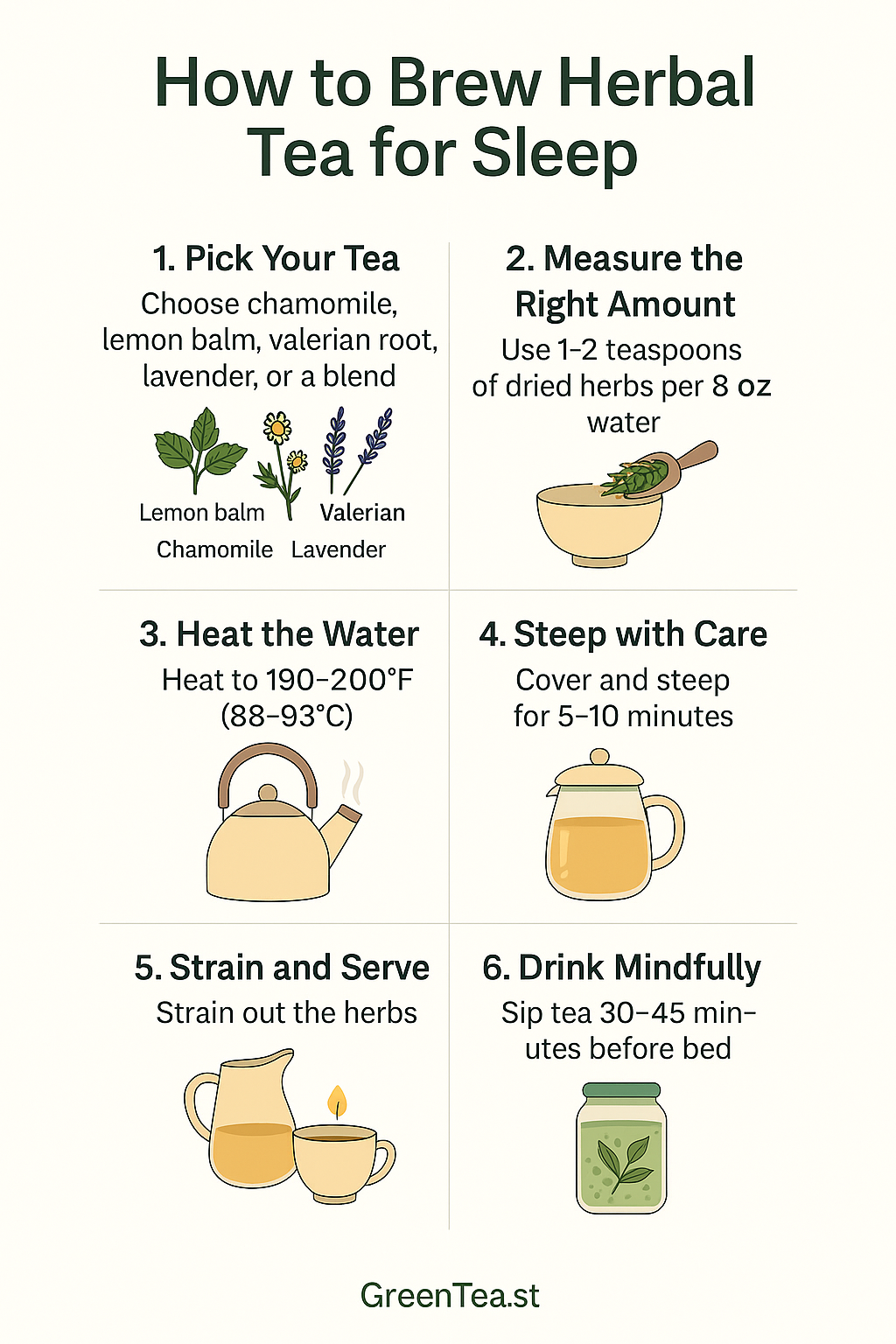
A good night’s rest begins long before your head hits the pillow. Brewing herbal tea the right way can turn bedtime into a calming ritual that signals your body it’s time to unwind. Follow these simple steps to make the perfect soothing cup.
1. Pick Your Tea
Choose a naturally calming herb such as chamomile, valerian root, lemon balm, or lavender.
You can also mix a blend — for example, 1 tablespoon of chamomile with ½ teaspoon of valerian root for deeper relaxation.
2. Measure the Right Amount
Use 1–2 teaspoons of dried herbs (or double that if fresh) per 8 ounces (240 ml) of water.
This ratio balances flavor and potency without becoming bitter or overpowering.
3. Heat the Water
Bring fresh water to just below boiling — around 190–200°F (88–93°C).
Avoid a rolling boil, which can destroy delicate aromatic oils in herbs like lavender or lemon balm.
4. Steep with Care
Pour the hot water over the herbs and cover your cup or teapot to trap the essential oils.
Let it steep for 5–10 minutes, depending on the herb:
- Chamomile, lemon balm: 5 minutes
- Valerian root, passionflower: up to 10 minutes
5. Strain and Serve
Remove the herbs and pour your tea into a mug.
Add a drizzle of honey or a squeeze of lemon if desired, but skip caffeine, milk, or sugar.
6. Drink Mindfully
Sip your tea 30–45 minutes before bed.
Find a quiet spot, dim the lights, and let the warmth of the tea and scent of herbs calm your senses.
7. Try a Cold Brew (Optional)
For a smoother, less bitter taste, steep your herbs in cold filtered water overnight in the refrigerator.
Strain and enjoy chilled or gently warmed before bed.
Side Effects and Precautions
While herbal teas are natural, they’re not entirely without risks. Some herbs can cause mild reactions, especially when consumed in large quantities or mixed with medications. Here’s what to keep in mind:
- Possible Allergic Reactions • Chamomile and valerian belong to plant families that may trigger allergies in sensitive individuals. • Symptoms can include itching, skin rashes, or mild swelling.
- Medication Interactions • Herbs like valerian and passionflower can amplify the effects of sedatives or sleep aids. • If you take antidepressants, blood thinners, or anxiety medication, talk to your doctor before adding these teas.
- Pregnancy and Breastfeeding • Certain calming herbs, including valerian, are not well-studied during pregnancy. • Expectant or nursing mothers should consult healthcare professionals before drinking herbal sleep blends.
- Excessive Consumption • Drinking more than 3–4 cups daily may lead to drowsiness, nausea, or digestive discomfort. • Stick to moderate, evening use to support rest without overloading your system.
According to the National Center for Complementary and Integrative Health (NCCIH), herbal sleep aids like chamomile and valerian are generally safe when used short-term and responsibly (1).
Tips for a Better Sleep Routine
Drinking herbal tea before bed works best when paired with a calming evening routine. These simple habits can help your body relax naturally and improve overall sleep quality.
1. Create a Calm Environment
Keep your evenings quiet and dim. Turn off bright lights and reduce screen time at least 30 to 60 minutes before bed. A dark, cool room helps your body release melatonin, the hormone that signals it’s time to sleep.
2. Sip Your Tea Mindfully
Drink your tea about half an hour before bedtime. Take slow, intentional sips and focus on the warmth and aroma. This small ritual helps the body slow down, signaling that it’s time to rest.
3. Keep a Consistent Sleep Schedule
Go to bed and wake up at the same time every day, even on weekends. A steady schedule strengthens your internal clock, helping you fall asleep faster and wake up more refreshed.
4. Avoid Heavy Meals and Late Caffeine
Try not to eat large dinners or have caffeine (like coffee or chocolate) late in the day. If you’re hungry before bed, go for something light and gentle on digestion, such as fruit, yogurt, or oatmeal.
5. Practice Relaxation Techniques
Calm your mind with light stretching, deep breathing, or meditation before sleep. Even 5–10 minutes of mindfulness can reduce tension and make the soothing effects of herbal tea more noticeable.
FAQs About Herbal Tea for Better Sleep
Chamomile and valerian root are two of the most popular teas for sleep. Chamomile contains apigenin, a compound that binds to brain receptors to reduce anxiety and promote calmness.
Yes, most herbal teas are caffeine-free and safe for daily use. However, if you’re pregnant or taking medication, it’s wise to confirm safety with your healthcare provider.
Drink it about 30–45 minutes before bedtime to allow your body to absorb the calming compounds and begin relaxing.
Yes. Blends such as chamomile and lavender or lemon balm and valerian can complement each other for deeper relaxation.
No. Unlike sleep medications, herbal teas gently support natural sleep rhythms without morning grogginess or dependence.
Conclusion
Herbal teas offer a simple, natural way to promote better sleep and reduce nighttime anxiety. From chamomile’s gentle floral calm to valerian’s deep relaxation, each cup provides more than warmth — it’s a nightly ritual that helps your body and mind slow down.
Incorporating herbal tea into your bedtime routine can encourage better sleep quality, reduced stress, and a more peaceful transition into rest. Combined with healthy habits like dim lighting, screen-free evenings, and consistent bedtime hours, these teas can become a cornerstone of restorative, natural sleep.


