I Joined the Detox Tea Challenge: My Recipe and Results
I didn’t start the detox tea challenge to lose weight. I started it because I felt heavy, tired, and sluggish every morning, even after getting a full night’s sleep. My digestion felt slow, my skin looked dull, and my energy levels were unpredictable. I wanted a reset that didn’t rely on extreme dieting or supplements.
That’s when I came across a detox tea routine. It wasn’t about starving or replacing meals but supporting the body’s natural detox system through hydration and herbs. The idea sounded simple enough: drink a cup or two of tea made from natural ingredients known to support liver and digestive health, and see what happens over 30 days.
I read that certain teas—like green tea, ginger, and dandelion—can help promote detoxification by increasing antioxidant activity and improving digestion (1). So I decided to try it. My goal was not perfection but progress: more energy, better digestion, and clearer skin.
Would this be just another wellness trend, or would I actually feel a difference? Over the next 30 days, I kept notes on my body, skin, and mood to find out.
What’s in My Detox Tea Recipe
Before starting, I wanted my detox tea to be both functional and easy to prepare. Instead of relying on commercial “detox blends,” I created my own using herbs and teas backed by research for liver support, digestion, and hydration. Here’s what went into my daily cup:
| Ingredient | Function | Flavor Note |
|---|---|---|
| Green Tea | Boosts metabolism and provides antioxidants | Mild, grassy |
| Ginger Root | Aids digestion and reduces bloating | Warm, spicy |
| Dandelion Root | Supports liver detox and fluid balance | Earthy, slightly bitter |
| Lemon Juice | Alkalizes and helps cleanse the system | Bright, citrusy |
| Honey (½ tsp) | Adds sweetness and soothes digestion | Smooth, floral |
Each morning, I brewed a mix of green tea and dandelion root, added freshly grated ginger, and squeezed in lemon juice before sipping slowly.
Studies show that green tea catechins and dandelion compounds may help the liver metabolize toxins more efficiently, supporting natural detoxification without harsh side effects (2). The result was a drink that felt refreshing, warming, and satisfying all at once.
After a few days, I started to crave the morning ritual itself—the act of brewing, smelling the steam, and easing into the day with intention. It felt less like a “challenge” and more like self-care in a cup.
The First Week: Adjusting to the Detox Routine
The first week was all about breaking old habits and letting my body recalibrate. I replaced my morning coffee with the detox tea blend and instantly noticed one thing — my caffeine withdrawal. The first two days came with mild headaches and fatigue, which I half-expected after reading about how green tea delivers caffeine more gently than coffee.
By day three, the fog started to lift. My digestion felt smoother, and the afternoon bloat I usually experienced began to fade. I made sure to pair the tea with lighter meals, mainly vegetables, fruits, and whole grains, which seemed to amplify its effects.
Another key change was hydration. Because detox tea is mostly water, I was inadvertently drinking more fluids throughout the day, helping my body flush out sodium and toxins naturally. Research suggests that staying hydrated aids the kidneys and liver in processing waste more effectively (3).
Emotionally, this first week required patience. Skipping coffee was harder than expected, but the daily ritual of preparing my tea became grounding. I learned to slow down, sip with mindfulness, and pay attention to how my body responded. By the end of the week, I was already sleeping better and feeling lighter — not just physically, but mentally too.
Week Two: Real Results Begin
By week two, I had fully settled into my detox rhythm. The headaches were gone, my energy felt steady, and I began to notice subtle but encouraging physical changes. My stomach looked less bloated, and my digestion became more predictable. Each morning started with a warm cup of the detox blend—green tea, ginger, and lemon—and it felt like my body was finally syncing with the routine.
Around day ten, I realized that my sugar cravings had dropped dramatically. Normally, I’d reach for a mid-afternoon snack, but the tea helped stabilize my appetite. This aligns with research showing that green tea catechins, particularly EGCG, may help regulate metabolism and reduce appetite by influencing hunger hormones (4).
Another welcome benefit was the clarity I felt. My mind seemed less foggy, and my focus improved at work. Whether that was due to cleaner eating, steady hydration, or the mild caffeine from green tea, I couldn’t say for sure—but it was noticeable. I also started experimenting with an evening cup made with peppermint and dandelion root, both known for supporting digestion and liver function.
By the end of week two, I wasn’t just drinking detox tea—I was looking forward to it. It had become a comforting part of my morning and evening rituals, a small act of care that set the tone for the rest of my day.
My Detox Tea Recipe
By week three, I decided to perfect my own detox tea blend instead of relying on pre-made versions. I wanted something natural, simple, and easy to prepare daily. The goal was to combine ingredients known for their detoxifying and digestive benefits while keeping the taste refreshing enough to enjoy morning and night.
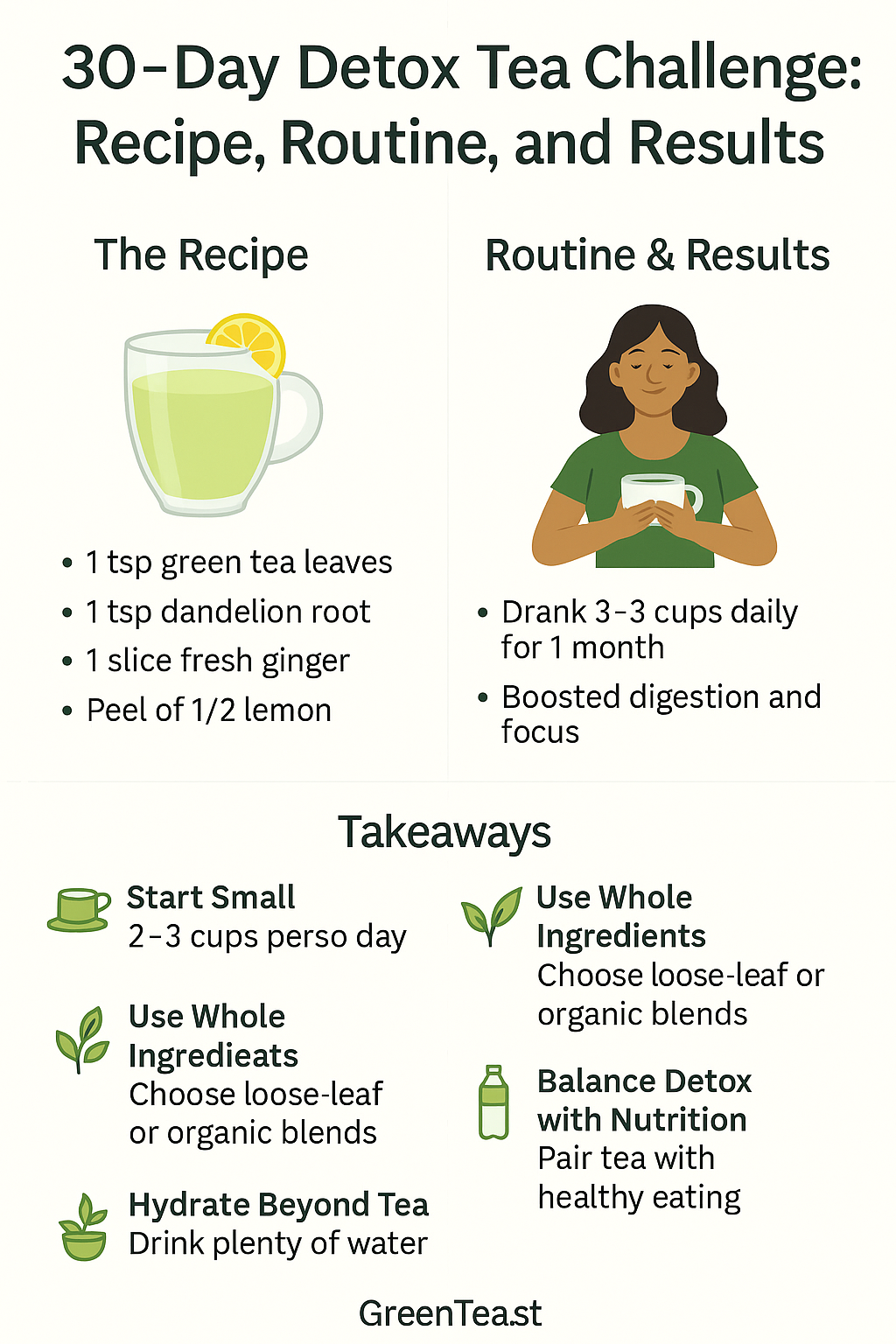
Here’s the recipe I settled on after experimenting for a few days:
My Daily Detox Tea Blend
Ingredients (for 1 serving):
- 1 teaspoon green tea leaves (rich in catechins for antioxidant and metabolism support)
- ½ teaspoon dandelion root (helps support liver function and acts as a natural diuretic)
- ½ teaspoon ginger root (aids digestion and reduces bloating)
- 1 teaspoon lemon juice (boosts vitamin C and enhances flavor)
- Optional: 1 teaspoon raw honey (for a mild sweetness and antimicrobial benefits)
How to Prepare:
- Boil 2 cups of filtered water and allow it to cool slightly (to around 80°C or 175°F).
- Add the green tea, ginger, and dandelion root to a teapot or infuser.
- Pour the warm water over the herbs and let steep for 5 to 7 minutes.
- Strain the mixture into a mug.
- Add lemon juice and honey just before drinking.
This blend became my daily companion. Green tea provided the caffeine lift and antioxidants, ginger soothed digestion, and dandelion supported liver detox. Lemon added brightness and encouraged hydration, while honey took the edge off the bitter undertones of dandelion.
Scientific evidence supports the synergy of these ingredients. Green tea’s catechins have been linked to enhanced fat oxidation and improved detox enzyme activity (5). Similarly, dandelion root has shown hepatoprotective and diuretic effects that help flush toxins through the kidneys (6). Ginger, on the other hand, contributes its own anti-inflammatory benefits and may stimulate digestion.
I brewed this mix twice a day—once in the morning before breakfast and once an hour before bed. The morning version energized me, while the evening cup had a calming, grounding effect that made sleep come easier. By sticking to this simple, home-blended formula, I noticed a level of consistency that no store-bought detox tea had ever delivered.
The Results After 30 Days
When I started the detox tea challenge, I didn’t expect drastic transformations. My goal was simply to reset my body, support digestion, and feel lighter. But by the end of 30 days, the results went far beyond that.
The most immediate and visible change was in my digestion. Within the first two weeks, bloating was noticeably reduced. By day 30, my stomach felt consistently flat, and I wasn’t experiencing that heavy post-meal discomfort anymore. Dandelion root likely played a key role here—its natural diuretic properties help flush excess water and reduce puffiness without depleting essential minerals (7).
My skin also surprised me. Around week three, I began noticing a clearer, more hydrated glow. While I can’t credit the tea alone, the combination of antioxidants from green tea and increased hydration definitely helped. Green tea polyphenols, particularly EGCG, have been linked to skin health benefits by reducing oxidative stress and improving circulation (8). I wasn’t using new skincare products, so I’m fairly certain my consistent detox routine had something to do with it.
Energy-wise, I felt more balanced. Unlike coffee, which often gives me a quick burst followed by a crash, the gentle caffeine from green tea provided steady alertness throughout the day. My sleep quality also improved. Drinking the evening cup about an hour before bed helped me relax and sleep more soundly, likely thanks to ginger’s calming properties and the overall evening ritual of slowing down.
As for weight changes, I didn’t experience a dramatic drop—but I did lose about 1.5 kilograms (3 pounds) over the month. It wasn’t just about numbers though. My body felt lighter, my digestion smoother, and my energy more sustained. The biggest takeaway was that consistency mattered more than intensity.
Overall, the 30-day detox tea challenge wasn’t a restrictive cleanse—it was a gradual, sustainable reset that helped me reconnect with mindful habits, hydration, and nourishment.
What I Learned from the Detox Tea Challenge
Looking back at the 30 days, the biggest lesson I learned was that detoxing isn’t really about deprivation—it’s about attention. It’s about noticing what your body feels like when you feed it better, hydrate properly, and create space for small daily rituals that bring calm and energy at the same time.
At first, I thought drinking detox tea would be the main driver of change. But by the end, I realized the real power came from consistency. Making tea every morning became an anchor habit that naturally encouraged better choices throughout the day. When I started with something light, warm, and intentional, I was less likely to reach for junk food or skip hydration later on.
The process also reminded me that the body doesn’t need extreme cleanses to “detox.” It already has a remarkable built-in system for that—especially the liver and kidneys. What teas like green tea, dandelion, and ginger do is support those organs through antioxidant and anti-inflammatory compounds. For instance, studies show that polyphenols in green tea and phenolic acids in ginger help reduce oxidative stress and promote healthy liver function (9).
Another thing I learned was how emotional health plays a role in physical detox. Taking time to slow down, sip mindfully, and give myself that quiet window each morning became a mental reset as much as a physical one. It wasn’t just about cleansing toxins; it was about clearing clutter—from both diet and mindset.
In short, the 30-day detox tea challenge helped me appreciate simplicity. Instead of chasing quick fixes, I learned that steady, mindful practices build more lasting results. And if you’re thinking of trying a detox yourself, it doesn’t have to be complicated—just start with a cup of thoughtfully brewed tea and see where that small act of care leads.
My Final Thoughts and Recommendations
Finishing the 30-day detox tea challenge felt less like crossing a finish line and more like finding a rhythm I didn’t want to lose. It became clear that this wasn’t a one-time reset but a lifestyle shift that emphasized balance, hydration, and self-awareness.
If I could share one thing from the experience, it’s that detox teas work best as part of a healthy foundation—not as a shortcut. The teas themselves were gentle and supportive, not aggressive or cleansing in the harsh sense. Ingredients like green tea, dandelion, ginger, and lemon peel worked together to aid digestion, improve circulation, and provide antioxidants that naturally help the body do what it’s designed to do: restore and renew.
For anyone considering a detox tea routine, here are a few simple takeaways from my 30 days:
- Start Small and Stay Consistent Don’t go overboard. Two to three cups per day is plenty. What matters most is doing it daily and paying attention to how your body responds.
- Use Whole Ingredients Choose loose-leaf teas or organic blends without added sugars or artificial flavors. Fresh ginger, lemon, and a touch of honey (if needed) go a long way.
- Balance Detox with Nutrition Detox teas can complement a clean diet, but they can’t replace one. Pair your tea with whole foods—fresh vegetables, lean proteins, and fiber-rich grains—for sustainable results.
- Hydrate Beyond Tea Tea counts toward hydration, but don’t forget to drink water too. Staying hydrated supports kidney and liver function, which are central to the body’s natural detox process (10).
- Make It a Mindful Ritual Use your tea time to slow down, breathe, and check in with yourself. The calm that comes from this practice often spills over into other parts of life.
After 30 days, I didn’t just feel lighter—I felt clearer. My digestion, focus, and overall energy all improved. But most importantly, I built a habit I look forward to keeping. Detox tea may not be a miracle cure, but it’s a wonderful tool for those who want to reconnect with their health in a gentle, enjoyable way.