
How to Make Cold Brew Iced Tea Overnight + Recipe
There’s something quietly satisfying about waking up to a chilled pitcher of perfectly steeped tea waiting in the fridge. Cold brew iced tea is more than just a refreshing drink for hot days — it’s a simple ritual that turns a few tea leaves and cold water into a naturally sweet, antioxidant-rich infusion. Unlike hot tea that’s quickly cooled with ice, cold brew tea is steeped slowly, usually overnight, which creates a smoother flavor without bitterness.
This slow extraction process also changes what you get in your cup. Cold water draws out amino acids and gentle flavor compounds while limiting tannins and caffeine, giving you a balanced drink that feels hydrating rather than dehydrating. It’s one of the easiest ways to enjoy the health benefits of tea without the sharpness or acidity sometimes found in hot brews. Studies suggest that cold-brewed tea may even preserve higher levels of catechins and other antioxidants than tea brewed at high temperatures (1).
What Is Cold Brew Iced Tea?
Cold brew iced tea is made by steeping tea leaves in cold or room-temperature water for several hours — usually overnight. This slow, gentle brewing process extracts flavor without the bitterness that can appear when tea is steeped in hot water. Because no heat is used, the resulting tea is naturally smooth, slightly sweet, and easy to drink straight without sugar or additives.
The science behind it is simple but fascinating. Hot water quickly draws out caffeine and tannins, compounds that give tea its astringency. Cold water, on the other hand, pulls out fewer of those bitter molecules while preserving delicate amino acids and antioxidants. This means you get a mellow, refreshing tea with less caffeine and a cleaner taste. Research also suggests that lower-temperature infusions help retain more polyphenols and theanine, which may enhance both the flavor and calming effects of tea (2).
Benefits of Cold Brewing Tea
Cold brewing tea isn’t just a modern trend. It’s one of the easiest ways to draw out the best flavors and health benefits of your favorite tea leaves — all without effort or special tools. By letting tea slowly infuse in cold water, you create a drink that’s naturally smooth, lower in caffeine, and packed with antioxidants. Here are some of the main benefits:
1. Smoother, Less Bitter Flavor
When tea is brewed in boiling water, heat quickly extracts tannins — the compounds responsible for tea’s dryness and astringency. Cold brewing avoids this, resulting in a milder, rounder taste. Even strong black teas or grassy green teas taste more balanced when brewed cold, with a subtle sweetness that doesn’t need sugar.
2. More Antioxidants Preserved
Cold brewing helps protect delicate plant compounds that may break down in high heat. Catechins, polyphenols, and the amino acid L-theanine are better preserved in lower temperatures. These compounds play a role in reducing oxidative stress and supporting heart, brain, and skin health. Research has shown that teas steeped at lower temperatures maintain comparable or even higher antioxidant activity compared to hot infusions (3).
3. Naturally Lower in Caffeine
Since caffeine dissolves more readily in hot water, cold brew tea generally contains less of it — about 30–60% lower, depending on the tea type. That makes it a great choice for people who want a gentle energy lift without the jitteriness or sleep disruption that hot tea or coffee can cause.
4. Refreshing and Hydrating
Cold brew tea doubles as a flavorful hydration option. It’s light on the stomach and can be enjoyed throughout the day without causing digestive irritation. Add slices of fruit, cucumber, or mint, and you have a healthy alternative to sugary beverages.
Best Teas for Cold Brewing
Not all teas behave the same when steeped cold. Some release deep, nutty flavors, while others stay bright and floral. Choosing the right tea can make all the difference between a weak brew and a smooth, refreshing pitcher that tastes like summer in a glass.
Below are some of the most popular tea types for cold brewing — each with its own character, caffeine content, and ideal steeping time.
1. Green Tea (Sencha, Dragonwell, Gyokuro)
Green teas are among the most rewarding to cold brew. When steeped in cool water, their natural grassy and umami notes turn soft, delicate, and subtly sweet. Sencha gives a crisp flavor, Dragonwell adds a roasted edge, while Gyokuro delivers a luxuriously smooth, oceanic taste.
Cold brewing green tea also helps preserve its catechins and amino acids — compounds that may support calm focus, skin health, and metabolic balance (4).
2. Black Tea (Assam, Darjeeling, Ceylon)
Black teas make excellent cold brews for those who prefer bold, malty, or fruity flavors. Assam produces a rich amber tea with notes of caramel, while Darjeeling leans lighter with a hint of muscatel sweetness. Ceylon offers bright citrus undertones, making it a perfect base for iced lemon tea.
Cold brewing tones down their natural bitterness, so you get a smooth drink that’s naturally sweet and satisfying without sugar.
3. Oolong Tea
Oolong sits between green and black tea in flavor and oxidation. When cold brewed, its floral and honeyed notes shine beautifully. Light oolongs like Tie Guan Yin are refreshing and delicate, while darker oolongs develop toasty, nutty flavors. Oolong is also known for its potential to aid digestion and metabolism — perfect for sipping after meals.
4. White Tea (Silver Needle, White Peony)
White teas are the gentlest choice for cold brewing. Silver Needle creates a silky, sweet brew with subtle melon undertones, while White Peony offers a fuller body with mild floral notes. Since these teas are minimally processed, their natural antioxidants remain intact, making them a refreshing and healthful choice for all-day hydration.
5. Herbal Teas (Hibiscus, Chamomile, Peppermint, Rooibos)
Herbal infusions add color and variety to your cold brew options. Hibiscus produces a tart, ruby-red tea that’s rich in vitamin C. Chamomile adds a soft, honeyed calmness, perfect for evenings. Peppermint cools the palate and refreshes digestion, while Rooibos offers a caffeine-free, antioxidant-rich sweetness.
Cold Brew Tea Flavor & Caffeine Comparison Table
| Type of Tea | Flavor Profile (Cold Brewed) | Caffeine Level | Ideal Steeping Time (Refrigerated) |
|---|---|---|---|
| Sencha (Green) | Fresh, grassy, sweet | Medium-low | 6–8 hours |
| Dragonwell (Green) | Roasted, nutty, smooth | Medium-low | 6–8 hours |
| Gyokuro (Green) | Umami, marine, rich | Medium | 8–10 hours |
| Assam (Black) | Malty, caramel, bold | Medium-high | 8–10 hours |
| Darjeeling (Black) | Fruity, floral, muscatel | Medium | 8–10 hours |
| Oolong | Floral, honeyed, toasted | Medium | 8–10 hours |
| White Peony (White) | Light, floral, sweet | Low | 10–12 hours |
| Rooibos (Herbal) | Sweet, vanilla-like | None | 8–10 hours |
| Hibiscus (Herbal) | Tart, berry-like | None | 6–8 hours |
Cold brewing brings out the nuances of each tea type, making it ideal for experimentation. For stronger flavor, simply extend the steeping time by a few hours.
Step-by-Step: How to Make Cold Brew Iced Tea Overnight
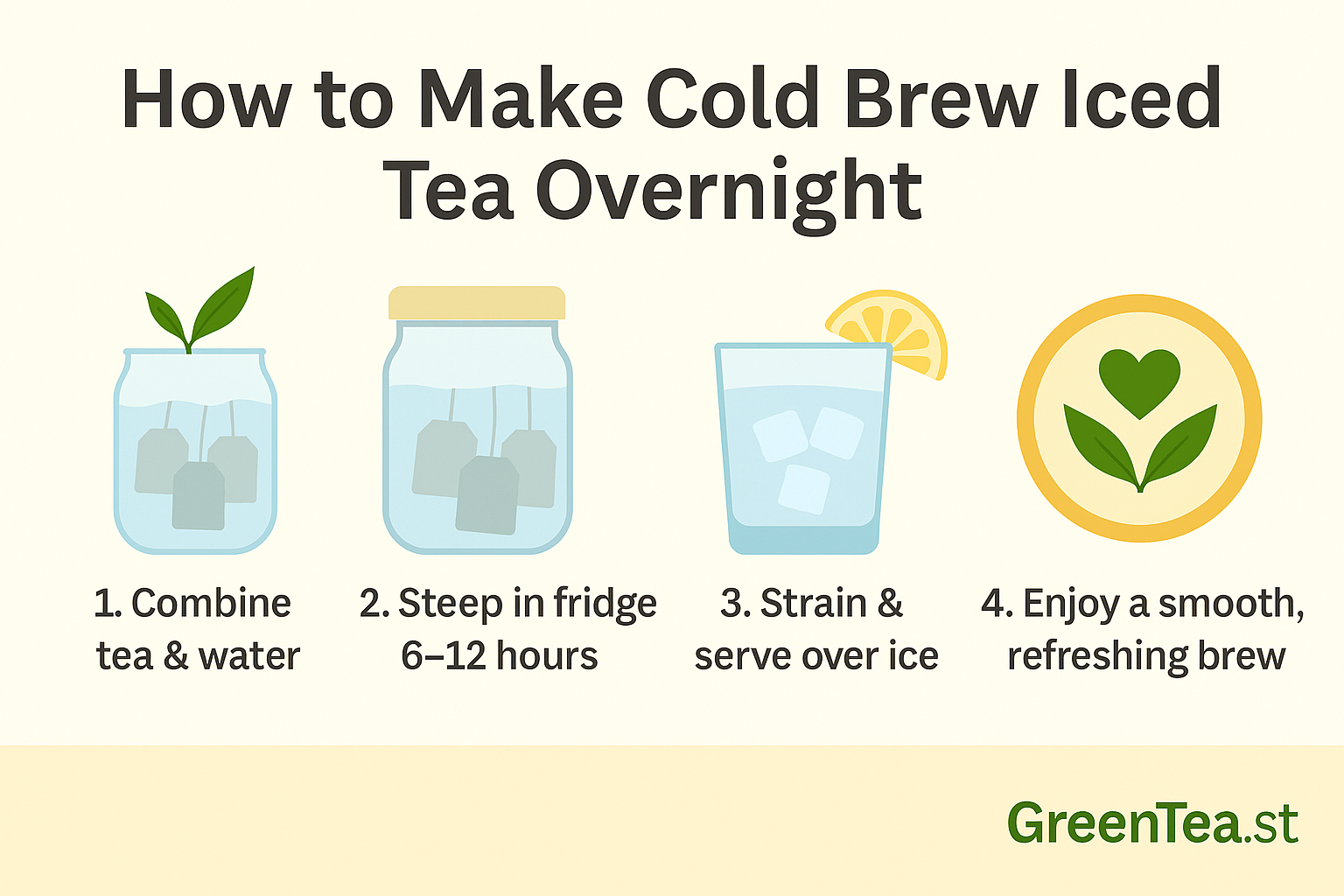
Making cold brew iced tea overnight is one of the simplest, most forgiving ways to enjoy a perfectly balanced cup. Unlike traditional hot tea, which requires precise timing and temperature, cold brewing lets the water and tea leaves do all the work while you sleep. The result is a smoother, naturally sweet infusion with no bitterness.
Here’s how to master the process from start to finish:
Ingredients
- 1 to 2 tablespoons of loose-leaf tea (or 2 tea bags)
- 2 cups (500 ml) of cold filtered water
- Optional: slices of lemon, cucumber, mint leaves, or a drizzle of honey after brewing
Equipment
- A glass jar, teapot, or pitcher with a lid
- A fine-mesh strainer or infuser
- A refrigerator (for the overnight steep)
Step 1: Choose Your Tea
Start by selecting a tea that complements your taste preferences and caffeine tolerance.
- Green tea for a fresh, clean flavor
- Black tea for a stronger, malty brew
- Herbal blends like hibiscus or rooibos for caffeine-free options
If you’re new to cold brewing, Sencha or White Peony are great beginner-friendly choices for their light, refreshing notes.
Step 2: Measure and Combine
Use 1 tablespoon of loose tea per cup (250 ml) of water. Adjust the ratio if you prefer stronger flavor. Place the tea directly into your jar or infuser, then pour in the cold filtered water.
Tip: Filtered water is important because minerals in tap water can affect taste and clarity.
Step 3: Refrigerate Overnight
Cover the container and place it in the refrigerator for 6 to 12 hours, depending on the tea type.
- Green tea or white tea: 6–8 hours
- Black or oolong tea: 8–10 hours
- Herbal teas: 8–12 hours
The slow extraction in cold water allows delicate compounds like amino acids and polyphenols to infuse without the bitterness or acidity caused by hot water (5).
Step 4: Strain and Serve
Once steeped, strain the tea into a clean container or directly into your glass. Add ice cubes for extra chill. You can flavor your tea naturally by adding citrus slices, fresh mint, or berries for a fruity twist.
Pro Tip: Avoid adding sugar — cold brewing already softens bitterness, making sweeteners unnecessary for most drinkers.
Step 5: Store and Enjoy
Cold brew iced tea can be stored in the refrigerator for up to 3 days. However, it’s best enjoyed within 24 hours for peak freshness and aroma.
If you plan to make it regularly, prepare larger batches ahead of time and rotate your tea varieties throughout the week. This keeps your routine exciting while giving you different flavor and caffeine profiles.
Tips for Best Results
Cold brewing tea is simple, but a few key adjustments can make the difference between a flat brew and a perfectly balanced infusion. Whether you’re making a single serving or a large batch, these tips will help you get the most out of your tea leaves.
1. Use Quality Loose-Leaf Tea
Loose-leaf tea tends to produce a more flavorful and aromatic brew than pre-packaged tea bags. The larger leaf size allows a slower, more even release of flavor compounds during the long steeping time. If you only have tea bags, choose unbleached, high-quality ones without added flavoring or fillers.
2. Always Use Cold, Filtered Water
Water quality matters as much as the tea itself. Tap water with chlorine or mineral residue can alter taste and dull the aroma. Cold, filtered water extracts flavor more gently and keeps your tea clear rather than cloudy. For best results, use spring or filtered water straight from the fridge.
3. Adjust the Steeping Time by Tea Type
Different teas extract at different rates.
- Green and white teas: 6–8 hours for a light, refreshing flavor.
- Black and oolong teas: 8–10 hours for a fuller taste.
- Herbal teas: 10–12 hours for a stronger infusion. Over-steeping isn’t usually an issue with cold brew, but leaving tea for more than 14 hours can make it slightly woody or bitter.
4. Avoid Metallic Containers
Steeping tea in stainless steel or reactive metals can subtly affect taste and reduce antioxidant quality. Glass jars or BPA-free pitchers are the best choice because they don’t leach flavors or trap odors.
5. Don’t Add Sugar Too Early
If you enjoy a touch of sweetness, add it after brewing, not before. Sugar and syrups can interfere with flavor extraction and may even promote bacterial growth during the long refrigeration process. Instead, try natural alternatives like honey, stevia, or fruit slices for sweetness once your tea is strained.
6. Experiment with Infusions
Cold brew tea pairs beautifully with herbs and fruits. Try mixing in ingredients like:
- Mint leaves for a cool, refreshing edge
- Cucumber slices for spa-style hydration
- Lemon or orange peels for brightness
- Berries or apple slices for a natural sweetness
These additions enhance both the flavor and the visual appeal, turning every jar of cold brew tea into a refreshing, healthy treat.
Common Mistakes to Avoid When Cold Brewing Tea
Cold brewing is forgiving, but there are still a few traps that can ruin flavor or freshness if you’re not careful. Avoid these common mistakes to make sure your tea comes out crisp, clean, and delicious every time.
1. Using Hot or Warm Water
The biggest error is using warm water to “speed up” the process. Cold brewing works precisely because of the slow extraction. Warm water pulls out tannins and caffeine too quickly, resulting in a harsh, bitter brew. Always use cold or room temperature filtered water and let time do the work overnight.
2. Overpacking the Tea
Adding too many leaves might seem like a shortcut for stronger flavor, but it actually overwhelms the brew, making it cloudy and overly tannic. Stick to about 1 tablespoon of loose-leaf tea per cup of water, and increase steeping time if you prefer more intensity instead of overloading the jar.
3. Leaving It Too Long
While cold brew tea is more stable than hot tea, it still has limits. Leaving the leaves steeping for over 14 hours can lead to woody or stale flavors. Once the flavor feels balanced, strain the tea and refrigerate it separately to preserve its freshness.
4. Using Unfiltered or Tap Water
Unfiltered tap water often contains chlorine, iron, or other minerals that can dull flavor and cloud your brew. These impurities interact with tannins in tea, reducing its clarity and brightness. Always use filtered, purified, or spring water for the cleanest taste.
5. Skipping the Lid
Leaving your jar uncovered in the fridge exposes it to odors from nearby foods — like onions, garlic, or leftover meals. Tea is highly absorbent, so always cover your container tightly. If your pitcher doesn’t have a lid, plastic wrap or beeswax covers will do the trick.
6. Adding Citrus or Herbs Too Early
Citrus and herbs add wonderful flavor but can break down if left to steep overnight, sometimes making the tea sour or murky. Add your lemons, mint, or fruit slices after straining, so the tea stays clear and balanced.
7. Not Cleaning the Container Properly
Even slight residue from old batches can introduce off-flavors or bacteria. Wash your brewing jars or pitchers thoroughly with hot water and mild soap between uses, especially around the lid and rim where buildup occurs most easily.
When you avoid these mistakes, cold brewing becomes virtually effortless. The flavor stays smooth, your tea keeps longer, and every sip feels crisp and hydrating — just as it should.
Side Effects or Considerations
Cold brew tea is gentle and refreshing, but it’s still important to know how it interacts with your body, especially if you’re caffeine-sensitive or on certain medications.
1. Caffeine Sensitivity
While cold brewing extracts less caffeine than hot brewing, it’s not caffeine-free — especially if you use green, black, or oolong tea. If you’re prone to jitters or sleeplessness, choose herbal options like chamomile, rooibos, or peppermint instead.
2. Iron Absorption
Tea contains tannins that can reduce the absorption of non-heme iron (the kind found in plant-based foods). If you’re iron-deficient, avoid drinking tea with meals and wait at least one hour after eating to enjoy your brew.
3. Additives and Sweeteners
Adding flavored syrups, sugar, or fruit juices can quickly turn your healthy cold brew into a high-calorie drink. Keep it simple with natural infusions — fruit slices, herbs, or honey in moderation.
4. Allergies and Herbal Sensitivity
Some herbal teas used in cold brews (like hibiscus or lemongrass) may trigger mild reactions in sensitive individuals. If you’re trying a new blend, start with a small serving and see how your body responds.
FAQs About Cold Brew Iced Tea
Yes — green, black, oolong, white, and herbal teas all work well. The key is adjusting the steeping time. Green teas need 6–8 hours, while black or herbal teas can take 10–12 hours.
When stored in the fridge, it stays fresh for about 3 days. Always keep it covered and refrigerated to maintain flavor and safety
Yes. Cold brewing extracts caffeine more slowly, typically resulting in about half the caffeine of hot-brewed tea, depending on the tea type and steeping duration
Absolutely — milk adds creaminess to black teas, while fruits like lemon, berries, or mint make it more refreshing. Just remember to add them after brewing, not during steeping.
Not necessarily. Cloudiness can happen when using very fine tea leaves or mineral-rich water. Try filtering your water and straining your tea twice for a clearer look.
Conclusion
Cold brew iced tea is the perfect example of simplicity meeting sophistication. It requires no special equipment, no heat, and no rush — just time, patience, and quality tea leaves. Whether you’re chasing hydration on a hot day or replacing sugary drinks with something more natural, cold brew tea delivers flavor, antioxidants, and calm energy in every glass.
By understanding the right ratios, brewing times, and storage methods, you can craft café-quality cold brew at home — smooth, refreshing, and exactly to your taste. So tonight, fill that jar, let it steep in the fridge, and wake up tomorrow to the most effortless cup of tea you’ve ever made.


