How to Make Tea Without Bitterness
Have you ever brewed a cup of tea that smelled wonderful but tasted harsh and bitter? It’s one of the most common frustrations for tea lovers. Whether it’s green, black, or oolong, bitterness usually has less to do with the tea itself and more with how it’s made.
Tea’s flavor comes from a delicate balance of natural compounds — caffeine, catechins, and tannins. When these are extracted properly, the result is a smooth, aromatic cup. But when steeped too long or in overly hot water, the same compounds turn a good tea bitter.
The good news is that making tea without bitterness isn’t about luck or guesswork. It’s about understanding how temperature, timing, and technique work together. Once you know the science behind it, you can control the taste and bring out your tea’s natural sweetness every time (1).
Why Tea Turns Bitter
Bitterness in tea comes down to chemistry. All true teas — from green to black — come from the same plant, Camellia sinensis. What sets them apart is how they’re processed and how their natural compounds react when infused in hot water.
The key culprits are tannins, catechins, and caffeine. These antioxidants are beneficial for health but can create an astringent, dry taste when over-extracted. High water temperature or long steeping times accelerate this process, pulling too many of these compounds into the cup. The result: a sharp, mouth-drying bitterness that overpowers the tea’s natural sweetness.
Research shows that teas brewed at lower temperatures (especially green and white teas) maintain a smoother, more balanced flavor because fewer tannins dissolve at cooler levels (2). In other words, bitterness isn’t inevitable — it’s simply a matter of control.
Common Mistakes That Cause Bitterness
Even the best-quality tea can taste unpleasant if it’s brewed incorrectly. Most of the time, bitterness comes from simple, easy-to-fix mistakes. Recognizing these small missteps helps ensure every cup tastes as smooth as intended.
- Using Boiling Water on Delicate Teas
The most common reason for bitterness is water that’s too hot. Green and white teas, for instance, require lower temperatures because their leaves are less oxidized. Pouring boiling water on them scorches the leaves, releasing excess tannins. Always cool the water slightly before pouring — around 75–80°C (167–176°F) for green teas is ideal. - Over-Steeping the Leaves
Leaving tea leaves in water for too long extracts bitter polyphenols that dominate the flavor. Each tea type has its own ideal steeping time: usually 2–3 minutes for green tea, 4–5 minutes for black, and 5–7 minutes for herbal infusions. Timing your brew makes a dramatic difference. - Reusing Leaves Too Many Times
While high-quality loose-leaf tea can be re-steeped once or twice, overdoing it weakens flavor and increases bitterness. By the third or fourth brew, the pleasant aromatics have faded, leaving mostly tannins behind. - Using Poor-Quality or Broken Tea Leaves
Dust and broken fragments found in some tea bags release tannins more quickly than whole leaves. Loose-leaf teas are less likely to turn bitter because the larger leaves release compounds more slowly, maintaining a gentler flavor curve. - Using Hard or Stale Water
Water quality plays a bigger role than most realize. Hard water with high mineral content can dull flavor and enhance bitterness. Using fresh, filtered water with moderate mineral levels helps the tea’s natural sweetness shine through (3).
How to Make Tea Without Bitterness (Step-by-Step Guide)
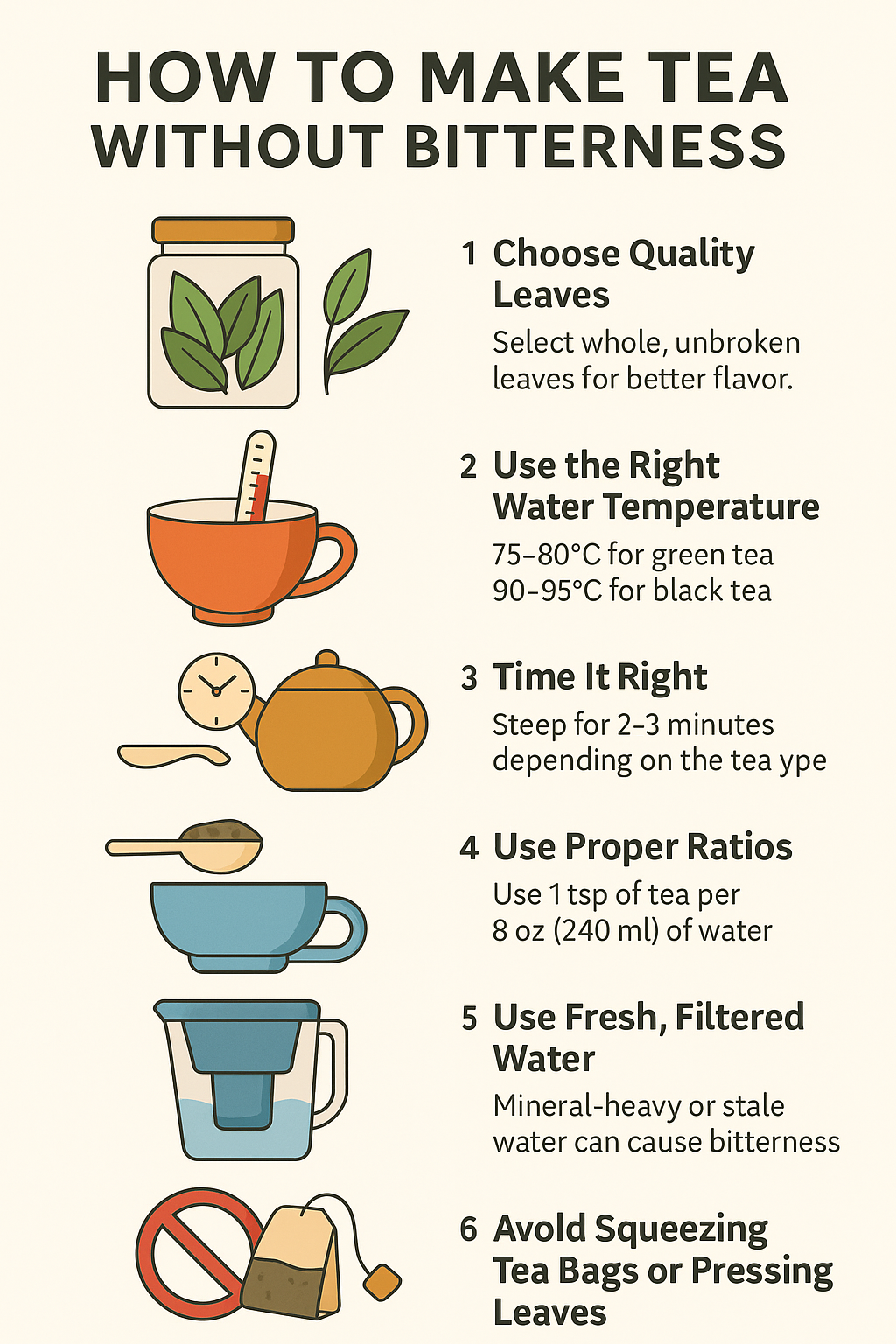
Once you understand why bitterness happens, making a smooth, balanced cup becomes simple. These steps apply to most teas, whether green, black, oolong, or herbal. Follow them closely and you’ll notice how flavor, aroma, and color improve with every brew.
Step 1: Choose Quality Leaves
A great cup of tea starts with great leaves. Whole, unbroken leaves brew more evenly and release flavor more gradually, avoiding the harsh tannin rush that crushed or powdered teas can produce.
Loose-leaf tea is generally superior to bagged tea because it allows water to circulate freely around the leaves, ensuring full flavor extraction. High-quality leaves also contain more essential oils, giving a rounder, smoother taste (4).
Look for teas with a fresh, clean aroma — not musty or overly perfumed. Store them in airtight containers, away from light, moisture, and strong odors.
Step 2: Use the Right Water Temperature
The single most important factor in avoiding bitterness is temperature control. Each tea type responds differently to heat. Too hot, and you scorch delicate leaves; too cool, and you under-extract, leading to a flat taste.
| Tea Type | Ideal Temperature (°C) | Ideal Temperature (°F) |
|---|---|---|
| Green Tea | 75–80°C | 167–176°F |
| White Tea | 80–85°C | 176–185°F |
| Oolong Tea | 85–90°C | 185–194°F |
| Black Tea | 90–95°C | 194–203°F |
| Herbal Tea | 100°C | 212°F |
Cool your boiling water for a few minutes before pouring over green or white teas. Using the right temperature allows the natural sweetness and umami to shine through without triggering bitterness (5).
Step 3: Time It Right
Just as important as temperature is timing. Over-steeping is the fastest way to make your tea bitter. The longer the leaves sit in hot water, the more tannins are released.
Here’s a simple reference guide:
- Green Tea: 2–3 minutes
- White Tea: 3–4 minutes
- Oolong Tea: 4–5 minutes
- Black Tea: 4–5 minutes
- Herbal Tea: 5–7 minutes
A study found that most green tea polyphenols extract within the first two minutes of steeping, while longer durations pull in harsher compounds (6). Use a timer to stay consistent — even 30 extra seconds can change flavor dramatically.
Step 4: Use Proper Ratios
Getting the leaf-to-water ratio right prevents both bitterness and blandness. A good general rule is 1 teaspoon (2–3 grams) of loose tea per 8 ounces (240 ml) of water.
Using too much tea overwhelms the balance, while too little can make it watery and acidic. Adjust to your taste over time — the goal is a soft, full flavor that feels round, not sharp.
Step 5: Use Fresh, Filtered Water
Tea is 98% water, so its quality determines the final taste. Hard or stale water can flatten flavor and intensify bitterness. Always start with cold, filtered water rich in oxygen — this helps extract flavor evenly. Avoid distilled water, which lacks minerals needed to carry aroma and taste (7).
If you live in an area with mineral-heavy tap water, use a filter jug or bottled spring water for best results.
Step 6: Avoid Squeezing Tea Bags or Pressing Leaves
It’s tempting to squeeze every last drop out of a tea bag or press loose leaves at the end of steeping, but doing so releases highly concentrated tannins. These compounds are what make tea taste astringent or bitter.
Once your steeping time is up, remove the tea gently. Letting gravity do the work ensures the final cup stays smooth and naturally sweet.
Bonus Tips for a Smoother Cup
Once you’ve mastered the basics of temperature, time, and quality, a few small adjustments can further refine your tea. These simple techniques help you personalize flavor and keep bitterness at bay — especially if you like experimenting with different varieties.
1. Add a Drop of Lemon or Honey
A squeeze of fresh lemon juice can soften bitterness and brighten flavor, especially in green and black teas. The citric acid lightly binds with tannins, reducing their harshness. Similarly, a touch of honey rounds out the flavor with natural sweetness without overpowering the tea’s character.
Both additions also provide small antioxidant and antimicrobial benefits, making them more than just flavor enhancers.
2. Try Cold Brewing
Cold brewing tea is one of the most effective ways to avoid bitterness altogether. Instead of using hot water, simply steep your tea leaves in cold, filtered water and refrigerate for 6–8 hours. This slower extraction process minimizes tannins and caffeine release while drawing out delicate aromas and natural sweetness.
Studies have found that cold-brewed green tea maintains a smoother flavor profile and higher amino acid concentration than hot-brewed versions (8). It’s perfect for summer days or for anyone sensitive to caffeine.
3. Use Ceramic or Glass Teapots
Your choice of teaware can subtly affect taste. Ceramic and glass teapots are non-reactive, meaning they don’t alter the chemical balance of your tea. Metal pots, especially those not stainless steel, may slightly change the flavor by interacting with tannins.
Clean your teapot regularly and avoid mixing strong-flavored teas in the same pot to maintain purity of taste.
4. Mind Your Water Source
If you’ve ever wondered why tea tastes better in one location than another, it often comes down to water. Try brewing the same tea with both tap and filtered water — the difference is noticeable. The right mineral balance enhances body and smoothness, while overly hard water brings out bitterness.
5. Drink Fresh, Not Reheated
Reheating tea can make it taste flat or bitter because heat breaks down its volatile aromatic compounds. If you make tea ahead of time, store it in a thermos or glass bottle and drink it within 12 hours. For cold brews, keep them refrigerated and consume within two days for the best taste.
FAQs
Green tea turns bitter when brewed in water that’s too hot or steeped too long. Use water around 75–80°C (167–176°F) and limit steeping to 2–3 minutes for a smooth, mellow flavor.
Yes. Add a few drops of lemon juice or a small amount of honey. Both help neutralize bitterness and balance the taste without masking the natural tea flavor.
Not necessarily. Strength and bitterness aren’t the same thing. A well-brewed tea can be strong in flavor yet still smooth if temperature and steeping time are controlled.
It does. Cold water extracts fewer tannins and caffeine, producing a sweeter, more refreshing flavor. Cold-brewed tea also keeps well for up to 48 hours when refrigerated.
Yes. Hard or mineral-heavy water accentuates bitterness. Use fresh, filtered or spring water for a clean, balanced infusion every time.
Conclusion
Bitterness in tea isn’t a flaw in the leaf — it’s simply a matter of chemistry. When you control temperature, steeping time, and water quality, you transform a sharp or dry cup into one that’s naturally sweet and aromatic.
The goal isn’t perfection but awareness. The same catechins that make tea bitter also make it beneficial, and learning how to brew them gently brings out their best. Whether you prefer your tea hot, cold, green, or black, brewing with intention ensures every sip feels restorative rather than rushed.
Tea, at its heart, is a lesson in patience. When you slow down and let the process unfold — water cooling slightly, leaves unfurling gracefully — you discover that the secret to smooth tea lies as much in how you brew as in when you pause to enjoy it