
What Makes Darjeeling First Flush Tea So Special? (Taste, Season & Best Brands)
Have you ever wondered why tea connoisseurs across the world call Darjeeling First Flush tea the “Champagne of Teas”? The name isn’t just poetic—it reflects the rare combination of altitude, soil, and timing that gives this Himalayan brew its reputation for unmatched delicacy and fragrance. Every spring, as the first tender leaves awaken after winter dormancy, skilled hands pick them from the misty slopes of Darjeeling, India. The result is a tea so refined and aromatic that it’s celebrated in luxury circles and auctioned at record prices.
Unlike the darker, more robust teas that dominate morning routines, Darjeeling First Flush is light, floral, and bursting with vitality. Each cup captures the freshness of early spring—the season’s first sunshine, dew, and mountain breeze all steeped into liquid gold. Its limited harvest window, from late February to early April, makes it one of the most sought-after teas on earth. Collectors and enthusiasts alike anticipate each year’s harvest with the same excitement as wine lovers awaiting a new vintage.
This article explores what truly makes Darjeeling First Flush special—its origin, flavor profile, health benefits, and the top estates producing it. Get ready to discover why every sip tells the story of nature’s first bloom of the year (1).
What is Darjeeling First Flush Tea?
Darjeeling First Flush tea refers to the very first harvest of the year, gathered between late February and early April from the high-altitude tea gardens of Darjeeling, West Bengal, India. These young, tender leaves are plucked as soon as the tea bushes awaken from their winter dormancy, producing a light, floral, and highly aromatic brew prized by tea enthusiasts around the globe.
Unlike later harvests, the first flush is minimally oxidized—usually between 10% and 20%—which allows it to retain its delicate greenish hue and vibrant, grassy freshness. This makes it closer in character to a green or lightly oxidized oolong tea than the darker black teas most people associate with India. Its subtle flavor and golden liquor reflect the pure essence of early spring in the Himalayas.
Each cup delivers a soft floral fragrance, brisk mouthfeel, and a gentle sweetness that fades into a clean finish. In comparison, the Second Flush (harvested in late May and June) is fuller-bodied with muscatel notes, while the Autumnal Flush (picked around October) offers deeper color and mellow sweetness. The First Flush remains the most celebrated because it captures the “first breath” of the season, a fleeting freshness that no other harvest can replicate (2).
The Harvest Season and Why Timing Matters
Timing is everything when it comes to Darjeeling First Flush tea. The tea gardens of Darjeeling lie between 2,000 and 7,000 feet above sea level, where cool Himalayan winds, misty mornings, and rich, loamy soil create the ideal growing environment. The first harvest season, from late February to early April, occurs just as the plants awaken from winter dormancy. During this short window, the young leaves are packed with amino acids, catechins, and volatile compounds that give First Flush its distinctive floral aroma and crisp, lively taste.
This early-season timing is crucial because the weather is cool and humid, allowing the leaves to grow slowly and develop complex flavors. Even a difference of a few days in plucking can alter the chemical composition of the leaves, influencing both aroma and astringency. After hand-plucking, the leaves are lightly oxidized and carefully dried to preserve their delicate fragrance.
The result is a tea that reflects the freshness of early spring, unlike later flushes harvested in warmer months that produce stronger and darker liquors. To maintain this unique freshness, premium First Flush teas are often air-freighted directly from India to specialty retailers worldwide. Each cup becomes a reflection of the season itself—a short-lived but unforgettable taste of the Himalayas (3).
The Taste Profile: Why Tea Aficionados Love It
If you’ve ever sipped Darjeeling First Flush tea, you know it’s unlike any other. The first thing that strikes you is its bright, golden color—a clear, sunlit amber that shimmers in the cup. The aroma follows, often described as fresh-cut flowers, green grapes, or spring meadows. Each sip begins with a crisp, brisk note that awakens the palate, followed by gentle sweetness and a hint of floral or muscatel undertone. The finish is clean, leaving no bitterness, just a lingering freshness that feels alive.
Tea connoisseurs often compare Darjeeling’s first flush to a fine white wine. Like wine, its character is shaped by the region’s terroir—the altitude, temperature, soil composition, and rainfall patterns that make Darjeeling tea unique. Depending on the specific estate, you may detect notes of orchid, jasmine, peach, or almond, all naturally occurring from the plant’s essential oils and polyphenols.
Because the tea is only lightly oxidized, it retains more L-theanine and catechins, compounds known to create a balanced, uplifting effect—energizing the mind without the crash associated with coffee. It’s this harmony of taste, aroma, and feeling that has earned Darjeeling First Flush its status as the “Champagne of Teas”, admired by sommeliers and casual drinkers alike (4).
Health Benefits of Darjeeling First Flush Tea
Beyond its delicate aroma and refined taste, Darjeeling First Flush tea offers several science-backed health benefits thanks to its rich composition of antioxidants, polyphenols, and amino acids.
1. Powerful Antioxidant Protection
Darjeeling First Flush is packed with polyphenols, especially catechins and theaflavins, which help neutralize free radicals—unstable molecules that contribute to cellular damage and aging. These antioxidants support the immune system and may reduce the risk of chronic diseases like heart disease and certain cancers. Because the leaves are harvested early and lightly oxidized, they retain a high concentration of these beneficial compounds.
2. Gentle Caffeine for Mental Clarity
Unlike coffee’s harsh jolt, the moderate caffeine content in Darjeeling tea provides a smooth, sustained boost in alertness. Combined with L-theanine, it promotes calm focus without jitters, helping improve attention and mental clarity throughout the day.
3. Heart and Metabolic Support
Studies suggest that regular consumption of antioxidant-rich teas can help lower LDL cholesterol, regulate blood pressure, and improve overall cardiovascular function. The catechins in Darjeeling tea may also enhance fat metabolism, making it a supportive beverage for maintaining a healthy weight.
4. Easy on Digestion
Darjeeling’s light oxidation gives it a naturally smooth and mild character. It’s less acidic than many black teas, making it suitable for those with sensitive stomachs. A cup after a meal can aid digestion without causing bloating or discomfort.
5. Hydration and Detox Support
Since Darjeeling tea is often consumed without milk or sugar, it helps maintain hydration while providing antioxidants that support the body’s natural detoxification processes.
These combined benefits make Darjeeling First Flush not only a luxury drink but also a functional wellness beverage. Scientific research continues to support the idea that moderate tea drinking contributes to long-term health and vitality (4).
Brewing the Perfect Cup
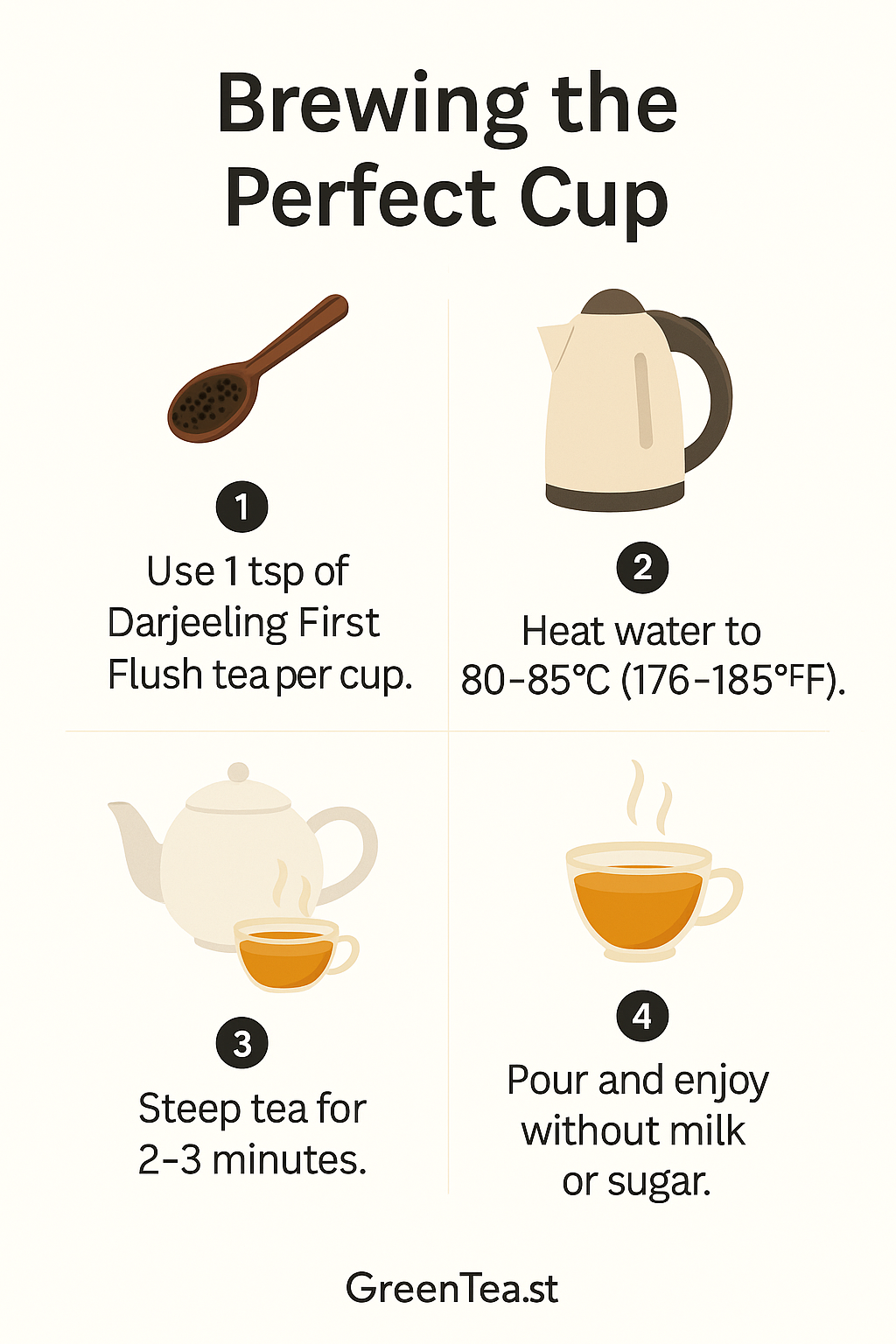
Darjeeling First Flush shines when you brew it gently. Aim for a light, fragrant liquor with crisp freshness and no bitterness.
Target parameters
- Leaf to water: 2 to 3 grams per 250 ml (about 1 level teaspoon of loose leaf per cup)
- Water temperature: 80–85°C / 176–185°F
- Steep time: 2 to 3 minutes
- Water: Soft, filtered water to preserve clarity and aroma
- Teaware: Glass or porcelain to showcase the pale golden color and delicate fragrance
Step-by-step recipe
- Measure and warm. Add 2–3 g of tea to a prewarmed glass or porcelain teapot or infuser. Swirl a little hot water in the vessel, then discard.
- Heat the water. Bring filtered water to a full boil, then let it cool to 80–85°C.
- Steep. Pour 250 ml of hot water over the leaves. Steep 2 minutes for a very light cup, 3 minutes for more intensity.
- Strain and taste. Decant fully into a warm cup. Sip first without sweetener to appreciate the floral notes and brisk finish.
- Second infusion. Re-infuse the same leaves at the same temperature for 2 minutes. The second cup is often softer and sweeter.
Extra tips for best results
- If your tea tastes sharp, lower the water temperature or shorten the steep by 30 seconds.
- If it tastes too light, add 0.5 g more leaf or extend the steep by 15–30 seconds.
- Avoid hard or heavily chlorinated water, which can mute aroma and add a dull finish.
- Skip milk. First Flush is prized for its clarity and high floral notes, which show best on their own.
The Best Darjeeling First Flush Tea Brands
If you’re ready to experience the distinct character of Darjeeling’s First Flush, start with these renowned estates and trusted producers. Each brand has its own signature aroma, altitude, and leaf style that capture the soul of early-spring Darjeeling.
1. Makaibari Estate
Established in 1859, Makaibari is one of the world’s oldest organic tea gardens. Its teas are hand-plucked and biodynamically cultivated, producing a cup that’s both floral and complex. Expect notes of white flowers, green almonds, and an airy sweetness that lingers. The estate’s dedication to sustainability has earned it global respect and a loyal following among premium tea buyers.
2. Castleton Estate
Known for its vibrant muscatel character, Castleton’s First Flush teas are brisk yet aromatic, striking a perfect balance between fruit and floral tones. The estate sits high in the Kurseong valley, where cool winds and mist create the ideal terroir for high-grade Darjeeling leaves. Castleton is often featured in global tea tastings and auctions for its consistent quality.
3. Gopaldhara Estate
Located among the highest tea gardens in Darjeeling (over 6,000 feet), Gopaldhara produces bright, clear infusions with crisp mountain freshness. Its teas are known for layered complexity—combining delicate floral top notes with underlying sweetness. Many enthusiasts regard Gopaldhara’s First Flush as the most refreshing for daily sipping.
4. Jungpana Estate
A boutique, family-run estate famous for handpicked teas with clean, layered flavors. Jungpana’s First Flush is elegant, featuring hints of citrus, wild honey, and stone fruit. Because of limited production, it’s sought after by collectors and connoisseurs alike.
5. Margaret’s Hope Estate
A classic name in Darjeeling tea, Margaret’s Hope delivers a First Flush that’s crisp and mildly fruity, with a soft astringency. It’s ideal for those new to Darjeeling who want a balanced introduction to its flavor spectrum.
All these estates are certified Darjeeling producers, protected by the Geographical Indication (GI) tag, ensuring authenticity and origin. When purchasing, always check for the official Darjeeling Tea Board seal to avoid imitations (5).
How to Identify Authentic Darjeeling First Flush
The global demand for Darjeeling tea has unfortunately led to widespread imitation. Nearly four times more tea is sold under the name “Darjeeling” than is actually produced each year, which makes it essential to know how to spot the real thing. Authentic Darjeeling First Flush stands apart in both appearance and aroma, and with a few tips, you can quickly tell whether your tea is genuine.
1. Check for the Official GI Logo
True Darjeeling tea carries the Geographical Indication (GI) logo — a certification mark granted by the Tea Board of India. This mark guarantees that the tea was grown, processed, and packaged exclusively within the 87 designated Darjeeling tea estates. The logo features a woman holding two leaves and a bud inside a circular seal. If your tea lacks this symbol, it’s not authentic Darjeeling.
2. Read the Packaging Details Carefully
Look for clear information about the estate name, harvest season, and grade (e.g., “First Flush FTGFOP1”). Reputable producers proudly list their estate (such as Makaibari or Castleton) and flush on the label. Generic labels like “Darjeeling-style tea” or “Himalayan blend” usually signal non-authentic products.
3. Observe the Leaf Appearance
First Flush Darjeeling leaves are small, wiry, and lightly rolled, often showing a mix of light green and silvery tips. They differ from darker, heavily oxidized teas, which appear uniformly brown or black. This subtle green hue reflects the early spring harvest and gentle oxidation.
4. Smell and Taste the Tea
The aroma of real Darjeeling First Flush is unmistakable — fresh, floral, and slightly muscatel, with a hint of sweetness and no harsh bitterness. The liquor itself is pale gold to light amber. In contrast, imitations often taste dull or overly strong, missing the crisp floral high notes that characterize Darjeeling’s high-elevation terroir.
5. Buy from Verified Retailers
Purchase only from brands or online shops that disclose their sourcing and estate partnerships. Trustworthy retailers such as Vahdam India, TeaBox, and Mariage Frères provide batch-level traceability and GI-certified guarantees.
Authentic Darjeeling tea isn’t just about flavor — it’s a heritage product representing centuries of craftsmanship, altitude, and microclimate unique to the Himalayan foothills (6).
FAQs About Darjeeling First Flush Tea
“First Flush” refers to the first plucking season of Darjeeling tea, typically from late February to early April. The young leaves are tender, aromatic, and produce a light golden liquor with floral and fruity notes. It’s often considered the finest and most delicate harvest of the year.
While the First Flush is brisk, floral, and fresh, the Second Flush (harvested around May to June) develops a deeper amber color and muscatel flavor — think of ripe fruit and honey tones. Tea lovers often describe First Flush as elegant and springlike, while Second Flush feels warmer and more robust.
Yes, but in moderate amounts — usually less than a typical cup of black tea. Its caffeine content is lower because the leaves undergo lighter oxidation. That’s why it provides gentle alertness without the jitters associated with stronger teas or coffee
Keep it in an airtight container, away from light, heat, and moisture. Oxygen and humidity can dull its fragrance and delicate flavor. Use tins or opaque canisters, and store in a cool, dark place — never in the refrigerator, which can introduce condensation.
This tea pairs beautifully with light pastries, fruit salads, and mild cheeses. Avoid heavily spiced or oily foods, as they can overpower its subtle aroma. Afternoon tea with butter biscuits or scones is an ideal setting for appreciating its elegance.
Because of its unique terroir and microclimate. The combination of Himalayan altitude, misty air, and mineral-rich soil produces a distinctive, complex aroma unmatched by any other tea-growing region. Like Champagne, only tea from specific gardens in Darjeeling can legally carry the name.
Yes — its short harvest season, manual picking, and limited yield make it a premium luxury tea. Prices range from $25 to $100 per 100g, depending on the estate and grade. However, a small amount goes a long way in delivering an exquisite experience.
Conclusion
Darjeeling First Flush Tea stands apart as a seasonal treasure — delicate, fragrant, and deeply rooted in Himalayan tradition. Each spring harvest offers a fleeting moment of perfection, capturing the misty freshness of the mountains in every sip. Its floral notes, golden hue, and brisk clarity make it a favorite among tea connoisseurs who appreciate subtlety over strength.
Whether you brew it to awaken your senses or to slow down with intention, the experience is more than taste — it’s a ritual of calm, craftsmanship, and connection to nature. For tea lovers, this isn’t just a beverage; it’s the Champagne of teas, brewed once a year and savored for a lifetime.


