
Milk Tea: Benefits, Types, Side Effects, and How to Brew
Milk tea is more than just a drink — it’s a comforting ritual that transcends cultures and continents. From British afternoon teas to India’s spiced chai and Taiwan’s bubble tea craze, milk tea has evolved into countless forms while maintaining one simple appeal: a perfect balance between the boldness of tea and the smoothness of milk.
This beverage brings more than warmth and nostalgia. It contains antioxidants from tea leaves that help combat oxidative stress, while milk contributes essential nutrients like calcium and vitamin D. Whether served steaming hot in the morning or iced on a humid day, milk tea offers both relaxation and gentle stimulation.
Globally, its popularity continues to grow, driven by both traditional tea ceremonies and modern café culture. Studies show that milk tea consumption has increased steadily across Asia, Europe, and North America over the past decade, highlighting its universal appeal and adaptability (1).
What Is Milk Tea?
Milk tea is any beverage that combines brewed tea leaves with milk or milk alternatives like soy, oat, or almond milk. The result is a smooth, creamy drink that softens tea’s natural bitterness while enhancing its body and flavor. The addition of milk not only alters taste but also changes the chemical composition of the tea — the proteins in milk can interact with tea’s polyphenols, slightly reducing astringency and producing a rounder, more balanced cup.
Across the world, this simple concept takes on many local identities. In Britain, it’s often a strong black tea with a dash of milk, enjoyed with biscuits or scones. In India, it becomes Masala Chai, a bold brew simmered with spices like ginger, cinnamon, and cardamom. In Hong Kong, it transforms into Silk Stocking Tea, made with evaporated or condensed milk for extra richness. Meanwhile, Thai Milk Tea and Taiwanese Bubble Tea have added sweetness, bright color, and tapioca pearls, turning milk tea into a cultural phenomenon.
Research suggests that the milk–tea interaction does not destroy all antioxidants but changes how they’re absorbed, possibly moderating their effects while improving taste and drinkability (2).
Health Benefits of Milk Tea
Milk tea isn’t just soothing—it can offer a mix of wellness benefits when made with quality tea and consumed in moderation. The combination of tea’s antioxidants and milk’s nutrients creates a drink that nourishes both body and mind. Below are some of the most recognized health benefits, starting with three core ones supported by research.
1. Rich in Antioxidants
The tea base—whether black, green, or oolong—is naturally rich in antioxidants such as catechins and polyphenols. These compounds help neutralize free radicals, protecting the body from oxidative stress that contributes to aging and chronic disease.
Drinking tea regularly may improve heart health, reduce inflammation, and support immune function. Even when milk is added, studies suggest that many antioxidants remain bioavailable, meaning your body can still absorb and use them effectively. The key is moderate brewing time and fresh ingredients (3).
2. Supports Digestion
Many traditional versions of milk tea, especially Indian chai, include spices like ginger, fennel, and cardamom—known for aiding digestion. These ingredients stimulate gastric secretions and reduce bloating, making milk tea particularly comforting after meals.
The mild fat content of milk also helps soothe the stomach, while the warmth of the tea can ease cramping or mild indigestion. Herbal variations with peppermint or chamomile offer similar calming effects on the digestive tract, making milk tea an approachable option for gentle gut support (4).
3. Promotes Bone and Dental Health
Milk naturally provides calcium, phosphorus, and vitamin D—nutrients essential for strong bones and teeth. When paired with tea, which contains fluoride, this combination may contribute to improved bone density and oral health.
Some research suggests that regular milk tea drinkers may experience fewer issues with bone weakness, especially when low-sugar, dairy-based versions are consumed. It’s best to avoid sweetened or flavored milk teas, as added sugars can counter these benefits by increasing the risk of dental decay (5).
4. Enhances Mental Alertness and Focus
One of the most appreciated effects of milk tea comes from its caffeine content, which provides a gentle lift in energy and focus without the harsh crash associated with coffee. Black and green teas contain moderate amounts of caffeine, while milk adds proteins and natural fats that slow caffeine absorption. This combination results in sustained alertness rather than quick spikes.
Beyond caffeine, tea also contains L-theanine, an amino acid that promotes calm focus and reduces anxiety. Together, these compounds help improve concentration, mental clarity, and mood stability—making milk tea a great option for work breaks or morning rituals (6).
5. Aids Hydration and Comfort
Contrary to popular belief, tea (even with caffeine) contributes to overall hydration. The water content in milk tea replenishes fluids, while the warmth promotes relaxation and stress relief. This makes it ideal for unwinding after a long day or balancing caffeine intake when cutting back on coffee.
When prepared with minimal sugar and healthy milk options, milk tea serves as a nourishing beverage that supports both physical and emotional well-being. Its soothing nature also encourages mindful sipping—an often-overlooked benefit that supports mental wellness and digestion alike (7).
Popular Types of Milk Tea
Milk tea has become one of the world’s most versatile drinks, with regional variations that reflect local culture, ingredients, and preferences. From delicate, fragrant brews to rich and spicy concoctions, each style of milk tea tells its own story. Below are some of the most popular varieties enjoyed around the world—each offering a unique flavor, texture, and level of caffeine.
1. British Milk Tea (English Breakfast or Earl Grey)
British milk tea is the classic combination of black tea and milk, typically made using Assam, Ceylon, or English Breakfast blends. The tea is steeped strong, then softened with a splash of milk—traditionally cow’s milk, though oat or soy milk are popular modern choices.
The result is a comforting drink that pairs perfectly with biscuits, pastries, or morning toast. It’s low in sugar (unless sweetened) and offers a modest caffeine boost ideal for breakfast or afternoon tea breaks. The milk mellows the tannins of black tea, creating a smooth, slightly malty flavor.
2. Masala Chai (India)
Masala Chai, India’s most famous tea, is more than a beverage—it’s a ritual. The base is strong Assam black tea, simmered with milk, sugar, and a mix of warming spices like ginger, cardamom, cinnamon, clove, and black pepper.
This blend doesn’t just wake you up—it supports digestion, circulation, and immunity thanks to its rich polyphenol and spice content (8). The creamy, spicy-sweet balance makes Masala Chai both invigorating and soothing, often enjoyed throughout the day in small, strong cups known as “chai shots.”
3. Bubble Tea (Taiwan)
Invented in Taiwan in the 1980s, bubble tea—also called boba tea—combines black or green tea with milk, sugar, and chewy tapioca pearls. Served cold with ice and a wide straw, it’s a playful drink that’s taken the world by storm.
Modern variations use oat, almond, or coconut milk, and sweeteners like honey or stevia for a healthier twist. Despite its dessert-like appearance, bubble tea still delivers the antioxidant benefits of tea, though it should be consumed moderately due to sugar and calorie content.
4. Thai Milk Tea
Famous for its striking orange hue, Thai milk tea is brewed from strong Ceylon or Assam tea and mixed with condensed milk, sugar, and sometimes star anise or vanilla. It’s served over ice for a sweet, creamy treat popular in Southeast Asia.
While it’s richer and higher in calories than most teas, it remains a refreshing indulgence, especially in hot climates. Variations using coconut milk instead of condensed milk can make it lighter and dairy-free.
5. Hong Kong-Style Milk Tea
Also known as “Silk Stocking Tea,” this drink gets its name from the fine mesh filter used to create its silky texture. It combines strong Ceylon black tea with evaporated or condensed milk, producing a smooth, velvety drink with deep caramel notes.
Hong Kong milk tea is typically unsweetened, but its rich, creamy body makes it satisfying on its own. It’s served both hot and cold and remains a cultural staple in Hong Kong’s vibrant café scene.
Here’s a quick comparison of some of the world’s favorite milk teas by flavor profile and caffeine content:
| Type | Base Tea | Flavor Profile | Milk Type | Caffeine Level |
|---|---|---|---|---|
| British Milk Tea | Black (Assam/Ceylon) | Malty, smooth, slightly astringent | Cow, oat, soy | Moderate |
| Masala Chai | Assam | Spicy, creamy, warming | Cow, buffalo, almond | Moderate to High |
| Bubble Tea | Black/Green | Sweet, creamy, chewy | Dairy or plant milk | Moderate |
| Thai Milk Tea | Ceylon/Assam | Sweet, vanilla, aromatic | Condensed milk | High |
| Hong Kong Milk Tea | Ceylon | Bold, velvety, roasted | Evaporated milk | High |
How to Brew Milk Tea (Step-by-Step Guide)
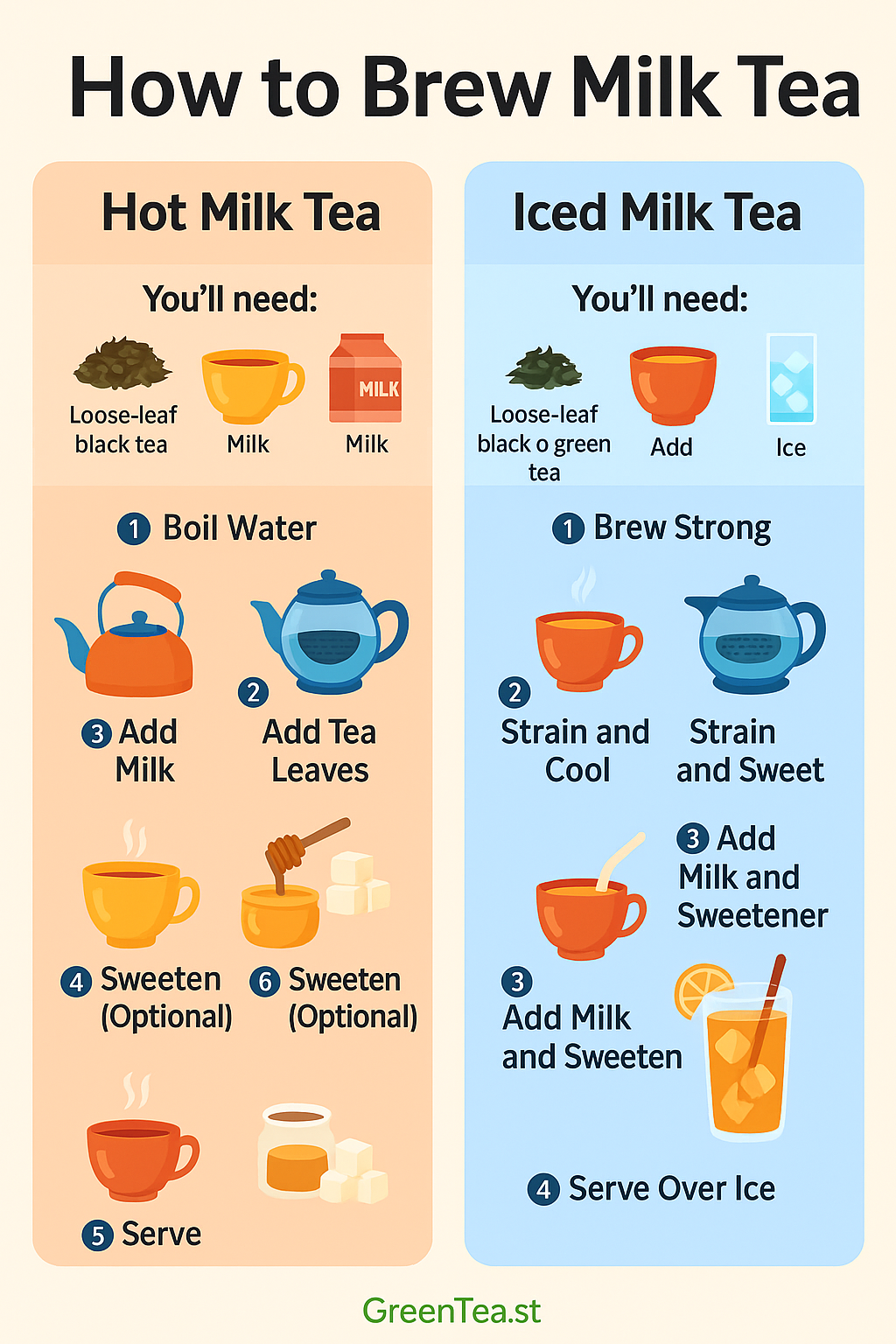
Making milk tea at home can be as simple or as ceremonial as you want it to be. The secret lies in balance—achieving the right ratio of tea, milk, and steeping time so that neither flavor overwhelms the other. Below is a detailed step-by-step guide to help you create the perfect cup, whether you prefer it hot and comforting or iced and refreshing.
Hot Milk Tea (Classic Method)
You’ll Need:
- 1 teaspoon loose-leaf black tea (Assam, Ceylon, or English Breakfast)
- ¾ cup hot water (about 90–95°C / 195–203°F)
- ¼ cup warm milk (cow, oat, almond, or soy)
- Sweetener of choice (optional: honey, sugar, or stevia)
Steps:
- Boil Water Heat water to around 90–95°C (195–203°F). Avoid a rolling boil—it can make black tea taste bitter.
- Add Tea Leaves Place loose-leaf tea in a teapot or infuser. Pour hot water over the leaves.
- Steep Let the tea steep for 3–5 minutes depending on your preference. Shorter for a lighter taste, longer for more strength.
- Add Milk Warm your milk separately (do not boil) and slowly pour it into the tea. Stir gently to combine.
- Sweeten (Optional) Add honey, sugar, or your preferred sweetener. Stir until fully dissolved.
- Serve Pour into a cup and enjoy immediately. For an elevated experience, pair with biscuits or light snacks.
Iced Milk Tea (Cold Version)
You’ll Need:
- 1 tablespoon loose-leaf black or green tea
- 1 cup hot water
- ¼ cup milk (any variety)
- Ice cubes
- Sweetener (optional)
Steps:
- Brew Strong Tea Use double the amount of tea leaves since the ice will dilute the flavor. Steep in hot water for 5 minutes.
- Strain and Cool Remove the tea leaves and let the brew cool to room temperature.
- Add Milk and Sweetener Mix in milk and sweetener to taste, stirring thoroughly.
- Serve Over Ice Fill a tall glass with ice cubes and pour the tea mixture over. Garnish with cinnamon, mint, or a splash of vanilla if desired.
Tips for Perfect Milk Tea Every Time
- Use fresh, loose-leaf tea for better flavor extraction.
- Avoid boiling milk with tea, as it can cause curdling and bitterness.
- Adjust milk ratio based on your tea base—stronger teas like Assam need more milk, while lighter ones like Darjeeling require less.
- Experiment with plant-based milks (oat, almond, soy) for dairy-free options that complement different teas.
- For a frothy café-style milk tea, whisk milk before adding it to your tea or use a handheld frother.
Side Effects and Precautions of Milk Tea
While milk tea can be an enjoyable and even beneficial part of your daily routine, it’s best consumed mindfully. Too much can offset its advantages and cause discomfort for some people. Here’s what to watch out for:
1. Caffeine Sensitivity
Milk tea often uses black or green tea as its base, both of which contain caffeine. Drinking several cups daily may cause jitteriness, insomnia, or heart palpitations in sensitive individuals. People prone to anxiety or high blood pressure should moderate their intake or opt for decaf versions.
2. Lactose Intolerance and Dairy Sensitivity
For those with lactose intolerance, regular cow’s milk can lead to bloating, cramps, or gas. Switching to lactose-free or plant-based milk alternatives like almond, soy, or oat milk can help prevent these symptoms while keeping the drink creamy and enjoyable.
3. Added Sugar Concerns
Commercial milk teas, especially bubble tea or Thai tea, often contain high amounts of sugar and sweetened condensed milk. Over time, this may contribute to weight gain, insulin resistance, and dental issues.
Choose homemade or sugar-free versions to enjoy the flavor without the health risks.
4. Iron Absorption Interference
The tannins in black tea can inhibit iron absorption from plant-based foods. If you’re iron-deficient or vegan, avoid drinking milk tea immediately after meals. Instead, have it 1–2 hours after eating to minimize this effect (6).
5. Gastrointestinal Discomfort
Drinking very strong or over-steeped milk tea can irritate the stomach lining, especially when consumed on an empty stomach. Always brew at the correct temperature and steeping time, and pair with light snacks if you’re prone to acid reflux.
6. Allergies and Additives
Store-bought milk teas may contain artificial flavorings or preservatives that could trigger allergies. Always read ingredient labels, especially if you have sensitivities to soy, nuts, or specific flavor enhancers.
FAQs About Milk Tea
Yes, when consumed in moderation, milk tea can offer antioxidants, gentle caffeine stimulation, and improved alertness. However, avoid excess sugar or multiple servings daily to prevent side effects.
Absolutely. Almond, oat, soy, and coconut milk work well and add distinct flavors. Just ensure your milk doesn’t curdle by avoiding boiling temperatures when adding it to the tea.
One to two cups per day is ideal for most people. Those sensitive to caffeine should limit it to one cup or choose decaffeinated tea leaves.
Certain blends, such as chai with ginger or cardamom, can aid digestion. However, for some people, dairy milk may cause bloating or discomfort. Switching to lactose-free milk can help.
Morning or early afternoon is ideal. Avoid drinking too close to bedtime, as caffeine may interfere with sleep.
Conclusion
Milk tea is more than a comforting beverage — it’s a cultural ritual and a personal experience. Its blend of tea’s antioxidants and milk’s creaminess offers both refreshment and nourishment. However, the benefits depend heavily on how it’s made and how much you consume.
To enjoy milk tea healthily, use quality loose-leaf tea, limit added sugar, and experiment with milk alternatives that fit your body’s needs. Whether you prefer it hot, iced, spiced, or sweet, milk tea can be part of a balanced lifestyle when enjoyed in moderation.


