Does Tea Expire?
Have you ever found an old tin of tea in your cupboard and wondered if it’s still safe to drink? The truth is, tea doesn’t “expire” in the same way milk or bread does. It doesn’t spoil suddenly or grow harmful bacteria if stored properly. Instead, tea gradually loses its freshness, flavor, and nutritional quality over time.
Tea is made from dried leaves, herbs, or flowers that are naturally low in moisture. This means they have a long shelf life—but their essential oils and aromatic compounds begin to fade as months (or years) pass. Factors like air, light, heat, and humidity can speed up this process, leaving you with tea that tastes flat or musty rather than fragrant and lively.
Most types of tea are best enjoyed within 1–2 years of purchase, but this varies by variety and how it’s stored. Green teas, for example, tend to age faster than black teas because they contain more delicate antioxidants and less oxidation during processing. Proper storage can make a world of difference in how long your tea retains its signature taste and health benefits (1).
Understanding Tea Shelf Life
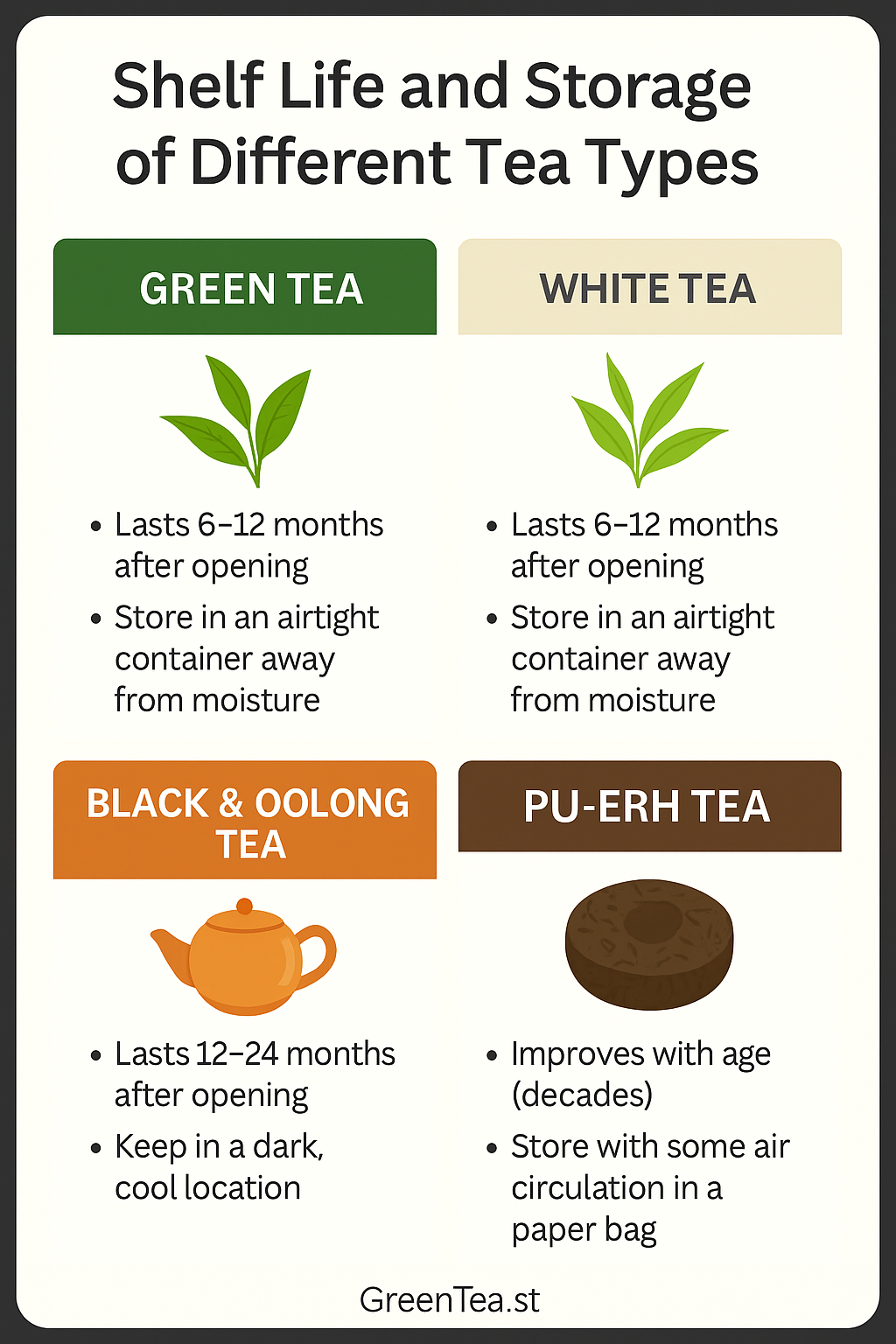
Tea, unlike perishable foods, doesn’t spoil quickly—but it does age. Over time, exposure to oxygen, moisture, light, and heat causes its volatile compounds and polyphenols to degrade. These are the very molecules responsible for its flavor, color, and antioxidant activity. Once they begin breaking down, your tea starts losing its character.
It’s also important to understand the difference between a “best before” date and an expiration date. The “best before” simply indicates when tea is expected to be at peak flavor, not when it becomes unsafe. Most teas remain safe to consume long after this date, provided they’re stored correctly in airtight containers away from sunlight and humidity.
The shelf life depends heavily on processing style and oxidation level. For example, black and oolong teas, which undergo more oxidation, are more stable and last longer than delicate green or white teas. Herbal blends that include dried fruit, flowers, or citrus peels tend to spoil faster due to natural oils and sugars.
Here’s a simple comparison of average shelf life by tea type:
| Type of Tea | Average Shelf Life (Unopened) | Average Shelf Life (Opened) | Notes |
|---|---|---|---|
| Green Tea | 6–12 months | 3–6 months | Very sensitive to air and light; store in cool, dark containers. |
| Black Tea | 18–24 months | 12–18 months | More oxidation means longer flavor stability. |
| Oolong Tea | 12–24 months | 6–12 months | Partial oxidation helps preserve aroma longer. |
| White Tea | 12–18 months | 6–12 months | Fragile and prone to losing fragrance. |
| Herbal Tea (Mixed) | 6–12 months | 3–6 months | Spoils faster due to fruit, flower, and oil content. |
| Pu-erh / Dark Tea | Ages gracefully for years | Ages gracefully for years | Fermented teas improve with time if stored well. |
Proper storage can nearly double these estimates. Always seal your tea tightly after use, avoid plastic containers that trap odors, and keep it away from humidity-prone spots like the kitchen sink or stovetop (2).
Signs Your Tea Has Gone Stale
Even though tea doesn’t “expire” in the traditional sense, it can go stale — and when it does, you’ll notice the difference immediately. The aroma fades first, followed by the flavor. What was once a fragrant, full-bodied brew can start tasting flat, musty, or even sour.
Here are the most common signs your tea has lost its freshness:
- Dull or Faded Aroma
- Fresh tea should have a vibrant scent — grassy, floral, roasted, or malty depending on the type.
- If you barely smell anything, or detect a faint cardboard-like odor, it’s likely gone stale.
- Weakened Flavor
- Brew a small cup. If it tastes bland, watery, or lacks its usual depth, that’s a clear sign of oxidation and loss of essential oils.
- Green and white teas, in particular, lose their subtle notes quickly once exposed to air.
- Color Changes
- Old green tea may darken from pale green to brownish hues, while black tea might lose its rich amber tone.
- These changes signal oxidation or moisture absorption.
- Clumping or Visible Moisture
- If your tea leaves stick together or feel damp, humidity has crept in. This environment can lead to mold growth.
- Always discard tea that shows white fuzz or an unusual smell — it’s no longer safe to drink.
- Unusual Taste or Aftertaste
- A sour, metallic, or musty aftertaste indicates that oils and organic compounds have gone rancid.
- Herbal teas with dried fruits or peels tend to go bad sooner for this reason.
When in doubt, it’s better to throw out questionable tea than risk contamination or poor flavor. Remember, even the highest-quality teas can’t withstand prolonged exposure to air and moisture (3).
How to Store Tea Properly
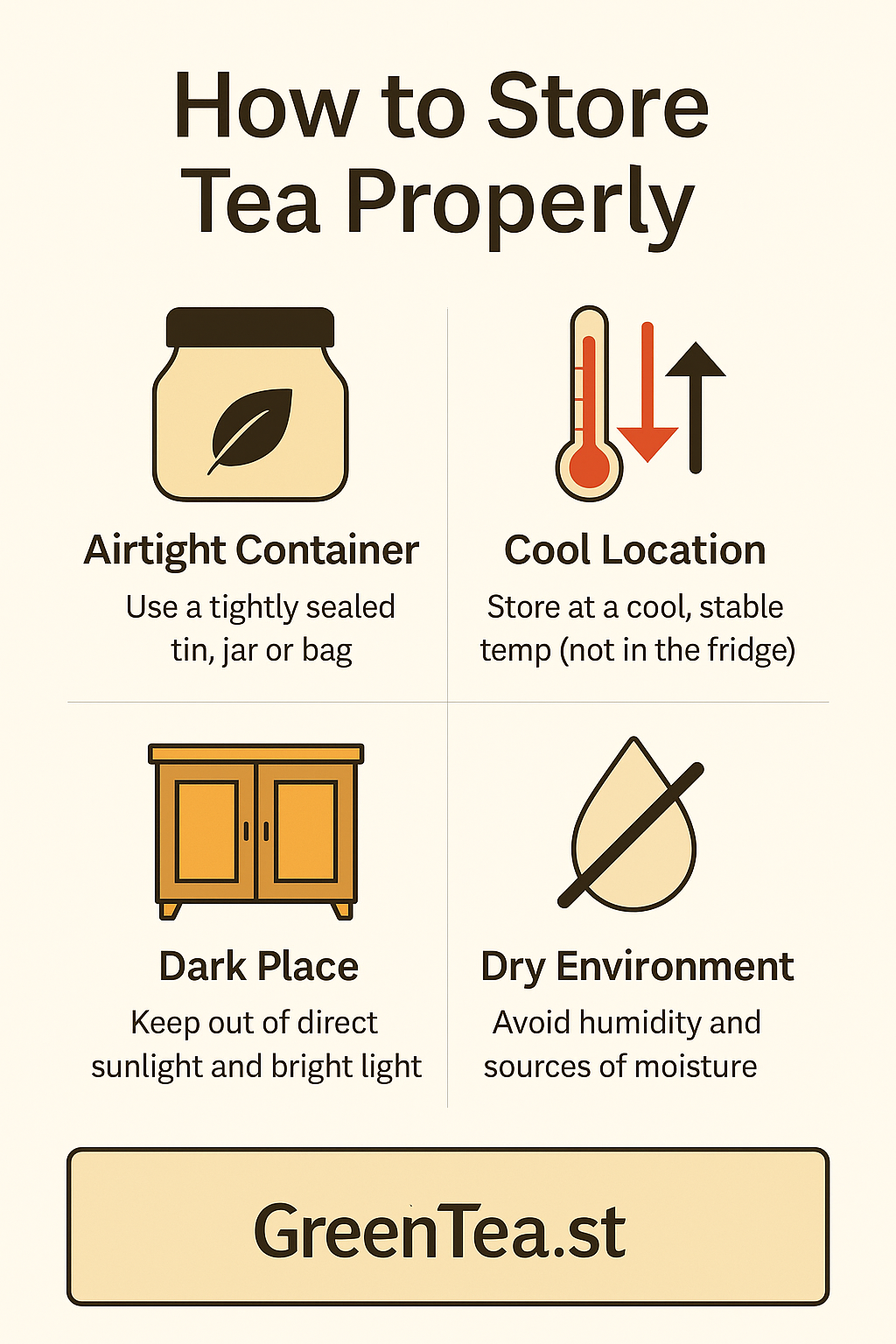
If you want your tea to stay fresh and flavorful for as long as possible, proper storage is essential. Tea leaves are hygroscopic — they absorb moisture, odors, and flavors from the air — which means even small mistakes in storage can dramatically shorten their shelf life. The goal is to protect them from four enemies: air, light, heat, and humidity.
Here are the best practices to preserve your tea’s aroma, taste, and antioxidant value:
- Use Airtight Containers
- Choose tins or glass jars with tight-fitting lids. If using glass, keep it in a dark cupboard away from sunlight.
- Avoid clear plastic bags or paper pouches, as they allow air and light to seep through.
- Store in a Cool, Dry Place
- Ideal temperature: below 77°F (25°C).
- Avoid keeping tea near the stove, oven, or dishwasher — these areas are warm and humid.
- Keep Away from Strong Odors
- Tea readily absorbs smells from nearby foods, spices, and even cleaning products.
- Never store tea beside coffee, onions, or scented candles.
- Don’t Refrigerate or Freeze (Unless Necessary)
- Although it seems logical, refrigeration introduces moisture when tea is taken in and out of cold environments.
- If you must freeze rare teas (like high-end matcha), seal them in double airtight packaging and thaw completely before opening.
- Label and Rotate Your Stock
- Write the purchase date on containers so you can use older tea first.
- Keep a small batch for daily use and store the rest in a larger sealed bag to minimize exposure.
These simple steps can preserve your tea’s aroma, flavor, and antioxidant activity for months beyond its printed date. Studies show that teas stored away from heat and light maintain more polyphenols and catechins, both key to tea’s health benefits (4).
Can You Still Drink Expired Tea?
Yes — in most cases, you can safely drink tea after its expiration date, provided it has been stored correctly. The “best before” date on your tea package typically refers to peak flavor and aroma, not food safety. Unlike milk or fresh produce, dry tea leaves don’t spoil easily since they contain very little moisture. However, while expired tea won’t make you sick, it might not give you the rich taste or health benefits you expect.
The key is to inspect before you sip. If the leaves are dry, crisp, and free from mold or a sour odor, the tea is likely safe to brew. A quick test brew can confirm this — if the liquor looks clear and the aroma is mild but not unpleasant, it’s good to drink. You may just need to steep it a bit longer to extract the flavor.
But never consume tea that shows any of the following:
- Visible mold or clumping (sign of moisture contamination)
- Damp or sticky feel
- Rancid, fishy, or sour odor
- Presence of insects or webs (especially in herbal or fruit teas)
Herbal blends that contain dried fruit, flowers, or essential oils degrade faster than pure tea leaves and may become unsafe when rancid. Always err on the side of caution.
For those wondering about the nutritional value, older tea still retains some beneficial compounds, though its antioxidant and catechin content can drop by as much as 30–50% after 18 months of storage, depending on the type and conditions (5).
FAQs About Tea Expiration
Once opened, loose-leaf tea typically lasts 6 to 12 months, depending on the type and how it’s stored. Green and white teas are more delicate, while black and oolong teas can retain flavor for up to two years if sealed properly.
Unopened tea in its original airtight packaging can stay fresh for up to 2–3 years. Store it in a cool, dark place to maintain quality and prevent oxidation.
If it’s been stored away from heat, light, and moisture — and has no signs of mold or bad odor — it’s generally safe. However, expect a weaker flavor and aroma.
Pu-erh and black teas are the most shelf-stable because they are fermented or oxidized. In fact, high-quality pu-erh teas often improve with age under controlled conditions.
Yes. Tea bags contain smaller leaf particles that lose flavor and aroma more quickly due to greater surface exposure. Loose-leaf tea maintains quality for longer periods.
Conclusion
Tea doesn’t truly expire in the sense of becoming unsafe, but its quality naturally declines over time. Factors like air, light, and moisture can dull its taste and reduce its health benefits. The best way to ensure a flavorful, aromatic cup is to buy tea in small quantities, store it properly in airtight containers, and enjoy it within a year of opening.
Whether you’re a casual tea drinker or a connoisseur, treating tea like a fine ingredient — not a pantry leftover — will reward you with a consistently rich and satisfying brew. Proper care and awareness go a long way toward keeping your favorite leaves fresh and vibrant for years to come.