
How Much Caffeine Is In Boba Tea?
Boba tea is known for its chewy tapioca pearls and sweet creamy taste, but few realize how much caffeine it can contain. Depending on the tea base and serving size, one cup can range from a mild energy lift to the strength of a coffee.
The caffeine in bubble tea comes entirely from the tea base. Black, green, oolong, white, and matcha teas all contain caffeine in varying amounts. Larger servings or stronger brews can double your intake without you noticing.
Studies show that caffeine levels in tea-based drinks can range from 30 to 160 milligrams per 16-ounce serving, depending on preparation and tea type (1). Knowing how much caffeine your favorite boba contains helps you enjoy it more mindfully.
What Determines the Caffeine Level in Boba Tea
1. The Tea Base
The tea used is the biggest factor in caffeine content. Black tea contains the highest amount, followed by green, oolong, and white tea. Matcha is unique because you consume the powdered leaf itself, not just an infusion.
Each tea type has a different mix of caffeine, theanine, and antioxidants, which affects both the strength and feel of the energy boost (2).
2. Brewing Time and Temperature
The longer and hotter the brew, the more caffeine is released. A short one-minute steep might yield 40 mg, while a five-minute brew can reach 100 mg or more.
Bubble tea shops often brew strong tea bases to retain flavor after adding milk, ice, or syrup. This concentrated brewing style quietly increases caffeine levels.
3. Serving Size and Dilution
Boba tea usually comes in 16 to 24-ounce servings. Even when diluted with milk or creamer, the total caffeine remains high.
A large black milk tea can contain up to 150 mg of caffeine, similar to a small coffee. Ice and toppings reduce volume, but not caffeine concentration.
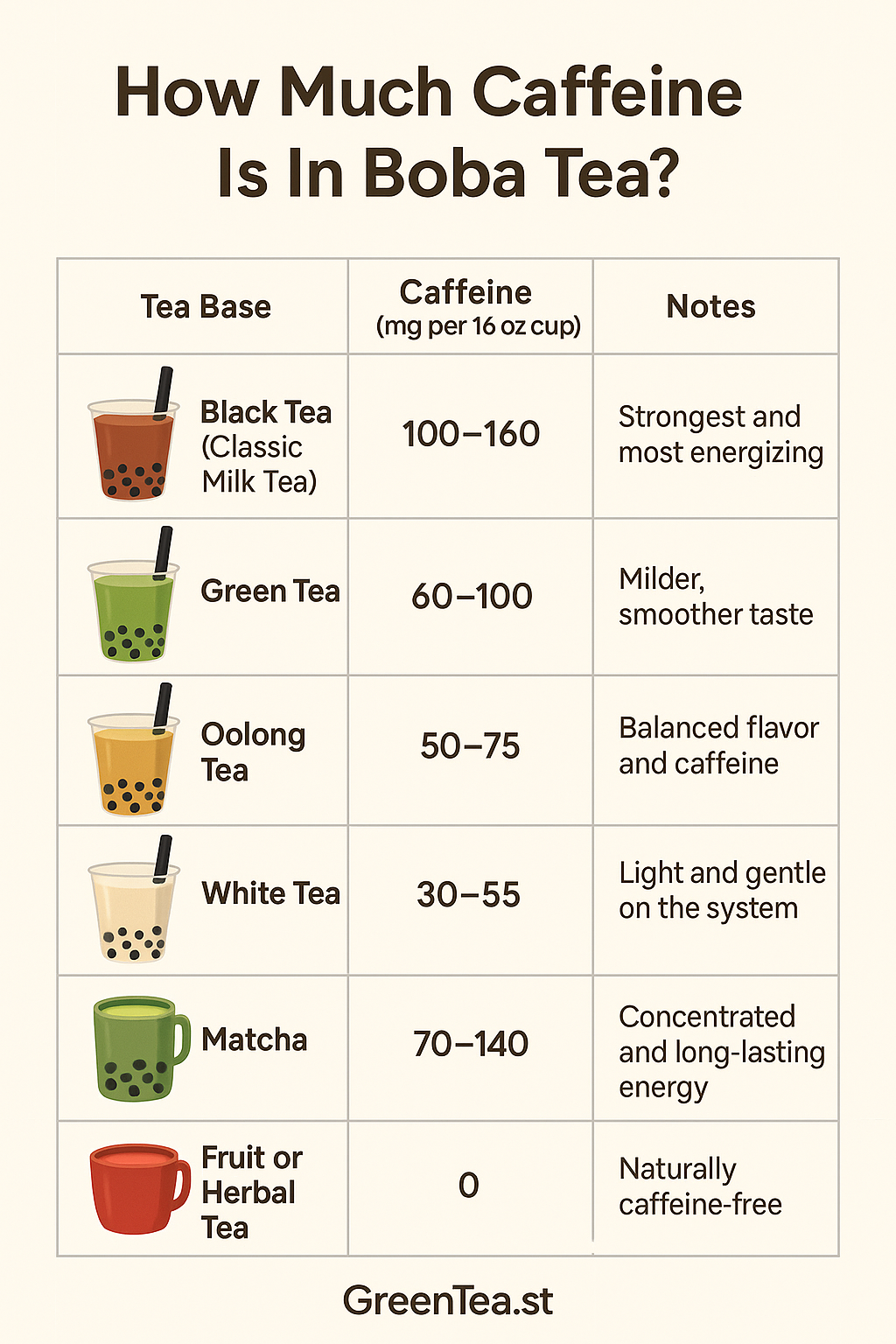
Average Caffeine Content by Tea Base
The caffeine in boba tea depends mainly on the tea variety used. Each type of tea offers a different intensity, flavor, and effect on alertness.
| Tea Base | Caffeine (mg per 16 oz cup) | Notes |
|---|---|---|
| Black Tea (Classic Milk Tea) | 100–160 mg | Strongest and most energizing. |
| Green Tea | 60–100 mg | Milder, smoother taste. |
| Oolong Tea | 50–75 mg | Balanced flavor and caffeine. |
| White Tea | 30–55 mg | Light and gentle on the system. |
| Matcha | 70–140 mg | Concentrated and long-lasting energy. |
| Fruit or Herbal Tea | 0 mg | Naturally caffeine-free. |
A black milk tea made with strong leaves will usually be the most stimulating. Oolong and green tea versions offer a gentler lift, while fruit teas are completely caffeine-free.
Matcha sits in the middle but feels stronger because it delivers caffeine gradually over time (3).
How Boba Additives Affect Caffeine
While the tea base determines how much caffeine is in your drink, the rest of your boba ingredients — tapioca pearls, jellies, milk, and syrups — can subtly influence how that caffeine feels once you drink it. These additives don’t add caffeine themselves, but they do affect how quickly your body absorbs it and how long the energy lasts.
1. Tapioca Pearls and Jellies
Tapioca pearls and fruit jellies are caffeine-free. They’re made primarily from cassava starch, fruit extracts, or agar, which means they provide carbohydrates for energy but no stimulant effect. However, the added sugar in these toppings can cause a temporary blood sugar spike, leading to what some drinkers describe as a “sugar rush.”
That short burst of energy may make you feel alert at first, but it’s unrelated to caffeine. Once your blood sugar drops, you may feel more tired — especially if your drink contained only a small amount of tea (4).
2. Milk and Creamers
Milk, plant-based milk, and non-dairy creamers can influence how your body experiences caffeine. The proteins and fats in milk slow digestion, which means caffeine is released into your bloodstream more gradually. As a result, milk tea delivers a gentler, longer-lasting boost compared to plain iced tea.
This slower absorption makes milk tea appealing to people who want steady focus without the sharp peak and crash of coffee. Non-dairy creamers, however, may not offer the same benefit — many are made with hydrogenated fats and sweeteners that alter taste but not caffeine metabolism.
3. Sweeteners and Flavor Syrups
Like toppings, syrups don’t add caffeine but can influence how stimulating the drink feels. High sugar content can amplify caffeine’s effects by spiking blood glucose and heart rate, creating the illusion of stronger energy. But once insulin lowers blood sugar, fatigue often follows.
Choosing less sugar or half-sweet options helps you experience the tea’s natural flavor and a smoother energy curve rather than a quick high and crash.
Comparison — Boba Tea vs Coffee and Energy Drinks
Caffeine levels in boba tea can rival other popular beverages. The amount depends on the tea base, strength, and serving size.
| Drink | Serving Size | Approx. Caffeine (mg) |
|---|---|---|
| Boba Tea (16 oz) | 30–160 mg | Varies by tea type and brew. |
| Coffee (8 oz) | 95–200 mg | Strongest per ounce. |
| Energy Drink (8 oz) | 70–150 mg | Often combined with sugar and taurine. |
| Green Tea (8 oz) | 25–45 mg | Mild natural stimulant. |
Boba tea typically contains less caffeine than coffee, especially when made with oolong or green tea bases. However, its larger serving size means the total caffeine can approach that of a full cup of coffee — particularly if brewed strong or made with matcha.
Energy drinks often contain similar caffeine levels to black tea–based boba, but the effect is intensified by synthetic additives such as taurine and guarana, which increase alertness and heart rate. In contrast, tea-based caffeine is balanced by L-theanine, an amino acid that promotes calm focus rather than restlessness (5).
While both drinks can provide a mental boost, the caffeine in boba tea is typically gentler, slower to peak, and less likely to cause jitteriness — making it a good middle ground between plain tea and coffee.
Caffeine Sensitivity and Safe Intake
Caffeine affects people differently depending on body weight, metabolism, and how often they consume it. Some can drink two cups of coffee easily, while others feel jittery after one milk tea.
The U.S. Food and Drug Administration (FDA) recommends no more than 400 milligrams of caffeine per day for healthy adults. This equals about two strong milk teas or four small cups of coffee.
Common Signs of Too Much Caffeine
- Restlessness or anxiety
- Difficulty sleeping
- Rapid heartbeat
- Headache or irritability
Pregnant individuals, teens, and people with heart or anxiety conditions should limit caffeine further. For most adults, moderate consumption supports alertness without harmful effects (6).
Tips for Reducing Caffeine in Boba Tea
Reducing caffeine doesn’t mean giving up your favorite drink. A few simple adjustments can make a big difference.
1. Choose Herbal or Fruit Bases
Herbal teas such as chamomile, hibiscus, or rooibos are naturally caffeine-free. Fruit blends like mango or lychee are also free of caffeine unless mixed with tea.
2. Request Half-Tea, Half-Water
Ask for a half-strength brew to cut caffeine by roughly half. It keeps flavor and sweetness while reducing total caffeine.
3. Pick Smaller Sizes
A medium (16 oz) contains far less caffeine than a large (24 oz). Size is one of the easiest ways to control intake.
4. Skip Matcha and Coffee Add-Ins
Matcha, espresso, or “dirty” milk teas can double your caffeine. Choose oolong or jasmine for a balanced effect.
Lower-caffeine teas and shorter steeping times reduce caffeine without sacrificing flavor quality (7).
FAQs
Not all boba teas have caffeine. Drinks made with black, green, oolong, or matcha contain caffeine. Herbal and fruit teas are naturally caffeine-free.
Teas made with white, oolong, or jasmine green tea have the lowest caffeine content. Herbal bases such as hibiscus or rooibos have none.
Small amounts are safe, but caffeine should be limited. Health authorities recommend under 200 mg per day during pregnancy and less than 2.5 mg per kilogram of body weight for children.
Caffeine effects last about three to five hours. Because milk and sugar slow absorption, the energy rise is gentle and steady.
Conclusion
The caffeine in boba tea depends on the tea base, how it’s brewed, and the serving size. Black and matcha teas contain the most, while oolong, white, and herbal options are milder.
Moderate caffeine supports focus and energy, but exceeding your limit can cause restlessness or poor sleep. Staying within the recommended 400 milligrams per day keeps boba tea enjoyable and safe (8).
Choosing the right base and portion lets you enjoy bubble tea’s flavor and comfort without overdoing the caffeine.


