Afternoon Tea Proper Timing
There’s something timeless about pausing your day for a warm cup of tea. Afternoon tea isn’t just a British custom—it’s a mindful ritual that brings balance to busy lives. Beyond the elegance of teapots and pastries, there’s real science behind why this mid-afternoon moment is so restorative. The timing, in particular, plays a major role in how tea affects your mood, focus, and digestion.
Afternoon tea became popular in the 19th century when people started noticing a dip in energy between lunch and dinner. It wasn’t just about luxury—it was a way to refuel without overeating or overstimulating the body. Today, many nutritionists agree that a light caffeine boost and slow, intentional break during this time can help reduce stress and stabilize blood sugar.
Historically, afternoon tea is believed to have started in England around 1840, credited to Anna, the Duchess of Bedford, who would invite friends for tea and light snacks to bridge the gap between meals (1). Her simple idea evolved into a beloved social tradition still enjoyed worldwide.
Whether it’s a quiet moment with your favorite tea or a small gathering with friends, afternoon tea remains one of the simplest ways to restore balance in both body and mind.
The Origin of Afternoon Tea
The story of afternoon tea begins in early 19th-century England, during a time when daily meals were split into two main events—breakfast and dinner. Dinner was usually served late in the evening, leaving a long gap in the day when hunger would naturally set in. Anna, the seventh Duchess of Bedford, found herself growing weary and hungry around four o’clock and began requesting a tray of tea, bread, and butter to her room each afternoon.
Her simple habit quickly became fashionable among London’s upper class. By the 1840s, it had evolved into a social event, complete with fine china, elegant attire, and carefully curated snacks. Friends and guests would gather to enjoy tea alongside sandwiches, scones, and delicate pastries. The event wasn’t just about satisfying hunger—it became a graceful pause, a way to slow down, connect, and converse.
As Britain’s empire expanded, tea culture traveled across continents. Countries such as India, Japan, and China, already steeped in rich tea traditions, added their own flavors and customs to the ritual. Today, “afternoon tea” can mean anything from a quiet solo break to a full social gathering, but the essence remains the same: balance, elegance, and mindfulness.
According to Historic UK, this ritual became embedded in British life by the mid-19th century, symbolizing refinement, leisure, and hospitality (2).
The Best Time for Afternoon Tea
Timing is everything when it comes to enjoying tea for both pleasure and health. Traditionally, afternoon tea is served between 3:30 p.m. and 5:00 p.m., a window that perfectly bridges the energy dip most people experience between lunch and dinner. This timing aligns with the body’s natural circadian rhythm, offering a gentle lift without interfering with your evening rest.
Nutritionists agree that a small dose of caffeine during this period can enhance alertness and focus, especially after hours of work or study. Unlike coffee, tea releases caffeine more gradually, providing a sustained sense of calm energy rather than a sharp spike and crash. Herbal or low-caffeine teas such as oolong, jasmine, or green tea are often preferred in the afternoon, as they balance stimulation with relaxation.
Having tea too late, especially black or matcha tea, may disturb sleep in caffeine-sensitive individuals. Experts recommend switching to herbal infusions like chamomile, rooibos, or mint after 6 p.m. for a soothing close to the day.
A study published in the Journal of Nutritional Science found that moderate tea consumption during the late afternoon can improve alertness, reduce fatigue, and even enhance mood without causing evening restlessness (3).
Best Types of Tea for Afternoon Energy and Relaxation
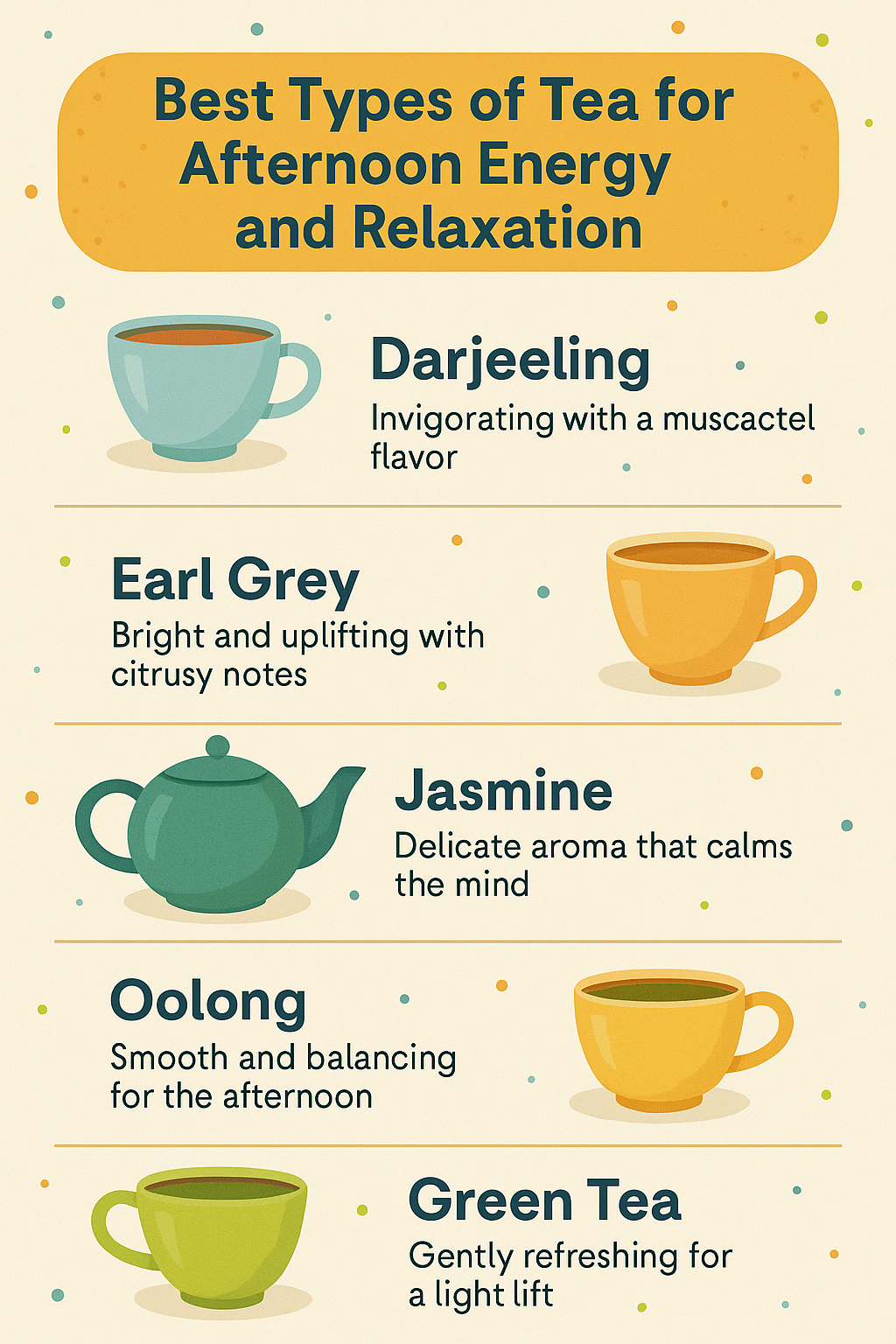
Afternoon tea isn’t just about when you drink—it’s also about what you drink. The right tea can lift your energy gently, clear your mind, or calm your nerves, depending on what your afternoon needs most. Here are a few of the best teas to enjoy between meals for both refreshment and balance:
1. Black Tea (Darjeeling, Assam, Earl Grey)
Black tea remains a classic choice for afternoon tea. It contains a moderate amount of caffeine, enough to improve focus and ward off post-lunch fatigue without overstimulating the body. Darjeeling offers floral and muscatel notes, while Assam delivers a rich, malty flavor perfect with a splash of milk. Earl Grey, infused with bergamot oil, adds a refreshing citrus twist that pairs beautifully with pastries or scones.
2. Green Tea (Sencha, Jasmine, Dragonwell)
Green tea provides a lighter, cleaner energy boost. It’s rich in antioxidants like catechins, which help protect cells from damage while supporting metabolism. Drinking green tea in the afternoon enhances alertness and provides a subtle sweetness that refreshes the palate. For a floral touch, jasmine green tea works beautifully with light snacks such as fruit tarts or crackers.
3. Oolong Tea
Oolong sits between green and black tea, offering the best of both worlds—mild caffeine content and a smooth, toasted aroma. It promotes digestion and helps balance blood sugar, making it an ideal companion to mid-afternoon treats. Taiwanese oolong teas like Tieguanyin or Dong Ding have a naturally creamy finish that feels indulgent yet soothing.
4. Herbal and Caffeine-Free Teas (Chamomile, Rooibos, Peppermint)
For those who prefer to avoid caffeine, herbal teas are the perfect way to unwind. Chamomile relaxes the mind and muscles, rooibos provides antioxidants without bitterness, and peppermint refreshes digestion. These are excellent for late-afternoon sipping when you’re winding down but not quite ready for bed.
Research shows that polyphenol-rich teas, such as oolong and green tea, can improve energy metabolism, support mental clarity, and lower oxidative stress levels during daytime hours (4).
Pairing Snacks with Tea
The beauty of afternoon tea lies not just in the brew itself but also in the art of pairing it with light, thoughtful bites. The right snack can elevate your tea’s flavor, balance its caffeine, and keep you nourished without feeling heavy or sluggish.
1. Classic Pairings
Traditional afternoon tea spreads often include scones with clotted cream and jam, cucumber sandwiches, and delicate biscuits or macarons. These classics work beautifully because they complement rather than overpower the tea’s subtle flavors. The mild saltiness of a sandwich balances the sweetness of pastries, creating a satisfying contrast alongside the gentle bitterness of black or oolong tea.
2. Balancing Flavor and Nutrition
To make your tea time both enjoyable and healthy, focus on balance. Pair sweeter treats with fiber or protein to help stabilize energy levels and prevent sugar spikes. For example, enjoy a small pastry with a handful of almonds or pair your scone with Greek yogurt instead of heavy cream. Teas like green or jasmine also enhance digestion, making lighter snacks ideal.
3. Modern Interpretations
Modern tea pairings are becoming more inclusive, catering to diverse dietary preferences. Vegan scones made with coconut oil or oat milk, gluten-free biscuits using almond flour, or fruit platters with berries and citrus slices all pair beautifully with afternoon blends like Earl Grey or Sencha. These options not only make afternoon tea more accessible but also align with a mindful, health-conscious lifestyle.
4. Flavor Harmony
Think of pairing as a conversation between food and tea. Citrusy teas like Earl Grey match buttery or vanilla-based sweets, while floral teas like jasmine or chamomile shine next to light sandwiches or fruit. Stronger teas like Assam or oolong benefit from hearty textures such as oat cookies or nut-based bites, enhancing both aroma and satisfaction.
Research shows that mindful food pairing during tea consumption can enhance both satiety and sensory pleasure by balancing sweetness and bitterness on the palate (6).
Health Benefits of Afternoon Tea
Afternoon tea isn’t just a charming ritual—it offers real physical and psychological benefits when enjoyed mindfully. The combination of moderate caffeine, antioxidants, and the calming nature of the tea ritual itself makes it one of the healthiest daily habits you can adopt.
1. Improved Alertness and Focus
A small amount of caffeine in tea can do wonders for your afternoon energy levels. Unlike coffee, tea contains the amino acid L-theanine, which works synergistically with caffeine to promote focus and calm alertness without the jitters. This balanced stimulation helps maintain productivity and creativity during that mid-day slump, allowing you to feel awake yet centered.
2. Supports Digestion and Gut Comfort
Pairing tea with light snacks—like cucumber sandwiches, scones, or fruit—stimulates gentle digestive activity. Herbal teas such as peppermint or ginger further soothe the stomach, helping ease bloating or heaviness after lunch. Warm tea also promotes hydration and bile flow, aiding in the breakdown of fats. This makes afternoon tea both refreshing and physiologically beneficial.
3. Reduces Stress and Promotes Relaxation
Beyond the physical effects, tea encourages mental stillness. The act of brewing and sipping slowly helps calm the nervous system, reducing cortisol levels and improving mood. Taking this break in the middle of a busy day gives your mind time to reset.
4. Strengthens Social and Emotional Connection
Afternoon tea has long served as a gentle social bridge—a time to connect with others in a peaceful, unhurried environment. Sharing tea builds emotional connection and reinforces mindfulness. Even when enjoyed alone, it fosters introspection and gratitude, supporting mental well-being.
A study from the Journal of Physiological Anthropology found that regular tea consumption not only enhances relaxation and cognitive performance but also helps the body recover faster from stress (4).
FAQs
The best time is between 2:30 PM and 4:00 PM, after lunch but before dinner. This timing helps stabilize energy, curb cravings, and prevents caffeine from interfering with sleep.
Yes, green tea is excellent in the afternoon. It provides a gentle lift in focus and metabolism without overstimulation. Options like Sencha or Jasmine are perfect for sustained alertness.
Light sandwiches, scones, biscuits, fruits, and nuts pair best. The goal is to complement your tea’s flavor while keeping the meal light and balanced.
Absolutely. Choose herbal teas like rooibos, chamomile, or peppermint, which contain no caffeine yet still offer soothing, relaxing effects.
No. Traditionalists might prefer milk in black tea, but it’s purely optional. Many teas—especially green or oolong—taste best without any additions.
Conclusion
Afternoon tea is more than a beverage; it’s a moment of pause and mindfulness that bridges the day. Whether it’s a delicate Darjeeling to refresh your mind or a floral Jasmine to soothe your senses, choosing the right tea at the right time can uplift both energy and mood. Pair it with wholesome snacks, sip slowly, and enjoy the ritual—it’s a simple yet elegant way to care for both body and mind.
Incorporating this daily habit may not only support your focus and digestion but also invite calm and social connection into your busy afternoons. The key lies in moderation, balance, and awareness—hallmarks of every great cup of tea.