
Green Tea Benefits for Stomach
Digestive discomfort—such as bloating, acid reflux, or heaviness after meals—is something most people experience from time to time. The stomach plays a crucial role in breaking down food and absorbing nutrients, but modern habits like stress, processed diets, and irregular eating often strain its function.
Green tea has been used for centuries in Asian medicine as a gentle digestive aid. It contains polyphenols and antioxidants that help calm inflammation, reduce bloating, and support healthy enzyme function.
Studies have shown that compounds in green tea, particularly catechins and epigallocatechin gallate (EGCG), can promote gut health by reducing harmful bacteria and supporting beneficial ones. This improves digestion and protects the stomach lining from irritation. Research confirms green tea’s beneficial impact on digestive function and gut balance (1).
Why Green Tea Supports Digestive Health
Green tea helps the digestive system work more efficiently by encouraging the natural production of enzymes and bile. These secretions help the stomach break down fats and proteins more effectively, making it easier for the body to absorb nutrients from food. The catechins in green tea also support smoother intestinal movement, which helps prevent gas buildup and bloating.
Another reason green tea benefits the stomach is its strong anti-inflammatory and antibacterial profile. The polyphenols in green tea reduce irritation in the stomach lining, easing discomfort caused by mild gastritis or acid reflux. They also inhibit the growth of harmful bacteria such as Helicobacter pylori, which is linked to ulcers and stomach inflammation.
Overall, drinking green tea after meals supports digestion naturally and helps maintain a balanced gut environment (2).
3. Key Benefits of Green Tea for the Stomach
1. Reduces Bloating and Gas
One of the most noticeable benefits of green tea is its ability to ease bloating and reduce gas. The catechins in green tea act as mild diuretics, helping the body release excess water and sodium that contribute to puffiness and abdominal heaviness. At the same time, green tea’s gentle stimulation of the digestive muscles helps move food along the intestinal tract, preventing the stagnation that leads to gas buildup.
Many people find that sipping a warm cup of green tea after a heavy meal brings immediate relief. Its natural bitterness triggers digestive secretions, which aid in breaking down fats and carbohydrates more efficiently. This makes green tea an ideal, caffeine-light alternative to coffee for post-meal digestion (3).
2. Soothes Stomach Inflammation
Chronic inflammation in the stomach can lead to ulcers, indigestion, and acid reflux. Green tea’s antioxidants—especially EGCG—help reduce this inflammation by neutralizing free radicals that irritate the stomach lining. These compounds have been found to lower oxidative stress and suppress inflammatory enzymes, giving the stomach a better chance to heal and maintain balance.
Animal and human studies show that regular green tea drinkers tend to have lower markers of inflammation in the gut and a lower risk of developing gastritis or peptic ulcers. It’s best enjoyed warm rather than hot, as excessive heat can irritate the stomach’s mucosal lining (4).
3. Aids in Fat Digestion
Green tea also helps the stomach handle high-fat meals by promoting lipid metabolism. The catechins in green tea activate digestive enzymes like lipase, which break down fats into smaller components that the body can process more easily. This not only improves digestion but also supports weight management over time.
In addition, green tea’s mild caffeine content enhances thermogenesis—the process by which your body burns calories to produce heat. This dual action means you digest fats more efficiently while also getting a small metabolic boost. For those who experience heaviness or nausea after rich meals, drinking green tea about 30 minutes afterward can help reduce discomfort (5).
How to Brew Green Tea for Digestive Comfort
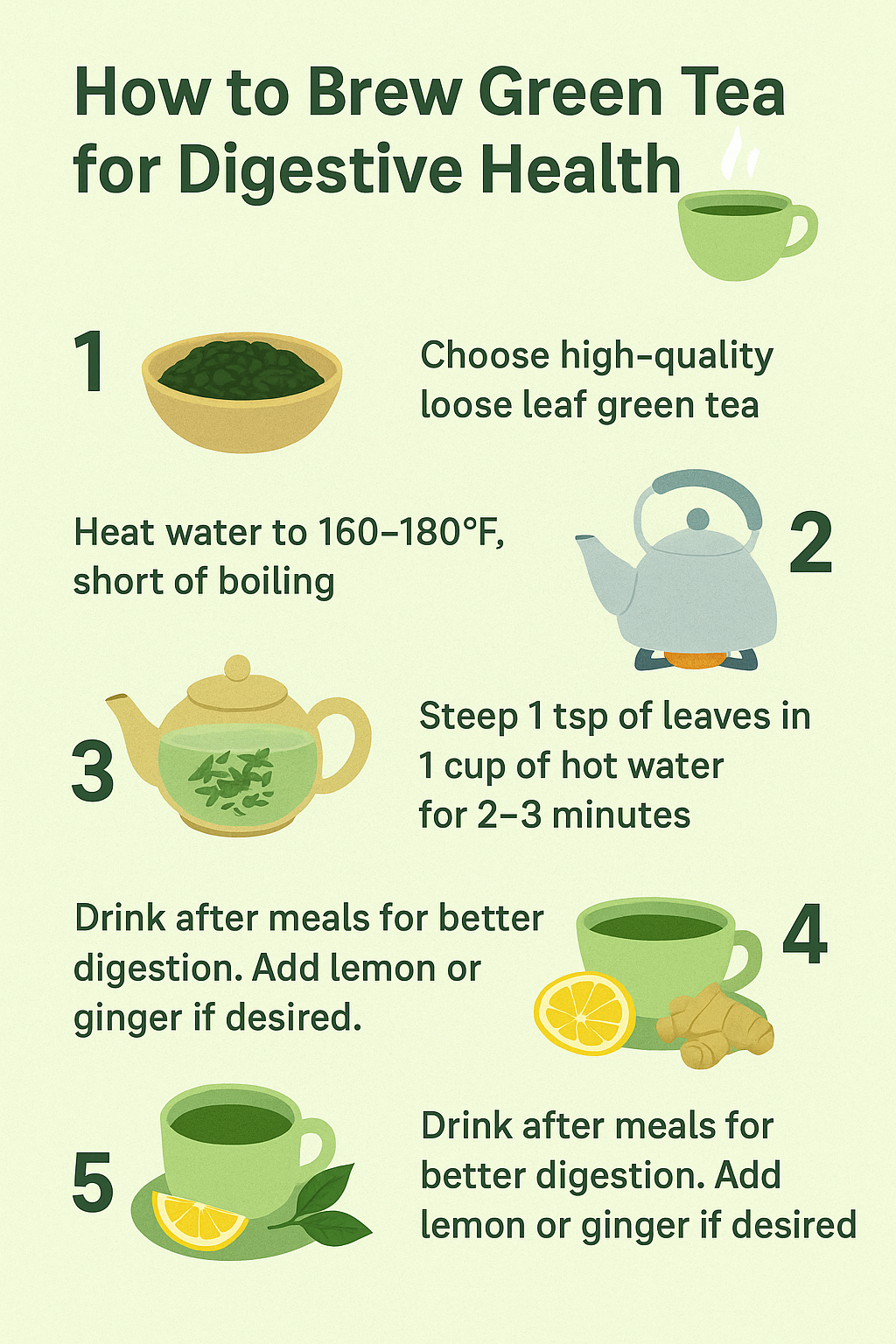
Brewing green tea the right way is key to preserving its delicate compounds and getting the most benefit for your stomach. If it’s brewed too hot or steeped too long, the tea can become bitter and slightly acidic, which may irritate sensitive stomachs. When prepared correctly, however, it’s gentle, soothing, and rich in active compounds that support healthy digestion.
Here’s how to make a perfect, stomach-friendly cup of green tea at home:
Step 1: Choose the Right Type of Green Tea
Not all green teas are equal when it comes to digestion. Japanese green teas like Sencha and Gyokuro are light and grassy, making them ideal for sensitive stomachs. Chinese varieties such as Longjing (Dragon Well) or Jasmine Green Tea have a slightly roasted note and are also great options for reducing bloating and discomfort.
If you prefer less caffeine, go for decaffeinated green tea or matcha with low caffeine content. Loose-leaf tea is always better than tea bags since it contains higher-quality leaves and more antioxidants (6).
Step 2: Heat the Water Gently
Boiling water can scorch green tea leaves and make the brew too harsh for your stomach. Instead, heat your water to 80–85°C (175–185°F)—just below boiling. If you don’t have a thermometer, simply let boiling water cool for about 2 minutes before pouring it over the leaves.
This temperature range allows the catechins and antioxidants to steep gently, releasing their benefits without creating bitterness or excess tannins, which can upset digestion.
Step 3: Use the Right Ratio and Steep Time
For a mild yet effective brew, use 1 teaspoon of green tea leaves for every 6–8 ounces of water. Steep for 2–3 minutes only, then strain the leaves immediately. Oversteeping increases tannin release, which may lead to stomach irritation, especially on an empty stomach.
If you’re sensitive, you can start with a lighter brew—just 1 minute of steeping—and gradually extend the time as your stomach adjusts.
Step 4: Enhance with Gentle Additions (Optional)
Adding a few natural ingredients can boost the digestive benefits of green tea:
- Fresh Ginger Slices: Help soothe nausea and bloating while adding a warm, spicy note.
- Lemon Juice: Stimulates digestive enzymes and enhances antioxidant absorption.
- Honey (in moderation): Adds a touch of sweetness and can help reduce acidity.
Avoid milk or heavy sweeteners, as they can counteract the digestive support green tea provides.
Step 5: Drink at the Right Time
Timing matters as much as preparation. For digestive support, the best times to drink green tea are:
- After meals (especially lunch or dinner): Helps break down fats and proteins.
- Mid-morning or afternoon: Keeps energy steady and reduces bloating.
- Avoid on an empty stomach: The natural acidity of tea may irritate sensitive stomachs.
Drinking 1–2 cups daily is ideal for gentle, consistent digestive support. More than 3 cups can increase caffeine intake beyond the recommended range, so moderation is key (7).
Side Effects and Precautions
Green tea is generally safe and beneficial for most people, but like any natural remedy, it should be consumed thoughtfully—especially when using it to support stomach health. Overconsumption or improper timing can sometimes do more harm than good, particularly for those with sensitive digestion or underlying health conditions.
1. Avoid Drinking on an Empty Stomach
Green tea contains catechins and natural acids that, while beneficial in moderation, can irritate the stomach lining if consumed without food. This may cause mild nausea, acid reflux, or a “sour” feeling in the stomach. It’s best to drink green tea 20–30 minutes after a meal rather than first thing in the morning.
If you’re fasting or prefer to drink it early, opt for a lighter brew with shorter steeping time and lower caffeine levels to minimize discomfort.
2. Limit Caffeine Intake
While green tea contains less caffeine than coffee, its levels can still range from 20–45 mg per cup, depending on the variety and brew time. Too much caffeine can increase stomach acid production and trigger restlessness or heartburn in sensitive individuals.
Experts recommend keeping your total caffeine intake below 400 mg per day, which equals about 6–8 cups of green tea, though 2–3 cups daily is ideal for most people (8).
3. Be Cautious with Iron Absorption
Green tea’s tannins can bind with iron from plant-based foods, reducing its absorption. This is usually not a problem for most people but can be a concern for those with iron-deficiency anemia or on vegetarian diets. To avoid interference, drink green tea at least an hour before or after meals containing iron-rich foods or supplements.
Adding a squeeze of lemon or pairing your tea with vitamin C–rich fruits can help offset this effect and improve mineral absorption.
4. Watch for Medication Interactions
Green tea’s bioactive compounds can interact with certain medications, including blood thinners (warfarin), stimulants, or heart medications. If you take prescription drugs, consult your healthcare provider before adding large amounts of green tea to your daily routine. The same caution applies to people with chronic gastritis, ulcers, or GERD, as excess caffeine or acidity can sometimes worsen symptoms.
5. Pregnancy and Sensitivity Considerations
Pregnant or breastfeeding women should keep caffeine intake moderate, limiting green tea to 1–2 cups per day. Those who experience caffeine sensitivity, insomnia, or palpitations should also reduce consumption or choose decaffeinated varieties for a gentler experience.
FAQs
Yes, green tea can help ease several digestive issues like bloating, indigestion, and mild inflammation. Its antioxidants and catechins calm irritation in the stomach lining and promote smoother digestion. However, consistency and moderation are key—one cup won’t fix chronic issues overnight.
The best time to drink green tea is 20–30 minutes after meals, when digestion is actively occurring. Drinking it too early, especially on an empty stomach, can lead to acidity or nausea. For those with sensitive digestion, an early afternoon cup is often most comfortable.
Green tea may soothe mild inflammation and reduce irritation, but it can worsen symptoms if consumed too strong or too hot. For acid reflux sufferers, drink mildly brewed tea at warm (not hot) temperature, and avoid pairing it with acidic foods.
For optimal benefits, 1–3 cups per day is enough. Drinking more than 4 cups may raise caffeine levels and cause discomfort. Stick to freshly brewed, high-quality green tea rather than bottled or flavored options that often contain added sugar or preservatives.
Absolutely. Lemon boosts antioxidant absorption and aids in fat digestion, while ginger enhances anti-inflammatory and anti-nausea effects. Both additions make green tea more effective for stomach relief while improving flavor naturally.
Conclusion
Green tea is one of the simplest and most effective natural remedies for promoting digestive wellness. Its gentle catechins and polyphenols work to ease inflammation, support fat metabolism, and calm the gut without the side effects of harsh medications. When brewed and consumed correctly, it offers both immediate comfort and long-term digestive support.
Drinking green tea after meals can help prevent bloating and aid nutrient absorption, while its soothing warmth makes it a relaxing daily ritual. For best results, stick with high-quality loose-leaf varieties, use moderate temperatures, and avoid drinking it on an empty stomach.
Over time, incorporating green tea into your routine can help your body digest more efficiently, reduce discomfort, and bring natural balance to your digestive system.


