Evening Herbal Tea for Relaxation
Evenings are a time to slow down, but for many, the body keeps racing long after the day ends. A cup of herbal tea can help bridge that gap, guiding the body and mind toward rest. The warmth of the tea, paired with its natural plant compounds, encourages relaxation without the stimulating effects of caffeine.
Herbal teas have been used for centuries in cultures worldwide to ease stress and prepare the body for sleep. Ingredients like chamomile, lavender, and lemon balm work gently on the nervous system, helping lower cortisol and promote a sense of calm. Unlike green or black teas, herbal blends are naturally caffeine-free, making them ideal for evenings.
Studies suggest that regular consumption of calming herbal teas can improve sleep quality and reduce anxiety by modulating neurotransmitters that influence mood and relaxation (1).
A nightly tea ritual is more than a beverage choice — it’s a signal to the body that it’s time to unwind.
Why Herbal Tea Helps You Relax
Evening herbal teas promote calm through a combination of warmth, aroma, and biochemistry. When you drink a warm, caffeine-free infusion, the body responds with slower breathing, muscle relaxation, and lower heart rate. The temperature itself soothes the vagus nerve, a key pathway for reducing stress signals throughout the body.
Herbal teas also contain bioactive compounds that work directly on the nervous system. Compounds like apigenin in chamomile, linalool in lavender, and rosmarinic acid in lemon balm can bind to the brain’s GABA receptors — the same calming pathway targeted by many natural sleep aids. This gentle interaction quiets the mind and helps the body transition toward rest.
The psychological element of the ritual matters too. Preparing and sipping tea at night becomes a form of mindfulness, signaling that it’s time to slow down. Over time, this association alone can improve sleep consistency and quality (2).
Best Herbal Teas for Evening Relaxation
Not all herbal teas work the same way. Some are better for sleep, others for easing stress or calming digestion. The best evening teas combine gentle sedative effects with aromas that comfort the senses and steady the mind.
Below are some of the most effective herbs for evening relaxation. Each one supports calm in a slightly different way, but all share one key trait — they are caffeine-free and kind to the nervous system.
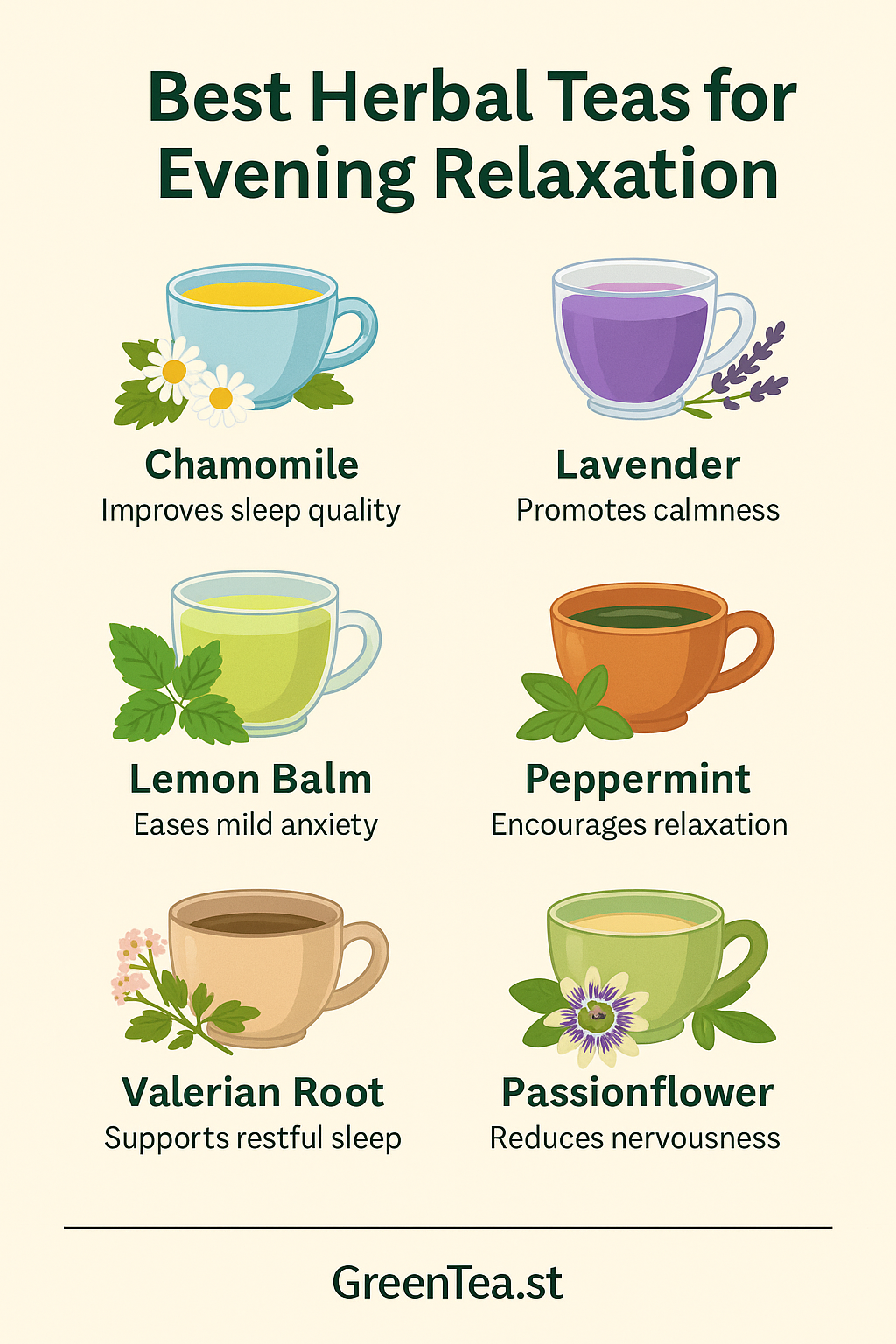
| Herbal Tea | Key Benefit | Main Compound | Caffeine |
|---|---|---|---|
| Chamomile | Promotes calm and better sleep | Apigenin | 0 mg |
| Lavender | Reduces anxiety and muscle tension | Linalool | 0 mg |
| Lemon Balm | Relieves restlessness and nervous energy | Rosmarinic acid | 0 mg |
| Peppermint | Soothes digestion and relaxes the mind | Menthol | 0 mg |
| Valerian Root | Shortens sleep onset and improves depth | Valerenic acid | 0 mg |
| Passionflower | Increases GABA activity for deep calm | Flavonoids | 0 mg |
Chamomile
Chamomile is among the most studied herbs for sleep and relaxation. Its main flavonoid, apigenin, binds to specific receptors in the brain that reduce anxiety and promote drowsiness. Regular consumption of chamomile tea before bed has been linked to improved sleep quality and reduced nighttime awakenings, especially in older adults and postpartum women (4).
The gentle floral taste and warmth also help calm digestion, which can support overall nighttime comfort and rest.
Lavender
Lavender offers both internal and aromatic benefits. Drinking lavender tea or inhaling its steam can reduce cortisol levels, lower heart rate, and promote a sense of calm. The compound linalool, found in lavender’s essential oils, interacts with serotonin pathways in the brain, which play a role in mood and relaxation (5).
Even a few sips of warm lavender tea before bed can quiet mental tension and prepare the body for rest.
Lemon Balm
Lemon balm, a citrus-scented member of the mint family, is prized for its ability to reduce restlessness and mild anxiety. It contains rosmarinic acid, a compound that enhances GABA activity in the brain. This supports emotional balance and helps quiet racing thoughts that often interfere with sleep (6).
When blended with chamomile or peppermint, lemon balm adds a light, refreshing taste that helps relax both the mind and body.
Peppermint
Peppermint tea is both soothing and refreshing, making it a great choice for evenings when you want to unwind after a heavy meal. The main compound, menthol, relaxes the smooth muscles of the digestive tract, easing discomfort that can interfere with rest. This same cooling compound also promotes deep breathing, which helps slow the heart rate and prepare the body for sleep (7).
Peppermint’s aroma adds an extra benefit. Studies show that inhaling peppermint can improve mental relaxation while gently improving alertness, helping you unwind without feeling sluggish.
Valerian Root
Valerian root has been used in traditional medicine for centuries to promote restful sleep. Its main active compound, valerenic acid, increases levels of gamma-aminobutyric acid (GABA) in the brain, a neurotransmitter that quiets nervous activity and encourages deeper rest (8).
Unlike synthetic sleep aids, valerian works gradually. Regular use over several nights can help reduce the time it takes to fall asleep and improve sleep depth. The flavor is earthy and strong, but blending it with chamomile or lemon balm balances its taste while keeping its effects.
Passionflower
Passionflower tea is known for its calming and anti-anxiety properties. It contains flavonoids that stimulate GABA production, similar to valerian but with a milder effect. This makes it particularly useful for easing a busy mind before bed without causing grogginess the next morning (9).
People who experience light sleep or frequent awakenings often find passionflower tea helps maintain rest through the night. It pairs well with chamomile or lavender for a gentle bedtime blend that supports both mental calm and emotional balance.
The Science Behind Calming Herbal Compounds
Herbal teas calm the body through a mix of neurochemical and sensory effects. Compounds such as apigenin, linalool, rosmarinic acid, menthol, and valerenic acid act on the same brain pathways that regulate mood and relaxation. These molecules gently enhance the brain’s ability to slow activity after stress.
How GABA Enhancers Work
Many herbs increase the activity of GABA (gamma-aminobutyric acid), a neurotransmitter that reduces nervous system excitability. When GABA levels rise, heart rate slows, muscles relax, and the body enters a pre-sleep state. Chamomile, valerian, and passionflower all work by either mimicking or preserving GABA activity (10).
Aromatherapeutic Compounds
Aromatic oils such as linalool in lavender and menthol in peppermint also influence mood through inhalation. These volatile compounds activate the olfactory limbic pathway, a direct connection between smell and emotion. Inhaling these aromas can reduce cortisol — the body’s primary stress hormone — within minutes (11).
Polyphenols and Antioxidant Effects
Herbal teas are rich in polyphenols and flavonoids, which help counter oxidative stress and inflammation. Chronic oxidative stress is linked to sleep disruption and anxiety. By reducing it, herbal teas promote steady neurotransmitter function and protect neurons from fatigue (12).
Thermal and Ritual Effects
The warmth of tea enhances relaxation by increasing peripheral circulation and signaling the body to wind down. Holding a warm cup activates sensory pathways associated with comfort, while slow sipping encourages mindfulness and deeper breathing. Over time, this simple act conditions the brain to associate tea with calm and safety.
Together, these biochemical and sensory effects explain why a warm cup of herbal tea can do more than just taste pleasant — it biologically prepares you for rest and emotional balance.
How and When to Brew for Maximum Calm
Essentials
- Kettle or pot, fine strainer, 300–350 ml mug with lid or small plate.
- Filtered water, fresh dried herbs, optional honey or lemon.
- Aim for quiet lighting and slow breathing while you brew.
Standard Hot Infusion (Leaves and Flowers)
- Heat water to 90–95°C (194–203°F).
- Measure 1–2 tsp dried herb per 250 ml water.
- Add herbs to a warm mug or teapot and pour water over.
- Cover to hold aroma, steep 5–10 minutes.
- Strain, taste, then sweeten lightly if desired.
(Time and temperature shape flavor and bioactive extraction, so stay within these ranges for best results (13).)
Stronger Night Cap
- Use 2 tsp herb per 250 ml water.
- Steep 10–12 minutes, still covered.
- Strain; add a splash of cool water if intensity is high.
Cold Infusion (Extra Gentle)
- Add 1 tbsp herb per 350 ml cool water.
- Cover and refrigerate 6–8 hours.
- Strain and drink plain, or warm gently before bed.
If Using Roots or Seeds
- For valerian or fennel: simmer 5 minutes at 90–95°C, then cover and steep 10 minutes.
- Strain well to avoid grit.
Timing Your Cup
- Start 30–60 minutes before bed.
- Sip slowly, focusing on breathing and posture.
- Keep screens dim or off to protect your wind-down.
Dose Guide by Herb
| Herb | Water | Temp | Steep |
|---|---|---|---|
| Chamomile | 250 ml | 90–95°C | 7–10 min |
| Lavender | 250 ml | 90–95°C | 5–7 min |
| Lemon Balm | 250 ml | 90–95°C | 7–10 min |
| Peppermint | 250 ml | 90–95°C | 5–8 min |
| Valerian Root | 250 ml | 90–95°C | 10–12 min (after 5 min simmer) |
| Passionflower | 250 ml | 90–95°C | 7–10 min |
Water Quality
- Use filtered or soft water.
- If water tastes chlorinated, let it sit 15 minutes before heating.
- Reboil only once to keep oxygen levels higher.
Make-Ahead Concentrate
- Brew 4× strength in a 1-liter teapot.
- Steep 10 minutes, strain, cool.
- Refrigerate up to 24 hours; dilute 1:3 with hot water at bedtime.
Flavor Balancing
- Too strong: add 30–50 ml hot water.
- Too light: extend steep by 2 minutes next time.
- Bitter: shorten steep or reduce herb by ½ tsp.
Cup-by-Cup Habit
- Keep a simple log: herb, time, temp, effect.
- Adjust one variable per night.
- Aim for a repeatable routine that your body recognizes.
Evening Tea Ritual Tips
A warm cup of herbal tea can do more than help you relax — it can retrain your body to recognize calm and prepare for rest. By creating a nightly ritual around tea, you strengthen the association between evening stillness and sleep.
1. Set the Atmosphere
Your environment plays a major role in how your body responds to relaxation cues. As you prepare your tea, dim the lights to mimic the natural sunset effect that encourages melatonin production. Avoid bright overhead lights or screens that confuse your circadian rhythm.
You can also enhance the atmosphere by lighting a candle, diffusing lavender essential oil, or playing soft instrumental music. These gentle sensory signals help the nervous system shift from alertness to rest mode. Over time, this environment becomes a visual and emotional reminder that it’s time to slow down.
2. Focus on Breathing
Before sipping, pause and focus on your breath. Try a simple 4-2-6 technique — inhale for four seconds, hold for two, and exhale for six. This rhythm activates the parasympathetic nervous system, which lowers blood pressure and steadies the heart rate (14).
Breathing deeply while inhaling your tea’s aroma compounds — like linalool in lavender or menthol in peppermint — doubles the calming effect. Aromatic molecules travel through the olfactory system to the brain’s limbic region, helping to calm emotional activity and promote a feeling of ease.
3. Add Gentle Movement
Pairing tea with slow movement helps release the physical tension that builds throughout the day. Light yoga stretches or gentle tai chi movements improve circulation, allowing tea’s bioactive compounds to work more efficiently.
You might begin your ritual by rolling your shoulders, rotating your wrists, or performing light forward bends. Focus on exhaling during stretches to release muscle tension. Even five minutes of mindful movement before tea can prepare the body for deeper relaxation and better digestion of warm beverages.
4. Use Consistent Timing
Drinking tea at the same time each evening trains your body to expect rest afterward. Ideally, have your tea 30 to 60 minutes before bed to allow its compounds — especially those in chamomile and valerian — to take effect naturally.
If you maintain a regular bedtime, this consistency strengthens your circadian rhythm, the internal clock that governs sleep and wake cycles. Over time, your body will begin to unwind automatically when you reach for your evening cup.
5. Limit Digital Stimulation
Screens emit blue light, which suppresses melatonin and keeps the brain alert. To maximize the calming benefits of your tea, take a full break from screens while drinking.
Replace scrolling with low-stimulation activities — read a few pages of a physical book, journal your thoughts, or play soft music. This helps the brain transition from information processing to rest mode, reinforcing your tea ritual as a signal for peace and reflection.
6. Engage the Senses
Herbal tea works best when you experience it fully. As you sip, observe the color, warmth, and aroma of the infusion. Let the scent fill your senses before each sip, allowing the brain to link the experience with comfort and safety.
Mindful sipping helps slow down mental chatter. Notice how the warmth feels in your hands and chest, how the flavor shifts as the tea cools, and how your breathing becomes calmer between sips. This multi-sensory awareness builds a lasting neurological association between tea and relaxation.
7. Reflect Briefly
End your ritual with a moment of reflection. You might jot down a gratitude note, recall a peaceful memory, or set an intention for tomorrow. This short practice helps your mind release lingering thoughts and prevents rumination at bedtime.
Reflective habits are proven to lower evening stress and support emotional regulation. When combined with a warm, caffeine-free beverage, they create a consistent sense of closure to the day — a mindful transition from activity to rest.
When practiced regularly, these small actions transform a cup of tea into a full relaxation ritual. They turn your evening beverage into an anchor for calm, balance, and renewal — a nightly reminder that rest is part of wellness, not an interruption from it.
Precautions and Side Effects
Herbal teas are gentle on the body, but they still contain bioactive compounds that can interact with medications or health conditions. Understanding how to use them safely ensures you get the full benefit without unwanted effects.
1. Sedative Herbs May Cause Drowsiness
Teas like valerian root, passionflower, and chamomile have mild sedative properties. While this helps promote sleep, drinking them too close to activities that require focus — such as driving or operating machinery — can cause unwanted drowsiness. It’s best to enjoy these blends when you can rest soon after consumption (15).
If you’re new to these herbs, start with half a cup to gauge your body’s response before drinking a full serving.
2. Pregnancy and Breastfeeding Precautions
Some herbal ingredients may not be suitable during pregnancy or lactation. Chamomile, valerian, and passionflower should be used cautiously or avoided unless approved by a healthcare professional. Certain herbs can affect uterine tone or hormone balance.
For expectant or breastfeeding mothers, rooibos or lemon balm are safer alternatives. Both are caffeine-free and soothing without affecting hormonal function (16).
3. Medication Interactions
Herbal teas can influence how the body metabolizes certain drugs. Valerian may enhance the effects of sedatives or anti-anxiety medications, while lemon balm and chamomile can mildly increase drowsiness when combined with antihistamines.
If you’re taking antidepressants, blood thinners, or sleep aids, consult your doctor before introducing herbal teas with calming properties. Even though they are natural, they can amplify or counteract medication effects (17).
4. Allergic Reactions
People sensitive to plants in the Asteraceae family (like ragweed, daisies, or marigolds) may react to chamomile. Symptoms include mild itching, skin redness, or throat irritation. If this occurs, discontinue immediately and switch to other relaxing herbs such as peppermint or lavender.
Always buy teas from reputable sources to ensure purity and avoid cross-contamination with allergens.
5. Overuse and Potency
Even gentle herbs can cause discomfort in excess. Drinking more than three strong cups of valerian or passionflower tea daily may lead to headaches or digestive upset. Consistent overuse can also reduce their calming effect as your body adapts.
Moderation yields the best results. Use these teas as part of a varied routine — alternating blends like chamomile-lavender or peppermint-lemon balm keeps your palate and nervous system balanced (18).
When approached mindfully, herbal teas are among the safest and most enjoyable natural ways to promote relaxation. Understanding how your body responds ensures each cup supports your health — not just your sleep.
FAQs
Yes. Most herbal teas are safe for daily use as long as you’re not over-brewing or using high-strength sedative blends. Rotate different herbs for balanced effects and to prevent tolerance.
Absolutely. Blending herbs can enhance relaxation and flavor. Chamomile and lavender complement each other well — chamomile soothes the body, while lavender calms the mind.
The best time is 30 to 60 minutes before sleep. This allows the tea’s calming compounds to reach peak effect while you’re already in a relaxed environment.
Chamomile and peppermint tend to take effect quickly due to their fast absorption and aromatic influence on the nervous system. Valerian and passionflower work best with regular use over several nights.
No. Herbal teas support natural relaxation but should not replace prescribed sleep aids without medical guidance. They work best as part of a healthy sleep routine and lifestyle.
Conclusion
Herbal teas offer a gentle, natural path to evening relaxation. Whether you prefer the floral calm of chamomile, the soft aroma of lavender, or the grounded warmth of valerian, each blend provides a simple way to ease daily tension.
Drinking tea slowly, in a calm setting, helps align body and mind toward rest. When paired with mindful breathing and a consistent bedtime, this nightly ritual can improve both mood and sleep quality (19).
A well-brewed cup at night is more than comfort — it’s a small act of self-care that resets your system for tomorrow.