
Best Tea for Itchy Throat
An itchy throat can sneak up on anyone — after a cold, a long day of talking, or exposure to dry air. The irritation often feels worse at night, when the airways are dry and swallowing becomes uncomfortable. While lozenges and syrups help, a warm cup of tea is one of the simplest and most effective natural remedies for soothing the throat.
Tea offers more than warmth. Its moisture hydrates the mucous membranes, while herbal compounds coat and calm irritated tissues. Many teas also provide mild anti-inflammatory and antimicrobial properties that help ease soreness and prevent further irritation.
Research shows that sipping warm liquids like herbal tea can improve comfort by increasing saliva production, lubricating the throat, and reducing the urge to cough (1). Herbal teas also help the body stay hydrated, a key factor in recovery from dryness and inflammation.
Whether it’s the smooth texture of licorice root, the cooling freshness of peppermint, or the gentle calm of chamomile, the right tea can bring quick, lasting relief for throat discomfort.
Why Tea Helps an Itchy Throat
Tea is one of the oldest natural remedies for throat irritation, and science continues to support why it works so well. Warm tea acts on multiple levels: it soothes the throat, hydrates the body, and delivers healing plant compounds that reduce inflammation and discomfort.
The warmth of tea stimulates blood flow to the throat, helping to relax tight muscles and ease dryness. It also promotes saliva production, which keeps tissues moist and prevents further irritation. This gentle hydration is especially helpful when coughing or mouth breathing worsens dryness.
Herbal teas add another layer of relief. Ingredients like mucilage in slippery elm and glycyrrhizin in licorice root coat the throat’s mucous membranes, forming a thin, protective film that calms irritation. Others, such as ginger and chamomile, work internally by reducing inflammation and relaxing the muscles involved in swallowing (2).
The act of sipping tea itself has a soothing rhythm. The slow warmth against the throat relaxes nerve endings, reduces the cough reflex, and helps the body transition into recovery mode.
Best Teas for Itchy Throat
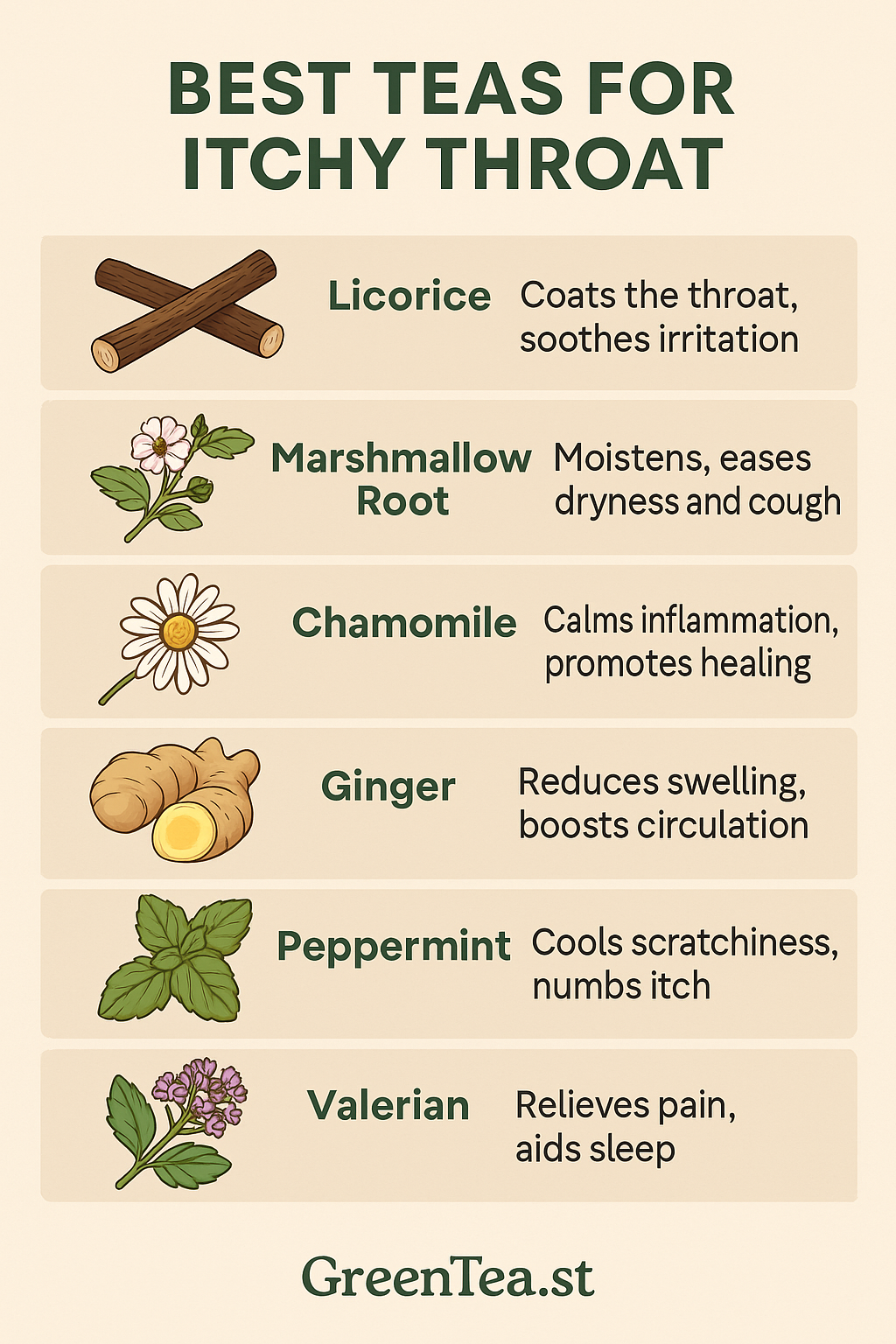
An itchy or scratchy throat often needs both moisture and anti-inflammatory support. Certain teas naturally calm irritation by coating the throat, reducing inflammation, and easing the urge to cough. Below are two of the most effective teas to start with — both caffeine-free and gentle enough for frequent use.
Licorice Root Tea
Licorice root is one of the most traditional remedies for sore and itchy throats. Its key compound, glycyrrhizin, gives it a naturally sweet flavor and mild anti-inflammatory effect. This compound helps relax throat muscles and supports the production of mucus, which keeps tissues moist.
When brewed, licorice root releases demulcent polysaccharides that form a smooth, protective coating along the throat’s lining. This layer acts as a temporary barrier, reducing friction and pain while swallowing. Studies show that licorice extracts can relieve throat irritation and inflammation, especially after respiratory infections (3).
To prepare: use one teaspoon of dried licorice root per cup of water, steep for 10–12 minutes, and sip slowly. Avoid overuse if you have high blood pressure, as glycyrrhizin can raise sodium retention in large amounts.
Slippery Elm Tea
Slippery elm is another well-known herbal remedy for throat discomfort. Its inner bark contains mucilage, a gel-like substance that becomes thick when mixed with water. This mucilage coats the throat and mouth, instantly soothing dryness and reducing irritation.
Beyond coating, slippery elm also acts as a mild anti-inflammatory, helping to calm the mucous membranes. It’s particularly useful when a cough or post-nasal drip aggravates the throat. Research confirms that slippery elm tea can increase throat comfort and reduce the sensation of soreness in people with chronic irritation (4).
For best results, use one tablespoon of powdered slippery elm bark per cup of hot water, stir well, and let it thicken before drinking. The consistency might feel unusual, but that smooth texture is what makes it effective.
Ginger Tea
Ginger tea is one of the most effective natural soothers for an itchy or sore throat. The warmth of ginger helps improve blood flow to the area, while its active compound, gingerol, reduces inflammation and swelling in throat tissues. This makes it especially helpful when the irritation is caused by a cold or post-nasal drip.
Beyond its anti-inflammatory power, ginger also acts as a mild antimicrobial, helping to fight bacteria or viruses that may worsen throat discomfort. Drinking freshly brewed ginger tea can loosen mucus, calm coughing, and ease that scratchy sensation caused by dryness or irritation (5).
To prepare: slice fresh ginger root (about 2–3 cm), add it to 250 ml of water, and simmer for 5–7 minutes. Strain, let it cool slightly, and add a spoonful of honey for extra throat coating and antibacterial benefit.
Chamomile Tea
Chamomile tea offers gentle, all-around comfort for an irritated throat. Its main compound, apigenin, works as a natural anti-inflammatory and muscle relaxant, reducing swelling and easing tension in throat tissues.
Chamomile also supports healing by moisturizing mucous membranes and promoting better sleep, which is essential for recovery. Inhaling the steam from freshly brewed chamomile tea can also help relieve nasal congestion and dryness. Studies show that chamomile tea or steam inhalation improves comfort and decreases throat inflammation in mild respiratory conditions (6).
To brew: use one tablespoon of dried chamomile flowers per cup of hot water, cover, and steep for 5–10 minutes. For extra relief, sip slowly while it’s warm and inhale the gentle floral steam before each sip.
Marshmallow Root Tea
Marshmallow root is one of nature’s most effective throat moisturizers. Its high mucilage content turns slightly thick when steeped, creating a soothing gel-like coating that covers irritated tissues. This helps reduce the dry, scratchy feeling and calms the urge to cough.
Unlike some herbal teas, marshmallow root is almost flavorless and very gentle, making it ideal for repeated use throughout the day. Research suggests that mucilage-rich herbs like marshmallow can form a protective film on mucous membranes, reducing friction and irritation caused by inflammation or dryness (7).
To prepare: steep 1 tablespoon of dried marshmallow root in cold or warm water (not boiling) for 30–60 minutes, then strain. The cool infusion helps preserve mucilage and provides deep hydration without irritation.
Peppermint Tea
Peppermint tea offers both cooling relief and gentle antimicrobial action for an itchy throat. Its signature compound, menthol, acts as a mild natural anesthetic that numbs irritation and soothes the throat lining. It also opens nasal passages and supports easier breathing — a bonus if congestion is part of the problem.
In addition to cooling the throat, peppermint has anti-inflammatory and antioxidant properties that may help reduce redness and irritation. It’s often recommended for soothing sore throats linked to colds or seasonal allergies. Studies show menthol’s vapors can relax throat muscles and reduce the sensation of cough and tickle (8).
To brew: steep 1 teaspoon of dried peppermint leaves in 250 ml of hot water for 5–7 minutes. Drink warm for comfort, or allow it to cool for a refreshing, hydrating option during the day.
Valerian Root Tea
Valerian root tea is best known for promoting calm and rest, but it also helps relieve throat tension caused by chronic coughing or muscle strain from speaking. Its main compound, valerenic acid, works on the brain’s GABA receptors, reducing nervous system activity and relaxing throat muscles.
This relaxation effect can be particularly useful for nighttime throat irritation, where constant swallowing or coughing interrupts sleep. By calming both the body and the airways, valerian root tea helps break the cycle of irritation that often worsens overnight (9).
To prepare: steep 1 teaspoon of dried valerian root in boiling water for 10–12 minutes. The taste is earthy and slightly bitter, so pairing it with chamomile or a touch of honey makes it smoother. Drink about 30 minutes before bed for best results.
The Science Behind Soothing Teas
Warm tea does more than comfort — it helps the body heal. Herbal teas for itchy throats work through three main mechanisms: coating, calming, and cleansing.
1. Coating and Moisturizing
Demulcent herbs such as slippery elm, licorice root, and marshmallow root are rich in natural mucilage — thick, gel-like compounds that line the throat and protect sensitive tissues from friction. This helps minimize coughing, dryness, and pain. Research shows that mucilage increases throat hydration and reduces perceived irritation almost immediately after consumption (10).
2. Reducing Inflammation
Teas like ginger and chamomile contain bioactive compounds such as gingerol and apigenin, which inhibit inflammatory pathways in the throat. This helps reduce swelling and redness while supporting the body’s natural healing response. These anti-inflammatory effects are especially helpful after vocal strain or mild infection (11).
3. Cooling and Clearing
Herbs like peppermint contribute menthol, a volatile oil that provides a cooling sensation and mild numbing effect. Menthol interacts with TRPM8 receptors in the throat, sending cooling signals to the brain and easing the sensation of itchiness or pain. This also helps open airways and reduce irritation from coughing (12).
Together, these mechanisms explain why herbal teas relieve an itchy throat more effectively than plain water. The combination of warmth, hydration, and bioactive plant compounds makes tea one of the simplest and most natural solutions for everyday throat comfort.
How to Brew Tea for Throat Relief
Hot Infusion for Leaves and Flowers
- Heat water to 85–95°C (185–203°F).
- Measure 1 tbsp dried herb per 250 ml water.
- Place herbs in a mug or teapot and cover after pouring water.
- Steep 7–10 minutes to extract soothing compounds.
- Strain. Sip warm in small, frequent sips. Warm infusions hydrate mucous membranes and ease cough sensitivity (13).
Cold or Cool Infusion for Mucilage Herbs
- Add 1 tbsp marshmallow root or slippery elm to 250–300 ml cool water.
- Cover and infuse 30–60 minutes, stirring once.
- Strain. Drink cool, or warm gently without boiling. Cool steeping preserves mucilage that coats and protects the throat (14).
Simmered Decoction for Roots
- Add 1 tsp cut licorice or valerian to 250 ml water.
- Bring to a gentle simmer for 5 minutes.
- Remove from heat, cover, and steep 10 minutes.
- Strain. Sweeten lightly if needed. Decoction improves extraction of demulcents and calming actives in roots (15).
Soothing Add-Ins
- Honey: 1–2 tsp per cup for throat coating and microbial support. Avoid in children under 1 year (16).
- Lemon: a few drops for flavor and mucus thinning. Add after steeping to protect aroma and vitamin C.
- Ginger boost: add 2–3 fresh slices during steeping for extra warmth and anti-inflammatory effect.
Dosage and Timing
- Drink 1 cup every 3–4 hours while symptoms persist.
- Aim for 2–4 cups daily, then taper as irritation improves.
- Best taken warm before bed to reduce nighttime cough.
Herb-by-Herb Brew Guide
| Herb | Measure | Water Temp | Time | Notes |
|---|---|---|---|---|
| Licorice root | 1 tsp cut root | Simmer, then cover | 5 min simmer + 10 min steep | Avoid with uncontrolled hypertension (17). |
| Slippery elm | 1 tbsp powder | Cool | 30–45 min | Stir well for smooth coating (14). |
| Marshmallow root | 1 tbsp cut root | Cool | 30–60 min | Preserve mucilage for moisture. |
| Ginger fresh | 2–3 slices | 90–95°C | 5–7 min | Add honey after straining (18). |
| Chamomile | 1 tbsp flowers | 90–95°C | 5–10 min | Cover to retain aroma (19). |
| Peppermint | 1 tsp leaves | 90–95°C | 5–7 min | Good for cooling tickle (20). |
| Valerian root | 1 tsp cut root | Simmer, then cover | 5 min simmer + 10–12 min steep | Use at night for cough-related sleep issues (21). |
Make a Day Batch
- Brew 3–4 cups at once using the methods above.
- Store in a sealed glass jar in the fridge up to 24 hours.
- Rewarm gently. Do not boil after adding honey or lemon.
Quick Relief Routine
- Morning: ginger or chamomile, sip slowly.
- Afternoon: marshmallow or slippery elm cool infusion.
- Evening: licorice or chamomile with honey.
- Bedtime: valerian blend if coughing disturbs sleep.
Safety Notes
- Stop use if you notice rash, swelling, or trouble breathing.
- Licorice may interact with diuretics and blood pressure medicines.
- If sore throat persists beyond 3 days, or you have fever or white patches, seek medical care (22).
Simple Home Tea Blends for Itchy Throat
Creating your own tea blends lets you combine soothing herbs for faster and more balanced relief. Each blend below supports hydration, coating, and calming effects in slightly different ways depending on your symptoms.
Licorice + Ginger + Honey
This blend offers both deep throat coating and anti-inflammatory relief. Licorice root forms a protective layer on the throat, while ginger improves circulation and reduces swelling. Honey adds antibacterial and moisturizing benefits.
How to make:
- Simmer 1 tsp licorice root and 3 slices of fresh ginger in 300 ml water for 5 minutes.
- Cover and steep 10 minutes.
- Strain and add 1 tsp honey before drinking.
Chamomile + Peppermint
Perfect for evening comfort or post-cold irritation, this blend is calming and cooling. Chamomile eases inflammation, while peppermint’s menthol gently numbs itchiness and opens the airways.
How to make:
- Add 1 tbsp dried chamomile and 1 tsp peppermint leaves to 250 ml hot water.
- Cover and steep 7–10 minutes.
- Strain and sip warm before bed.
Marshmallow + Lemon Balm
Ideal for dry or mildly sore throats, this combination soothes and hydrates. Marshmallow provides mucilage to coat the throat, while lemon balm calms nerves and reduces irritation from mild coughing.
How to make:
- Add 1 tbsp marshmallow root to 250 ml cool water. Steep 30 minutes and strain.
- Add 1 tsp dried lemon balm to the strained liquid, reheat gently for 3 minutes.
- Sweeten lightly if desired and drink warm or at room temperature.
These blends use gentle herbs that can be safely repeated throughout the day. They support the body’s natural recovery and offer comfort without artificial additives (23).
When to See a Doctor
Most cases of an itchy or sore throat improve within a few days of rest and hydration. However, persistent or worsening symptoms can point to an underlying infection or allergy that needs medical attention.
1. Prolonged Discomfort
If your throat irritation lasts more than 5–7 days, or keeps returning despite home remedies, consult a healthcare provider. Chronic irritation may signal allergies, acid reflux, or mild infection.
2. Severe Pain or Swelling
Seek medical help if swallowing becomes painful, your voice changes, or the throat looks visibly swollen. These can indicate inflammation that requires professional treatment.
3. Fever or White Patches
A sore throat accompanied by fever, white patches, or swollen lymph nodes may suggest a bacterial infection such as strep throat. These symptoms require testing and, in some cases, antibiotics.
4. Underlying Conditions
People with asthma, GERD, or seasonal allergies should be cautious. Throat irritation may flare due to postnasal drip or acid reflux, both of which benefit from medical management rather than herbal treatment alone.
5. Special Precautions
Pregnant or breastfeeding individuals should consult a doctor before using herbs like chamomile or licorice, as these may affect hormone balance or blood pressure.
If symptoms escalate or breathing becomes difficult, seek immediate medical care. Persistent sore throats can sometimes mask more serious conditions and should never be ignored (24).
FAQs
Ginger tea often provides the quickest relief because it improves circulation and reduces inflammation. Its warmth also soothes dryness and loosens mucus naturally (25).
Yes, but only mild, caffeine-free teas such as chamomile, peppermint, or marshmallow root. Avoid strong herbs like licorice or valerian for children under 12 unless advised by a healthcare provider.
Two to four cups spaced throughout the day usually work best. Frequent small sips keep the throat moist and provide steady soothing effects.
Yes, but only after steeping. Lemon adds vitamin C and helps thin mucus. Adding it to boiling water can destroy its nutrients and irritate very sore throats if overused.
Many ready-made throat teas are effective, but read ingredient labels carefully. Choose blends with licorice, marshmallow, chamomile, or peppermint, and avoid artificial flavorings or caffeine that may cause dryness.
Conclusion
A warm cup of tea remains one of the most comforting and natural ways to ease an itchy throat. Herbs like licorice, marshmallow root, and chamomile coat and calm delicate tissues, while ginger and peppermint fight inflammation and open the airways.
Beyond physical relief, the ritual of brewing and sipping tea encourages mindfulness and hydration — two factors that help the throat heal faster. Combined with rest and gentle care, these teas provide both comfort and recovery without harsh side effects (26).
For most people, tea can be more than a remedy — it’s a soothing pause that reminds the body to breathe, hydrate, and heal.

