Green Tea for Skin Acne Treatment
Acne can be one of the most frustrating skin challenges — unpredictable, persistent, and deeply tied to inflammation and hormonal changes. While skincare products often promise quick fixes, few offer lasting, natural balance. Green tea, however, stands out for its science-backed ability to reduce breakouts and improve skin clarity from the inside out.
For centuries, green tea has been valued in Asian beauty traditions for its anti-inflammatory and antibacterial properties. Today, research confirms that compounds like EGCG (epigallocatechin gallate) help regulate sebum production, calm redness, and protect skin cells from oxidative stress. Whether applied topically or enjoyed as a drink, green tea offers a gentle yet effective approach to acne control.
Its combination of antioxidants, tannins, and vitamins works in harmony to fight acne-causing bacteria, heal scars, and support a more even complexion. Unlike harsh treatments, green tea nurtures the skin’s natural barrier — making it suitable even for sensitive or acne-prone skin types (1).
What Makes Green Tea Effective for Acne?
The power of green tea for acne lies in its unique blend of antioxidants, polyphenols, and natural antibacterial agents. The key compound, epigallocatechin gallate (EGCG), is one of the most potent plant-based antioxidants known. It directly targets the root causes of acne — excess oil, bacteria, and inflammation — while protecting skin cells from oxidative stress.
EGCG works by regulating sebaceous gland activity, helping reduce the amount of oil the skin produces. Less oil means fewer clogged pores and reduced bacterial growth, which are major contributors to breakouts. In addition, the compound’s anti-inflammatory action calms redness, swelling, and post-acne irritation.
Beyond EGCG, green tea contains caffeine, tannins, and other catechins that work together to tighten pores, balance the skin’s microbiome, and support faster healing. When used both internally and topically, green tea promotes a clearer, smoother complexion — without drying or over-stripping the skin (2).
Nutrient Profile and Skin-Active Compounds
Green tea’s acne-fighting power comes from its dense concentration of bioactive compounds that nourish and protect the skin at multiple levels. These nutrients don’t just clear acne temporarily — they strengthen your skin barrier, balance oil production, and defend against recurring inflammation.
Here’s a breakdown of the key skin-active components that make green tea a natural ally for clearer, calmer skin:
| Component | Function for Skin | Effect on Acne |
|---|---|---|
| EGCG (Epigallocatechin Gallate) | The main catechin in green tea; fights oxidative stress and inflammation. | Reduces oil production, inhibits acne-causing bacteria, and speeds up healing. |
| Polyphenols | Powerful plant antioxidants that protect against cell damage. | Decrease redness, fade dark spots, and improve overall skin texture. |
| Tannins | Natural astringents that tighten pores and balance sebum. | Minimize shine and prevent clogged pores. |
| Vitamin B2 (Riboflavin) | Supports skin repair and regeneration. | Aids healing of acne lesions and improves skin tone. |
| Vitamin E | Moisturizes and strengthens the skin barrier. | Reduces scarring and dryness from acne treatments. |
| Caffeine | Improves blood flow and helps constrict pores. | Reduces puffiness and supports a smoother appearance. |
Together, these nutrients create a multi-layered defense system: they reduce the oil that feeds acne, fight bacteria that cause inflammation, and repair the skin barrier for lasting balance.
Green tea’s rich polyphenols also offer photoprotection, helping to reduce post-acne hyperpigmentation and protect against sun damage that can worsen scars (3).
Skin Benefits of Green Tea for Acne

Green tea supports clearer skin through multiple mechanisms — it doesn’t just fight pimples on the surface but also addresses internal triggers like inflammation, oil imbalance, and bacterial overgrowth. Below are its most important skin benefits, supported by research and traditional skincare wisdom.
1. Reduces Sebum Production
Excess oil, or sebum, is one of the main causes of acne. When oil mixes with dead skin cells, it clogs pores and allows bacteria to grow. Green tea’s EGCG compound helps regulate sebum production by balancing hormonal activity in the sebaceous glands.
A 2016 study found that participants who applied EGCG-based solutions experienced a reduction in sebum secretion and acne lesions over eight weeks. Drinking green tea regularly adds an internal benefit by reducing systemic inflammation, helping the skin maintain a healthy oil balance (4).
2. Fights Acne-Causing Bacteria
Green tea’s antibacterial action targets Propionibacterium acnes and Staphylococcus epidermidis, the two main bacteria involved in breakouts. Catechins in green tea disrupt bacterial membranes, preventing infection and inflammation without the harsh effects of synthetic antibiotics.
Topical green tea extracts have been shown to reduce both inflammatory and non-inflammatory acne lesions, making it ideal for mild to moderate acne. When used as a toner or face mist, it helps purify the skin, minimize breakouts, and prevent future flare-ups naturally (5).
3. Calms Inflammation and Redness
Acne-prone skin is often inflamed, swollen, and sensitive. Green tea’s antioxidants, especially polyphenols and flavonoids, help calm these reactions by neutralizing free radicals and reducing cytokine activity — the chemicals responsible for inflammation.
This makes green tea particularly helpful for red, irritated, or cystic acne. Consistent use can also fade redness and improve post-acne marks by promoting even skin tone and healthy cell turnover (6).
4. Promotes Healing and Prevents Scarring
Beyond treating active breakouts, green tea supports the skin’s healing process. Its antioxidants encourage collagen production and accelerate tissue repair. Vitamin B2 and E further assist by keeping skin hydrated and resilient as it heals.
Regular use of green tea masks or toners can minimize the appearance of acne scars and dark spots over time. Its mild exfoliating action from tannins also promotes smoother texture without stripping the skin or causing irritation (7).
How to Use Green Tea for Acne Treatment
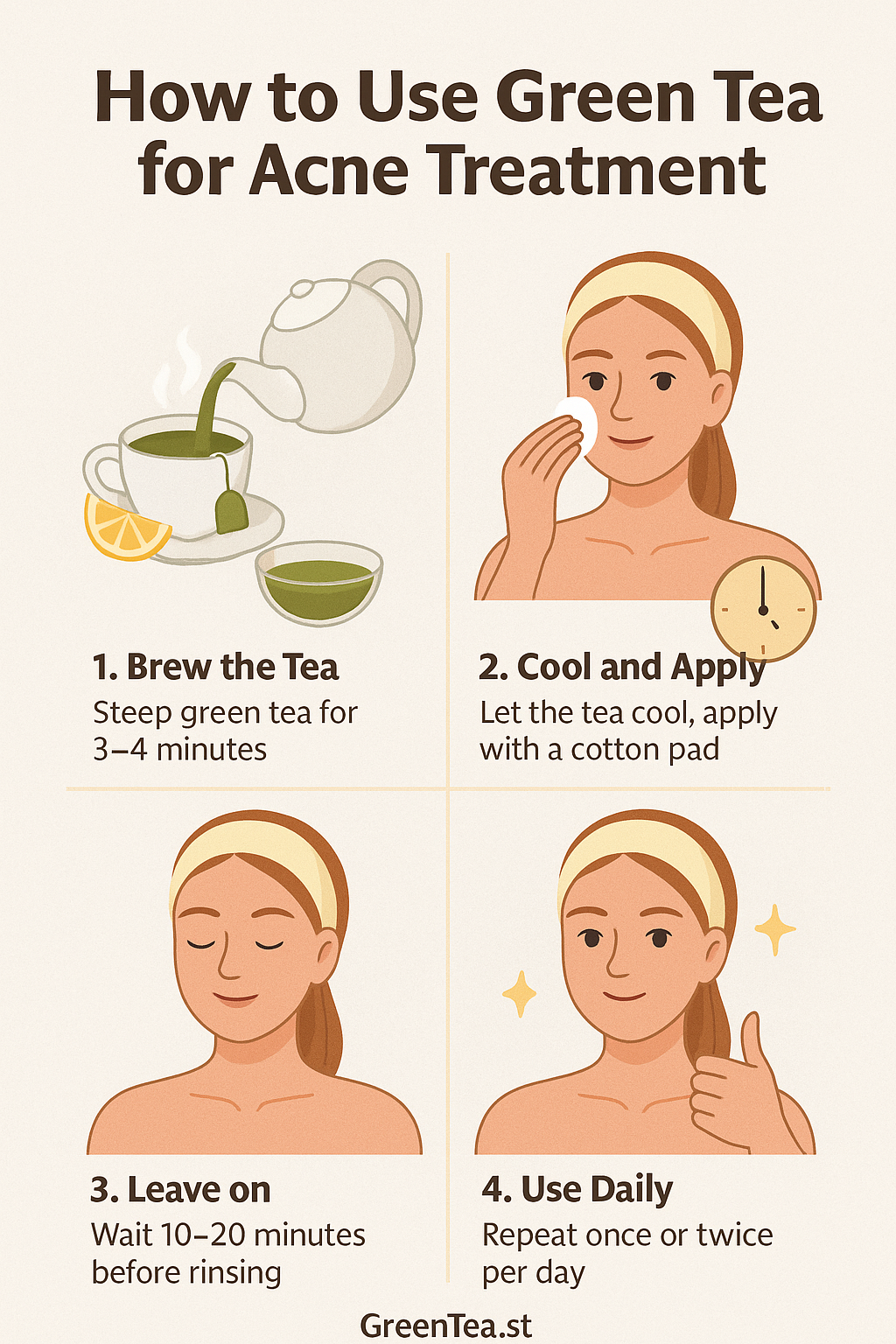
Green tea can be used both internally and externally to manage acne. Drinking it helps regulate inflammation and hormonal imbalances from within, while applying it topically targets bacteria and redness directly. Here’s how to make the most of both methods.
Internal Use — Drinking Green Tea
1. Choose the Right Type:
Opt for organic green tea, preferably sencha or matcha, as these have higher EGCG content. Avoid teas with added sugar or artificial flavoring.
2. Brewing Instructions:
- Heat water to 80°C (175°F) — not boiling, to protect antioxidants.
- Steep 1 teaspoon of loose leaves (or 1 bag) for 2–3 minutes.
- Drink 2–3 cups daily, ideally between meals to maximize absorption.
3. Timing:
Morning and early afternoon are ideal, as green tea contains mild caffeine. Avoid drinking it too close to bedtime.
Regular consumption helps reduce systemic inflammation, balance hormones, and improve skin clarity from the inside out.
External Use — Applying Green Tea to Skin
1. Green Tea Toner or Mist:
- Brew 1 cup of strong green tea and let it cool completely.
- Pour into a spray bottle and refrigerate.
- Apply to clean skin with a cotton pad or mist it on your face twice a day. This toner tightens pores, reduces shine, and calms irritation.
2. DIY Green Tea Face Mask:
- Mix 1 teaspoon matcha powder with 1 tablespoon yogurt or honey.
- Apply evenly on the face and leave for 10–15 minutes.
- Rinse with cool water and pat dry. This mask nourishes skin, clears pores, and supports healing.
3. Spot Treatment:
- Dip a cotton swab in cooled green tea and dab directly on blemishes.
- Repeat twice daily to shrink inflammation and speed recovery.
Used consistently, topical application enhances results and complements your daily tea consumption (8).
Best Green Tea Types for Skin Health
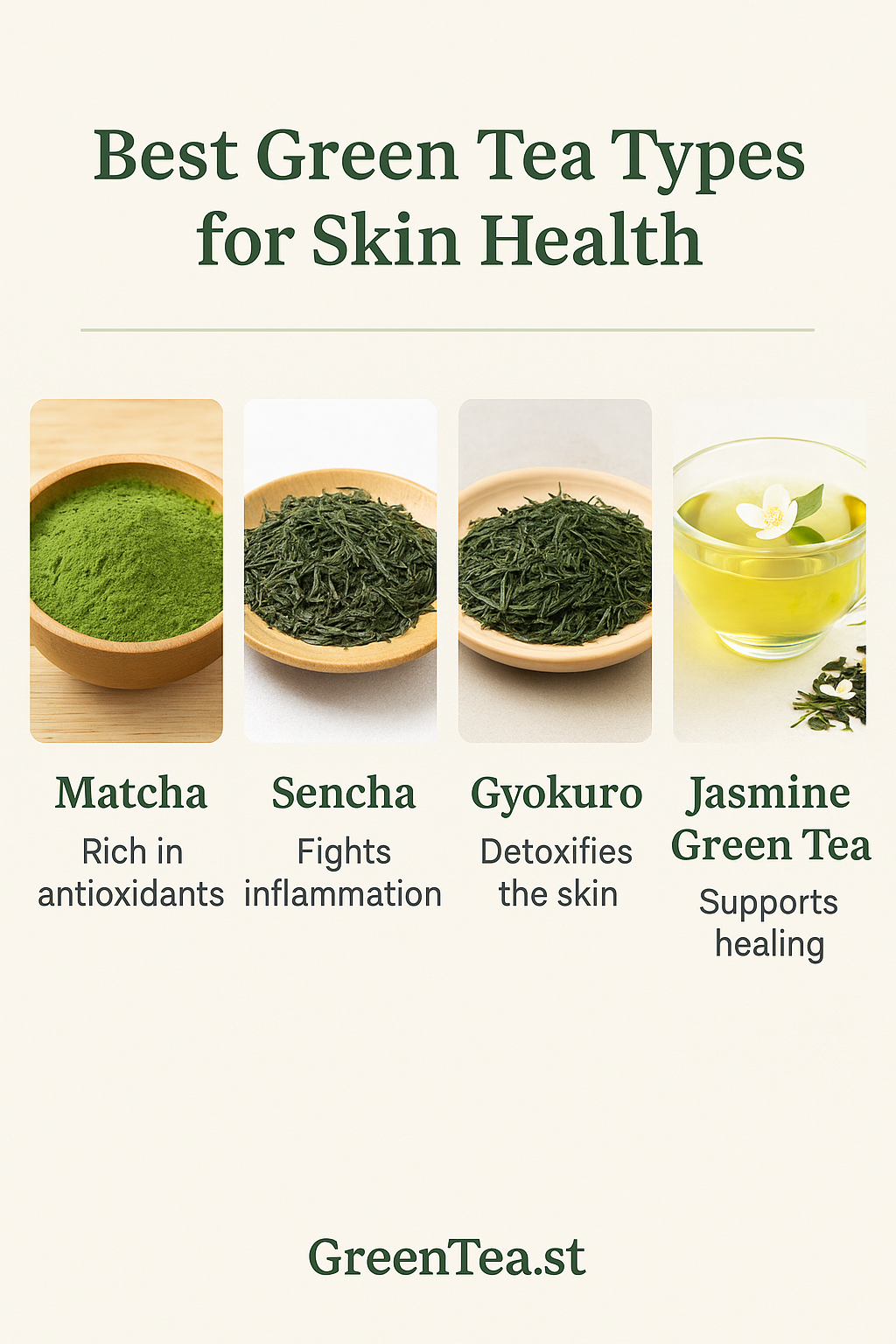
Not all green teas are created equal when it comes to skincare benefits. While all varieties contain antioxidants, some offer higher concentrations of EGCG, polyphenols, and vitamins that make them especially effective for acne treatment and skin repair.
The quality of your tea — its source, how it’s grown, and how it’s processed — determines its potency. Below is a detailed guide to the best green tea types for supporting clear, glowing skin.
| Type of Green Tea | Key Features | Best For | How to Use |
|---|---|---|---|
| Matcha | Made from finely ground whole tea leaves; highest EGCG and chlorophyll levels. | Acne control, detoxification, brightening dull skin. | Drink daily or mix with yogurt/honey for a topical face mask. |
| Sencha | The most common Japanese loose-leaf green tea; rich in antioxidants and vitamin C. | Everyday drinking, reducing redness and inflammation. | Brew 2–3 cups daily; gentle enough for sensitive skin types. |
| Gyokuro | Shade-grown tea with elevated amino acids and L-theanine content. | Balancing stress-induced breakouts, improving hydration. | Sip slowly; pairs well with mindful relaxation or skincare rituals. |
| Jasmine Green Tea | Infused with jasmine flowers; combines antioxidants with aromatherapeutic benefits. | Hormonal acne, stress-related flare-ups, relaxation. | Drink before bedtime or use cooled tea as a calming toner. |
| Hojicha | Roasted green tea with lower caffeine and high antioxidants. | Sensitive or dry skin types; gentle detox and barrier support. | Ideal as an evening drink to calm the system before rest. |
| Lemon Green Tea | Blended with lemon peel or juice to boost vitamin C absorption. | Post-acne dark spots and uneven skin tone. | Drink in the morning to support collagen formation and clarity. |
Matcha ranks highest for direct skin benefits since it contains the entire leaf, meaning it delivers more antioxidants and chlorophyll than other teas. Its concentrated EGCG levels help regulate sebum production and detoxify the skin from within.
For daily balance, sencha and jasmine green tea are excellent choices. They’re easy to prepare, mild in flavor, and effective at calming inflammation and reducing redness. Meanwhile, Hojicha is caffeine-light and perfect for evening use, especially if your skin tends to be dry or sensitive.
Combining internal use (drinking) with topical application from cooled brews provides a dual-action skincare approach — treating acne from both inside and out (9).
Precautions and Skin Sensitivity
Green tea is generally gentle and safe for most skin types, but using it thoughtfully ensures the best results — especially if your skin is sensitive or prone to dryness. While its natural compounds promote healing, overuse or improper application may cause irritation in rare cases.
Here are a few key precautions to keep in mind when using green tea for acne treatment:
1. Patch Test for Topical Use
Always do a patch test before applying green tea products or DIY masks to your face. Apply a small amount of brewed tea or paste to your inner wrist and wait 24 hours. If you notice redness or itching, avoid direct facial application. Some individuals may be sensitive to tannins or caffeine absorbed through the skin.
2. Avoid Overuse
Even though green tea is mild, using it excessively — especially in concentrated topical form — can dry out or over-tighten the skin. Limit topical treatments to once or twice daily, and always moisturize afterward to maintain barrier balance.
3. Be Mindful with Exfoliants and Acids
If you already use chemical exfoliants (like AHA, BHA, or retinol), introduce green tea slowly. The polyphenols in green tea have a mild exfoliating effect, and layering too many actives may lead to irritation or flaking.
4. Caffeine Sensitivity
Each cup of green tea contains 20–45 mg of caffeine, much lower than coffee but still enough to affect sensitive individuals. If you notice jitteriness or sleep disruption, choose decaffeinated green tea or limit your intake to two cups per day.
5. Sun Protection Still Matters
While green tea’s antioxidants help defend against UV damage, it’s not a substitute for sunscreen. Always use SPF daily, especially when using green tea topically — antioxidants enhance protection but don’t replace it.
When used moderately, green tea’s anti-inflammatory and antimicrobial effects work harmoniously with the skin’s natural rhythm, helping you achieve balance without side effects (10).
FAQs
Yes. You can safely apply cooled, brewed green tea using a cotton pad or as a mist. It helps calm redness, reduce oil, and refresh the skin. Always patch test first, especially if you have sensitive skin.
Most people notice improved texture and reduced redness after 2–4 weeks of consistent use. For deeper acne relief and fewer breakouts, allow at least 8 weeks of regular drinking and topical application.
Green tea can support acne treatment but should not replace prescribed medications for severe cases. It works best as a complementary therapy, improving skin balance and reducing side effects from stronger treatments.
Both have benefits. Drinking green tea fights inflammation and hormonal triggers internally, while topical use targets bacteria and redness on the skin’s surface. The combination provides the best results.
Yes. Green tea pairs well with aloe vera, honey, niacinamide, and vitamin C. Avoid combining it with strong acids or retinol in the same routine to prevent dryness or sensitivity.
Conclusion
Green tea offers one of the most natural and evidence-backed solutions for acne-prone skin. Rich in EGCG, polyphenols, and vitamins, it helps regulate oil production, fight bacteria, calm inflammation, and speed up healing — all while protecting the skin’s barrier.
Its versatility makes it ideal for all skin types, from oily to sensitive. Whether enjoyed as a daily drink or applied as a soothing toner or mask, green tea provides clearer, calmer, and more resilient skin over time.
In a world of harsh acne treatments, green tea stands out for its balance — gentle, effective, and rooted in centuries of natural healing tradition (11).