
11 Health Benefits of Hojicha Roasted Green Tea
Hojicha is a unique Japanese green tea that stands apart from others because of its roasting process. Made from sencha, bancha, or kukicha leaves and stems, hojicha is roasted at high temperatures, giving it a toasty, nutty, and slightly caramel-like flavor that is smoother and less bitter than traditional green teas. Developed in Kyoto in the 1920s, this tea has become a staple in Japanese households for its comforting taste and gentle effects on the body.
One of hojicha’s most appealing qualities is its low caffeine content, which makes it suitable for children, the elderly, and evening drinking. Unlike matcha or sencha, which can be stimulating, hojicha offers relaxation while still providing antioxidants, L-theanine, and beneficial minerals. This balance of taste and wellness has made hojicha increasingly popular not only in Japan but also worldwide as a versatile tea that can be enjoyed hot, iced, or even as a latte. Beyond its comforting flavor, hojicha delivers a wide range of health benefits supported by both tradition and modern research (1).
What is Hojicha?
Hojicha is a roasted Japanese green tea made from the leaves, stems, and twigs of the Camellia sinensis plant. Unlike other Japanese teas such as sencha or gyokuro, which are steamed to preserve their grassy flavor, hojicha undergoes a high-heat roasting process. This roasting transforms the tea, producing a toasty, nutty, and slightly smoky flavor with hints of caramel. The process also lowers bitterness, making hojicha smooth and easy to drink.
Hojicha was first developed in Kyoto in the 1920s as a way to use leftover leaves and stems. Over time, it grew in popularity due to its affordability, gentle taste, and low caffeine levels. Today, it is enjoyed by people of all ages in Japan, often in the evening, with meals, or even given to children and the elderly. Its versatility—whether brewed hot, served iced, or prepared as a hojicha latte—has made it increasingly popular outside Japan as well (2).
Hojicha Nutritional Facts
Hojicha’s roasting process slightly reduces some of the catechins found in green tea but introduces new beneficial compounds such as pyrazines and melanoidins, which contribute to its aroma and antioxidant activity. The result is a tea that is low in caffeine yet still packed with health-promoting nutrients. Below is a summary of the typical nutrients in one brewed cup (240 ml):
| Nutrient / Compound | Approximate Amount | Health Role |
|---|---|---|
| Catechins (EGCG) | 10–15 mg | Antioxidant, supports metabolism |
| Polyphenols | 40–60 mg | Anti-inflammatory, heart support |
| L-theanine | 4–6 mg | Promotes relaxation and mental clarity |
| Caffeine | 7–10 mg | Gentle stimulation, safe for evening |
| Pyrazines & Melanoidins | Present | Antioxidant, responsible for roasted aroma |
| Potassium | 20–30 mg | Regulates circulation and hydration |
| Magnesium | 2–4 mg | Supports muscle and nerve function |
| Calcium | 5–10 mg | Strengthens bones and teeth |
| Vitamin A | Trace | Supports vision and immunity |
| Vitamin C | Trace | Antioxidant, immune booster |
Hojicha is particularly valued for its low caffeine content, which makes it a rare green tea that can be comfortably enjoyed at night. While it contains fewer catechins than matcha or sencha, its unique combination of antioxidants, L-theanine, and minerals still delivers a wide range of wellness benefits (3).
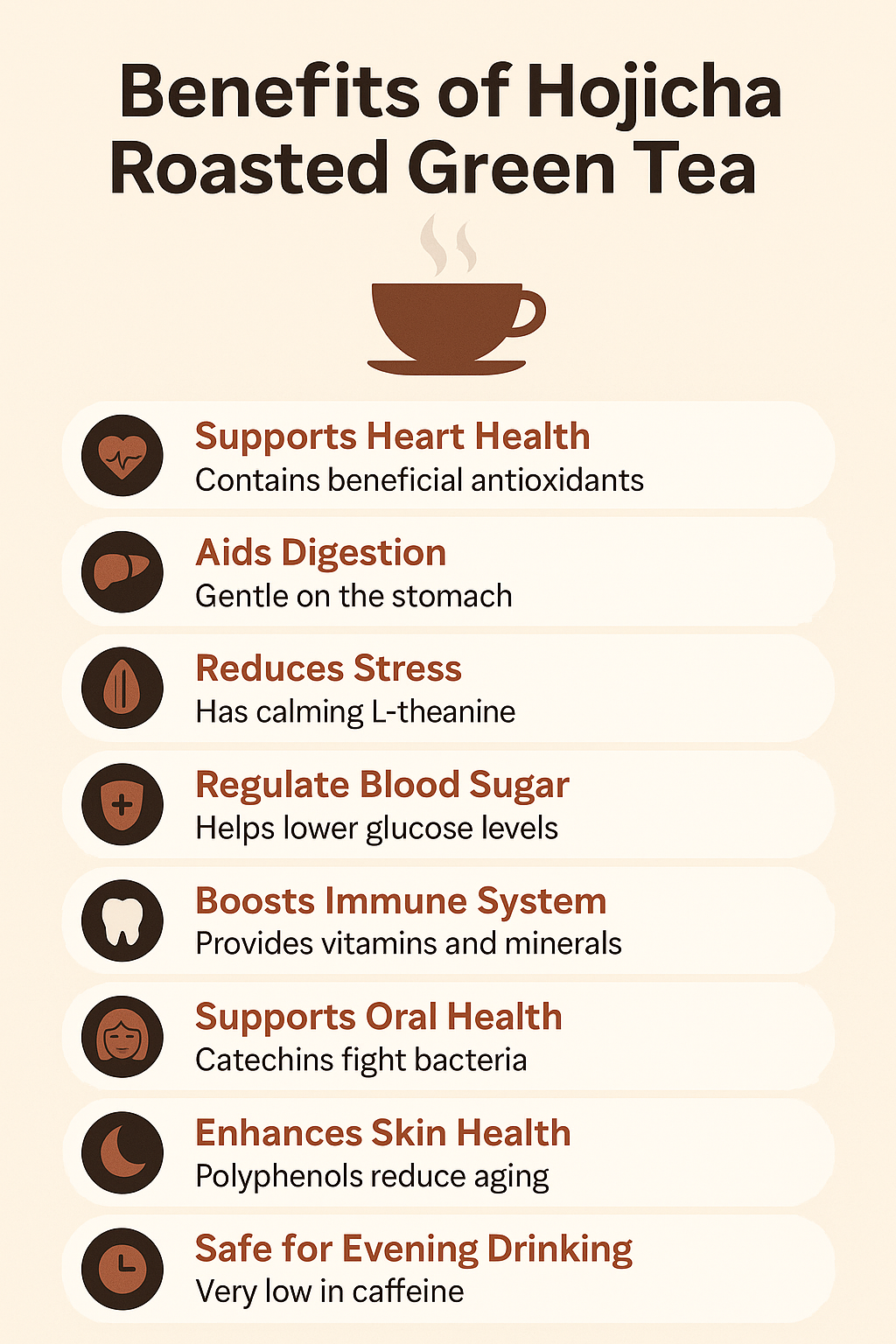
Here are 11 science-backed health benefits of hojicha roasted green tea.
1. Rich in Antioxidants
Hojicha may contain fewer catechins than other green teas due to the roasting process, but it still delivers a meaningful amount of antioxidants. These include catechins, polyphenols, and unique roasting byproducts like melanoidins, which have strong antioxidant activity. Antioxidants help neutralize free radicals, the unstable molecules that damage cells, accelerate aging, and contribute to chronic disease.
By drinking hojicha regularly, you provide your body with compounds that protect cells, reduce inflammation, and promote overall vitality. Its combination of traditional tea antioxidants with roasting-derived compounds makes hojicha unique among Japanese teas, offering a balanced way to support long-term health (4).
2. Supports Heart Health
Hojicha may promote cardiovascular wellness by supporting cholesterol balance and circulation. The polyphenols in hojicha are known to reduce LDL cholesterol and protect blood vessels from oxidative stress, which can lead to arterial stiffness. Its potassium content further supports healthy blood pressure levels, making it a heart-friendly choice.
Unlike stronger caffeinated teas or coffee, hojicha provides these cardiovascular benefits without overstimulating the body. Its gentle nature allows people of all ages to drink it daily, helping maintain circulation, reduce strain on the heart, and lower the long-term risk of cardiovascular disease (5).
3. Promotes Better Digestion
Hojicha is known in Japan as a tea that is gentle on the stomach. The roasting process reduces bitterness and tannin content compared to other green teas, making it less likely to cause irritation or nausea. This makes hojicha a good option for people with sensitive digestion or those who want a tea that can be enjoyed after meals.
Traditionally, hojicha has been served with evening meals because it soothes the stomach while aiding the body’s natural digestive process. Its warmth and mild compounds can also help reduce bloating and discomfort, offering both comfort and subtle digestive support (6).
4. Reduces Stress and Promotes Relaxation
Hojicha combines L-theanine, an amino acid that promotes calmness, with very low caffeine, creating a soothing effect on the nervous system. L-theanine encourages alpha brain wave activity, which is linked to relaxation and focus without drowsiness. Because hojicha is low in caffeine, it avoids the jittery effects sometimes experienced with sencha or matcha.
Many people find hojicha to be an ideal evening tea, helping to wind down after a busy day. Its roasted aroma also has a naturally calming quality, making it both a sensory and physiological aid for stress relief. For individuals looking for a tea that promotes peace of mind, hojicha is a gentle and enjoyable option (7).
5. Aids in Weight Management
Like other green teas, hojicha contains catechins and polyphenols that may support metabolism and fat oxidation. While the roasting process reduces the overall catechin content, hojicha still offers enough of these compounds to provide gentle metabolic support. Combined with its near-zero calories, hojicha is a helpful beverage for those aiming to manage weight naturally.
Replacing sugary drinks with hojicha is an effective strategy for reducing daily calorie intake while still enjoying a flavorful beverage. When paired with balanced meals and exercise, its antioxidants and mild caffeine content may provide an extra boost for supporting weight control (8).
6. Regulates Blood Sugar Levels
Hojicha may also play a role in stabilizing blood sugar levels. Its polyphenols help slow the absorption of glucose in the digestive tract, which prevents rapid spikes in blood sugar after meals. This steadying effect makes hojicha a suitable drink for individuals managing prediabetes or those aiming to maintain balanced energy levels.
Research suggests that green tea polyphenols can improve insulin sensitivity, enabling the body to use glucose more efficiently. Although hojicha contains slightly fewer polyphenols than unroasted green teas, it still provides protective benefits that support long-term metabolic health (9).
7. Boosts Immune System
Hojicha provides antioxidants, trace vitamins, and minerals that work together to strengthen the immune system. Polyphenols and vitamin C help protect immune cells from oxidative damage, while minerals like iron and magnesium contribute to healthy cellular function. By reducing inflammation and improving overall resilience, hojicha supports the body’s natural defense system.
Studies on green tea extracts show they can enhance immune response and lower susceptibility to common infections such as colds and flu. While hojicha has a lower catechin content than matcha or sencha, it is still a supportive beverage that can be consumed daily to promote immune balance (10).
8. Supports Oral Health
The catechins and fluoride naturally present in hojicha play an important role in oral hygiene. Catechins help inhibit the growth of harmful bacteria, including Streptococcus mutans, which is linked to cavities and gum disease. Fluoride strengthens tooth enamel, reducing the risk of decay.
Drinking hojicha regularly may also help reduce bad breath, since its polyphenols neutralize odor-causing bacteria in the mouth. Combined with proper dental care, hojicha can be a refreshing daily addition to maintain oral health and fresh breath (11).
9. Enhances Skin Health
The antioxidants in hojicha, particularly polyphenols and vitamin C, support skin health by reducing oxidative stress that contributes to premature aging. These compounds protect the skin from damage caused by free radicals, which are often linked to wrinkles, dullness, and loss of elasticity.
In addition, polyphenols have anti-inflammatory properties that may help calm skin irritation and redness. Regularly drinking hojicha provides the body with compounds that work from the inside out, supporting smoother, healthier, and more youthful-looking skin (12).
10. Safe for Evening Drinking
One of hojicha’s standout qualities is its very low caffeine content, averaging only 7–10 mg per cup. This makes it safe to drink in the evening, unlike sencha or matcha, which may interfere with sleep. In Japan, hojicha is often served after dinner or before bed because of its soothing qualities.
The combination of low caffeine and calming L-theanine makes hojicha an ideal nighttime tea. It provides relaxation without overstimulation, allowing drinkers to enjoy its roasted flavor while winding down for restful sleep (13).
11. May Support Longevity
Like other green teas, hojicha is associated with overall wellness and may contribute to healthy aging and longevity. Its antioxidants, minerals, and calming effects work together to protect against oxidative stress, support cardiovascular health, and maintain balanced metabolism—all important factors in long-term vitality.
While hojicha contains fewer catechins than unroasted teas, it makes up for this with roasting-derived compounds and its suitability for daily, long-term use. Because it is gentle on the stomach and low in caffeine, hojicha can be enjoyed regularly by people of all ages, supporting a lifestyle that promotes resilience, balance, and potentially greater longevity (14).
How to Make Hojicha
Hojicha is one of the easiest Japanese teas to prepare, and its roasting process makes it forgiving compared with more delicate green teas. It can be enjoyed hot for comfort or cold for refreshment, and it also works beautifully as the base for a hojicha latte.
Hot Brew Method
- Measure the tea
Use 1 teaspoon (2–3 g) of hojicha leaves per cup (240 ml) of water. - Heat the water
Heat water to 175–195°F (80–90°C). Unlike gyokuro or sencha, hojicha tolerates higher temperatures without becoming bitter. - Steep the leaves
Pour the hot water over the leaves and steep for 30–60 seconds. A longer steep will bring out deeper roasted flavors. - Strain and serve
Pour into a cup and enjoy plain, or with a touch of honey for sweetness.
Cold Brew Method
- Measure the tea
Add 2 teaspoons (4–5 g) of hojicha leaves per quart (1 liter) of cold water. - Steep in the refrigerator
Cover and refrigerate for 4–6 hours, or overnight for a stronger flavor. - Serve chilled
Strain the leaves and serve over ice for a smooth, refreshing drink. Cold brew hojicha tends to be less bitter and has a naturally sweet finish.
Tips for Brewing
- Hojicha can be steeped 2–3 times, with slightly longer steeping times for each infusion.
- For a creamy twist, prepare a hojicha latte by combining brewed hojicha with steamed milk or a milk alternative.
- Store hojicha leaves in an airtight container away from light and heat to preserve freshness.
Hojicha’s flexibility makes it a favorite: warm and soothing in the evening or cool and hydrating during summer months.
Side Effects and Risks
Hojicha is considered one of the safest green teas to drink, thanks to its low caffeine content and gentle flavor. However, as with any beverage, there are a few points to consider for balanced and safe consumption.
Caffeine Sensitivity
Although hojicha contains much less caffeine than other green teas—around 7–10 mg per cup—those who are very sensitive to caffeine may still experience mild restlessness or difficulty sleeping if they consume large amounts.
Stomach Sensitivity
While hojicha is gentler on the stomach than many other teas, its tannins and roasting compounds may still cause mild digestive discomfort for people with very sensitive stomachs, especially when consumed on an empty stomach.
Iron Absorption
Like other teas, hojicha contains tannins that can interfere with the absorption of non-heme iron from plant-based foods. For this reason, it’s best to drink hojicha between meals rather than with iron-rich foods, especially for individuals prone to anemia.
Quality and Safety
Because hojicha is often mass-produced, the quality can vary. Choosing organic hojicha from reputable sources reduces the risk of pesticide residues or contaminants.
In general, hojicha is safe for daily consumption and is even suitable for children and older adults. Its minimal caffeine makes it one of the best green tea options for those who want the benefits of tea without overstimulation.
Conclusion
Hojicha stands out among Japanese teas for its comforting roasted flavor, low caffeine, and gentle impact on the body. First crafted in Kyoto, this tea has grown into a household favorite, offering a unique combination of relaxation, warmth, and health benefits. Its antioxidants support heart, skin, and immune health, while its low caffeine and L-theanine make it ideal for stress relief and evening drinking.
Whether enjoyed hot after a meal, served cold in the summer, or made into a creamy latte, hojicha adapts to any occasion. Its versatility, safety, and cultural roots make it not just a drink but a daily ritual that promotes wellness. For those seeking a tea that balances flavor, comfort, and health, hojicha roasted green tea remains a timeless choice for people of all ages.


