
Best Tea for Sore Throat: Herbal Teas and Benefits
A sore throat is one of the most common discomforts people face, often caused by viral infections like the cold or flu, bacterial infections, allergies, or even overuse of the voice. It can feel scratchy, painful, and make swallowing difficult. While medications can help in severe cases, many people turn to natural remedies for relief. Among these, tea has long been valued for its soothing warmth, hydration, and medicinal properties.
Teas made from herbs, spices, or the tea plant itself can provide a gentle, natural way to ease throat irritation. The act of sipping a warm drink brings immediate comfort, while specific plant compounds work to reduce inflammation, fight microbes, and support healing. Studies suggest that warm beverages, including tea, can provide rapid relief of sore throat symptoms, especially when combined with honey or soothing herbs (1).
How Tea Helps a Sore Throat
Tea supports sore throat relief in several ways. First, the warmth of the beverage relaxes throat muscles, eases irritation, and helps loosen mucus, making it easier to clear the airways. Staying hydrated is another key factor, since dryness worsens pain and slows recovery. Herbal teas, being caffeine-free, are especially helpful because they provide fluid without risk of dehydration.
Beyond hydration, many teas contain natural compounds that actively support throat health. Antioxidants like polyphenols and flavonoids reduce oxidative stress and inflammation, while antimicrobial agents in herbs such as licorice root, ginger, and peppermint may help fight the underlying infection. Together, these effects make tea a practical and comforting home remedy for sore throats.
The Best Teas for Sore Throat
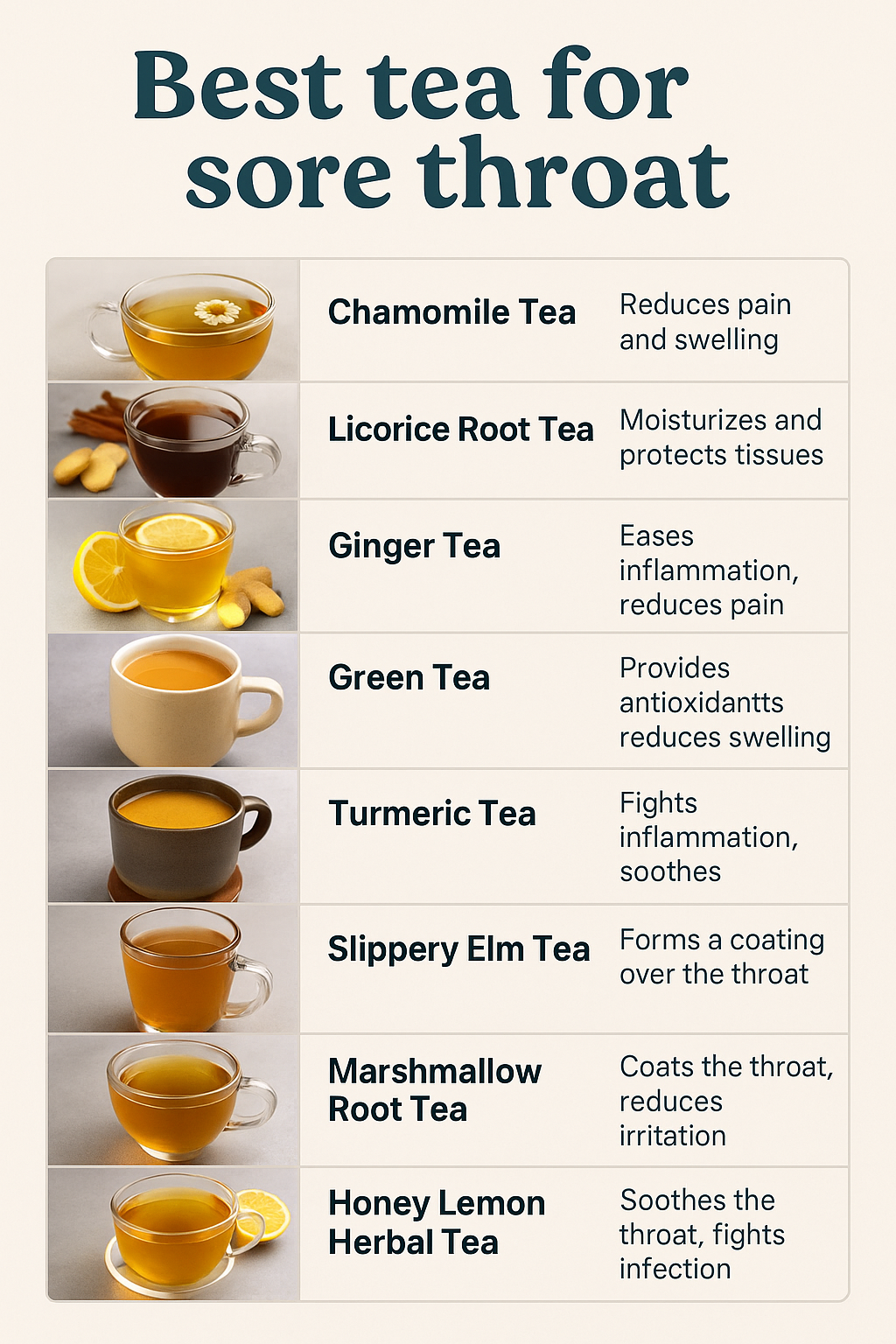
When it comes to soothing a sore throat, not all teas are created equal. Some offer more than just warmth and hydration — they contain natural anti-inflammatory, antimicrobial, and soothing compounds that directly target throat discomfort. Below are some of the most effective teas to consider when you’re feeling that scratchy pain.
1. Ginger Tea
Ginger tea is widely known for its warming and anti-inflammatory properties. Fresh ginger contains bioactive compounds like gingerol and shogaol, which help reduce swelling and irritation in throat tissues. The natural spiciness also stimulates saliva production, which keeps the throat moist and more comfortable.
Research has shown that ginger may have antibacterial and antiviral properties, which can support recovery when sore throats are linked to infections (2). Drinking freshly brewed ginger tea with a touch of honey can provide quick relief while supporting overall immune health.
2. Chamomile Tea
Chamomile tea is one of the most calming herbal infusions and is frequently used to soothe throat pain. It contains antioxidants like apigenin, which not only help reduce inflammation but may also provide mild pain relief. Its gentle, floral flavor makes it easy to sip even when swallowing feels uncomfortable.
Inhalation of chamomile steam has been found to relieve symptoms of respiratory infections, and drinking chamomile tea may provide similar soothing effects for sore throats (3). Adding a bit of lemon can enhance both the flavor and the benefits.
3. Licorice Root Tea
Licorice root tea has a naturally sweet taste and is a time-tested remedy for throat irritation. The root contains glycyrrhizin, a compound with potent anti-inflammatory and soothing properties. It helps form a protective coating over the mucous membranes, reducing pain and irritation when swallowing.
Studies suggest that licorice root can help alleviate throat discomfort after surgery and may also have antiviral and antimicrobial effects, making it a powerful choice for sore throats (4). However, it should be consumed in moderation, as high intake can affect blood pressure.
4. Peppermint Tea
Peppermint tea is refreshing and soothing, thanks to menthol, its active compound. Menthol provides a mild numbing effect that can temporarily relieve throat pain while also acting as a decongestant, helping to break up mucus in the respiratory tract. The cooling sensation offers quick comfort when the throat feels raw.
Research indicates that peppermint has antibacterial, antiviral, and anti-inflammatory properties, which makes peppermint tea a good choice when a sore throat is linked to infection (5). It can be enjoyed hot or slightly cooled, depending on your comfort.
5. Green Tea
Green tea is rich in polyphenols, particularly catechins, which are powerful antioxidants. These compounds reduce inflammation, fight oxidative stress, and support immune function. Drinking green tea can also help keep the throat hydrated while its mild astringency may soothe irritation.
Studies have shown that catechins in green tea may inhibit the growth of bacteria and viruses responsible for respiratory infections, including sore throats (6). Gargling with green tea has also been suggested as an additional way to relieve throat symptoms.
6. Slippery Elm Tea
Slippery elm tea has been used in traditional medicine for centuries to treat throat irritation. The inner bark of the slippery elm tree contains mucilage, a gel-like substance that coats the throat and provides a protective layer. This coating helps reduce pain when swallowing and soothes inflamed tissues.
Evidence supports its role as a demulcent — a substance that relieves irritation by forming a protective film over mucous membranes (7). For many, slippery elm tea offers a natural and immediate sense of relief.
7. Marshmallow Root Tea
Marshmallow root tea is another demulcent herb, similar to slippery elm, that produces mucilage to coat and protect the throat. This thick, soothing layer can ease pain, reduce inflammation, and help repair irritated mucous membranes.
Modern herbal medicine often recommends marshmallow root for coughs and sore throats, and studies suggest its mucilage helps relieve irritation in the respiratory tract (8). Drinking marshmallow root tea warm allows the compounds to fully release, giving both soothing hydration and therapeutic relief.
8. Honey Lemon Herbal Tea
While not a single herb, honey lemon tea is one of the most widely used home remedies for sore throats. Lemon provides vitamin C and antioxidants, while honey coats the throat and offers antimicrobial effects. Together, they reduce inflammation, ease pain, and support the immune system in fighting infection.
Honey in particular has been studied for its wound-healing and antimicrobial properties. Evidence suggests it can help reduce the severity and duration of throat irritation, making honey lemon tea a safe and effective option for most people (9).
Side Effects and Precautions: Which Teas May Not Be Suitable for Everyone
While many teas can soothe a sore throat, not all are suitable for everyone. Some may trigger allergies, interact with medications, or cause discomfort depending on individual health conditions. Here is a breakdown:
- Chamomile Tea
- Who should avoid it: People allergic to ragweed, daisies, or marigolds may experience allergic reactions to chamomile.
- Possible concern: Can interact with blood-thinning medications like warfarin, increasing bleeding risk.
- Ginger Tea
- Who should avoid it: Those with gallstones or on blood-thinning medication.
- Possible concern: Excessive ginger may cause stomach upset or heartburn in sensitive individuals.
- Licorice Root Tea
- Who should avoid it: People with high blood pressure, heart disease, kidney disease, or those taking diuretics or corticosteroids.
- Possible concern: Overconsumption may lead to dangerous spikes in blood pressure and potassium imbalances.
- Peppermint Tea
- Who should avoid it: People with gastroesophageal reflux disease (GERD) or acid reflux.
- Possible concern: Peppermint can relax the lower esophageal sphincter, worsening acid reflux symptoms.
- Slippery Elm Tea
- Who should avoid it: Pregnant or breastfeeding women, due to lack of safety data.
- Possible concern: It may slow absorption of certain oral medications when taken at the same time.
- Marshmallow Root Tea
- Who should avoid it: People on medications like lithium, diabetes drugs, or those with low blood sugar.
- Possible concern: Marshmallow root may lower blood sugar levels and interfere with drug absorption.
- Turmeric Tea
- Who should avoid it: Individuals with gallbladder disease, kidney stones, or those on anticoagulants.
- Possible concern: High doses may thin the blood and increase the risk of bleeding.
- Green Tea with Honey
- Who should avoid it: People sensitive to caffeine or those with iron deficiency anemia (since green tea can inhibit iron absorption).
- Possible concern: Caffeine-sensitive individuals may experience jitters, insomnia, or rapid heartbeat.
How to Brew Each Tea for Maximum Relief
To get the most out of these soothing teas, proper brewing is essential. Here’s how to prepare each tea for throat relief:
1. Chamomile Tea
- Ingredients: 1 tablespoon dried chamomile flowers (or 1 tea bag), 1 cup hot water.
- Method: Steep for 5–7 minutes, then strain. Add honey if desired for extra throat-coating effect.
- Best Time: Before bedtime for relaxation and overnight throat relief.
2. Ginger Tea
- Ingredients: 1–2 teaspoons fresh grated ginger root, 1 cup boiling water.
- Method: Simmer ginger in water for 10 minutes, then strain. Add lemon juice or honey for added soothing power.
- Best Time: Morning or midday to ease soreness and boost immunity.
3. Licorice Root Tea
- Ingredients: 1 teaspoon dried licorice root, 1 cup boiling water.
- Method: Steep for 10–15 minutes, strain, and sip slowly.
- Best Time: Twice daily when experiencing throat pain, but avoid long-term daily use due to side effects.
4. Peppermint Tea
- Ingredients: 1 tablespoon dried peppermint leaves (or 1 tea bag), 1 cup hot water.
- Method: Steep for 5–7 minutes, strain, and serve warm.
- Best Time: After meals or at night to soothe irritation and aid breathing.
5. Slippery Elm Tea
- Ingredients: 1 teaspoon powdered slippery elm bark, 1 cup hot water.
- Method: Mix powder with hot water, stir until dissolved. It creates a slightly thick, soothing drink.
- Best Time: Whenever throat irritation feels worst, up to 3 times daily.
6. Marshmallow Root Tea
- Ingredients: 1 tablespoon dried marshmallow root, 1 cup cold water.
- Method: Steep in cold water for 4–6 hours, then strain and gently warm before drinking.
- Best Time: Morning or afternoon, as needed for sore throat relief.
7. Turmeric Tea
- Ingredients: 1 teaspoon turmeric powder (or 1-inch fresh root), 1 cup boiling water.
- Method: Simmer for 10 minutes, strain, and add black pepper plus honey to boost absorption and soothe throat.
- Best Time: Morning or evening for both pain relief and inflammation control.
8. Green Tea with Honey
- Ingredients: 1 teaspoon loose green tea (or 1 tea bag), 1 cup hot water, 1 teaspoon honey.
- Method: Steep green tea for 2–3 minutes, then stir in honey. Avoid over-steeping to prevent bitterness.
- Best Time: Any time of day, especially mid-morning or early evening for hydration and immune support.
FAQs
Slippery elm and marshmallow root teas often provide the quickest relief because of their mucilage, which coats and soothes the throat almost immediately.
Most of the teas, such as chamomile, ginger, and green tea, are safe for daily use in moderation. However, teas like licorice root should be consumed cautiously due to possible effects on blood pressure.
Chamomile is ideal for nighttime as it not only soothes the throat but also promotes restful sleep. Peppermint can also work well if you struggle with congestion at night.
Chamomile, honey lemon, and peppermint teas are usually safe for children over one year old. Avoid honey in children under one year due to the risk of botulism, and consult a pediatrician before using herbal teas like slippery elm or marshmallow root.
Yes. A common combination is ginger, lemon, and honey. Another is chamomile with peppermint. Mixing allows you to target both inflammation and soothing effects simultaneously.
Conclusion
Choosing the best tea for a sore throat depends on your symptoms and health needs. If you want quick coating relief, slippery elm or marshmallow root are excellent options. For immune support and inflammation reduction, ginger and green tea work well. For a calming effect, especially at night, chamomile is the go-to. And if you prefer a refreshing option that also eases congestion, peppermint is ideal.
The key is consistency — sipping warm tea throughout the day keeps the throat moist, reduces irritation, and may help you recover faster. Pairing your chosen tea with honey enhances the soothing effect and adds antimicrobial power. With the right choice, a sore throat can go from unbearable to manageable in just a few cups.