When is The Best Time to Drink Green Tea?
Is there really a best time to drink green tea? Most people reach for a cup when they need a quick energy lift or a moment of calm, but the timing of that sip matters more than you might think. The hour you drink green tea can shape how your body absorbs its caffeine, antioxidants, and amino acids — all of which influence metabolism, focus, and even sleep quality.
Across Asia, tea timing is woven into daily life. In Japan, a morning cup of Sencha follows breakfast; in China, midday tea marks a pause between work and lunch. In the West, people often drink it as a substitute for coffee, unaware that certain times can amplify or blunt its effects.
In this guide, you’ll learn when to drink green tea for your specific goals — from boosting alertness and fat metabolism to supporting digestion and relaxation. You’ll also discover when not to drink it and how to choose the right tea for each moment of the day. Science shows that timing can make all the difference in how your body responds to green tea’s key compounds (1).
What Happens When You Drink Green Tea
When you drink green tea, your body absorbs a mix of bioactive compounds that interact in fascinating ways. The most notable are caffeine, catechins (especially EGCG), and L-theanine — each influencing energy, mood, and metabolism differently. Caffeine stimulates the central nervous system, providing alertness and mild fat oxidation, while L-theanine promotes calm focus by increasing alpha brain wave activity. Together, they create a smooth sense of alertness without the sharp spikes or crashes often caused by coffee (2).
Green tea also contains antioxidants that enter the bloodstream within 30–45 minutes after consumption, supporting oxidative balance and liver detoxification. However, drinking it on an empty stomach can sometimes cause mild nausea because of its tannins and acidity. Pairing green tea with or after a light meal reduces that effect and ensures steady absorption of nutrients.
In essence, the when of drinking green tea determines how it affects you. A cup in the morning might lift focus, while one before bed could disturb sleep. Understanding this rhythm — the science of timing — is the foundation for getting the most from your tea.
The Science of Timing
Your body runs on a 24-hour circadian rhythm, a natural internal clock that regulates sleep, digestion, and energy. This rhythm influences how your body responds to caffeine and antioxidants. Drinking green tea at certain times aligns with these biological patterns — amplifying its benefits rather than working against them.
In the morning, your body naturally releases cortisol, a hormone that helps you wake up and feel alert. Pairing green tea with breakfast or mid-morning activities supports this rhythm, providing gentle stimulation without overwhelming the nervous system. By contrast, drinking green tea late at night can interfere with melatonin production and make it harder to fall asleep.
The catechins in green tea also interact with digestion and metabolism in time-dependent ways. Studies show that drinking green tea before moderate exercise or between meals can increase fat oxidation and metabolic rate, while consumption during meals may help control post-meal blood sugar spikes (3).
Understanding this balance helps you use green tea strategically. Early in the day, it promotes focus and metabolism. Later in the day, milder teas like Genmaicha or Hojicha calm the body without interrupting rest. When paired with your body’s natural rhythm, green tea becomes not just a beverage but a lifestyle ally.
Best Times to Drink Green Tea
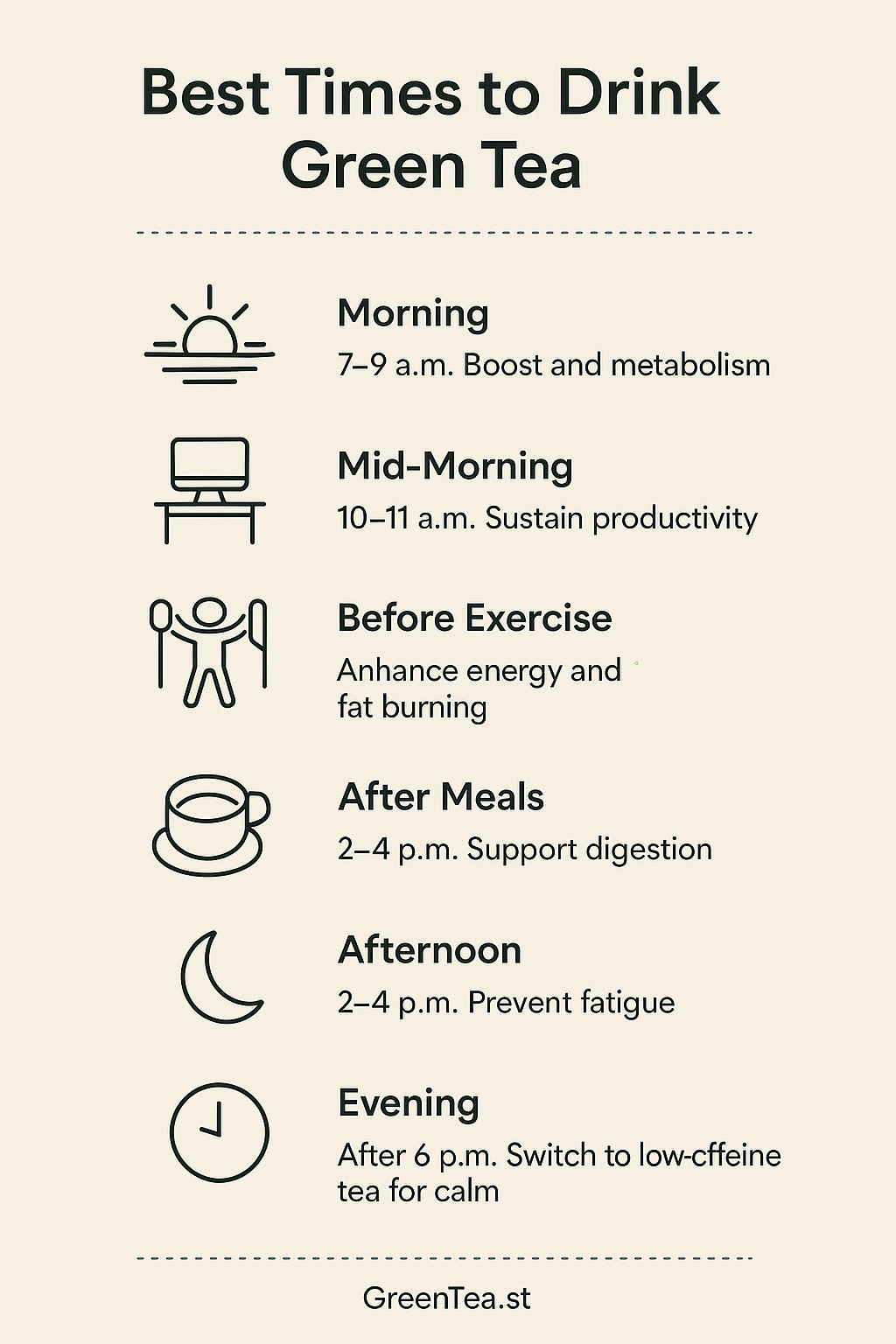
There’s no single “best” time that fits everyone. The right moment depends on your goals — energy, digestion, focus, or relaxation. Below are the most beneficial times of day to enjoy green tea, based on how your body responds to its key compounds.
1. Early Morning (After Breakfast)
Drinking green tea first thing in the morning may seem appealing, but it’s best to wait until after breakfast. When taken on an empty stomach, the tea’s tannins can irritate the stomach lining and cause mild nausea. After eating, however, the same compounds can help kick-start metabolism and sharpen focus without discomfort.
Green tea’s moderate caffeine content, combined with L-theanine, offers steady energy that aligns with your body’s natural cortisol peak. This makes it a perfect coffee alternative for those seeking gentle stimulation rather than a jolt (4). A warm cup after breakfast helps clear morning grogginess and sets a calm, alert tone for the day ahead.
2. Mid-Morning (Between 10–11 a.m.)
Mid-morning is an ideal window for green tea. By this time, your body has digested breakfast, and your energy levels may begin to dip slightly. The combination of caffeine and L-theanine enhances focus, memory, and alertness, helping maintain productivity through late morning tasks.
Research suggests that this synergy between caffeine and theanine improves cognitive performance while reducing mental fatigue (5). This makes mid-morning green tea especially useful for those who spend long hours on concentrated work or study. A small cup around 10:30 a.m. can keep your mind sharp and mood balanced until lunch.
3. Before Exercise
Drinking green tea 30 to 60 minutes before a workout can boost endurance and fat metabolism. Its catechins — particularly EGCG — enhance the body’s ability to use fat as fuel during physical activity. Combined with moderate caffeine, this makes it an effective natural pre-workout drink.
A controlled study found that regular green tea consumption before exercise significantly increased fat oxidation rates and improved physical performance (6). Whether you’re taking a brisk walk or a gym session, green tea offers energy without overstimulation, supporting stamina and recovery.
4. After Meals
One of the most traditional and beneficial times to drink green tea is after meals. In Japan and China, it’s common to end lunch or dinner with a small cup to aid digestion and cleanse the palate. The polyphenols in green tea may help reduce fat absorption and regulate post-meal blood sugar levels, especially after carbohydrate-heavy meals.
In one human study, green tea catechins were found to help slow carbohydrate breakdown and reduce glucose spikes after eating (7). However, drinking it immediately after a meal may interfere with iron absorption, so waiting 30 to 45 minutes is ideal. This timing supports digestion while still allowing your body to absorb nutrients efficiently.
5. Mid-Afternoon
The mid-afternoon slump, often between 2 p.m. and 4 p.m., is a perfect time for another cup of green tea. As energy levels naturally drop after lunch, the gentle caffeine and theanine combination helps restore alertness without the crash often caused by coffee or energy drinks.
Research indicates that even modest doses of caffeine can enhance attention and working memory for several hours (8). Green tea’s slow-releasing caffeine provides consistent focus, while its antioxidants offer a refreshing reset for the body and mind. Choose lighter teas like Sencha or Jasmine green tea at this time for an uplifting yet calm boost.
6. Evening (With or After Dinner)
If you enjoy a warm beverage in the evening, green tea can still be a good choice — as long as you select the right type. Traditional varieties like Hojicha or Genmaicha contain significantly less caffeine than standard green teas because they’re roasted. This makes them ideal for unwinding after a long day without disrupting sleep.
Beyond relaxation, these teas also support gentle digestion after dinner and can reduce bloating or heaviness. A cup of Hojicha about an hour after eating provides warmth and comfort, with minimal caffeine to disturb rest. Studies show that reducing caffeine intake within six hours of bedtime improves sleep quality and reduces nighttime awakenings (9).
When Not to Drink Green Tea
While green tea offers many benefits, timing matters just as much as quantity. Drinking it at the wrong time can cause mild side effects or reduce nutrient absorption. Here are moments best avoided for most people.
- On an Empty Stomach
Green tea contains natural tannins and caffeine, which can irritate the stomach lining when consumed without food. This may lead to nausea or acid discomfort in sensitive individuals. Always pair your first cup with or after a light meal or snack. - Immediately After Meals
Drinking green tea right after eating can reduce the absorption of non-heme iron from plant-based foods. Catechins bind to iron molecules in the digestive tract, making them harder to absorb. To avoid this, wait at least 30–45 minutes after meals before drinking tea (10). - Very Late at Night
Green tea naturally contains caffeine, which can stay active in the bloodstream for several hours. Consuming it too close to bedtime can interfere with melatonin production and delay sleep onset. For restful sleep, avoid caffeinated green tea at least six hours before bed. - During Dehydration
Green tea is mildly diuretic. If you’re already dehydrated or haven’t had enough water, drinking it before replenishing fluids may worsen dryness or fatigue. Always balance your intake with plenty of water throughout the day. - With Iron or Folic Acid Supplements
Catechins can interfere with the absorption of certain nutrients, including iron and folic acid. If you take these supplements, space your green tea at least an hour apart for best results.
Matching Tea Type to Time of Day
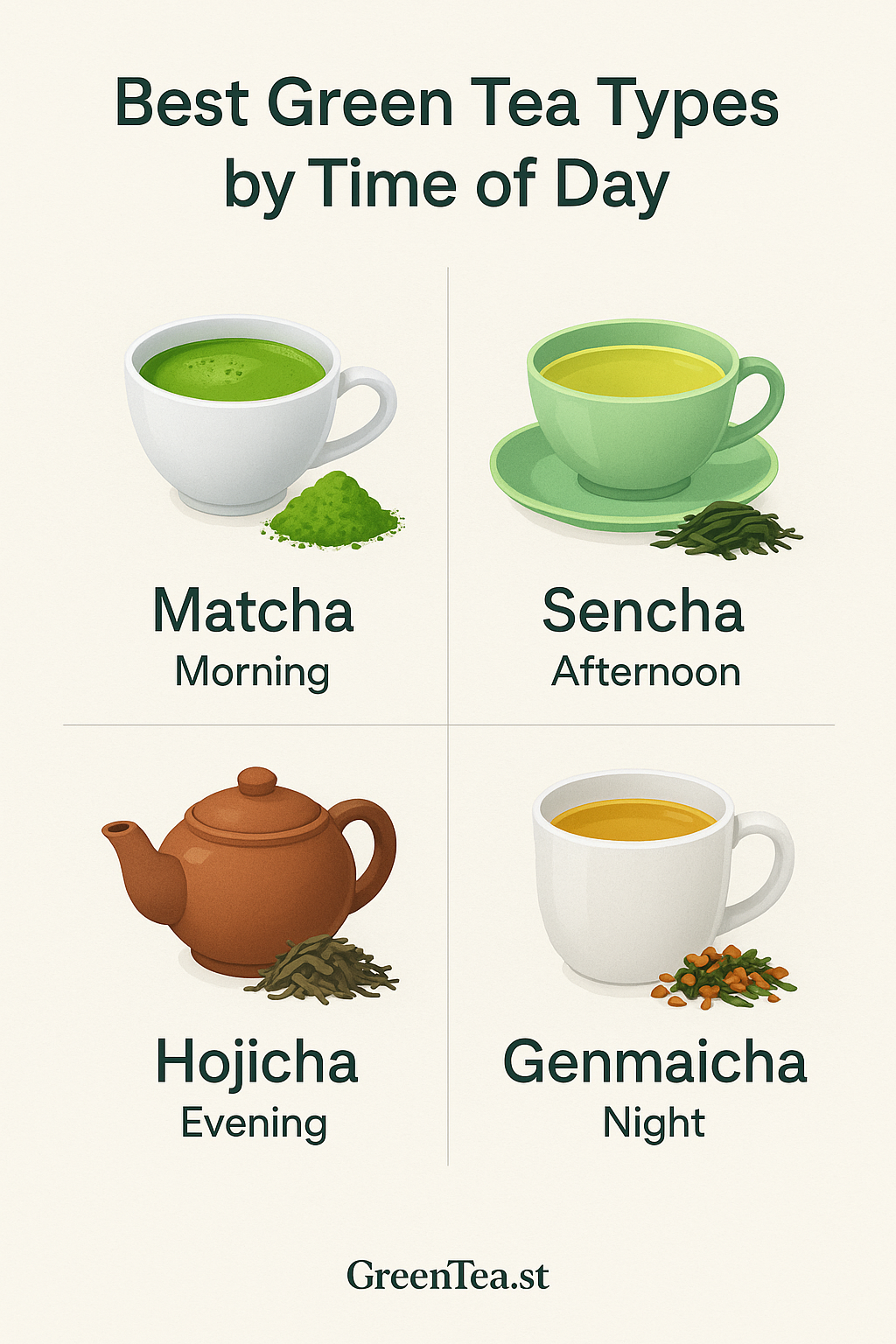
Not all green teas work the same way. Their caffeine levels, flavor intensity, and amino acid balance can make some better suited for mornings, while others shine later in the day. Choosing the right type for each time helps you enjoy all the benefits without overstimulation.
| Time of Day | Recommended Tea Type | Why It Works |
|---|---|---|
| Morning (After Breakfast) | Sencha | Bright and grassy with moderate caffeine; ideal for a clean, energizing start. |
| Mid-Morning (10–11 a.m.) | Matcha | Rich in caffeine and theanine, providing steady focus and mental clarity for work or study. |
| Before Exercise | Gyokuro | High in catechins and amino acids, supports fat oxidation and endurance during workouts. |
| After Meals | Jasmine Green Tea | Gentle on digestion and aromatic; helps balance post-meal heaviness. |
| Mid-Afternoon | Genmaicha | Lower caffeine, smooth roasted flavor that restores alertness without overstimulation. |
| Evening (After Dinner) | Hojicha or Decaf Green Tea | Naturally low in caffeine, promotes calmness and digestion before sleep. |
Caffeine levels in green teas can vary significantly depending on the type and brewing method. For instance, Matcha may contain up to three times more caffeine than Genmaicha, while Hojicha can have nearly zero. Research shows that caffeine content in green tea ranges from 10–45 mg per cup, depending on leaf maturity, temperature, and steeping time (11).
If you’re sensitive to caffeine or prefer tea in the evening, choose roasted or decaffeinated varieties. They retain antioxidants and flavor but deliver a smoother, more relaxing experience.
FAQs
It’s best to avoid it. Green tea’s tannins and caffeine can irritate the stomach lining and cause nausea when consumed without food. Have it after breakfast or a light snack for a smoother experience.
Most studies suggest that two to four cups daily provide optimal antioxidant and metabolic benefits without excess caffeine. The ideal amount depends on your caffeine tolerance and the specific type of tea.
If you enjoy tea in the evening, choose Hojicha, Genmaicha, or decaffeinated green tea. These varieties are lower in caffeine and rich in L-theanine, promoting relaxation without disturbing sleep.
For metabolic support, the best time is 30–60 minutes before exercise or mid-morning between meals. At these times, the body more effectively uses fat for energy, enhancing the effects of catechins and caffeine.
Yes. Longer steeping times and hotter water increase caffeine extraction. To lower caffeine, use cooler water (around 75–80°C) and shorter steeping times. For a stronger brew, let it steep a little longer — but not beyond three minutes.
Conclusion
Green tea is one of nature’s simplest yet most versatile wellness tools, but its benefits depend greatly on when you drink it. A morning cup can elevate focus and metabolism, a pre-workout brew enhances endurance, and a gentle evening blend like Hojicha restores calm.
Timing your tea allows its compounds — caffeine, L-theanine, and catechins — to work in harmony with your body’s rhythm. Studies continue to confirm that green tea supports digestion, heart health, and mental clarity when consumed mindfully throughout the day (12).
By aligning your cup with your clock, you turn a simple beverage into a daily ritual of balance — energizing when you need focus, soothing when you need rest, and always nourishing from within.