Cascara Sagrada Tea: Benefits and Side Effects
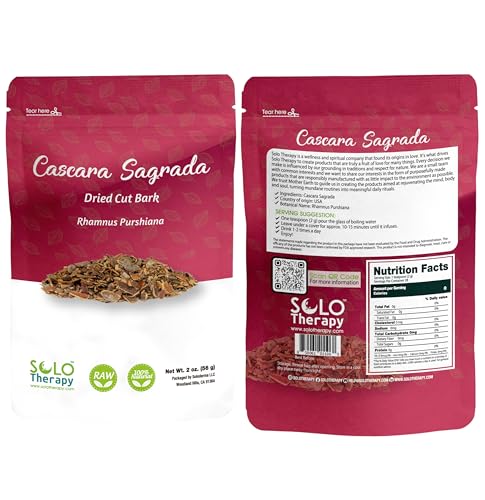
Cascara sagrada tea is an herbal infusion made from the bark of the Rhamnus purshiana tree, native to the Pacific Northwest of the United States. For centuries, Indigenous communities used the bark as a natural laxative, passing on knowledge of its powerful effects to European settlers. Today, cascara sagrada is still widely known as a stimulant laxative, often consumed as a tea, capsule, or tincture.
Unlike gentle digestive teas such as peppermint or chamomile, cascara sagrada works by stimulating muscle contractions in the intestines, which helps relieve occasional constipation. However, because of its potency and the potential for side effects, it is not intended for daily or long-term use. Modern health authorities caution that cascara should be used sparingly, only for short-term relief, and ideally under the guidance of a healthcare provider (1).
What is Cascara Sagrada?
Cascara sagrada, meaning “sacred bark” in Spanish, comes from the dried bark of Rhamnus purshiana. Before it can be safely consumed, the bark must be aged for at least a year or heat-treated to reduce compounds that can cause severe cramping and nausea when fresh. The properly aged bark contains glycosides, known as cascarosides, which are the main active ingredients responsible for its laxative effect.
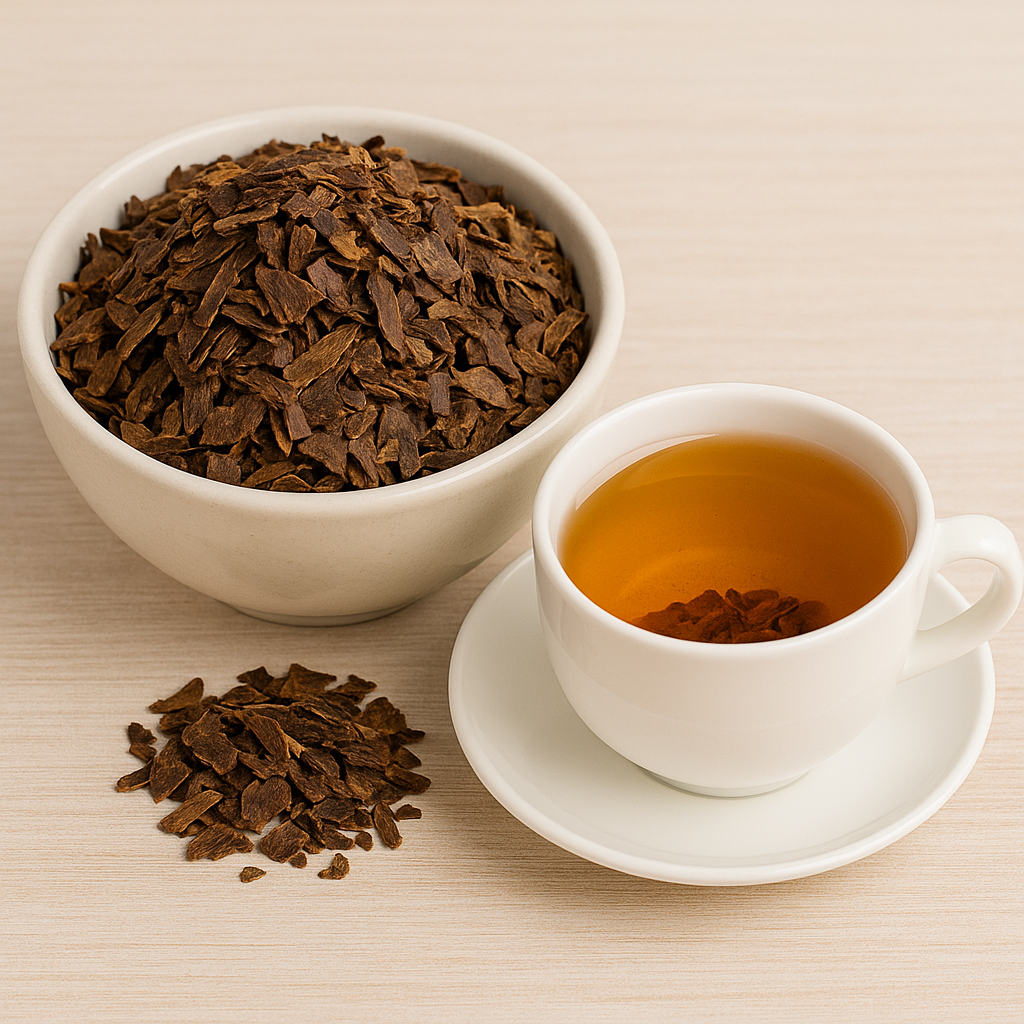
As a tea, cascara sagrada is prepared by steeping small amounts of the dried bark in hot water. The resulting brew is somewhat bitter and earthy, often softened by blending with herbs like peppermint or ginger. While capsules and tinctures are common today, tea remains a traditional method of consumption. However, it is important to note that the dosage from tea can vary significantly depending on preparation, making it less predictable than standardized supplements.
Perfect. Here’s Section 3 (Active Compounds and How They Work) and Section 4 (Evidence Grading Framework) with one inline source and a clear nutritional/compound facts table for cascara sagrada tea.
Active Compounds and How They Work
The main bioactive compounds in cascara sagrada are anthraquinone glycosides, often referred to as cascarosides. These compounds are metabolized by gut bacteria into active forms that directly stimulate the smooth muscle of the colon. This increases peristalsis, or the rhythmic contractions of the intestines, helping to move stool more efficiently.
Cascarosides also reduce water reabsorption in the large intestine, which softens stool and adds bulk. This dual action — stimulating motility and increasing stool water content — explains why cascara is considered a stimulant laxative, similar to senna. Onset of action typically occurs within 6 to 12 hours after drinking cascara tea, making it more predictable than some herbal remedies but still variable depending on preparation.
Nutritional and Compound Profile of Cascara Sagrada Tea
| Compound/Nutrient | Role in Body | Notes in Tea |
|---|---|---|
| Cascarosides (A–D) | Stimulate colon motility | Primary active compounds, responsible for laxative effect |
| Anthraquinones | Laxative, bitter principles | Found in aged bark; must be processed to reduce harshness |
| Tannins | Antimicrobial, astringent | Present in small amounts, may influence gut balance |
| Flavonoids & Phenolics | Antioxidant potential | Provide mild free radical scavenging |
| Trace minerals (calcium, potassium, magnesium) | Electrolyte support | Very small amounts, not significant as dietary source |
| Volatile oils | Flavor, mild digestive stimulation | Less concentrated compared to culinary herbs |
Because cascara is consumed as a tea, it does not deliver significant macronutrients (carbs, proteins, fats) or high levels of vitamins. Instead, its action depends on secondary metabolites such as cascarosides and anthraquinones.
Evidence Grading Framework
While cascara sagrada has a long history of traditional use and is recognized in herbal pharmacopeias, modern clinical evidence is limited. Most controlled trials date back decades and focused on cascara in combination formulas rather than as a standalone tea. Current knowledge relies on:
- Human evidence (limited): Historical laxative use, some early trials.
- Animal and in vitro studies: Demonstrate clear effects of cascarosides on intestinal motility.
- Traditional use: Documented for centuries among Native American communities and later European settlers.
Importantly, the FDA once approved cascara as an over-the-counter laxative ingredient but later revoked this status in 2002 due to insufficient evidence for long-term safety (2).
Benefits of Cascara Sagrada Tea (for occasional use only)
1. Relief of occasional constipation
Cascara sagrada tea can help when gentle methods like fiber, fluids, walking, peppermint, or ginger have not worked. Its active compounds, cascarosides, stimulate the colon and draw more water into the stool, which can ease passage. Most people feel an effect within 6 to 12 hours, which is why a bedtime cup is common. Practical tips: start with a mild brew, sip plenty of water, and consider pairing with ginger or peppermint to reduce cramping. Do not use daily or for more than a few days in a row, and avoid if you have ongoing abdominal pain, fever, or unknown causes of constipation.
2. Bowel preparation context (historical)
Before modern prescription bowel preps became standard, cascara often appeared in older bowel-cleansing formulas. That history explains its reputation for strong laxative action. Today, if a clinician prescribes a specific bowel prep for a procedure, that product should be used as directed; cascara tea is not a substitute. This background simply highlights that cascara can be effective, but it also underscores why safety limits and medical guidance matter.
3. A tea alternative to pills
Some people prefer a warm tea over tablets or capsules. Cascara sagrada tea provides the same basic laxative mechanism in a format that many find easier to tolerate and adjust. You can brew lighter or stronger infusions depending on sensitivity, and the warm liquid adds helpful hydration. Keep in mind that tea strength can vary by bark age and steep time, so effects are less predictable than standardized capsules. Use the smallest effective amount and reassess after one dose before increasing strength or frequency (3).
4. Short-term cleansing effect
Some people use cascara tea as part of a short-term detox or cleansing plan. Because it stimulates bowel movements, it can temporarily reduce bloating and help eliminate retained stool. While this can create a feeling of lightness, it is important to understand that this is not the same as detoxifying the body. The liver and kidneys do that job naturally. Cascara’s role is limited to promoting elimination through the colon, which may be useful in specific short-term cases but should not be overused.
5. Traditional wellness use
For generations, Native American communities used cascara bark not only for constipation but also as a general digestive aid. In traditional practice, it was sometimes included in blends for overall digestive balance, especially in times when diet was limited to less varied foods. This long-standing cultural use contributes to its reputation as a “sacred bark.” However, tradition does not replace clinical guidance, and modern herbalists caution that cascara is best reserved for acute, occasional constipation rather than everyday wellness use (4).
How to Brew Cascara Sagrada Tea
Cascara sagrada tea is not brewed like everyday herbal teas. Because it contains strong laxative compounds, the strength and portion size matter greatly. The bark should be aged at least a year or heat-treated before use, which reduces harsh side effects. Always purchase cascara sagrada from reputable suppliers that note proper processing on the label.
Basic preparation method:
- Measure the bark: Use about ½ to 1 teaspoon of dried cascara bark per cup of water.
- Boil the water: Bring 1 cup (240 ml) of water to a boil.
- Simmer gently: Add the bark to the water and simmer for 5–10 minutes.
- Strain: Remove the bark and pour the tea into a cup.
- Test tolerance: Begin with a small amount (about half a cup) to see how your body responds.
Tips for safe brewing:
- Start with the lowest concentration. Cascara strength varies by age of bark and supplier.
- If cramping occurs, try reducing steeping time or mixing cascara with soothing herbs such as ginger, peppermint, or chamomile.
- Do not sweeten heavily, as sugar can worsen digestive upset. A little honey or lemon is usually enough.
- Hydrate well before and after drinking, as the laxative effect can cause fluid loss.
Cascara tea typically begins to work 6 to 12 hours after consumption, which is why many people take it in the evening to stimulate a bowel movement the following morning.
Dosing, Onset, and Duration
Because cascara sagrada is a stimulant laxative, dosing must be conservative and carefully monitored. The recommended amounts vary depending on preparation, but for tea:
- Mild dose: ½ teaspoon of dried bark per cup of water.
- Stronger dose: Up to 2 teaspoons per cup (not advised for first-time users).
- Frequency: No more than once daily, and never longer than 7 days in a row.
The laxative effect usually begins 6 to 12 hours after drinking the tea. That’s why it is often taken in the evening, allowing relief by the next morning. Duration of effect can last up to 24 hours, but varies based on metabolism and sensitivity.
Important safety rule: Cascara should only be used for occasional constipation. Long-term or habitual use can weaken natural bowel function, making the body dependent on stimulant laxatives to have a bowel movement.
Side Effects and Risks
Although cascara sagrada is effective, it comes with a list of potential side effects, especially if misused.
Common side effects:
- Abdominal cramping and discomfort
- Urgent or loose stools
- Dehydration if fluid intake is not increased
Serious risks with frequent or long-term use:
- Electrolyte imbalance, especially low potassium, which can affect heart rhythm
- Dependence, where the colon stops functioning properly without stimulant laxatives
- Melanosis coli, a dark pigmentation of the colon lining linked to chronic anthraquinone use (though usually reversible)
Other considerations:
- Cascara may worsen conditions like hemorrhoids or inflammatory bowel diseases due to increased bowel irritation.
- Quality control matters: unaged or improperly prepared bark can be harsh, causing nausea or vomiting.
- Rarely, allergic reactions (skin rash, swelling, itching) may occur.
Because of these risks, cascara tea is best seen as a last resort when gentle teas (like chamomile or peppermint), hydration, and fiber intake have not provided relief (5).
Who Should Avoid Cascara Sagrada Tea?
Not everyone can safely use cascara sagrada tea. Certain groups should avoid it entirely due to its stimulant effects and risk of complications.
- Pregnant and breastfeeding women: Cascara can cause uterine contractions and pass into breast milk, potentially causing diarrhea in infants.
- Children and adolescents: Young digestive systems are more sensitive, and safer options should be used under pediatric guidance.
- People with chronic digestive conditions: Anyone with Crohn’s disease, ulcerative colitis, diverticulitis, or irritable bowel syndrome should avoid cascara due to its irritating effects on the colon.
- Kidney and heart patients: Because cascara may cause electrolyte loss, it can be dangerous for people with kidney disease, heart disease, or those on medications that affect potassium levels.
- Individuals with unexplained abdominal pain or obstruction: Using stimulant laxatives in these cases can worsen the problem and delay diagnosis.
When to See a Doctor
Constipation is common, but persistent or severe cases require medical evaluation. You should consult a doctor if:
- Constipation lasts longer than 7 days, even with tea or other remedies
- There is blood in the stool or black, tarry stools
- You experience severe abdominal pain, fever, or vomiting
- Bowel movements suddenly change in frequency or consistency without clear cause
- Constipation alternates with diarrhea, which could indicate an underlying condition
Cascara sagrada is not a solution for chronic constipation or underlying gastrointestinal diseases. If these red flags appear, professional care is essential rather than self-treatment.
FAQs
Usually within 6–12 hours, though some may feel effects sooner depending on dosage and sensitivity.
No. Daily use increases the risk of dependence and electrolyte imbalance. It should be limited to occasional use only.
No. Coffee cherry cascara is a fruity infusion made from coffee husks, unrelated to Rhamnus purshiana bark.
Yes, but carefully. It is sometimes blended with peppermint or ginger to ease cramping. Avoid combining with other laxative herbs like senna.
Both are stimulant laxatives, but senna is more widely studied and standardized. Cascara is effective but less predictable in strength.
Conclusion
Cascara sagrada tea has earned its reputation as a natural laxative with centuries of traditional use and proven stimulant effects. When brewed from properly aged bark, it can relieve occasional constipation within hours. However, its benefits come with risks. Side effects like cramping, dehydration, and electrolyte imbalances make it unsuitable for daily or long-term use.
For most people, gentle strategies such as hydration, fiber, movement, and milder teas should be the first line of defense against constipation. Cascara tea may serve as a short-term backup option, but it should never replace medical advice or ongoing digestive care. If symptoms persist, consulting a healthcare professional is the safest path forward.