
Is Arizona Green Tea with Ginseng & Honey Healthy?
Arizona Green Tea with Ginseng & Honey has become one of America’s best-selling ready-to-drink teas, instantly recognizable by its distinctive tall can and remarkably low price point that has remained stable for decades. The combination of “green tea,” “ginseng,” and “honey” printed on the label creates a powerful health halo, suggesting a beverage packed with antioxidants, natural energy, and wholesome sweetness. For many consumers, reaching for an Arizona Green Tea feels like making a healthier choice than grabbing a soda.
But does the reality match this perception? When you examine what’s actually inside that iconic can, the picture becomes considerably more complicated. This analysis breaks down the ingredients, nutrition facts, and scientific evidence to answer a straightforward question: Is Arizona Green Tea with Ginseng & Honey actually healthy?
What’s Actually in Arizona Green Tea?
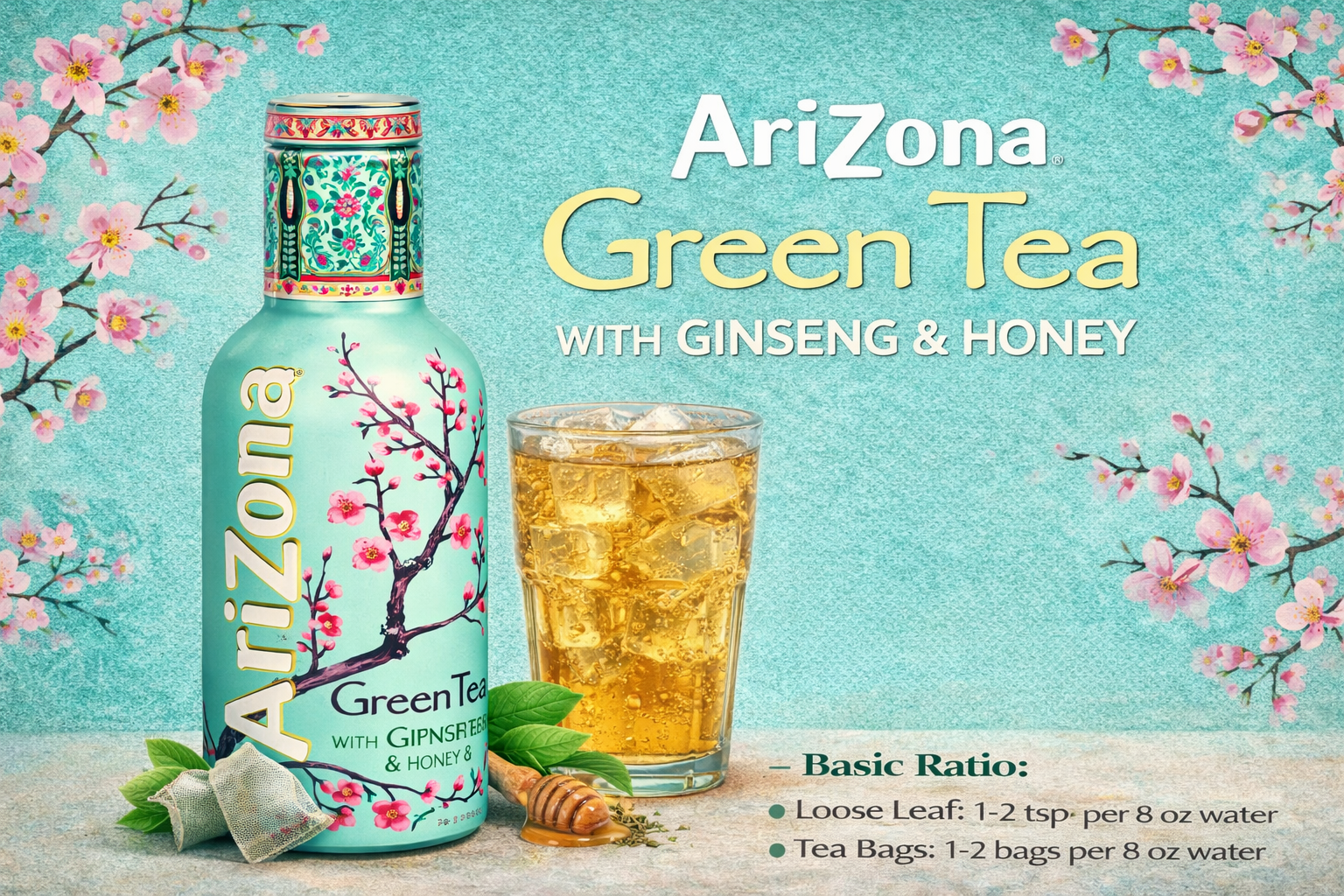
Understanding any beverage starts with reading the ingredient list. By law, ingredients must be listed in descending order by weight, meaning the first ingredients are present in the largest amounts. Here’s what you’ll find in Arizona Green Tea with Ginseng & Honey:
Premium Brewed Green Tea Using Filtered Water, High Fructose Corn Syrup (Glucose-Fructose Syrup), Honey, Citric Acid, Natural Flavors, Ascorbic Acid (Vitamin C), Ginseng Root Extract
Several things stand out immediately. Yes, the beverage does contain actual brewed green tea as the first ingredient (after water). However, the second ingredient—high fructose corn syrup—reveals what this drink really is at its core: a sweetened beverage. The honey that features so prominently in the product name appears third, meaning there’s more corn syrup than honey in every can.
Let’s examine each key ingredient:
High Fructose Corn Syrup (HFCS): This is the primary sweetener, not honey. HFCS is an industrial sweetener made from corn starch that’s been processed with enzymes to convert some of the glucose into fructose. The version used in beverages (HFCS-55) contains approximately 55% fructose and 45% glucose—very similar to table sugar’s 50/50 ratio. It’s cheaper than sugar, provides better shelf stability, and blends easily into beverages.
Honey: While the product name emphasizes honey, it appears after HFCS on the ingredient list. Based on its position, honey likely constitutes a small percentage of the total sweetener content—possibly 2% or less. At such minimal levels, honey provides no meaningful health advantages over other sugars.
Ginseng Root Extract: Listed last among the active ingredients, ginseng is present only in trace amounts. Therapeutic doses of ginseng in clinical studies typically range from 200-400mg of standardized extract. The amount in Arizona Green Tea is almost certainly milligrams at most—far below any level that would provide measurable benefits.
Ascorbic Acid (Vitamin C): Added as both a preservative and a marketing feature. One 8-ounce serving provides about 20% of the daily value for vitamin C, though this doesn’t offset the sugar content.
Natural Flavors: A vague term covering various flavoring compounds that don’t require specific disclosure.
The Nutrition Facts Breakdown
The nutrition facts tell an even clearer story. However, there’s an important detail many consumers miss: the serving size.
Per 8 fl oz serving:
- Calories: 70
- Total Fat: 0g
- Sodium: 0mg
- Total Carbohydrates: 18g
- Total Sugars: 17g (all added sugars)
- Protein: 0g
- Vitamin C: 18mg (20% DV)
These numbers look relatively modest until you realize one critical fact: a standard Arizona Green Tea can is 23 ounces, which contains nearly three servings. Most people drink the entire can.
Per 23 fl oz can (what most people actually consume):
- Calories: ~200
- Total Sugars: ~51g (all added sugars)
That’s over 50 grams of sugar in a single can—equivalent to approximately 12 teaspoons of sugar. To put this in perspective, the American Heart Association recommends that women consume no more than 25 grams (6 teaspoons) of added sugar per day, and men no more than 36 grams (9 teaspoons). One can of Arizona Green Tea delivers 140-200% of these recommended daily limits in a single beverage.
The Serving Size Trap
One of the most misleading aspects of Arizona Green Tea’s nutrition labeling is the serving size issue. The nutrition facts panel lists values per 8-ounce serving, which sounds reasonable—that’s a standard cup measurement. But the iconic tall can holds 23 ounces, meaning it contains nearly three servings.
Food manufacturers aren’t being deceptive per se—they’re following FDA regulations that allow them to set “reasonable” serving sizes. But the practical reality is that almost nobody pours out exactly 8 ounces of Arizona Green Tea and saves the rest for later. The can’s design, the product’s price point, and consumer behavior all point to single-session consumption of the entire container.
This serving size manipulation affects perception significantly. Seeing “70 calories” and “17g sugar” on the label creates a very different impression than “200 calories” and “51g sugar”—even though both describe the same can of tea consumed in the same sitting. Always multiply the per-serving values by the number of servings in the container you’re actually going to drink.
The 12-ounce cans and various bottle sizes have similar issues. A 12-ounce can contains 1.5 servings, delivering about 105 calories and 26 grams of sugar. The gallon jug, popular for parties and family use, contains 16 servings and a staggering 272 grams of sugar total.
The Sugar Problem
The sugar content is the central issue that undermines any health claims for Arizona Green Tea.
Comparing Sugar Content:
| Beverage (approximate oz) | Sugar Content |
|---|---|
| Arizona Green Tea (23 oz) | ~51g |
| Coca-Cola (20 oz) | ~65g |
| Snapple Peach Tea (16 oz) | ~40g |
| Mountain Dew (20 oz) | ~77g |
| Brewed Green Tea (23 oz) | 0g |
Arizona Green Tea contains less sugar than regular cola, which leads some consumers to view it as a healthier alternative. But this comparison sets an extremely low bar. Having slightly less sugar than soda doesn’t make a beverage healthy—it just makes it marginally less unhealthy in one specific dimension.
Health Impacts of Excessive Sugar Consumption:
The scientific consensus on added sugar is clear and well-established. Excessive consumption is associated with:
- Weight gain and obesity: Sugar provides calories without satiation, and liquid calories are particularly problematic because they don’t trigger the same fullness signals as solid food.
- Type 2 diabetes risk: High sugar intake, particularly from sweetened beverages, is consistently linked to increased diabetes risk in large population studies.
- Cardiovascular disease: Research published in JAMA Internal Medicine found that people who consumed 17-21% of their calories from added sugar had a 38% higher risk of dying from cardiovascular disease compared to those who consumed 8% or less.
- Dental health: Sugar promotes tooth decay by feeding bacteria that produce enamel-destroying acids.
- Non-alcoholic fatty liver disease: The liver processes fructose differently than glucose, and excessive intake can lead to fat accumulation in the liver.
These risks apply to habitual consumption rather than occasional indulgence. Drinking one Arizona Green Tea once a month is unlikely to cause health problems. Drinking one daily as a “healthy” beverage choice is a different matter entirely.
Is HFCS Worse Than Regular Sugar?
There’s been considerable debate about whether high fructose corn syrup is uniquely harmful compared to table sugar (sucrose). The current scientific consensus, supported by organizations including the American Medical Association and Academy of Nutrition and Dietetics, is that HFCS and sucrose are metabolically equivalent. Both contain similar proportions of fructose and glucose, deliver the same calories, and are processed similarly by the body.
The practical takeaway: excessive added sugar is problematic regardless of whether it comes from HFCS, sucrose, honey, or agave. The type matters less than the amount.
How Much Green Tea Benefit Actually Remains?
Green tea’s health reputation stems from its catechins—particularly epigallocatechin-3-gallate (EGCG)—and the amino acid L-theanine. These compounds have demonstrated antioxidant, anti-inflammatory, and potential cardioprotective effects in research studies. But does Arizona Green Tea deliver meaningful amounts of these beneficial compounds?
Factors Working Against Catechin Content:
Several aspects of ready-to-drink tea production and storage compromise the beneficial compounds:
Processing and pasteurization: Commercial bottled teas undergo heat treatment for safety and shelf stability. Research published in the Journal of Agricultural and Food Chemistry found that green tea catechins degrade at high temperatures. When brewed at 98°C for 7 hours, catechins degraded by 20%. The autoclaving (high-heat sterilization) used in commercial production causes even greater degradation and can convert EGCG to less bioactive forms.
Time and storage: Catechins continue to degrade over time, even at room temperature. Studies show that the stability of green tea catechins decreases during production, storage, and transport. Arizona products have a two-year shelf life—plenty of time for significant catechin degradation.
Dilution: The beverage must also contain substantial amounts of water and sweeteners, diluting whatever tea solids remain.
pH and added ingredients: Research shows that catechins are most stable at pH 4-5, with stability decreasing at lower and higher pH levels. The citric acid in Arizona Green Tea creates an acidic environment that may further affect catechin stability. Studies have also shown that adding commercially available soft drinks or other ingredients to green tea catechins decreases their stability.
What Research Shows About Bottled Green Teas:
Multiple studies have examined the antioxidant content of commercial ready-to-drink (RTD) green teas compared to fresh-brewed tea. The results are consistently disappointing for bottled products.
A study from the University of California found that commercially prepared bottled green tea products contained significantly lower catechin concentrations than freshly brewed tea. Some products contained such low levels that a consumer would need to drink 10-20 bottles to get the catechins present in a single cup of home-brewed tea.
The European Food Safety Authority’s scientific opinion on green tea catechins noted that EGCG concentrations in green tea infusions decrease during preparation and storage due to partial degradation and epimerization over time, at high temperatures, and at certain pH levels. The processing required for commercial shelf-stable products inherently compromises these compounds.
Caffeine as a Proxy:
While caffeine content doesn’t directly indicate antioxidant levels, it provides a useful comparison point. According to Arizona’s own statements, their green tea contains 7.5mg of caffeine per 8-ounce serving—or approximately 22mg per full 23-ounce can.
Compare this to freshly brewed green tea, which typically contains 30-50mg of caffeine per 8-ounce cup, or 80-130mg in 23 ounces. Arizona Green Tea contains roughly one-quarter to one-fifth the caffeine of home-brewed green tea, suggesting similarly reduced levels of other tea compounds.
The Bottom Line on Green Tea Benefits:
While Arizona Green Tea does contain real brewed green tea, the combination of processing, dilution, and storage means that any catechins or other beneficial compounds are present at substantially reduced levels compared to freshly brewed tea. You would need to drink multiple cans to approach the antioxidant intake of a single cup of home-brewed green tea—while consuming massive amounts of sugar in the process.
The Marketing vs. Reality Gap
Arizona Green Tea exemplifies how strategic ingredient selection and naming can create health perceptions that don’t match nutritional reality. The product leverages three powerful wellness associations:
“Green Tea”: Green tea has been extensively studied and genuinely offers health benefits when consumed in traditional form. The beverage industry has capitalized on this research, but “contains green tea” doesn’t mean “provides green tea benefits.”
“Ginseng”: This traditional medicinal herb has name recognition and health associations, even among consumers who couldn’t explain what ginseng actually does. Including trace amounts allows the product to feature ginseng prominently in its name while providing no functional benefit.
“Honey”: Honey feels more natural and wholesome than “sugar” or “corn syrup,” even though at trace levels it offers no advantage. The word evokes images of beehives and natural sweetness rather than industrial processing.
This strategy isn’t unique to Arizona—it’s standard practice in the beverage industry. But Arizona Green Tea is one of the most successful examples, with the health-positive naming helping it dominate the ready-to-drink tea market for decades.
The product’s price point reinforces the problem. At $0.99-$1.29 for a 23-ounce can (a price that has remained remarkably stable over the years), Arizona Green Tea is cheap enough for daily consumption. Many consumers treat it as their default beverage, drinking one or more cans daily under the impression they’re making a healthy choice.
Evaluating the Ginseng
Ginseng (Panax ginseng) has a long history in traditional medicine and has been studied for potential benefits including cognitive enhancement, energy support, and immune function. However, these studies typically use standardized extracts at doses of 200-400mg daily.
In Arizona Green Tea, ginseng root extract appears last on the ingredient list. Ingredient order indicates relative quantity, meaning ginseng is present in smaller amounts than citric acid, natural flavors, and even the added vitamin C. The actual amount is almost certainly in the single-digit milligrams—perhaps 100 times less than the doses used in clinical research.
At trace levels, ginseng cannot deliver any of its purported benefits. Its presence in Arizona Green Tea is purely a marketing feature, not a functional ingredient.
The Honey Angle
The product name emphasizes honey, evoking images of natural sweetness and potential antimicrobial and antioxidant benefits. Raw honey does contain some beneficial compounds, including antioxidants and enzymes with antibacterial properties.
However, these benefits require consuming meaningful amounts of quality honey. In Arizona Green Tea, honey is listed after high fructose corn syrup, indicating it’s a minority component of the total sweetener content. The small amount present provides no health advantage whatsoever over the HFCS it accompanies—it simply adds to the total sugar content while lending a “natural” aura to the product.
The use of “and/or” language in some formulations (high fructose corn syrup and/or honey) indicates that the actual honey content may vary between batches, with cost and availability driving formulation decisions rather than health considerations.
Arizona Green Tea vs. Home-Brewed Green Tea
The comparison between Arizona Green Tea and tea you brew yourself illustrates how dramatically processing and sweetening change a beverage:
| Factor | Arizona Green Tea (23 oz can) | Home-Brewed Green Tea (23 oz) |
|---|---|---|
| Calories | ~200 | 0-5 |
| Sugar | 51g | 0g |
| Catechins (EGCG) | Minimal/degraded | Full amount |
| L-theanine | Minimal | Full amount |
| Caffeine | ~22mg | ~80-130mg |
| Cost | ~$1-2 | ~$0.10-0.30 |
Home-brewed green tea delivers the full complement of antioxidants, provides a more substantial (though still moderate) caffeine boost, costs a fraction of the bottled product, and contains zero added sugar. The trade-off is convenience and time.
Better Alternatives
If you want the benefits of green tea without the sugar load, several options exist:
Unsweetened bottled green teas: Brands like Ito En and Pure Leaf offer unsweetened versions that contain no added sugar while providing actual green tea benefits. These cost more than Arizona but deliver genuine tea content.
Arizona Zero Sugar Green Tea: Arizona does offer a zero-sugar version sweetened with sucralose and acesulfame potassium. This eliminates the sugar problem, though some consumers prefer to avoid artificial sweeteners. It still won’t deliver the catechin content of fresh tea, but it’s a significant improvement over the original.
Low-sugar alternatives: Some brands offer lightly sweetened teas with 5-10 grams of sugar per serving rather than 17+ grams. These represent a middle ground between full-sugar and zero-sugar options.
Home-brewed green tea: The most economical and health-optimized choice. Brew a batch of green tea, let it cool, and refrigerate. Add a small amount of honey (a teaspoon per cup) if you prefer some sweetness—you’ll still consume far less sugar than Arizona’s pre-made version.
Cold-brewed green tea: Steeping tea in cold water overnight produces a smooth, naturally sweet-tasting tea with no bitterness and full antioxidant content. Simply add 1-2 teaspoons of loose leaf green tea (or 1-2 tea bags) per 8 ounces of cold water, refrigerate for 6-12 hours, and strain.
DIY honey-ginseng green tea: If you specifically want the flavor profile Arizona offers, brew your own green tea, add a teaspoon of honey and a few drops of liquid ginseng extract per cup. You’ll get more actual tea and ginseng while consuming far less sugar—and you’ll control exactly what goes into your beverage.
Reading Labels: What to Look For
The Arizona Green Tea example illustrates why label literacy matters for any health-conscious consumer. Here are the key principles:
Check serving size first: Always note the serving size and servings per container before looking at any other numbers. Then calculate what you’ll actually consume if you drink the whole bottle or can.
Ingredient order matters: Ingredients are listed by weight. If sweeteners appear in the top three ingredients (after water), you’re dealing with a sweetened beverage regardless of what else it contains.
Watch for multiple sweetener names: Sugar can appear under many names—high fructose corn syrup, corn syrup, cane sugar, evaporated cane juice, honey, agave nectar, brown rice syrup, and dozens more. Products sometimes use multiple sweeteners so no single one appears first on the list.
“No added sugar” vs. “unsweetened”: These terms have specific meanings. “No added sugar” means no sweeteners were added during processing, but the product might still contain natural sugars from fruit or other ingredients. “Unsweetened” typically means no sweeteners at all.
Marketing claims aren’t nutrition facts: Terms like “natural,” “made with real fruit,” or “contains antioxidants” are marketing language, not regulated health claims. Always verify by checking the actual nutrition facts panel.
Who Might This Drink Work For?
Despite its limitations as a “health drink,” Arizona Green Tea isn’t poison. Context matters:
Potentially appropriate uses:
- As an occasional treat when you’re craving something sweet
- As a transition beverage for someone trying to reduce soda consumption (marginally better, but not a long-term health solution)
- When nothing else is available and you want something other than water
- When consumed in portion-controlled amounts (half a can rather than the full 23 ounces)
Who should probably avoid it:
- People managing diabetes or blood sugar issues
- Those actively trying to lose weight
- Anyone with metabolic syndrome or cardiovascular disease risk factors
- Children (both sugar and caffeine concerns)
- Anyone seeking actual green tea health benefits
- People limiting added sugars per medical or dietary guidance
The Verdict: Is Arizona Green Tea Healthy?
No, Arizona Green Tea with Ginseng & Honey is not a healthy beverage.
It’s a sugar-sweetened drink that happens to contain some green tea. The “green tea,” “ginseng,” and “honey” marketing creates a health halo that doesn’t match the nutritional reality. Here’s the unvarnished assessment:
- Sugar content: At 51 grams per can, it exceeds daily recommended added sugar limits in a single serving
- Green tea benefits: Present but substantially degraded and diluted compared to fresh-brewed tea
- Ginseng benefits: Essentially nonexistent at trace amounts
- Honey benefits: Essentially nonexistent at trace amounts
The comparison to soda, while technically favorable, sets the bar so low it’s almost meaningless. Both are sugar-sweetened beverages; one simply has slightly less sugar and contains some tea compounds.
Putting It in Perspective:
This isn’t a call to never drink Arizona Green Tea. Occasional consumption won’t harm most healthy adults. The problem is perception—people drink it regularly believing they’re making a healthy choice, when they’re actually consuming a daily sugar bomb.
Understanding what you’re actually consuming empowers better decisions. If you enjoy the taste of Arizona Green Tea, treat it as what it is: a sweetened beverage for occasional enjoyment, not a health drink. If you want actual green tea benefits, brew your own tea. If you want convenient bottled tea, choose unsweetened versions. If you want to reduce sugar intake, Arizona Green Tea is one of the easiest cuts to make.
The bright green can with cherry blossoms and promises of ginseng and honey is brilliant marketing. It’s just not a health food.
Frequently Asked Questions
A standard 23-ounce can contains approximately 51 grams of sugar—all from added sweeteners (primarily high fructose corn syrup, with some honey). This is equivalent to about 12 teaspoons of sugar and exceeds the American Heart Association’s recommended daily limit for added sugars (25g for women, 36g for men) in a single beverage.
Yes, Arizona Green Tea is made with actual brewed green tea—it’s listed as the first ingredient after water. However, the processing, pasteurization, dilution with sweeteners, and storage time significantly reduce the beneficial compounds (catechins, L-theanine) compared to freshly brewed tea. The caffeine content (about 7.5mg per 8 oz) is roughly one-quarter that of home-brewed green tea, suggesting similarly reduced levels of other tea compounds.
Arizona Zero Sugar Green Tea eliminates the sugar problem by using artificial sweeteners (sucralose and acesulfame potassium) instead of high fructose corn syrup. This makes it significantly better from a caloric and blood sugar perspective. However, it still provides minimal green tea benefits compared to brewing your own tea. For those who want convenient bottled tea without sugar, it’s a reasonable option, though some people prefer to avoid artificial sweeteners.
Arizona Green Tea (23 oz) contains about 51g of sugar and 200 calories, while a 20 oz Coca-Cola contains about 65g of sugar and 240 calories. So Arizona has roughly 20% less sugar than cola. However, this comparison sets an extremely low bar—both are sugar-sweetened beverages that should be consumed sparingly. Arizona also contains some tea compounds and vitamin C that soda lacks, but these modest additions don’t transform it into a health drink.
Arizona Green Tea is not recommended for weight loss due to its high sugar and calorie content. At roughly 200 calories per can with no protein, fiber, or significant nutrients, it provides empty calories that don’t satisfy hunger. Liquid calories are particularly problematic for weight management because they don’t trigger satiety signals the way solid food does. Research consistently shows that people don’t compensate for liquid calories by eating less solid food—they simply add those calories on top of their normal intake. If you enjoy the taste, consider the zero-sugar version or limit consumption to occasional small portions rather than making it a daily habit.
A Note on Moderation
It’s worth emphasizing that this analysis isn’t suggesting Arizona Green Tea is dangerous or that you should never drink it. For healthy adults, occasional consumption poses no significant risk. The human body can handle sugar in reasonable amounts, and enjoying a sweet beverage from time to time is part of normal eating for many people.
The problem arises from misperception. When consumers believe they’re making a healthy choice, they may drink more frequently, larger quantities, and with less consideration than they would if they understood the product’s true nature. Someone who views Arizona Green Tea as a wellness beverage might drink one daily; someone who correctly categorizes it as a sweetened treat might reserve it for occasional enjoyment.
The dose makes the poison, as the saying goes. One can occasionally is trivial. One can daily for years adds up to substantial excess sugar intake that can contribute to weight gain, metabolic issues, and other health concerns over time.
Takeaways
Arizona Green Tea with Ginseng & Honey is fundamentally a heavily sweetened beverage that provides minimal green tea or ginseng benefits despite its health-forward marketing. With over 50 grams of sugar per can—primarily from high fructose corn syrup—it exceeds daily recommended added sugar limits in a single serving. The green tea compounds that might offer health benefits are present at substantially degraded and diluted levels, while the ginseng and honey contribute virtually nothing beyond label appeal.
For those genuinely seeking green tea’s antioxidant and wellness benefits, home-brewed tea or unsweetened bottled alternatives are vastly superior choices. If you enjoy Arizona Green Tea’s taste, the most honest approach is to treat it as an occasional indulgence—similar to how you’d treat soda or other sweetened beverages—rather than a health-promoting daily habit. The iconic tall can and appealingly low price make it an easy grab, but understanding what’s actually inside helps you make that grab with clear eyes rather than under the influence of clever marketing.


