Morning Tea Energy Boost: The Best Teas to Start Your Day
There’s something undeniably soothing about starting your day with a warm cup of tea. Beyond comfort, tea offers a steady energy boost that feels cleaner and more sustainable than the sudden jolt (and crash) often caused by coffee. This is thanks to its natural balance of caffeine and L-theanine, an amino acid that promotes calm alertness rather than overstimulation.
Unlike coffee, which spikes cortisol levels and can lead to mid-morning fatigue, tea releases energy gradually, enhancing focus without anxiety or restlessness. Studies show that the caffeine–L-theanine combination found in tea improves both attention and cognitive performance by modulating alpha brain waves and maintaining calm concentration (1).
Morning tea is more than a beverage — it’s a ritual that prepares your body and mind for the day. Whether you need clarity before a busy schedule or stamina for a workout, the right cup of tea can help you feel centered, focused, and energized from the inside out.
Tea’s energizing power lies in a unique chemical partnership between caffeine and L-theanine, two compounds that work together to provide smooth, focused energy. While caffeine increases alertness by stimulating the central nervous system, L-theanine acts as a natural relaxant, countering caffeine’s jittery effects.
This combination promotes alpha brain wave activity, associated with calm focus — the same state linked to meditation and mental clarity. In practical terms, this means you stay alert and productive without feeling tense or overstimulated. Green and black teas, in particular, contain optimal levels of both compounds, making them ideal morning beverages for sustained attention and mood balance.
Research supports these effects: a 2017 study found that the synergistic relationship between caffeine and L-theanine improves memory, reaction time, and cognitive efficiency while reducing anxiety compared to caffeine alone (2).
Tea’s gentle energy curve makes it perfect for those seeking productivity without the crash — a natural mental lift that enhances clarity, creativity, and endurance throughout the morning.
Best Morning Teas for Energy
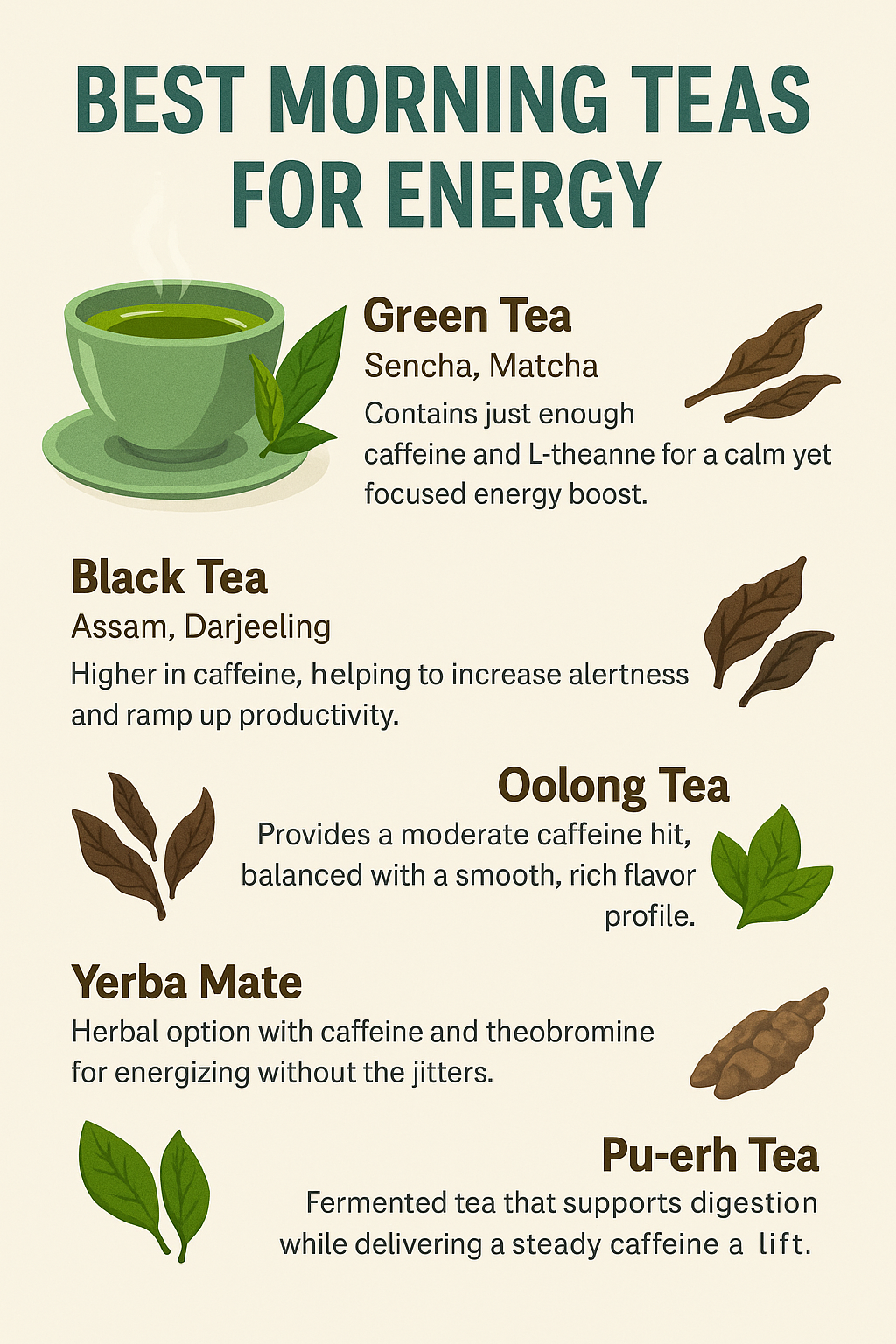
Not all teas deliver energy in the same way. The ideal morning tea depends on how much caffeine you can handle, your flavor preferences, and the kind of energy you want — sharp focus, calm alertness, or physical stamina. Below are the best teas for starting your day strong.
Green Tea (Sencha, Matcha)
Green tea is one of the cleanest sources of natural energy. It contains moderate caffeine balanced with L-theanine for smooth focus. Matcha, in particular, offers a higher caffeine level since you consume the entire powdered leaf, providing long-lasting alertness and steady metabolism support. Studies show that green tea catechins enhance fat oxidation and mental performance, making it ideal for both focus and fitness (3).
Black Tea (Assam, Darjeeling)
If you prefer a stronger morning kick, black tea delivers the boldness you’re after. Assam tea gives a malty, robust flavor perfect for waking up the senses, while Darjeeling offers a more refined energy lift with floral and muscatel notes. Both varieties contain higher caffeine than green tea but still less than coffee, helping maintain energy without overstimulation.
Oolong Tea
Oolong sits between green and black tea in both flavor and caffeine content. It offers a slow, steady energy release that enhances alertness while supporting metabolism. Traditional Chinese drinkers favor oolong in the morning for its digestive and fat-burning properties — a balanced brew that supports both mind and body performance.
Yerba Mate
Technically an herbal infusion from South America, yerba mate is a powerhouse for sustained vitality. It contains caffeine, theobromine, and a rich blend of antioxidants and vitamins. The result is mental clarity without the crash. Yerba mate’s earthy, grassy taste is invigorating, and its steady energy boost is popular among athletes and professionals alike.
Pu-erh Tea
A fermented tea from China, Pu-erh is prized for its gentle caffeine and detoxifying effects. It’s known to aid digestion and support liver health, making it an excellent choice after a heavy breakfast. Its rich, earthy flavor and slow energy curve make it perfect for a calm but focused start to the day.
Morning Tea Ritual for Energy and Focus
Turning your morning tea into a mindful ritual transforms it from a quick caffeine fix into a grounding, energizing experience. The goal is to create a few minutes of calm focus before the day begins — helping your mind and body sync into productivity mode.
Step 1: Choose Your Tea Intentionally
Pick a tea that suits your energy needs for the day. Green tea for balanced focus, black tea for intensity, or oolong for sustained stamina. The key is to brew it fresh and consciously — the act of selection itself helps signal mindfulness and purpose.
Step 2: Heat Water to the Right Temperature
Avoid boiling water for delicate teas like green or white. Use about 175°F (80°C) for green tea and 200°F (93°C) for black or oolong. Proper temperature ensures the best flavor extraction and prevents bitterness, which can disrupt the calmness of your ritual.
Step 3: Steep Mindfully
Steep your tea for the recommended time — 2 to 3 minutes for green, 3 to 5 for black, and 4 for oolong. As it brews, take deep breaths and observe the aroma rising from your cup. The slow release of scent and warmth helps center your focus and reduce mental clutter.
Step 4: Pair It With Light Movement or Reflection
Enjoy your tea while stretching, journaling, or planning your day. Combining physical or mental reflection with tea enhances energy regulation and mood stability. Research has shown that mindful morning routines like tea meditation improve stress management and mental clarity (4).
Step 5: Sip Slowly, Savor Fully
Let each sip wake your senses. Notice the warmth, the texture, and how the flavor unfolds. Avoid rushing — tea’s power lies in its ability to connect you to the present moment while fueling your body naturally.
Side Effects and Tips for Healthy Consumption
While tea is a healthy and natural energy source, balance is key. Drinking too much can lead to jitteriness, dehydration, or sleep disruption — especially if consumed later in the day. Knowing your body’s limits helps you enjoy all the benefits without the drawbacks.
Avoid Overconsumption
Caffeine in tea is gentler than coffee, but excess still adds up. Most experts recommend limiting intake to no more than 400 mg of caffeine per day, roughly equivalent to 5–6 cups of tea. Going beyond this can lead to restlessness, increased heart rate, or digestive discomfort (5).
Drink at the Right Time
The best time for tea is early morning or late morning, when your cortisol levels — the body’s natural energy hormone — start to dip. Avoid drinking caffeinated tea after 3 p.m., as even mild doses can delay melatonin release and disrupt sleep quality. For those needing an afternoon boost, switch to lighter teas like white tea or herbal infusions.
Explore Non-Caffeinated Energy Boosters
If you’re sensitive to caffeine or prefer a gentler lift, herbal options like ginseng, ginger, or rooibos tea can stimulate circulation and mental alertness without triggering energy crashes. These natural alternatives work by enhancing oxygen flow and balancing hormones that affect mood and focus.
Stay Hydrated and Mindful
Pair tea with water throughout the day to maintain hydration. Remember, tea works best as part of an overall healthy routine — steady sleep, balanced meals, and movement will make your energy last far longer than caffeine alone.
FAQs and Conclusion
1–2 cups are enough for a smooth energy lift without overstimulation. If you’re sensitive to caffeine, start with green or oolong tea for a gentler rise in alertness.
Yes. Tea provides caffeine with added antioxidants and L-theanine, offering focus and calm energy without the crash common with coffee.
Matcha and oolong tea deliver sustained energy for several hours due to their balanced caffeine release and amino acid content.
Yes. Herbal teas like ginseng, ginger, and peppermint increase circulation and alertness naturally, making them great caffeine-free options.
It’s better to eat something light before drinking strong teas like black or oolong to avoid mild nausea or acid irritation.
Conclusion
Starting your morning with tea is more than a habit — it’s a ritual of balance, energy, and mindfulness. Whether you prefer the grassy calm of green tea, the bold aroma of black tea, or the smooth richness of oolong, every cup awakens body and mind in a natural way.
Tea’s gentle caffeine, paired with its antioxidants and L-theanine, creates focus without frenzy — the perfect energy rhythm for a productive day. The secret is in how you drink it: slowly, consciously, and consistently.
So tomorrow morning, skip the rush to coffee and brew a mindful cup of tea instead. Let it energize you from the inside out.