
Mugwort Tea: Benefits, Side Effects, How to Brew
Mugwort tea is a centuries-old herbal infusion that has found its place in both traditional medicine and cultural rituals. Made from the aromatic leaves of Artemisia vulgaris, this tea is recognized for its earthy taste and association with wellness practices ranging from digestion support to relaxation. In Europe and East Asia, mugwort was not only brewed as tea but also used in cooking, herbal remedies, and even ceremonial practices.
Today, mugwort tea is making a quiet comeback among herbal enthusiasts who are drawn to its calming, slightly bitter flavor and its reputation as a supportive aid for digestion, women’s health, and rest. While still lesser-known compared to green tea or chamomile, mugwort is carving out its place as a traditional herbal tea worth exploring.
What is Mugwort Tea?
Mugwort tea is prepared from the dried leaves of the mugwort plant (Artemisia vulgaris), a hardy herb in the daisy family that grows across Europe, Asia, and North America. Historically, it was valued not only as a medicinal plant but also as a seasoning for food, often added to flavor meats or alcoholic beverages. Its essential oils, including cineole and thujone, give the tea its distinct aromatic character and slightly bitter edge.
The tea itself is typically brewed from 1 teaspoon of dried mugwort leaves steeped in hot water for 5–10 minutes. Herbalists often describe it as grounding, with an earthy, sage-like taste. Beyond taste, mugwort tea contains flavonoids, antioxidants, and trace minerals, compounds that are thought to contribute to its traditional uses in easing digestion, calming the nerves, and supporting menstrual balance. These properties are why it continues to be included in folk medicine traditions today (1).
Nutritional and Phytochemical Profile
Mugwort tea is not a nutrient-dense beverage in the same way whole foods are, but it does deliver a range of bioactive compounds that make it unique. Its main health-promoting elements come from phytochemicals like flavonoids, terpenes, and phenolic acids. These compounds are widely studied for their antioxidant, anti-inflammatory, and antimicrobial effects, all of which may explain why mugwort has been used for centuries in traditional remedies.
Key constituents include:
- Flavonoids (quercetin, luteolin, apigenin) – antioxidant and anti-inflammatory properties.
- Essential oils (cineole, camphor, thujone) – responsible for mugwort’s distinctive aroma and digestive effects.
- Phenolic acids – contribute to free radical scavenging activity.
- Trace minerals (calcium, iron, magnesium, potassium) – found in small amounts, but add to its overall value.
Because mugwort tea is made by steeping leaves in hot water, the nutrients extracted are primarily water-soluble compounds like flavonoids and volatile oils. This means you are getting a lighter infusion of bioactives rather than dense macronutrients, but still enough to provide a therapeutic effect.
Nutritional & Phytochemical Snapshot of Mugwort Tea
| Component | Key Compounds | Potential Role |
|---|---|---|
| Flavonoids | Quercetin, Luteolin, Apigenin | Antioxidant, anti-inflammatory |
| Essential Oils | Cineole, Camphor, Thujone | Digestive aid, aroma, mild antimicrobial |
| Phenolic Acids | Ferulic acid, Caffeic acid | Free radical scavenging |
| Trace Minerals | Calcium, Magnesium, Iron, Potassium | General body support (minor levels) |
| Bitter Compounds | Sesquiterpene lactones | Stimulates digestion, appetite regulation |
Health Benefits of Mugwort Tea

For centuries, mugwort has been used in traditional medicine across Europe and Asia. Today, it’s often consumed as a herbal tea for its soothing properties. While research on mugwort tea specifically is still developing, many of its benefits are linked to the plant’s phytochemicals and essential oils, which have shown promising effects in modern studies. Here are three of its most recognized benefits.
1. Supports Digestive Health
Mugwort tea is well known as a digestive aid. Its bitter compounds, especially sesquiterpene lactones, stimulate bile production, which can help break down fats and improve nutrient absorption. This makes it particularly valuable for easing bloating, indigestion, and sluggish digestion after heavy meals.
In addition, its essential oils such as cineole and camphor may relax the smooth muscles of the gastrointestinal tract, helping to reduce cramping and promote smoother digestion. Herbalists have long recommended mugwort infusions for individuals struggling with poor appetite or irregular bowel function. Modern studies on bitter herbs back up this use, showing they can improve gastric function and overall gut motility.
2. Menstrual Balance and Relief
One of mugwort’s most traditional uses has been for women’s health. Mugwort tea has historically been used to stimulate menstrual flow (an emmenagogue effect) and relieve common discomforts associated with menstruation. The tea’s compounds are thought to gently increase circulation to the pelvic region, which may ease cramps and regulate delayed or irregular cycles.
Flavonoids like quercetin and luteolin also provide anti-inflammatory action, which could lessen menstrual pain and discomfort. While clinical trials are limited, anecdotal and historical use suggest mugwort tea can act as a supportive herbal remedy for reproductive balance. However, because of these stimulating effects, mugwort tea is not recommended during pregnancy.
3. Promotes Relaxation and Better Sleep
Mugwort is also valued for its calming effects. Drinking a cup of mugwort tea in the evening has been linked to relaxation, reduced stress, and in some traditions, enhanced dream recall. Its essential oils, particularly cineole, interact with the nervous system in a way that can promote mild sedation and relaxation, making it a natural nighttime beverage for those who struggle with restlessness.
Some herbal traditions even associate mugwort with “dream tea” blends because of its reputation for supporting lucid dreams. While scientific evidence on dream-enhancing effects is anecdotal, studies on mugwort’s essential oils show mild sedative and calming properties that support its reputation as a sleep-friendly tea.
4 Anti-Inflammatory Effects
One of the standout properties of mugwort tea is its ability to calm inflammation in the body. Chronic inflammation has been linked to a wide range of health conditions, including arthritis, cardiovascular disease, and gastrointestinal discomfort. Mugwort contains bioactive compounds such as flavonoids and coumarins, which are known for modulating inflammatory responses.
Research on Artemisia species has demonstrated reductions in key pro-inflammatory markers like tumor necrosis factor-alpha (TNF-α) and interleukin-6, both of which are associated with pain, swelling, and tissue damage. By gently lowering these signals, mugwort tea may offer supportive relief for individuals dealing with inflammatory issues, whether that’s stiff joints, muscle soreness, or digestive irritation (2).
5 Liver Support and Detoxification
Mugwort has long been valued in traditional Chinese and Korean medicine for its role in “clearing heat” and aiding the liver. Today, modern studies provide scientific backing for these observations. Compounds in Artemisia vulgaris appear to protect liver cells from oxidative stress and toxin-related damage, while also supporting normal liver enzyme activity.
Preclinical research suggests that mugwort extracts may reduce the harmful impact of free radicals in the liver, stabilize cell membranes, and encourage more efficient detoxification pathways. This means drinking mugwort tea could provide gentle support for people dealing with metabolic stress, irregular diets, or environmental toxin exposure. While it is not a substitute for medical treatment, it may act as a complementary beverage for maintaining liver wellness (3).
6 Antimicrobial Properties
Mugwort tea also carries natural antimicrobial benefits thanks to its rich essential oil content, which includes cineole, camphor, and borneol. These compounds have been tested in laboratory settings and shown to inhibit the growth of harmful bacteria and fungi. Such properties make mugwort an interesting herbal tea for supporting immune resilience and protecting the body against low-grade microbial imbalances.
While drinking mugwort tea isn’t intended to act as an antibiotic, its antimicrobial profile may still provide everyday protection, especially for gut and oral health. By supporting a balanced microbiome and reducing exposure to opportunistic pathogens, it adds another layer to mugwort’s reputation as a health-promoting herb (4).
7 Menstrual Comfort and Hormonal Support
Mugwort tea has a long history of use in women’s health, especially for regulating the menstrual cycle and easing discomfort associated with cramps, bloating, and irregular bleeding. Traditionally, mugwort was regarded as an “emmenagogue,” meaning it helps stimulate menstrual flow and restore balance in cases of delay or stagnation.
Scientific reviews of Artemisia species note that certain volatile oils and flavonoids influence uterine smooth muscle, helping relieve spasms that contribute to pain. Some evidence also suggests mugwort’s compounds may interact with hormonal pathways that regulate the menstrual cycle. While it should never replace medical care, women with mild to moderate PMS symptoms may find mugwort tea a soothing natural ally (5).
8 Stress Relief and Sleep Aid
Beyond its physical benefits, mugwort tea is also used as a calming ritual for the mind and body. The herb contains nervine compounds that may help reduce anxiety and promote relaxation. Anecdotally, many people report that drinking mugwort tea before bedtime eases mental tension and leads to more restful sleep.
Research indicates that mugwort and related herbs act on the central nervous system in mild sedative ways, possibly by interacting with GABA receptors, the same pathways targeted by calming medications. This makes mugwort tea a gentle alternative for those who prefer herbal options to wind down at night, helping to combat stress-driven insomnia and improve overall mood stability (6).
9 Potential Cognitive Benefits
Emerging studies suggest that mugwort tea could also support brain health. Extracts from Artemisia vulgaris and related plants show promise in improving memory, focus, and learning capacity in animal studies. These effects may be linked to antioxidant compounds that protect neurons from oxidative damage while promoting better circulation in the brain.
There is also evidence that mugwort’s flavonoids may have anti-acetylcholinesterase activity, which helps maintain higher levels of acetylcholine, a neurotransmitter critical for learning and memory. While human research is still in its early stages, this hints that mugwort tea may have potential as a natural cognitive support beverage for maintaining mental clarity over time (7).
How to Brew Mugwort Tea
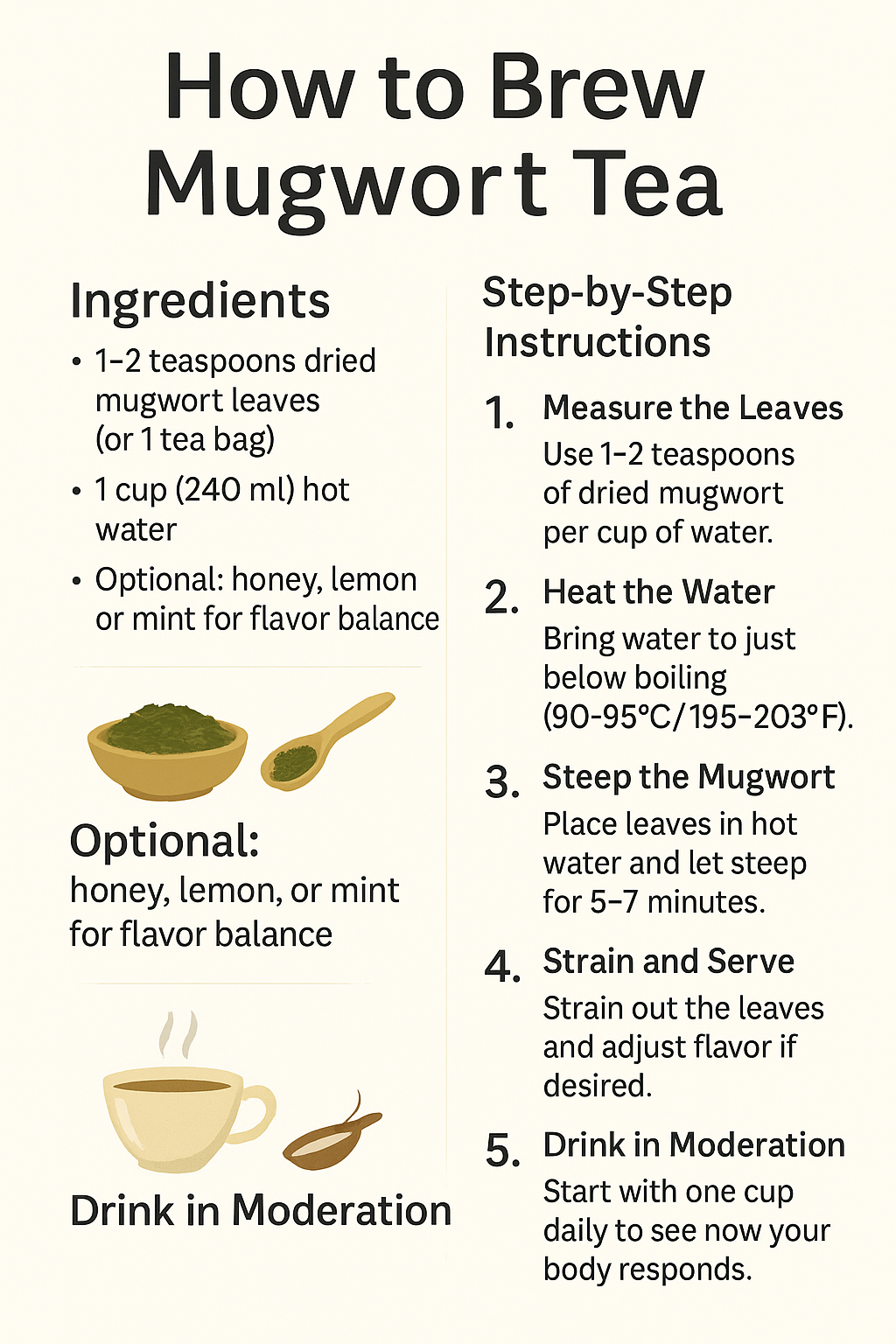
Brewing mugwort tea at home is simple and requires only dried mugwort leaves, hot water, and a little patience. Because mugwort can be bitter if over-steeped, the key is to use the right ratio and brewing time.
Ingredients
- 1–2 teaspoons of dried mugwort leaves (or 1 tea bag, if available)
- 1 cup (about 240 ml) hot water (not boiling, around 90–95°C or 195–203°F)
- Optional: honey, lemon, or mint for flavor balance
Step-by-Step Instructions
- Measure the Leaves • Use 1–2 teaspoons of dried mugwort per cup of water. Start small if you are new to mugwort’s flavor.
- Heat the Water • Bring water to just below boiling (90–95°C / 195–203°F). Too hot and it may make the tea more bitter.
- Steep the Mugwort • Place the dried leaves in a teapot, infuser, or directly into a mug. • Pour the hot water over the leaves and let it steep for 5–7 minutes.
- Strain and Serve • Strain out the leaves (or remove the tea bag). • Taste the tea before adding extras. Mugwort has an earthy, slightly bitter flavor that some enjoy plain, while others prefer a touch of honey or lemon.
- Drink in Moderation • Start with one cup daily to see how your body responds. Because mugwort has strong bioactive compounds, moderation is key.
Side Effects and Safety Considerations of Mugwort Tea
While mugwort tea has a long history in traditional medicine, it also comes with risks that need to be considered.
1. Allergic Reactions
- Mugwort belongs to the same botanical family as ragweed, daisies, and marigolds.
- People allergic to these plants may experience sneezing, skin irritation, or even more severe reactions after consuming mugwort tea (7).
2. Pregnancy and Breastfeeding
- Mugwort has been historically linked with stimulating uterine contractions.
- Because of this, pregnant and breastfeeding women should avoid mugwort tea entirely unless explicitly advised by a qualified healthcare provider (8).
3. Interaction with Medications
- Mugwort may interfere with certain medications, especially those that affect blood clotting, such as anticoagulants.
- It can also interact with sedatives due to its mild calming properties. Consult a doctor before combining it with prescribed medications.
4. Potential Toxic Compounds
- Mugwort contains thujone, a compound that in large doses can be toxic and affect the nervous system.
- Excessive consumption of mugwort tea may cause nausea, vomiting, or dizziness if taken beyond recommended amounts.
5. Not Suitable for Children
- Children should avoid mugwort tea, as their systems are more sensitive to its bioactive compounds, including thujone.
Who Should Avoid Mugwort Tea
Although mugwort tea offers potential benefits, it’s not suitable for everyone. The following groups should avoid it or only consume it with medical supervision:
1. Pregnant and Breastfeeding Women
Mugwort has been historically linked to stimulating uterine contractions. Drinking it may increase the risk of miscarriage or complications during pregnancy. Nursing mothers should also avoid it, as safety data is lacking (9).
2. People with Allergies
If you’re allergic to ragweed, daisies, marigolds, or other plants in the Asteraceae family, you may also react to mugwort. Symptoms can include sneezing, itchy eyes, skin rash, or in rare cases, difficulty breathing.
3. Individuals with Epilepsy or Seizure Disorders
Thujone, a compound in mugwort, may trigger or worsen seizures when consumed in significant amounts. People with neurological conditions should avoid mugwort tea.
4. Those on Blood-Thinning or Sedative Medications
Mugwort may interact with anticoagulants, increasing the risk of bleeding. It may also enhance the effects of sedatives, leading to excessive drowsiness or other complications.
5. Children and Adolescents
Because of its potent compounds and limited safety data, mugwort tea is not recommended for children under 18.
FAQs About Mugwort Tea
It’s not recommended for daily use. Occasional consumption in moderation is considered safer due to potential side effects from compounds like thujone.
Yes, mugwort has mild sedative effects and may promote relaxation, making it easier to fall asleep.
Traditionally, mugwort has been used to regulate menstruation and ease cramps, but evidence is limited. Always consult your doctor before using it for this purpose.
Mugwort tea has a slightly bitter, earthy, and herbal flavor, often compared to sage or chamomile but with a stronger edge.
No. Pregnant and breastfeeding women, children, and people with certain medical conditions or allergies should avoid it.
Conclusion
Mugwort tea is a centuries-old herbal infusion valued for its calming effects, digestive support, and traditional uses in menstrual and sleep health. It carries a distinctive earthy flavor and offers unique bioactive compounds that may provide wellness benefits. However, it is also a strong herb with risks that should not be ignored.
Pregnant women, individuals with allergies, seizure disorders, or those on certain medications should avoid it altogether. For healthy adults, occasional use in moderation can be a safe way to explore this traditional tea. As with any herbal remedy, it’s best to consult with a healthcare professional before making it part of your routine.


