
Sugar-Free Bubble Tea Options
If you love bubble tea but hate the sugar crash that follows, you’re not alone. The chewy tapioca pearls, creamy base, and sweet flavor make it irresistible — but most bubble teas come loaded with sugar. In fact, a standard 16-ounce serving of classic milk tea can contain up to 38 grams of sugar, which is almost as much as a can of soda.
That’s where sugar-free bubble tea steps in. Health-conscious drinkers and tea enthusiasts are now crafting delicious versions that skip refined sugar while keeping the creamy, chewy experience intact. By choosing smarter tea bases, natural sweeteners, and sugar-free toppings, it’s possible to enjoy every sip without the guilt or energy spikes that come from excess sugar.
What’s more, these alternatives can still taste indulgent, proving that bubble tea doesn’t need to be a “cheat drink” to be satisfying. Whether you’re on a low-carb diet, diabetic, or simply want to reduce sugar, there’s a version for you.
According to a 2024 review by the National Center for Biotechnology Information (1), limiting added sugars helps improve metabolic health, reduces inflammation, and stabilizes energy throughout the day. That’s exactly what sugar-free bubble tea aims to achieve — the flavor you love, minus the crash.
Understanding Sugar in Bubble Tea
Before diving into sugar-free options, it’s worth understanding just how much sugar hides in a typical cup of bubble tea. Most people are surprised to learn that even the “regular sweet” versions can rival desserts in sugar content.
A standard 16-ounce classic milk tea with tapioca pearls contains roughly 34–42 grams of sugar—that’s about 8 to 10 teaspoons. For context, the American Heart Association recommends a daily limit of 36 grams for men and 25 grams for women. It’s easy to exceed that in a single drink.
Even fruit-based teas can be misleading. While they sound healthier, many are made with sugary syrups or canned fruit packed in heavy syrup, which adds another 20–30 grams of sugar. The combination of sweetened tea base, flavored powders, and sugary pearls creates a high-calorie drink that can quickly spike blood glucose levels.
Here’s a quick comparison of sugar content among common bubble tea types:
| Type of Bubble Tea | Average Sugar (per 16 oz) | Calories |
|---|---|---|
| Classic Milk Tea (with pearls) | 38 g | 260–340 kcal |
| Fruit Tea (with syrup) | 32 g | 200–280 kcal |
| Matcha Milk Tea | 28 g | 180–250 kcal |
| Brown Sugar Boba Milk | 45 g | 320–450 kcal |
| Sugar-Free Version (stevia, monk fruit) | 2–6 g | 90–160 kcal |
Reducing sugar doesn’t just make your drink lighter—it can help prevent the energy crash and bloating that often follow sugary drinks. According to a 2023 study from the Harvard T.H. Chan School of Public Health (2), cutting back on added sugars reduces risks of heart disease and weight gain while improving mood and focus.
Best Sugar-Free Bubble Tea Ingredients and Combinations
You don’t have to give up bubble tea to live sugar-free. With the right base, sweetener, and toppings, you can enjoy all the creamy, chewy satisfaction without the guilt. Let’s look at the best ingredients to build a sugar-free version that still tastes amazing.
1. Tea Base: Choose Smart
Start with unsweetened brewed tea—it’s the foundation of any great boba.
- Green tea (like Sencha or Jasmine) offers antioxidants and a light, crisp taste.
- Black tea (Assam or Ceylon) adds a bold, classic flavor.
- Oolong tea strikes a balance—smooth, aromatic, and slightly floral. If you prefer caffeine-free, rooibos or herbal teas like chamomile are excellent bases.
2. Natural Sugar-Free Sweeteners
Instead of heavy syrups, use natural, zero-calorie sweeteners. These blend beautifully into both hot and cold teas:
- Stevia: Plant-based and widely available; best for subtle sweetness.
- Monk fruit: Has a clean, fruity sweetness without aftertaste.
- Erythritol or allulose: Sugar alcohols that dissolve well and taste close to sugar. These options have little to no effect on blood sugar levels, making them ideal for diabetics and low-carb lifestyles (3).
3. Milk Alternatives
Ditch condensed milk or creamers and go for unsweetened milk alternatives like:
- Almond milk: Light, nutty flavor, and low in calories.
- Oat milk: Creamy and rich texture without added sugar (choose unsweetened).
- Coconut milk: Great for tropical or matcha-based bubble teas. These options make your drink lactose-free, vegan-friendly, and easier on digestion.
4. Toppings Without the Sugar Bomb
Classic tapioca pearls are typically cooked in brown sugar syrup, which adds unnecessary sweetness. Instead, try:
- Plain or low-sugar tapioca pearls (some brands offer sugar-free versions).
- Aloe vera cubes or chia seeds for a fiber boost.
- Grass jelly or konjac jelly (made from konjac root and naturally low-calorie). They keep the fun texture without the sugar spike.
5. Creative Flavor Combos
You can make endless sugar-free variations by experimenting with tea bases, milk types, and natural flavorings. A few favorites include:
- Matcha + almond milk + monk fruit + chia pearls
- Jasmine green tea + coconut milk + aloe cubes
- Oolong + oat milk + stevia + grass jelly Each delivers the creamy balance of traditional boba but stays light, energizing, and health-conscious.
According to a 2022 review published in the Journal of Food Science & Nutrition, replacing refined sugar with natural sweeteners not only improves calorie control but also enhances gut microbiome balance and mood stability (4).
How to Make Sugar-Free Bubble Tea at Home
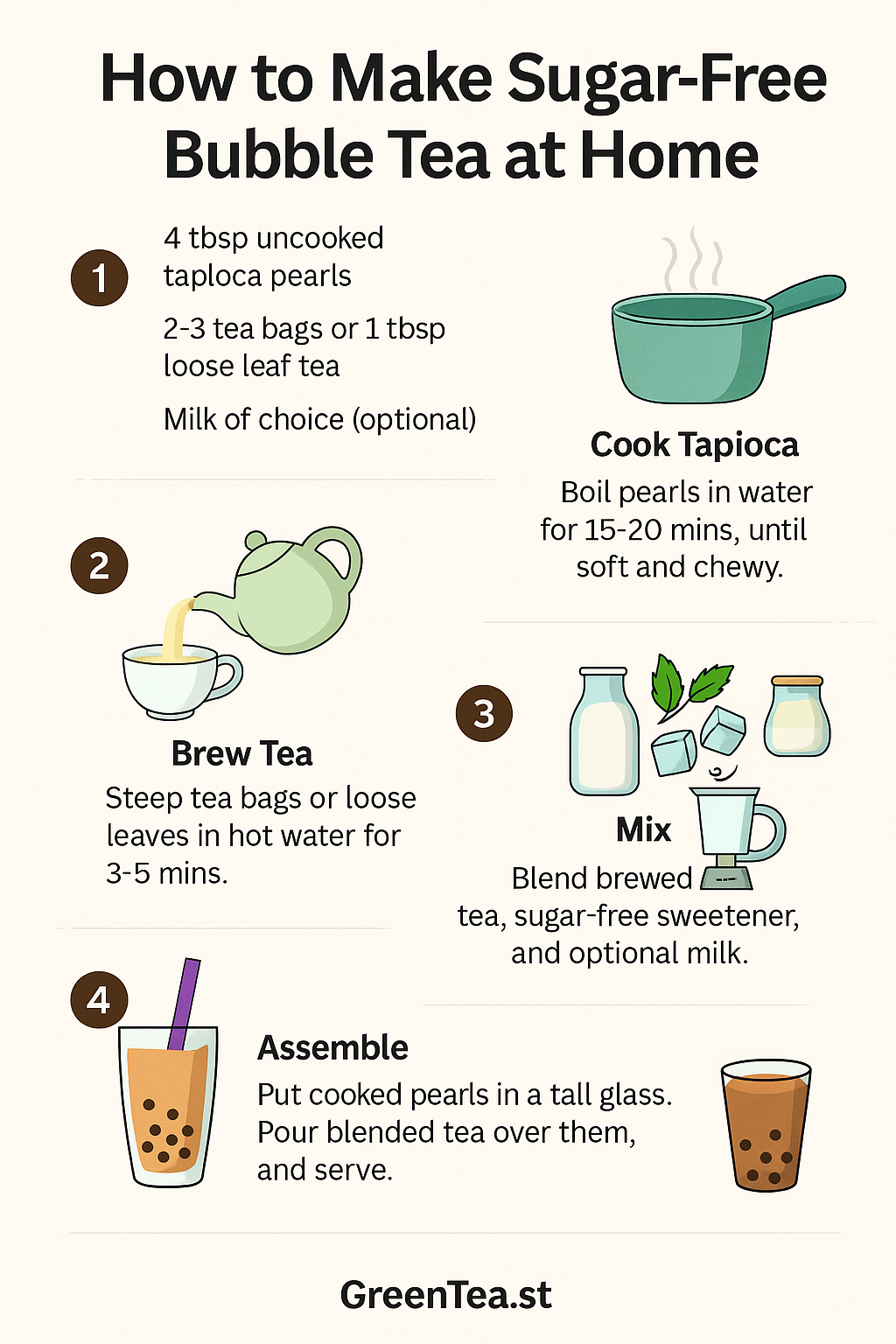
Making sugar-free bubble tea at home is simpler than it looks—and it gives you full control over sweetness, ingredients, and flavor. Here’s a step-by-step guide to crafting your perfect guilt-free cup.
Step 1: Brew the Tea Base
Start with high-quality loose leaf tea or a tea bag of your choice.
- Green tea (like jasmine or matcha) gives a refreshing, light taste.
- Black tea (like Assam or Ceylon) adds a bolder, traditional base.
- Oolong or herbal teas can add floral or earthy undertones.
Boil 1 cup of water per serving and steep your tea for 3–5 minutes depending on strength preference. Avoid over-steeping—it can make the tea bitter. Let it cool completely before the next step.
Step 2: Prepare Sugar-Free Tapioca Pearls (Optional)
Most store-bought tapioca pearls come soaked in syrup, but you can buy or make sugar-free ones.
- Boil the pearls for about 5–7 minutes, or until they float.
- Drain and rinse under cold water.
- Instead of coating them in sugar syrup, soak them briefly in monk fruit or stevia-sweetened water for a mild flavor.
You can also substitute pearls with chia seeds, konjac jelly, or grass jelly for a fiber-rich twist.
Step 3: Add Milk or Cream Alternative
Choose your favorite unsweetened milk:
- Almond milk for a nutty, light flavor.
- Oat milk for creaminess.
- Coconut milk for a tropical, rich taste.
Add ½ cup to your brewed tea and mix well. You can adjust the amount based on your texture preference—more milk for a latte-style drink, less for a traditional tea-forward cup.
Step 4: Sweeten Naturally
Use 1–2 teaspoons of your preferred natural sweetener:
- Monk fruit gives a clean sweetness.
- Stevia is ideal for subtle flavor profiles.
- Erythritol works great for a neutral, sugar-like taste.
Stir until dissolved. If you’re blending, you can skip this step and add the sweetener directly to your blender.
Step 5: Assemble Your Drink
In a tall glass:
- Add cooked tapioca pearls or your chosen topping.
- Pour in the cooled tea and milk mixture.
- Add ice cubes for a refreshing chill.
- Shake or stir gently before serving.
Your homemade sugar-free bubble tea is now ready—creamy, chewy, and energizing without the sugar rush.
A study from Nutrients Journal (2021) shows that preparing teas at home with natural sweeteners helps reduce sugar consumption by up to 40% over time, supporting better long-term metabolic health (5).
Benefits of Going Sugar-Free
Choosing sugar-free bubble tea doesn’t just cut calories—it transforms how your body feels and functions. Here are some of the key benefits supported by research:
1. Supports Weight Management
By skipping syrups and condensed milk, you significantly reduce calorie intake while still enjoying a flavorful drink. A 16-ounce regular bubble tea can contain up to 300–400 calories, while sugar-free versions can drop that number to less than half. Over time, this switch helps prevent excess weight gain and supports steady metabolism. According to a 2019 review in the American Journal of Clinical Nutrition, high sugar intake is strongly linked to obesity and metabolic syndrome (6).
2. Stabilizes Blood Sugar Levels
For people monitoring their blood glucose, removing added sugars is one of the simplest ways to stay balanced. Sugar-free bubble tea allows you to enjoy the fun and comfort of the drink without the crash or insulin spikes that follow high-sugar beverages. A study from Nutrients Journal found that diets lower in added sugars help improve insulin sensitivity and reduce inflammation (7).
3. Protects Dental Health
Regular bubble tea often coats teeth with sugar residue that promotes bacterial growth and enamel erosion. Opting for sugar-free alternatives—especially those made with unsweetened tea—reduces acid buildup and supports overall oral hygiene.
4. Enhances Energy and Focus
Unlike sugar-laden drinks that cause quick energy highs and lows, sugar-free bubble tea provides steady mental clarity thanks to tea’s natural caffeine and L-theanine. The combination promotes alertness without jitteriness or fatigue, making it an ideal midday pick-me-up.
5. Encourages Mindful Consumption
When you make or order sugar-free bubble tea, you’re more aware of your ingredients and portion sizes. This small but consistent mindfulness often extends to other food choices, improving your overall relationship with what you consume.
Side Effects or Considerations
While sugar-free bubble tea is generally a healthier choice, there are still a few important things to keep in mind:
1. Artificial Sweeteners
Many store-bought sugar-free options use artificial sweeteners like sucralose or aspartame. While they reduce calorie intake, some people experience bloating, headaches, or aftertastes from these additives. A review published in the Canadian Medical Association Journal linked long-term use of certain non-nutritive sweeteners to potential metabolic disturbances (3).
2. Sugar Alcohol Sensitivity
If your drink uses erythritol, xylitol, or sorbitol, remember that these sugar alcohols can cause mild digestive issues such as gas, bloating, or cramping, especially in larger amounts.
3. Caffeine Content
Bubble teas made with green or black tea bases still contain caffeine. While moderate amounts improve focus and energy, excessive intake may lead to restlessness or sleep disruption—especially if consumed late in the day.
4. Tapioca Pearls
Even without sugar in the tea itself, traditional tapioca pearls remain high in carbohydrates and starch. Some shops offer alternatives like chia seeds or konjac pearls, which are more fiber-rich and easier to digest.
5. Additive Awareness
Pre-mixed bubble tea powders may contain hidden additives such as thickeners or preservatives. Always check labels when possible, or make your tea at home to maintain full control over ingredients.
Conclusion
Sugar-free bubble tea offers the same fun, creamy texture and customizable flavor as traditional versions—without the sugar crash or extra calories. By swapping syrups for natural sweeteners like stevia, using real tea bases, and trying lighter toppings like chia or grass jelly, you can enjoy this trendy drink while keeping your health goals intact.
The key is balance. Whether you make it at home or order from a café, prioritize natural ingredients, watch caffeine levels, and sip mindfully. With the right tweaks, sugar-free bubble tea becomes not just a treat but a guilt-free ritual you can enjoy anytime.


