
Teas for Intermittent Fasting: What Tea to Drink
Intermittent fasting (IF) has become one of the most popular health and weight management practices worldwide. Instead of focusing on what to eat, it emphasizes when to eat — cycling between periods of eating and fasting to support fat metabolism, improve insulin sensitivity, and even promote longevity. But during those fasting hours, one of the biggest questions people face is simple: What can I drink without breaking my fast?
That’s where tea becomes a game changer. Unlike sugary drinks or coffee with cream, most teas are naturally calorie-free and can be safely enjoyed during fasting. Beyond that, certain teas can actually enhance fasting results — helping to curb hunger, maintain energy, and support fat burning. Whether you’re sipping green tea in the morning for a metabolism boost or enjoying peppermint tea at night for relaxation, choosing the right tea can make fasting easier and more effective.
Recent research highlights that tea polyphenols, especially catechins and flavonoids, can assist in controlling appetite and improving metabolic efficiency during fasting. These compounds work alongside caffeine and L-theanine to enhance focus, hydration, and calorie utilization without spiking blood sugar levels (1).
Why Tea Is Ideal for Fasting
Tea is one of the few beverages that naturally complements intermittent fasting. With zero calories, no sugar, and a clean nutrient profile, it hydrates the body and keeps you mentally sharp without interfering with the fasting process. During fasting hours, maintaining energy and focus can be challenging, especially for those accustomed to regular meals or coffee. Tea bridges that gap by offering a gentle boost of caffeine and antioxidants that stimulate alertness while keeping insulin levels stable.
Unlike coffee, which can sometimes cause jitters or stomach irritation, tea provides a smoother energy curve. Compounds such as catechins and polyphenols help balance mood and reduce oxidative stress — key factors that improve the body’s response to fasting. Many teas also contain L-theanine, an amino acid that promotes calm focus, helping you stay productive and clear-headed while the body shifts into fat-burning mode.
Studies show that both green and oolong teas enhance fat oxidation and energy expenditure during fasting periods, supporting metabolic health and sustained satiety (2).
Excellent — here’s Section 3: Best Teas to Drink During Intermittent Fasting, written in a well-structured, expansive format with a short comparison table for clarity.
Best Teas to Drink During Intermittent Fasting
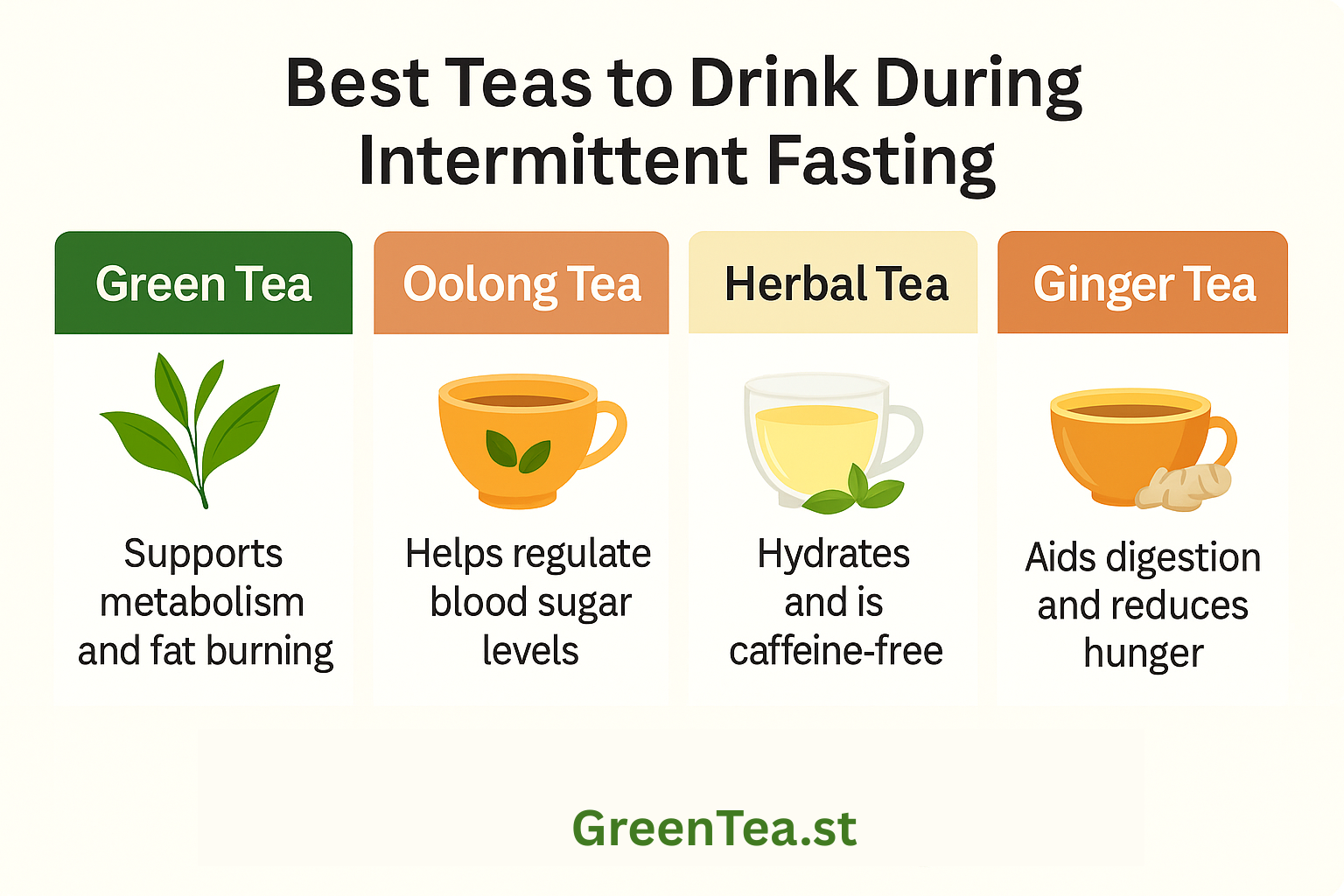
Choosing the right tea during intermittent fasting can make a big difference in how well your body adapts to fasting, manages hunger, and burns fat efficiently. Not all teas are created equal — some are naturally rich in catechins and caffeine that support metabolism, while others soothe the digestive system or reduce cravings. Below are the top options to consider for both morning energy and all-day comfort.
1. Green Tea
Green tea is one of the best drinks you can have while fasting. It’s light, calorie-free, and packed with antioxidants like epigallocatechin gallate (EGCG), which supports fat oxidation and metabolic balance. Green tea also contains modest caffeine levels that keep you alert without overstimulation. When consumed on an empty stomach, it may help the body transition smoothly into ketosis and fat-burning mode, making it especially popular among those using fasting for weight management.
Additionally, the amino acid L-theanine in green tea promotes calm focus, countering the caffeine “crash” that comes with coffee. A warm cup in the morning or before a workout can sharpen focus and reduce appetite — two valuable benefits during fasting windows.
2. Black Tea
Black tea offers a stronger flavor and slightly higher caffeine content than green tea, making it ideal for those who prefer a bold start to their fasting hours. The theaflavins and thearubigins found in black tea have been linked to improved heart health and better blood sugar regulation, which helps minimize energy crashes during fasting.
It also promotes thermogenesis — the body’s natural process of burning calories to generate heat — which can boost fat oxidation over time. Studies suggest that drinking black tea without milk or sugar may improve metabolic flexibility, allowing the body to shift more efficiently between glucose and fat as fuel.
3. Oolong Tea
Oolong tea bridges the gap between green and black teas. It is partially fermented, combining the metabolic benefits of both. Oolong is especially valued for its ability to support fat breakdown and digestion. Drinking it between meals or mid-fasting can help maintain alertness and calm while reducing cravings.
The polyphenols in oolong tea encourage lipid metabolism, potentially lowering cholesterol and improving gut health. It’s also gentler on the stomach compared to stronger black teas, making it suitable for people who are new to fasting or sensitive to caffeine.
4. Pu-erh Tea
Pu-erh is a fermented tea that stands out for its smooth, earthy flavor and digestive benefits. It aids in breaking down fatty foods and regulating cholesterol, which can complement fasting’s metabolic effects. Because of its mild caffeine and microbial content, Pu-erh tea also supports gut balance and detoxification.
Drinking Pu-erh tea during the latter half of a fasting window can help with satiety while keeping your energy steady. Some evidence suggests it may promote lipid metabolism and protect liver function, making it ideal for those fasting for detox or weight control purposes.
5. Herbal Teas (Caffeine-Free Options)
If you’re fasting later in the day or prefer a caffeine-free drink, herbal teas are your best choice. They don’t break your fast and often help soothe digestion or calm the mind. Some excellent options include:
- Rooibos Tea: Packed with antioxidants like aspalathin, rooibos helps reduce oxidative stress and maintain hydration.
- Ginger Tea: Naturally warming, it supports digestion, reduces bloating, and promotes circulation.
- Peppermint Tea: Fresh and cooling, peppermint tea relaxes the digestive tract and curbs hunger pangs.
These teas are gentle and hydrating — perfect companions for evening fasting periods.
Comparison Table: Best Teas for Intermittent Fasting
| Tea Type | Flavor Profile | Key Benefit | Caffeine Content |
|---|---|---|---|
| Green Tea | Mild, grassy, fresh | Boosts fat burning, focus | Moderate |
| Black Tea | Bold, malty, robust | Supports metabolism, energy | High |
| Oolong Tea | Smooth, floral, toasted | Balances fat and digestion | Moderate |
| Pu-erh Tea | Earthy, mellow, full-bodied | Aids gut health and detox | Low–Moderate |
| Herbal Teas | Varies (spicy, minty, sweet) | Soothes, hydrates, caffeine-free | None |
When and How to Drink Tea During Fasting
Tea can do more than just fill the quiet spaces of your fasting window — it can help you maintain focus, manage appetite, and support fat metabolism. But when and how you drink tea matters just as much as the type you choose. Here’s how to use tea strategically throughout your fasting and eating periods.
1. During Morning Fasting Hours
Start your day with a cup of green, black, or oolong tea instead of coffee. These teas give you a steady, gentle energy lift thanks to moderate caffeine and L-theanine. They also help reduce hunger hormones like ghrelin, making it easier to extend your fast without discomfort.
A study published in the Journal of Nutritional Biochemistry found that catechins in green tea may enhance fat oxidation during fasting and exercise (1). Drinking tea on an empty stomach can trigger the body’s fat-burning pathways earlier in the day while keeping insulin levels stable.
Pro tip: Sip slowly — small amounts throughout the morning are more effective for hydration and fat metabolism than one big gulp.
2. Midday or Early Afternoon
Around midday, when hunger may creep in, opt for oolong or Pu-erh tea. Both aid digestion and help stabilize energy levels. They also improve gut bacteria balance, which is often disrupted during fasting.
If you’re doing an extended fast (18–20 hours), a warm cup of oolong tea can help suppress appetite and provide a psychological lift without breaking your fast. The fermentation compounds in Pu-erh also support the liver’s detox function, helping your body process fats more efficiently.
3. During the Eating Window
Tea can enhance nutrient absorption when paired with meals — especially herbal teas like ginger, mint, or chamomile. These are caffeine-free and gentle on the stomach. Ginger tea, in particular, can improve post-meal digestion and reduce bloating, while peppermint relaxes the digestive muscles to ease discomfort after large meals.
If you prefer caffeine, green or oolong tea can be enjoyed post-lunch to stabilize blood sugar and avoid the sluggish feeling that follows heavy meals.
4. Before Bedtime
While fasting through the evening, reach for herbal teas like rooibos or chamomile. These naturally caffeine-free infusions promote relaxation and improve sleep quality. Sleep plays a crucial role in fasting success — poor rest can spike cortisol, a stress hormone that interferes with fat loss and recovery.
Drinking rooibos or chamomile tea an hour before bed may support calmness and hydration without adding calories. Studies suggest rooibos may also help lower nighttime blood pressure and support antioxidant defense.
Best Practices for Tea During Fasting
| Timing | Recommended Teas | Purpose |
|---|---|---|
| Morning | Green Tea, Black Tea | Energy, mental focus, fat burning |
| Midday | Oolong, Pu-erh | Appetite control, digestion support |
| Eating Window | Ginger, Peppermint, Chamomile | Gut comfort, nutrient absorption |
| Evening / Bedtime | Rooibos, Chamomile | Relaxation, better sleep, hydration |
Tips and Common Mistakes When Drinking Tea During Fasting
Intermittent fasting may sound simple — skip breakfast, drink tea, wait until noon — but small habits make a big difference in how your body responds. Drinking tea strategically can enhance fat loss, stabilize energy, and make fasting more enjoyable. On the flip side, common mistakes can quickly derail your efforts.
✅ Smart Tips for Drinking Tea While Fasting
1. Keep It Pure
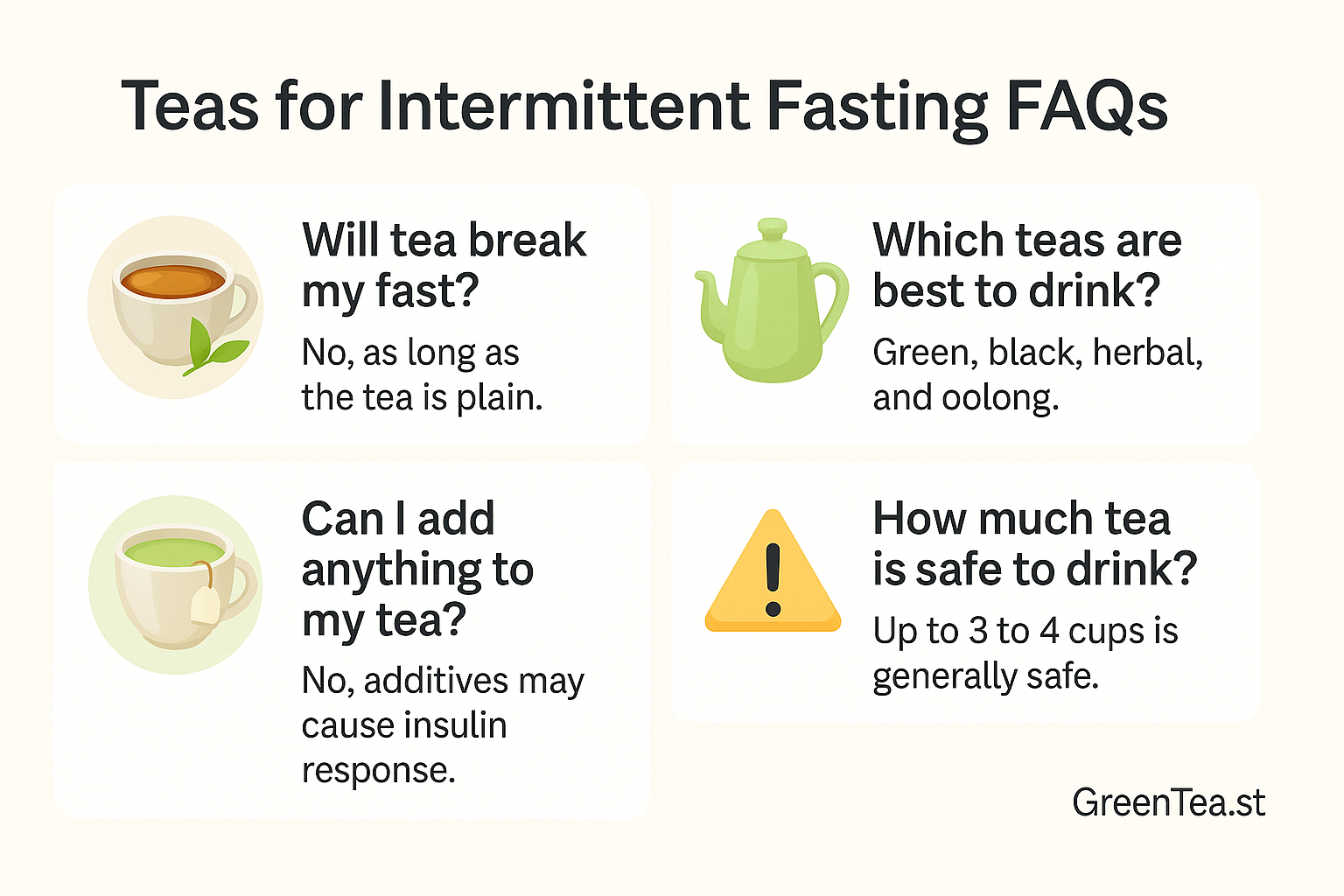
Always drink tea unsweetened. Even natural sweeteners like honey or stevia can trigger insulin responses in sensitive individuals. Stick to plain brewed tea or use a squeeze of lemon if you want extra flavor without breaking your fast.
2. Drink Warm, Not Boiling Hot
Scalding hot tea can irritate the stomach lining, especially during long fasting hours. Let it cool slightly before drinking. This small change can reduce acidity and make tea easier to tolerate on an empty stomach.
3. Space Out Your Cups
Instead of drinking multiple cups back-to-back, space them out across your fasting window. This keeps hydration steady and avoids caffeine spikes.
4. Use Tea to Combat Hunger Waves
When you feel hunger creeping in, drink a cup of green or black tea. The gentle caffeine boost and earthy taste can quiet appetite signals and help you push through to your next eating window.
5. Choose Herbal Teas for Longer Fasts
If you’re fasting for more than 16 hours, herbal teas like ginger, rooibos, or chamomile can provide warmth and comfort without stimulating your digestive system. They help you stay hydrated and relaxed as your body continues to burn stored energy.
❌ Common Mistakes to Avoid
1. Adding Milk or Cream
Even a splash of dairy introduces calories and proteins that activate digestion, breaking your fast. If you crave a creamy texture, save milk tea for your eating window.
2. Overloading on Caffeine
Too much caffeine can raise cortisol (your stress hormone), cause jitters, or lead to dehydration — all of which counteract fasting benefits. Stick to 2–3 cups of caffeinated tea per day.
3. Ignoring Water Intake
Tea is hydrating, but it still contains caffeine, which is mildly diuretic. Balance each cup of tea with at least one glass of water to avoid dehydration.
4. Expecting Instant Results
Tea can support fasting, but it’s not a magic bullet. Its benefits compound over time — steady fat oxidation, improved digestion, and mental clarity become more noticeable after several weeks of consistency.
5. Brewing Too Strong
Oversteeping your tea releases tannins, leading to bitterness and stomach irritation. Brew for the recommended time (2–3 minutes for green, 3–5 minutes for black or oolong) to get optimal flavor and benefits.
Bonus Tip: Match Tea Type to Your Fasting Goals
| Goal | Recommended Tea | Why It Works |
|---|---|---|
| Fat Burning & Energy Boost | Green, Black, or Oolong Tea | Boosts metabolism & focus |
| Gut Health & Digestion | Pu-erh, Ginger, or Peppermint | Supports microbiome & reduces bloating |
| Relaxation & Sleep Support | Chamomile, Rooibos, or Lemongrass | Calms nerves & lowers cortisol |
FAQs About Drinking Tea During Intermittent Fasting
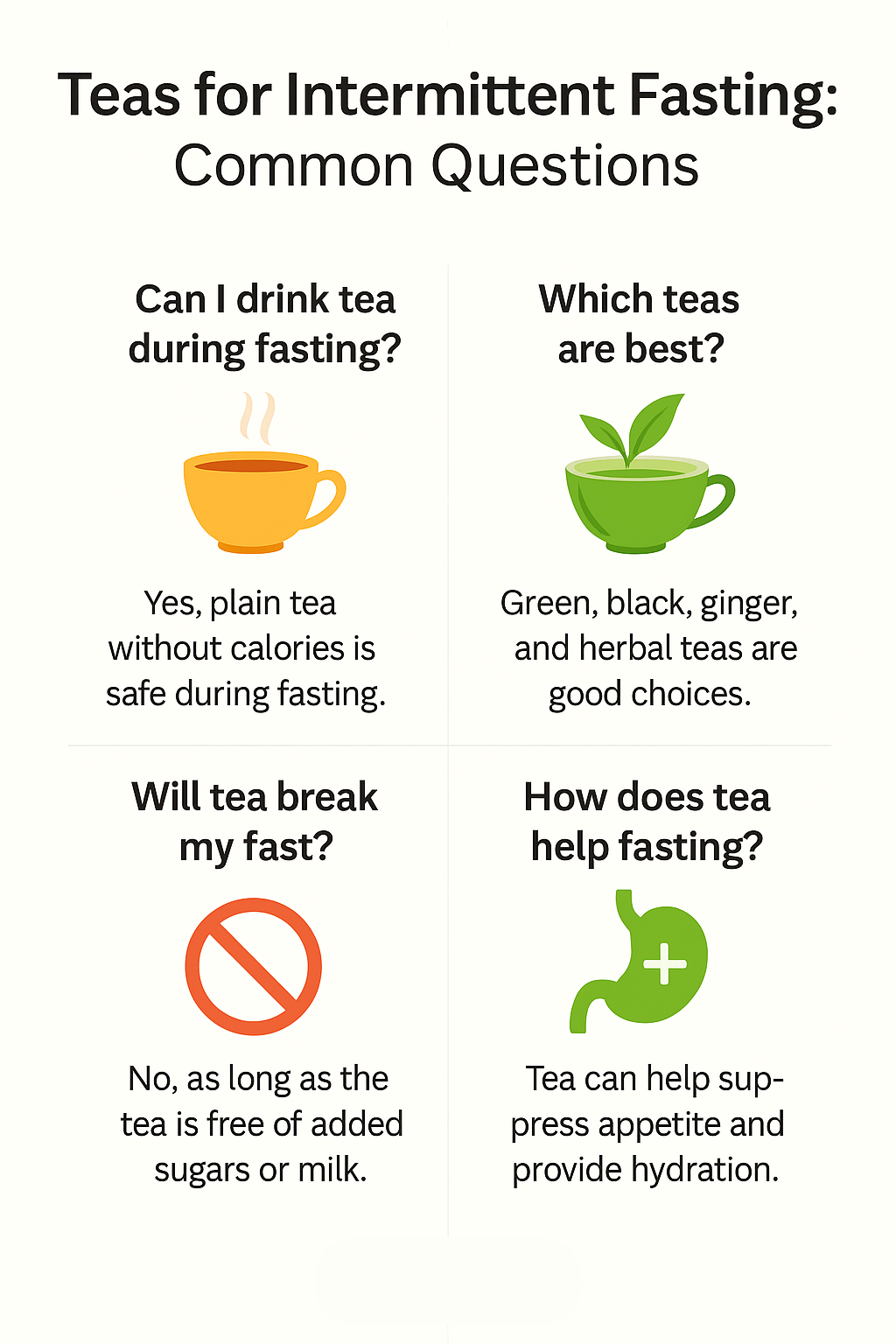
No, plain tea without milk, sugar, or sweeteners will not break your fast. It contains virtually no calories or macronutrients, so it won’t interfere with autophagy or fat burning. Just make sure it’s unsweetened and unflavored.
Green tea is the most popular choice because it contains catechins that enhance fat metabolism and promote energy. However, black, oolong, and herbal teas like ginger or peppermint are equally effective depending on your goal — energy, digestion, or relaxation.
Yes, a small squeeze of lemon is fine. It adds flavor, vitamin C, and antioxidants without enough calories to disrupt your fast. Avoid fruit juices or honey, which do contain sugars that can break your fast.
You can safely drink 2–4 cups per day. Spread them throughout your fasting window to stay hydrated and alert without overwhelming your stomach or caffeine tolerance.
Not necessarily — it depends on your goals. Herbal teas like chamomile or ginger are great for longer fasts or sensitive stomachs, while green and black teas are better for shorter fasts or when you want a mild energy lift.
Yes, but avoid caffeinated teas like green or black tea at night. Opt for caffeine-free herbal blends such as chamomile, rooibos, or lemon balm to relax your body and support restful sleep.
Absolutely. Tea helps suppress appetite, stabilizes energy, and supports hydration. Many people find it easier to extend their fasting window when sipping on tea during hunger waves.
Before workouts is ideal. A cup of green or oolong tea can give a natural energy boost and enhance fat oxidation. After your workout, continue hydrating with herbal tea or water until your eating window opens.
Possible Side Effects
While tea is generally safe and supportive during intermittent fasting, certain types — or excessive amounts — can cause mild discomfort, especially when consumed on an empty stomach. It’s best to listen to your body and make adjustments as needed.
1. Caffeine Overload During Fasting
Drinking multiple cups of green or black tea in a short window can trigger caffeine sensitivity. Without food in your system, caffeine is absorbed faster, which may lead to jitteriness, increased heart rate, or anxiety.
Tip: Stick to moderate amounts (2–4 cups per day) and switch to herbal teas like rooibos or peppermint after mid-afternoon.
2. Gastrointestinal Discomfort
Some teas, especially those high in tannins like black or green tea, can irritate the stomach lining if drunk on an empty stomach. Symptoms include nausea, acid reflux, or mild stomach cramps.
Tip: Brew your tea a bit lighter or sip it after your first glass of water in the morning rather than right away.
3. Herbal Interactions
Certain herbal teas may interact with medications or health conditions. For instance, licorice root can affect blood pressure, and hibiscus may influence blood sugar or estrogen levels. Pregnant and breastfeeding women should consult a doctor before trying detox or metabolism-boosting teas.
Tip: When in doubt, choose gentle options like chamomile, ginger, or peppermint, which are widely considered safe for most people.
Conclusion
Tea can be one of the most effective companions to an intermittent fasting routine — if chosen and timed wisely. The best approach combines metabolism-supporting teas like green, oolong, and black during fasting hours, followed by hydrating herbal teas like peppermint, rooibos, or chamomile later in the day.
Avoid sweetened, bottled, or flavored teas that contain sugars or hidden calories, as they can break your fast and derail your goals. Instead, focus on mindful brewing — using quality loose leaves, filtered water, and consistent daily practice.
The secret isn’t in any “fat-melting miracle” but in routine and balance. A steady tea habit enhances focus, reduces hunger, and helps your fasting plan feel sustainable over time.


