
Cold Brew Tea: Benefits, Types, and How to Make It
Cold brew tea has a smooth, naturally sweet taste that many people prefer to hot-brewed tea. Instead of using hot water, you steep the leaves in cold or room-temperature water for several hours in the fridge. The slower extraction pulls fewer tannins, so the result is less bitter and easier on the stomach.
Cold brewing does not turn tea into a miracle drink, but it can deliver a pleasant dose of the same polyphenols found in hot tea. Catechins such as EGCG are the compounds most often linked with benefits for heart and metabolic health, and they are present in properly brewed green tea whether you drink it hot or cold (1).
What is Cold Brew Tea?
Cold brew tea is simply tea leaves soaked in cold water for 6 to 12 hours, then strained and served chilled. It is not the same as iced tea that starts hot and is cooled with ice. Because extraction happens at a lower temperature, you get a cleaner flavor with less astringency and a softer caffeine feel.
You can cold brew almost any tea. Green tea tastes fresh and grassy, black tea turns smooth and malty, oolong becomes floral, and white tea is delicate and slightly sweet. The method is straightforward. Add tea to a jar, cover with cold filtered water, refrigerate, then strain. What you get is a refreshing, low-calorie drink that is easy to sip all day.
Benefits of Cold Brew Tea
Cold brew tea isn’t just about taste; it offers real health advantages thanks to the unique brewing process. By steeping tea slowly in cold water, the drink retains bioactive compounds that may be lost in hot brewing, making it a gentler yet still powerful way to support wellness.
1. Rich in Antioxidants
Cold brew tea contains a wealth of antioxidants, including catechins and polyphenols. These compounds neutralize free radicals that cause cellular damage and oxidative stress. Antioxidants play a role in slowing aging, protecting organs, and lowering the risk of chronic diseases. Because cold brewing avoids high temperatures, many of these delicate compounds are preserved in higher amounts compared to hot tea.
Studies have shown that catechins in green tea specifically improve oxidative balance, which may protect against cardiovascular and metabolic disorders (2). Regularly drinking cold brew tea can therefore provide a consistent, easy way to increase antioxidant intake.
2. Gentler on the Stomach
Unlike hot tea, cold brew tea has a naturally smoother, less acidic taste, which makes it easier on the digestive system. For individuals with acid sensitivity or those who experience discomfort with stronger brews, cold brew is a soothing alternative. The reduction in tannins during the cold steeping process also minimizes bitterness and the risk of stomach irritation.
This makes cold brew tea a suitable option for people who want to enjoy the benefits of tea without the harsh aftereffects of traditional hot brewing.
3. Supports Hydration
Cold brew tea is an excellent hydration choice since it provides flavor without the sugars or artificial additives found in many commercial beverages. Staying hydrated is vital for energy levels, digestion, and cognitive performance, and drinking cold brew throughout the day can make meeting fluid goals easier.
The gentle caffeine boost found in certain cold-brewed teas, such as green or oolong, also provides a refreshing lift without overstimulating, making it a balanced beverage option.
4. May Promote Heart Health
Cold brew tea can be a heart-friendly beverage. The polyphenols and flavonoids it contains have been linked to improved circulation, reduced LDL cholesterol, and better vascular function. By lowering oxidative stress and supporting arterial flexibility, these compounds may decrease the long-term risk of heart disease.
Some evidence suggests that tea consumption, especially green tea, is associated with a lower incidence of cardiovascular disease and stroke (3). Cold brewing helps retain these protective compounds while providing a smoother, more palatable drink that encourages daily consumption.
5. Provides a Sustained Energy Lift
While cold brew tea has caffeine, the slower extraction method produces a beverage that offers a more moderate and balanced boost compared to coffee or even hot tea. This steady release of caffeine helps improve alertness, focus, and productivity without the sharp spikes and crashes.
Combined with the amino acid L-theanine, present in many teas, cold brew delivers a calming yet energizing effect. This makes it a great option for people who want sustained mental clarity during work or study.
6. Supports Weight Management
Cold brew tea can also be part of a weight management plan. Catechins and caffeine together may boost fat oxidation and increase metabolic rate slightly, helping the body burn calories more efficiently. Drinking cold brew before exercise could further enhance fat utilization during workouts.
In addition, substituting cold brew tea for sugary sodas or high-calorie drinks naturally reduces overall calorie intake, supporting gradual and sustainable weight loss.
Types of Tea That Work Best for Cold Brewing
Not all teas perform equally when cold brewed. Some varieties release a smooth, naturally sweet flavor, while others can turn out dull or overly bitter. Below are some of the best teas for cold brewing and why they work particularly well.
1. Green Tea
Green tea is one of the most popular choices for cold brewing. The cooler extraction process reduces bitterness and grassy notes, creating a smoother, slightly sweet beverage. This makes it especially enjoyable for people who might find hot green tea too sharp.
Cold-brewed green tea also retains high levels of catechins and antioxidants, which may be degraded by heat. This makes it not only delicious but also a powerful option for hydration and wellness.
2. Oolong Tea
Oolong tea, which falls between green and black tea in terms of oxidation, offers a wide flavor spectrum that shines in cold brewing. Depending on the variety, it can produce floral, fruity, or toasty notes that become more pronounced when brewed slowly in cold water.
The moderate caffeine level in oolong provides a refreshing lift without being overpowering. Its polyphenol content may also support fat metabolism, making it a popular choice for those who want both flavor and health benefits in their cold brew.
3. Black Tea
Black tea delivers a bold and robust flavor that transforms into something surprisingly mellow when cold brewed. The slow steeping process softens its natural astringency, resulting in a smoother taste with subtle notes of malt, fruit, or spice depending on the origin.
Cold-brewed black tea is also a great source of theaflavins, antioxidants that may support heart health and reduce inflammation. For those who enjoy a strong tea base, black tea is an excellent choice for cold brewing, especially when served over ice with a slice of lemon.
4. Herbal Teas
Herbal infusions, such as hibiscus, chamomile, peppermint, and rooibos, are naturally caffeine-free and work beautifully for cold brewing. Since these are not true teas from the Camellia sinensis plant, their flavors and health benefits vary widely, from soothing digestion to promoting relaxation.
Cold brewing enhances their natural sweetness and makes them refreshing, hydrating options for all ages. Hibiscus in particular creates a vibrant red cold brew with a tart, cranberry-like flavor and added vitamin C.
5. White Tea
White tea, known for its delicate and subtle character, is particularly well suited to cold brewing. The mild process preserves its natural sweetness and floral aroma while preventing the bitterness that can develop with hot brewing.
Cold-brewed white tea is light, refreshing, and naturally lower in caffeine compared to green or black teas. It is also rich in antioxidants that may support skin health and overall wellness, making it a sophisticated option for those who prefer gentler flavors.
Perfect — let’s wrap up the Types of Tea That Work Best for Cold Brewing with the last two teas, then I’ll add a comparison table for clarity.
6. Pu-erh Tea
Pu-erh, a fermented and aged tea from China, develops earthy, rich, and slightly sweet notes that mellow beautifully in a cold brew. Unlike its sometimes heavy hot-brew counterpart, cold-brewed pu-erh is smoother and less pungent, making it more approachable for new tea drinkers.
It also contains probiotics from the fermentation process, which may support gut health alongside its antioxidant content. For those seeking depth of flavor with added wellness benefits, pu-erh is an intriguing option.
7. Flavored and Blended Teas
Teas blended with fruit pieces, flowers, or spices often shine when cold brewed. Examples include green tea with jasmine, black tea with citrus, or rooibos with vanilla. The extended steeping allows these natural flavorings to infuse more gently, producing a balanced drink without overpowering bitterness.
Flavored teas are also popular for making cold brew “mocktails” at home. They pair well with sparkling water, fresh herbs, or even light sweeteners for a customizable, refreshing beverage.
Comparison Table: Cold Brew Tea Types
Here’s a quick look at how different teas perform in terms of flavor profile and caffeine level when cold brewed:
| Tea Type | Flavor Profile (Cold Brewed) | Caffeine Level (per 8 oz) |
|---|---|---|
| Green Tea | Smooth, mildly sweet, grassy-soft | 20–35 mg |
| Oolong Tea | Floral, fruity, toasty | 30–50 mg |
| Black Tea | Bold, malty, slightly sweet | 40–70 mg |
| Herbal Teas | Varies: fruity, floral, minty, tart | 0 mg (naturally caffeine-free) |
| White Tea | Light, delicate, floral, sweet | 15–30 mg |
| Pu-erh Tea | Earthy, mellow, smooth | 30–70 mg |
| Flavored Teas | Balanced, enhanced by fruit/spices | Varies (depends on base) |
How to Make Cold Brew Tea
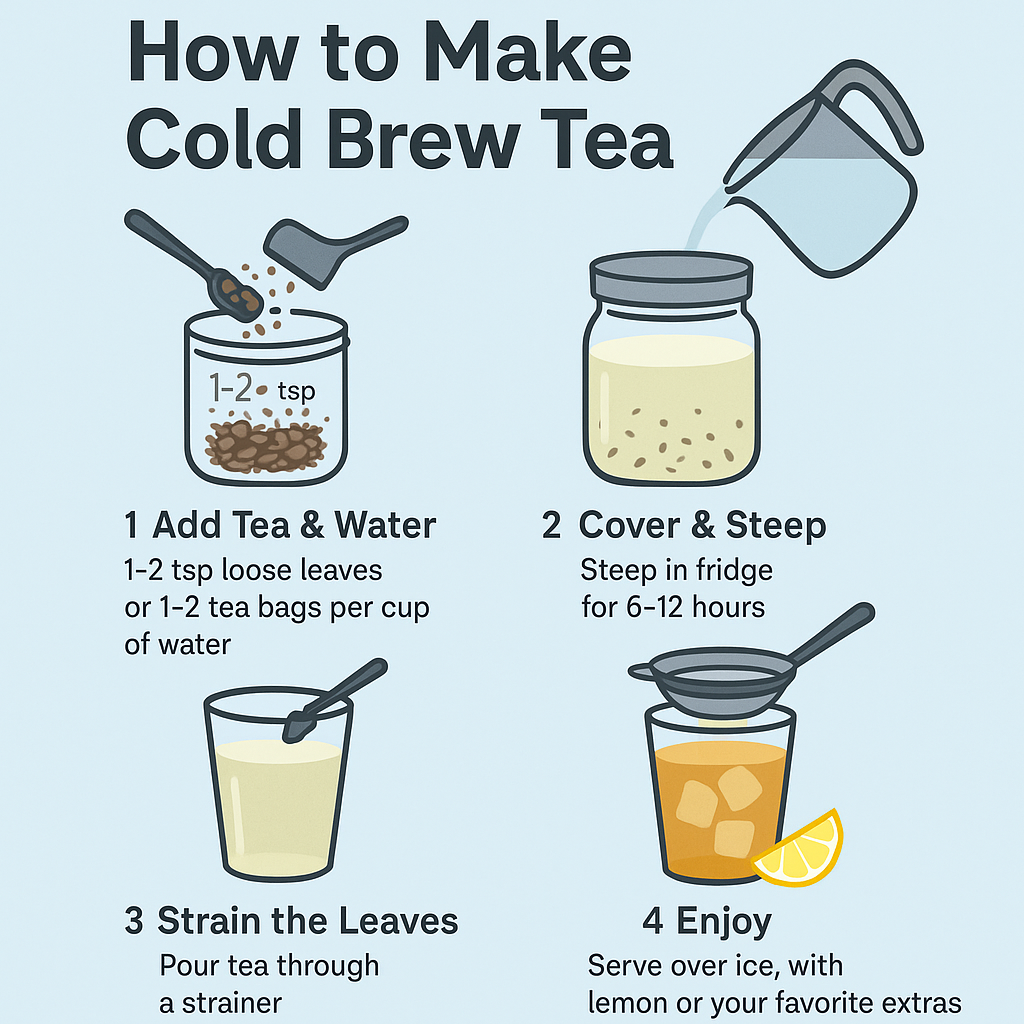
Cold brewing tea is simple and requires little more than patience and good-quality leaves. Unlike hot tea, which extracts flavors quickly, cold water works gently over several hours, bringing out subtle sweetness and reducing bitterness. Here’s how to do it right:
Step-by-Step Guide
- Choose Your Tea
- Select loose-leaf or high-quality tea bags. Green, white, oolong, black, pu-erh, or herbal teas all work well depending on your preference.
- Measure the Leaves
- Use about 1 to 1.5 teaspoons of loose tea per 8 oz (240 ml) of water. For stronger brews, increase slightly.
- Add Cold or Room-Temperature Water
- Place the tea in a pitcher or glass jar and pour in filtered cold water.
- Steep Slowly
- Cover and refrigerate for 6–12 hours.
- Lighter teas like green or white need less time (6–8 hours).
- Heavier teas like black or pu-erh benefit from longer infusions (10–12 hours).
- Strain and Serve
- Remove the leaves or bags. Pour the tea over ice for a refreshing drink.
- Optional Enhancements
- Add lemon slices, fresh mint, ginger, or honey for flavor.
- For sparkling cold brew, top with soda water before serving.
Brewing Tips
- Always use fresh, filtered water, as it makes up most of the tea’s taste.
- Store leftover cold brew in the refrigerator and drink within 2–3 days for the best flavor.
- For a caffeine-free option, try rooibos, hibiscus, or chamomile.
Side Effects and Precautions of Cold Brew Tea
While cold brew tea is generally safe and gentler than hot-brewed tea, there are a few important considerations to keep in mind:
- Caffeine Sensitivity
- Even though cold brewing extracts less caffeine than hot brewing, some teas (like black, oolong, or pu-erh) still contain moderate levels.
- Sensitive individuals may experience jitteriness, insomnia, or increased heart rate if they drink too much.
- Tannins and Stomach Irritation
- Cold brew extracts fewer tannins, which means it is less astringent and gentler on the stomach.
- However, drinking large amounts of strong cold brew may still cause mild nausea in some people.
- Possible Contamination Risk
- Because cold brew tea is steeped over several hours at low temperatures, there’s a small risk of bacterial growth if hygiene is poor.
- Always use clean containers, filtered water, and refrigerate during steeping to minimize this risk.
- Interactions with Medications
- Green and black teas contain compounds that can interfere with iron absorption when consumed in excess.
- People on blood thinners, stimulants, or sensitive medications should check with a healthcare provider before drinking large quantities.
- Pregnancy and Breastfeeding
- Herbal cold brews, such as hibiscus, licorice, or strong herbal blends, may not be safe during pregnancy.
- Always consult a healthcare provider before consuming herbal teas while pregnant or breastfeeding.
FAQs About Cold Brew Tea
Yes. Cold brewing typically extracts less caffeine because the leaves steep slowly at low temperatures. However, the exact amount depends on the tea type.
Cold brew tea can be stored in the refrigerator for up to 2–3 days. After that, it may lose flavor and freshness.
Absolutely. Herbal teas like chamomile, rooibos, and hibiscus work especially well, as cold brewing enhances their natural sweetness and floral notes.
No. A simple jar, pitcher, or even a French press works perfectly. Just ensure it is clean and airtight.
Conclusion
Cold brew tea is more than just a refreshing beverage — it’s a method that transforms the flavor, smoothness, and drinkability of tea. By steeping leaves slowly in cold water, you unlock a natural sweetness with less bitterness, making it perfect for both seasoned tea lovers and newcomers. From green and white teas to herbal blends and pu-erh, nearly any tea can be enjoyed in this gentle style.
Beyond its taste, cold brew tea offers health-supportive antioxidants and hydration benefits, while being versatile enough to pair with fruits, herbs, or sparkling water. With minimal equipment and a little patience, anyone can prepare it at home and enjoy a crisp, revitalizing drink tailored to their taste.


