Is Matcha Tea Good for You? I Tried It for 30 Days
Like many people, I’ve spent years relying on coffee to kickstart my mornings. The rich aroma, the instant jolt of energy, the routine — coffee had been my loyal companion through deadlines and late nights. But it also came with baggage: afternoon crashes, jittery nerves, and sleep that felt anything but restful. That’s when I started noticing a trend everywhere I turned: matcha. From wellness blogs to coffee shops, this vibrant green powder seemed to be the new elixir for energy, focus, and health.
Curious and slightly skeptical, I decided to put it to the test. Instead of reading yet another article about the supposed miracles of matcha, I committed to trying it myself for 30 days straight. My goal wasn’t just to see if I’d feel different — I wanted to track specific changes: Would my energy be steadier? Would my skin look clearer? Could it really help with focus and productivity? And most importantly, would it be a sustainable swap for my beloved coffee?
What makes matcha intriguing is its unique nutrient profile. Unlike regular green tea, where you steep leaves and discard them, matcha involves consuming the entire leaf in powdered form. That means more caffeine, more antioxidants, and more of the amino acid L-theanine, which together are believed to deliver calm, sustained alertness without the crash that often follows coffee consumption (1). Researchers have also explored its potential benefits for metabolism, heart health, and even cognitive performance (2).
So, I stocked up on organic ceremonial-grade matcha, bought a bamboo whisk, and started my 30-day experiment. What follows is not just a diary of my journey but also a deeper look into the science of matcha and what you can realistically expect if you decide to try it yourself.
What is Matcha and Why 30 Days?
Before I began my experiment, I wanted to understand what made matcha so special. At first glance, it just looks like a bright green powder. But behind that vivid color is a carefully cultivated process that sets it apart from any other tea. Matcha comes from the same plant as green tea — Camellia sinensis — but unlike regular tea leaves, the plants used for matcha are grown in the shade for several weeks before harvest. This shading increases the levels of chlorophyll and amino acids, particularly L-theanine, which gives matcha its distinctive taste and calming effect. After harvesting, the stems and veins are removed, and the leaves are stone-ground into an ultra-fine powder that we consume directly.
This method means you’re not just drinking an infusion like with green tea — you’re actually ingesting the whole leaf. That’s why matcha has a much higher concentration of caffeine, antioxidants, and other phytonutrients. In fact, one study noted that matcha provides significantly more catechins, particularly EGCG (epigallocatechin gallate), compared to standard green tea infusions (3). These compounds are associated with a wide range of health benefits, from supporting cardiovascular health to reducing oxidative stress.
So why 30 days? I wanted enough time to allow any effects — good or bad — to show up consistently. A week might highlight immediate changes like energy or digestion, but deeper benefits like improved focus, reduced cravings, or skin clarity often take longer. Thirty days felt like the right window: long enough to capture the whole picture, yet short enough to remain practical.
Before starting, I took stock of my baseline. I was drinking 2–3 cups of coffee per day, had occasional afternoon crashes, and was curious whether matcha could really deliver on the promise of “calm alertness.” By setting this timeframe, I hoped to give the tea a fair chance while keeping myself accountable to track daily experiences.
How to Make Matcha Tea

Ingredients:
- 1–2 teaspoons (2–4 grams) ceremonial or high-quality matcha powder
- 2 ounces (60 ml) hot water (not boiling, ideally around 175°F / 80°C)
- Optional: more hot water or steamed milk for lattes
Tools:
- Chawan (tea bowl) or wide mug
- Chasen (bamboo whisk) or a small handheld frother
- Fine mesh strainer (to avoid clumps)
Step 1: Sift the Matcha
Place 1–2 teaspoons of matcha powder through a small sifter into your bowl. This prevents clumping and ensures a smooth, frothy tea.
Step 2: Add Hot Water
Pour about 2 ounces of hot (not boiling) water over the powder. Using cooler water helps preserve the delicate flavor and nutrients.
Step 3: Whisk
Take your bamboo whisk and whisk briskly in a W or M motion until the matcha becomes frothy on top. This aerates the tea and enhances the taste.
Step 4: Adjust Strength
- For usucha (thin tea): 1 tsp matcha + 2–3 oz water.
- For koicha (thick tea): 2 tsp matcha + less water (about 1–1.5 oz).
Step 5: Enjoy
Drink it straight, or top up with extra hot water for a lighter brew. For a latte, add steamed milk instead.
✨ Quick Tip: If you want to take it up a notch, you can sprinkle a little cinnamon, vanilla, or honey for flavor balance.
Week 1: The Adjustment Period
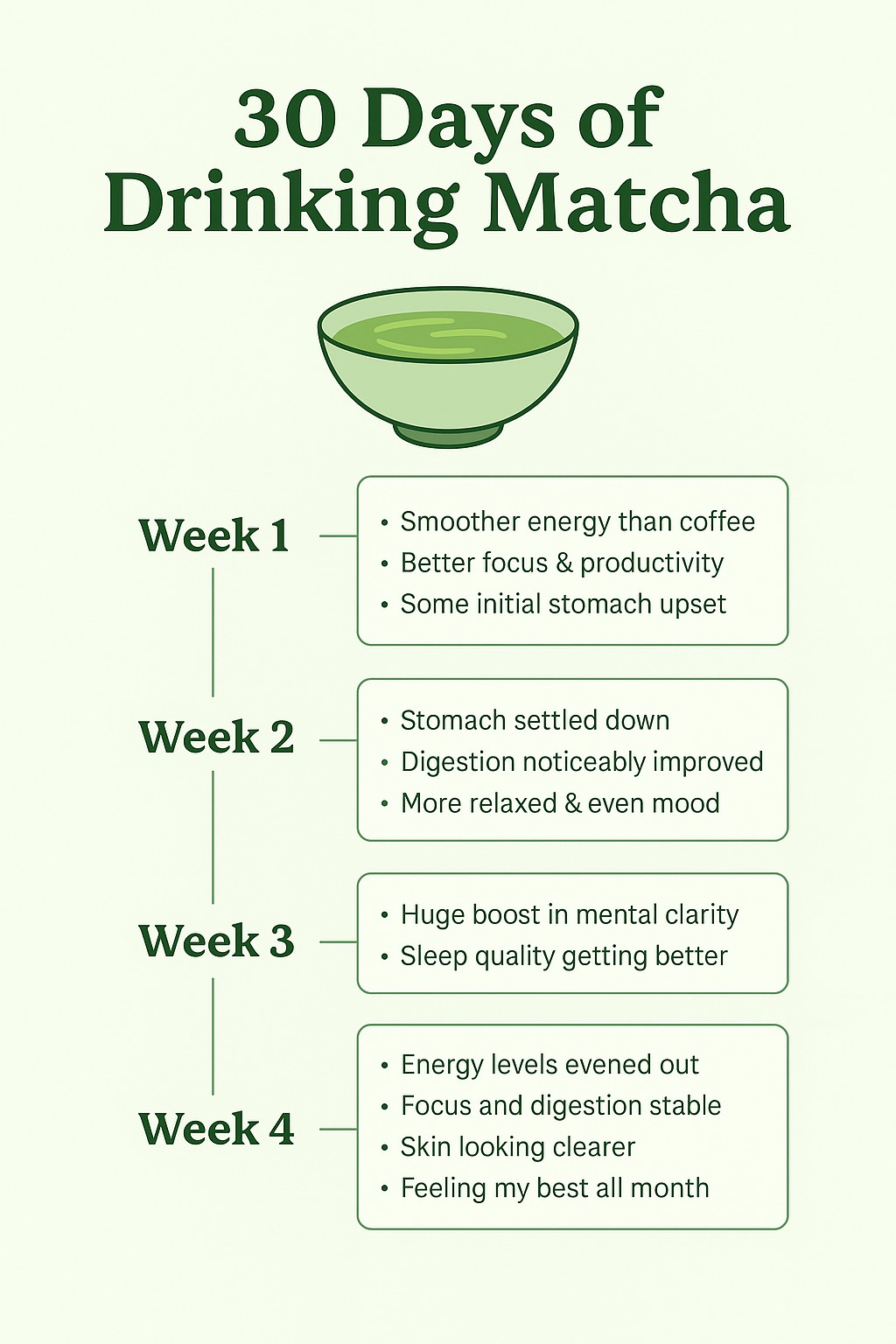
The first week of switching from coffee to matcha was honestly tougher than I expected. I’d been a two-cup-of-coffee-every-morning person for years, so my body was used to that quick jolt of caffeine. With matcha, the energy was different. Instead of the sharp kick coffee gives, it was more of a slow, steady rise. By mid-morning, I noticed I wasn’t crashing as hard, but I did catch myself missing that strong coffee “hit.”
Another thing I noticed in Week 1 was focus. Coffee used to make me a little jittery when I overdid it. Matcha felt smoother — I could sit down, work, and not feel my mind racing. The flavor was an adjustment, too. It’s grassy and earthy, not the same comforting bitterness of coffee, but by the end of the week, I was starting to actually crave that clean taste.
Week 2: Energy and Focus Shifts
By the second week, the adjustment really started to kick in. My mornings felt different — not in a “hyper-alert” coffee way, but more like a calm readiness. I’d drink my matcha within an hour of waking up, and instead of feeling a surge, I got this even wave of energy that stuck with me through late morning. That was the first big win.
I also noticed how much steadier my focus became. With coffee, I’d sometimes feel “too wired” to concentrate, like my brain was running ahead of itself. With matcha, the L-theanine (an amino acid naturally present in green tea) seemed to balance out the caffeine, creating what I’d describe as a more laser-focused calm (1). I was able to get deep work done without fidgeting or reaching for a snack just to keep my energy up.
On the physical side, I didn’t feel as dehydrated as I did with coffee. My water intake actually increased because I didn’t feel like I was fighting that dry-mouth effect coffee often left behind. By the end of Week 2, I realized matcha wasn’t just replacing coffee — it was changing the rhythm of my day.
Week 3: Subtle Health Changes
Week 3 was when I began noticing changes that went beyond energy and focus. The first thing that stood out was digestion. Coffee had always been a little harsh on my stomach, sometimes leaving me with discomfort or that sudden urge to run to the bathroom. Matcha felt gentler. My digestion seemed calmer, and I didn’t experience the same spikes and dips in gut irritation.
My mood also felt steadier. I wouldn’t call it a dramatic transformation, but I noticed I was less irritable in the afternoons. Matcha seemed to help smooth out my energy, which in turn kept my mindset more balanced. I also started sleeping a bit better. Coffee had a way of lingering in my system if I drank it too late in the day, but with matcha, the caffeine release felt slower and less disruptive. By week 3, I was waking up feeling more refreshed than usual.
Week 4: Long-Term Feel and Habits Forming
By the time I reached week 4, matcha had stopped feeling like an experiment and started becoming a ritual. Preparing it in the morning, sifting the powder, whisking until it turned frothy — it became a calming routine that set the tone for my day. I realized I wasn’t just replacing coffee. I was creating space for a slower, more mindful start.
The long-term effects felt more noticeable now. My energy was steady from morning through afternoon without the crash I used to expect from coffee. I was more consistent in my work, less prone to midday slumps, and my overall stress levels seemed easier to manage. Even small things, like clearer skin and fewer sugar cravings, began to show. By week 4, I wasn’t just drinking matcha for the health claims. I was drinking it because it genuinely made me feel good.
The Science Behind My Experience
After four weeks of drinking matcha daily, I wanted to compare what I felt with what science actually says. Many of the changes I noticed — calmer focus, steadier energy, and even digestion benefits — have research to back them up.
Matcha is packed with catechins, a type of antioxidant, with EGCG (epigallocatechin gallate) being the most notable. These antioxidants help reduce oxidative stress, which is linked to chronic disease and aging. Studies suggest that regular green tea consumption, including matcha, may support cardiovascular health, boost metabolism, and even help regulate blood sugar (3). That lined up with my steadier energy and fewer sugar cravings.
The combination of caffeine and L-theanine is another key. While coffee delivers caffeine in a sharp spike, matcha provides a slower release. L-theanine works with caffeine to promote calm alertness, reducing jitteriness and helping with focus (4). This matched my personal experience of being able to concentrate for longer without the mental restlessness coffee sometimes caused.
Even the digestive comfort I noticed makes sense. Green tea compounds are known to support gut health by modulating microbiota and reducing inflammation. While more research is needed, it gave context to why I felt less stomach irritation compared to coffee.
The Pros and Cons I Experienced
After 30 days of drinking matcha every day, I had a clear picture of what worked well for me and where the downsides showed up.
Pros
- Steady Energy Instead of the rollercoaster of coffee highs and crashes, matcha gave me a calm, lasting boost. My productivity felt smoother throughout the day.
- Improved Focus The mix of caffeine and L-theanine really did its job. I was less jittery, more concentrated, and able to stay in “deep work” mode longer.
- Digestive Comfort Unlike coffee, which sometimes upset my stomach, matcha felt gentle. It never gave me that acidic burn.
- Healthier Ritual Whisking matcha each morning became a small mindfulness practice. It felt grounding and gave me a healthier start to the day.
- Subtle Wellness Perks Clearer skin, fewer cravings for sugary snacks, and even better sleep quality were surprising bonuses.
Cons
- Taste Adjustment The grassy, earthy flavor took some getting used to. By week 2, I liked it, but it wasn’t love at first sip.
- Price Good ceremonial-grade matcha is expensive compared to regular coffee or tea. Daily use can add up quickly.
- Caffeine Sensitivity Although gentler than coffee, matcha still contains caffeine. Drinking it late in the day affected my sleep if I wasn’t careful.
- Prep Time It takes longer to whisk a bowl of matcha than to press a coffee machine button. On rushed mornings, this felt inconvenient.
Tips for Trying Matcha Yourself
If you’re curious about adding matcha to your routine, here are some lessons I learned from my 30-day experiment.
- Start Small Begin with half a teaspoon and increase gradually. Jumping in with two teaspoons on day one can feel overwhelming if you’re new to its taste and caffeine.
- Choose Quality Go for ceremonial-grade matcha if you plan to drink it straight. It’s smoother and less bitter. Culinary-grade works well for smoothies or baking.
- Mind the Water Temperature Don’t use boiling water. Keep it around 175°F (80°C). Hotter water scorches the tea and makes it bitter.
- Invest in the Right Tools A bamboo whisk (chasen) and small sifter make a big difference. They prevent clumps and help you create that frothy top layer.
- Timing Matters For the best energy boost, drink matcha in the morning or before work. Avoid late afternoon or evening cups if caffeine affects your sleep.
- Experiment with Recipes If the taste feels too grassy, try a matcha latte with oat milk or almond milk. You can also add it to smoothies, protein shakes, or even desserts.
- Stay Consistent Like most wellness habits, the real benefits show up when you drink it regularly. Don’t expect miracles after a day or two.
Conclusion: Is Matcha Tea Good for You?
After 30 days of replacing coffee with matcha, I can confidently say it made a positive difference in my daily life. The biggest changes were steadier energy, sharper focus, and less digestive discomfort. I also found unexpected perks like clearer skin and better sleep, which made me appreciate it even more.
Matcha isn’t perfect. The taste takes some adjusting, the good stuff is pricey, and it still has caffeine that can affect sensitive drinkers. But overall, it felt like a healthier, more sustainable choice compared to coffee. The ritual of making it each morning also turned into a mindfulness practice that set a calm, intentional tone for my day.
So is matcha good for you? Based on both the research and my personal experience, I’d say yes — especially if you’re looking for a gentler, more balanced source of energy. For me, it’s not about replacing coffee completely. It’s about having an option that feels better for my body and my mind.
Will I keep drinking matcha? Absolutely. Maybe not every single day, but enough to enjoy the benefits and keep it as a steady part of my wellness routine.