How to Brew Green Tea Properly
If you’ve ever brewed green tea only to end up with a bitter, mouth-puckering cup, you’re not alone. The problem usually isn’t the tea itself — it’s the way it’s brewed. Green tea is one of the most delicate beverages in the world, packed with antioxidants, amino acids, and natural compounds that can easily be ruined by boiling water or over-steeping. Mastering the right brewing technique can completely transform the flavor, aroma, and even the nutritional value of your tea.
When brewed correctly, green tea reveals a soft balance of grassy freshness and natural sweetness. The right temperature, steeping time, and water quality determine whether those beneficial catechins — the antioxidants linked to heart and metabolic health — stay intact or break down. Studies show that brewing within the ideal temperature range preserves more antioxidants and produces a smoother flavor compared to using boiling water (1).
Brewing green tea properly isn’t complicated; it just takes awareness and care. In this guide, you’ll learn how to steep it like a pro — so every cup tastes clean, vibrant, and full of life.
Understanding Green Tea Basics
To brew green tea properly, it helps to first understand what makes it unique. Unlike black or oolong teas, green tea leaves are minimally oxidized, meaning they retain much of their natural chlorophyll, antioxidants, and amino acids. This is why green tea tastes fresher, lighter, and sometimes slightly vegetal. The way it’s processed — steamed, pan-fired, or roasted — also determines its final flavor and how it should be brewed.
The secret to unlocking a perfect cup lies in recognizing that not all green teas are created equal. Japanese green teas like Sencha and Gyokuro are steamed, producing bright, grassy notes and a vibrant green color. Chinese varieties such as Dragonwell (Longjing) or Gunpowder are pan-fired, giving them a toasty, nutty flavor with less bitterness. Matcha, on the other hand, is finely ground whole-leaf tea, whisked rather than steeped, offering a thicker texture and concentrated nutrients.
The table below highlights the differences among the most common types of green tea:
| Type of Green Tea | Origin | Processing Method | Flavor Profile | Caffeine Level (mg per cup) |
|---|---|---|---|---|
| Sencha | Japan | Steamed | Fresh, grassy, slightly sweet | 30–40 |
| Gyokuro | Japan | Shade-grown, steamed | Umami-rich, deep, mellow | 35–45 |
| Dragonwell (Longjing) | China | Pan-fired | Nutty, smooth, mild | 20–30 |
| Matcha | Japan | Shade-grown, stone-ground | Creamy, vegetal, rich | 60–70 |
| Gunpowder | China | Pan-fired, rolled | Smoky, brisk, bold | 25–35 |
Each variety demands a slightly different approach. For instance, Gyokuro prefers cooler water (around 140°F or 60°C) and longer steeping, while Sencha and Dragonwell thrive in moderate heat between 160°F–175°F (70°C–80°C). Using boiling water can destroy flavor complexity and reduce the level of L-theanine — the calming amino acid that promotes focus and relaxation (2).
By understanding these nuances, you can tailor your brewing technique to the type of green tea you’re drinking — ensuring that each cup delivers the balance of smoothness, aroma, and health benefits that make this tea so revered.
Understanding Brewing Variables
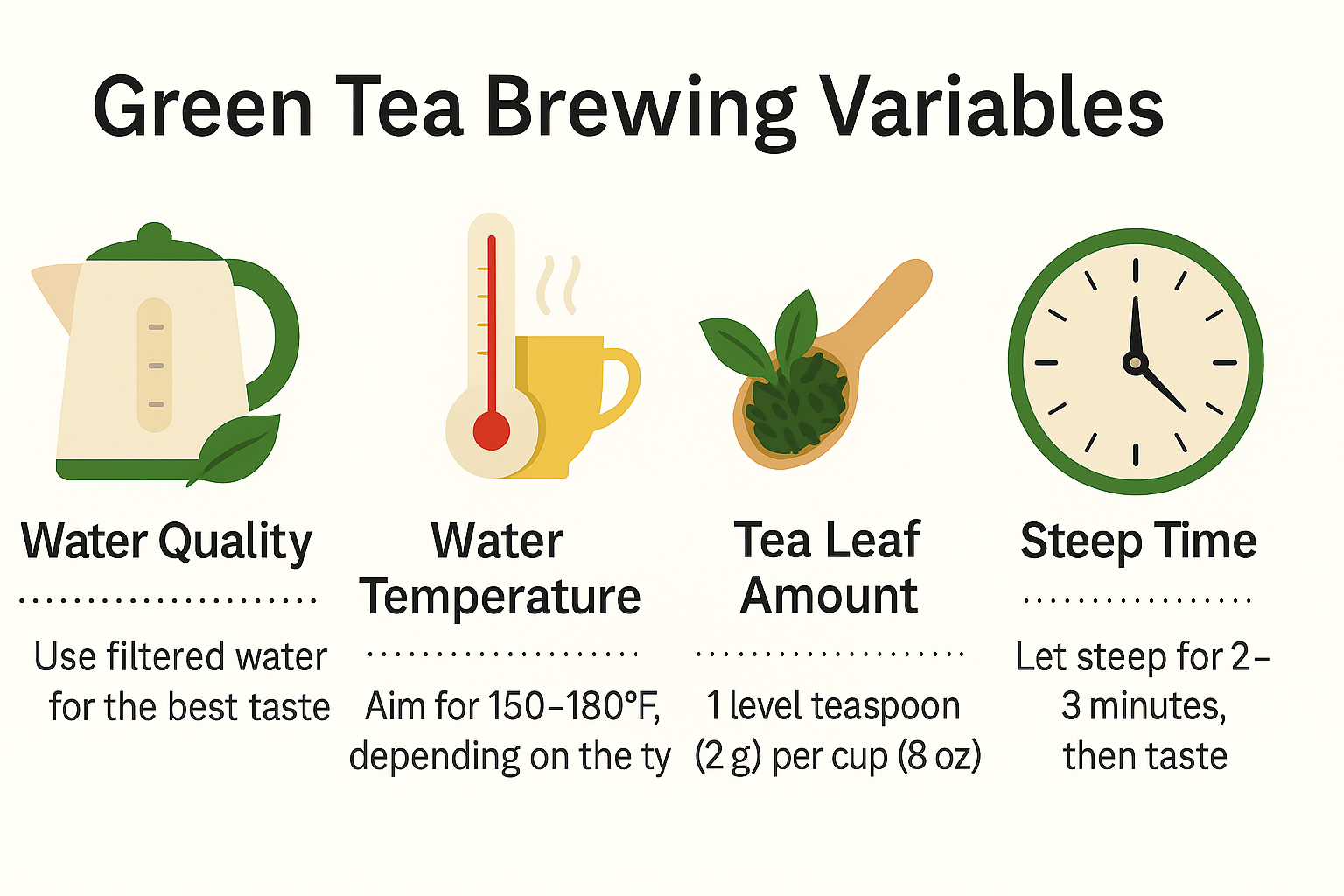
Brewing green tea properly isn’t just about steeping leaves in hot water — it’s a balance of time, temperature, and ratio. These three elements directly determine the flavor, nutrient retention, and overall experience of your cup.
1. Temperature
The single biggest mistake most beginners make is using boiling water. High heat destroys the delicate catechins and amino acids that make green tea so healthy and smooth. The ideal range depends on the tea type:
| Tea Type | Temperature Range (°F) | Temperature Range (°C) |
|---|---|---|
| Sencha | 160–175°F | 70–80°C |
| Gyokuro | 130–150°F | 55–65°C |
| Dragonwell | 175–185°F | 80–85°C |
| Matcha | 160°F | 70°C |
A good rule of thumb is to let boiled water cool for 2–3 minutes before pouring it over your tea. This small step helps preserve antioxidants and avoids bitterness.
2. Time
Steeping too long extracts tannins that make tea harsh and dry. The sweet spot for most green teas is 1 to 3 minutes. For powdered matcha, the steeping concept doesn’t apply — it’s whisked directly into water.
| Tea Type | Steeping Time |
|---|---|
| Sencha | 1–2 minutes |
| Gyokuro | 2–3 minutes |
| Dragonwell | 2–3 minutes |
| Matcha | Whisk directly |
3. Leaf-to-Water Ratio
The standard ratio is 1 teaspoon of tea leaves per 6–8 ounces of water. Adjust according to taste — more leaves make a bolder cup, while fewer yield a gentler flavor.
Studies suggest that water temperature and steeping time not only affect taste but also the antioxidant content in the final brew, reinforcing why precision matters (2).
How to Brew Green Tea Step by Step
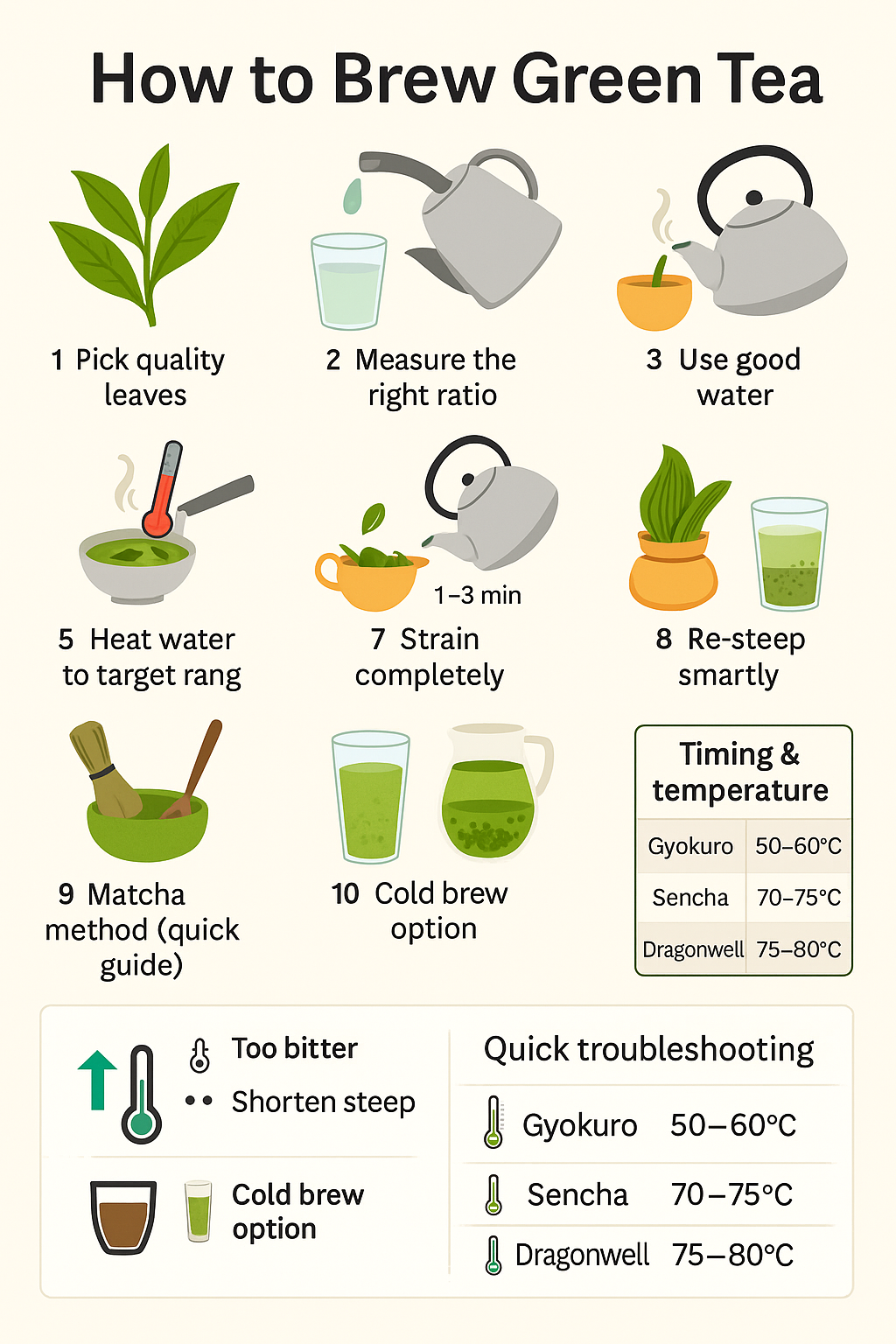
Follow this playbook to get a clean, sweet cup every time.
1. Pick quality leaves
Choose fresh, whole loose leaves from a trusted source. Look for a vibrant green color and a pleasant grassy aroma. Bags are convenient, but loose leaf gives you better control and flavor.
2. Measure the right ratio
Start with 2 grams of tea per 240 ml (8 oz) water. For stronger styles like gyokuro, use 4–5 g per 120 ml (4 oz). A small digital scale is helpful, but a level teaspoon is roughly 2 g for many senchas.
3. Use good water
Fresh, cold, filtered water tastes best. Avoid distilled water, which can make tea taste flat. Glass, clay, or porcelain teapots keep flavors clean.
4. Preheat your teaware
Swirl hot water in the pot and cups, then discard. This stabilizes brew temperature and prevents harsh extraction.
5. Heat water to the target range
Green tea prefers hot, not boiling, water.
- Gyokuro: 50–60°C (122–140°F)
- Sencha: 70–75°C (158–167°F)
- Dragonwell, Gunpowder: 75–80°C (167–176°F)
- Matcha (for whisking): 75–80°C (167–176°F)
6. Add water, then start the clock
Pour gently over the leaves so they unfurl evenly. Keep the lid on during steeping to hold heat.
7. Steep with precision
- Gyokuro: 2–3 minutes
- Sencha: 60–90 seconds
- Dragonwell, Gunpowder: 2 minutes Taste at the early end and adjust next time. If it is bitter, lower the temperature or shorten the time. If it is thin, add a little more leaf or a touch more heat.
8. Strain completely
Pour out every last drop into your cup or a fairness pitcher. Leaving liquor in the pot keeps extracting and causes bitterness. Do not squeeze tea bags, which pushes out harsh tannins.
9. Re-steep smartly
Good green tea gives 2–3 infusions. Use slightly hotter water and shorter times for the second pour with Japanese teas, slightly longer for many Chinese greens. Stop when flavor fades.
10. Matcha method (quick guide)
Sift 1–2 g matcha into a warm bowl, add 60–80 ml hot water at 75–80°C, whisk in a zigzag until frothy. For usucha (thin), use more water; for koicha (thick), use less.
11. Cold brew option
Combine 10 g leaves per 1 liter cold water. Refrigerate 6–8 hours for sencha and Dragonwell, 8–12 hours for gyokuro. Strain and keep chilled up to 24 hours. Cold brew is naturally sweet, low in bitterness, and softer in caffeine.
12. Quick troubleshooting
- Too bitter: lower temp by 5–10°C, shorten steep 15–30 seconds, or reduce leaf slightly.
- Too weak: add 0.5–1 g leaf, raise temp by 3–5°C, or extend steep 15–30 seconds.
- Vegetal or flat: use fresher tea and filtered water, and preheat teaware.
Brewing within the gentle temperature range helps preserve delicate catechins and L-theanine, which improves both taste and potential health value (3).
Tips for Perfecting Flavor and Aroma
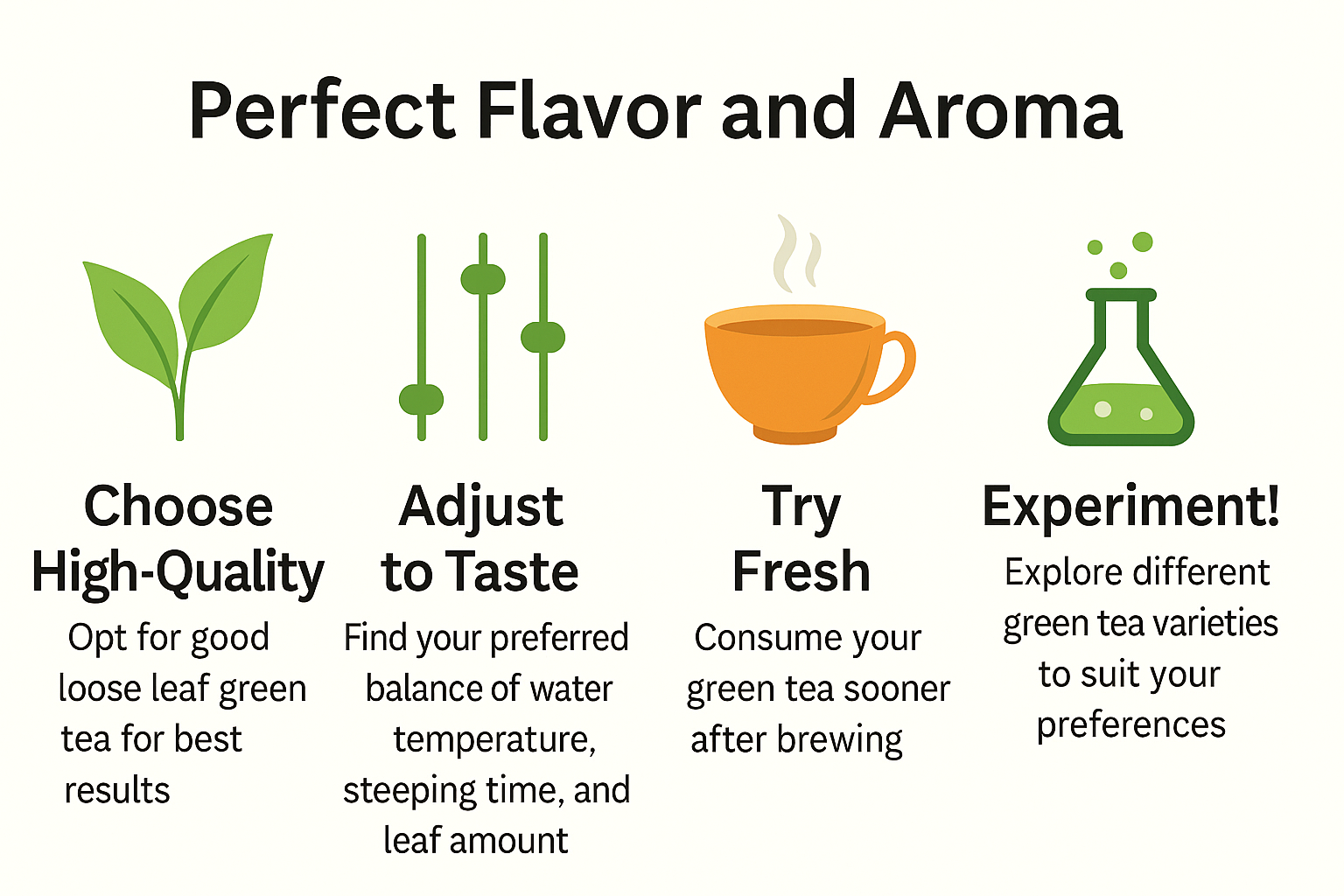
Even when you get the basic brewing steps right, a few thoughtful tweaks can elevate your green tea from good to exceptional. Every variable — from water purity to brewing vessel — subtly affects the taste, clarity, and fragrance of the tea. Here’s how to make your cup stand out.
1. Use Filtered or Spring Water
Water makes up more than 95% of your tea, so its quality matters immensely. Tap water often contains minerals or chlorine that can alter flavor and dull aroma. Using filtered or spring water brings out the tea’s natural sweetness and clean finish.
Soft water highlights delicate umami notes in Japanese teas like Sencha and Gyokuro, while mineral-rich water tends to suit Chinese pan-fired teas like Dragonwell. If your tea ever tastes flat or harsh, your water might be the culprit.
2. Preheat Your Teaware
Pour a little hot water into your teapot or cup before brewing, swirl it, then discard. This stabilizes temperature and prevents sudden heat loss when you add your leaves. Preheating keeps brewing consistent and helps maintain a smoother extraction of catechins and amino acids, especially important for high-grade teas.
3. Experiment With Short Infusions
Instead of brewing one long steep, try multiple short infusions. High-quality loose-leaf teas can be re-steeped up to three times, with each round offering a slightly different character.
- The first pour is light and aromatic.
- The second brings out depth and umami.
- The third often highlights subtle sweetness.
This method is both economical and traditional, reflecting how Japanese and Chinese tea ceremonies maximize each leaf’s potential.
4. Match the Vessel to the Tea
Clay teapots (like Kyusu) retain heat longer and are perfect for Japanese green teas, while porcelain or glass teapots suit delicate varieties like Silver Needle or lightly oxidized Dragonwell.
Using the right material enhances the tea’s expression and aroma, ensuring a balanced experience across infusions.
5. Don’t Forget Air and Space
When leaves are cramped, they can’t expand fully. Always use a teapot or infuser with enough room for circulation. Proper leaf movement during steeping ensures even flavor extraction and prevents that “stale” taste that sometimes occurs with small strainers.
Studies show that both water temperature and vessel type influence catechin release and aroma profile, emphasizing that brewing is as much art as it is science (3).
Common Mistakes to Avoid When Brewing Green Tea
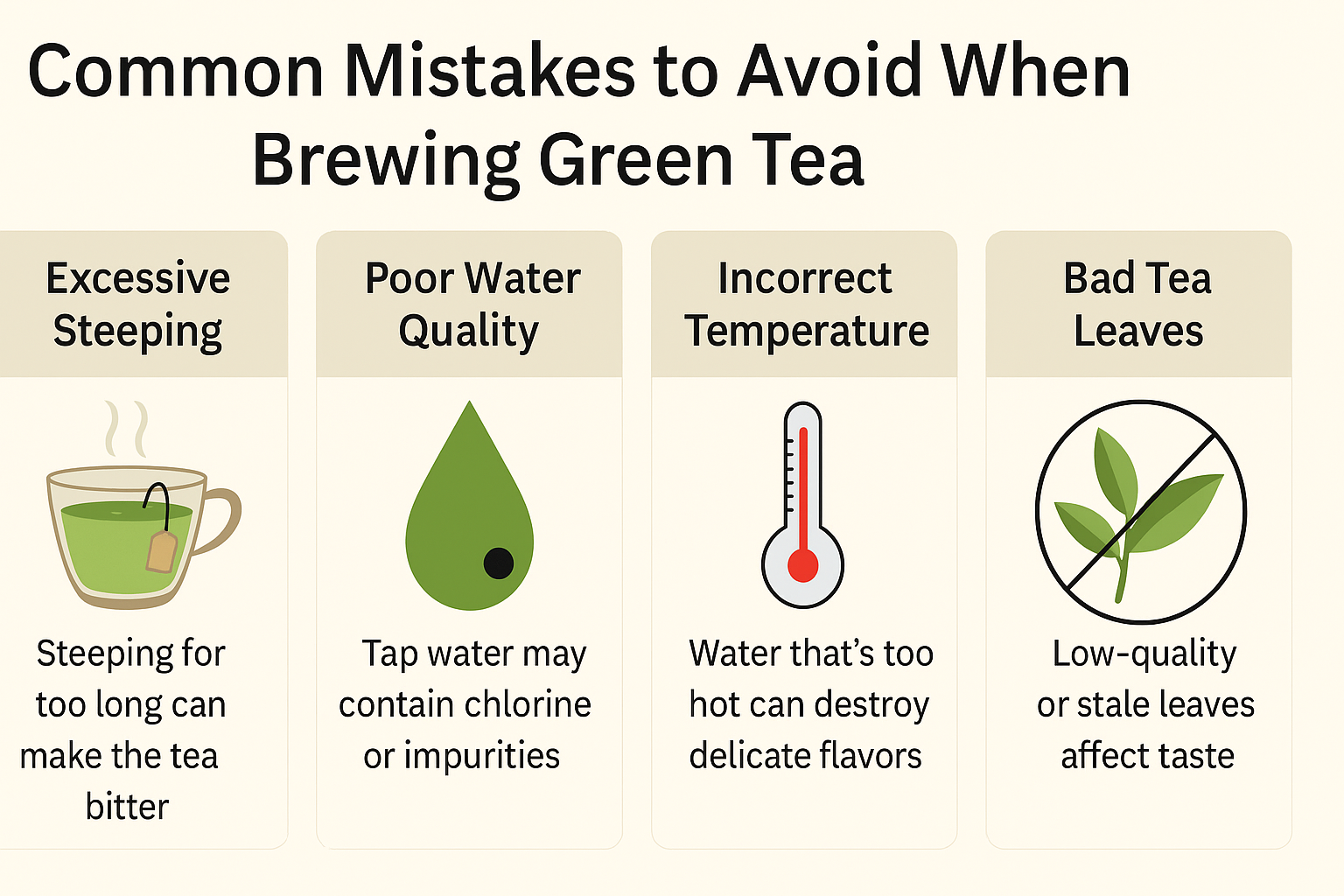
Even with good intentions, many people unknowingly ruin a great cup of green tea before it ever reaches their lips. The difference between a bitter brew and a beautifully balanced one often comes down to avoiding these small but crucial missteps.
1. Using Boiling Water
The most common mistake is brewing green tea with water that’s too hot. Boiling water (212°F / 100°C) scorches delicate tea leaves, destroying the amino acids and antioxidants that give green tea its sweetness and smoothness.
For most varieties, 160°F to 185°F (70°C–85°C) is ideal. Anything hotter will release excess tannins, leaving your tea unpleasantly bitter.
Quick fix: If you don’t have a thermometer, let your boiled water sit for about 2 minutes before pouring it over the leaves.
2. Oversteeping the Tea
Leaving the leaves in water for too long is another flavor-killer. While it might seem that longer steeping makes a stronger tea, it actually leads to more astringency and a dry mouthfeel.
Stick to these steeping guidelines:
- Japanese greens (Sencha, Gyokuro): 1–2 minutes
- Chinese greens (Dragonwell, Gunpowder): 2–3 minutes
- Matcha: Whisk immediately — never steep
If your tea tastes too strong, reduce the steeping time rather than diluting it with water later.
3. Using the Wrong Leaf-to-Water Ratio
Too few leaves yield a weak and watery flavor, while too many create an overly intense brew. The standard guideline is 1 teaspoon (about 2 grams) of tea per 6–8 ounces (180–240 ml) of water.
Adjust slightly depending on your preference — but consistency is key if you want to replicate that perfect cup every time.
4. Ignoring Freshness
Green tea is delicate and oxidizes quickly once exposed to air, heat, or light. Using old or improperly stored leaves can result in a flat, grassy, or even sour taste.
To preserve flavor and nutrients:
- Store in an airtight, opaque container
- Keep in a cool, dark place away from sunlight or strong odors
- Use within 3–6 months of opening
5. Using Low-Quality Tea Bags
Mass-produced tea bags often contain tea dust and fannings—small broken particles that release bitterness faster than whole leaves. Loose-leaf tea offers better flavor, higher nutrient retention, and more control over brewing strength.
If convenience matters, choose pyramid-shaped tea bags that give the leaves room to expand.
6. Neglecting Water Quality
Even the best tea leaves can’t overcome poor water. Tap water with high mineral or chlorine content dulls the aroma and can introduce metallic or chemical notes. Always use filtered, spring, or soft water for the cleanest taste and clearest liquor.
7. Forgetting to Enjoy It Fresh
Green tea loses its vibrant aroma and delicate balance as it sits. Drink it within 10–15 minutes of brewing for the best experience. If you must store it, refrigerate in a sealed container and consume within 24 hours.
Perfecting your technique takes practice, but avoiding these mistakes will instantly upgrade your results. Mastering temperature, timing, and proportion will help you experience green tea as it’s meant to be — smooth, aromatic, and nourishing (4).
FAQs About Brewing Green Tea Properly
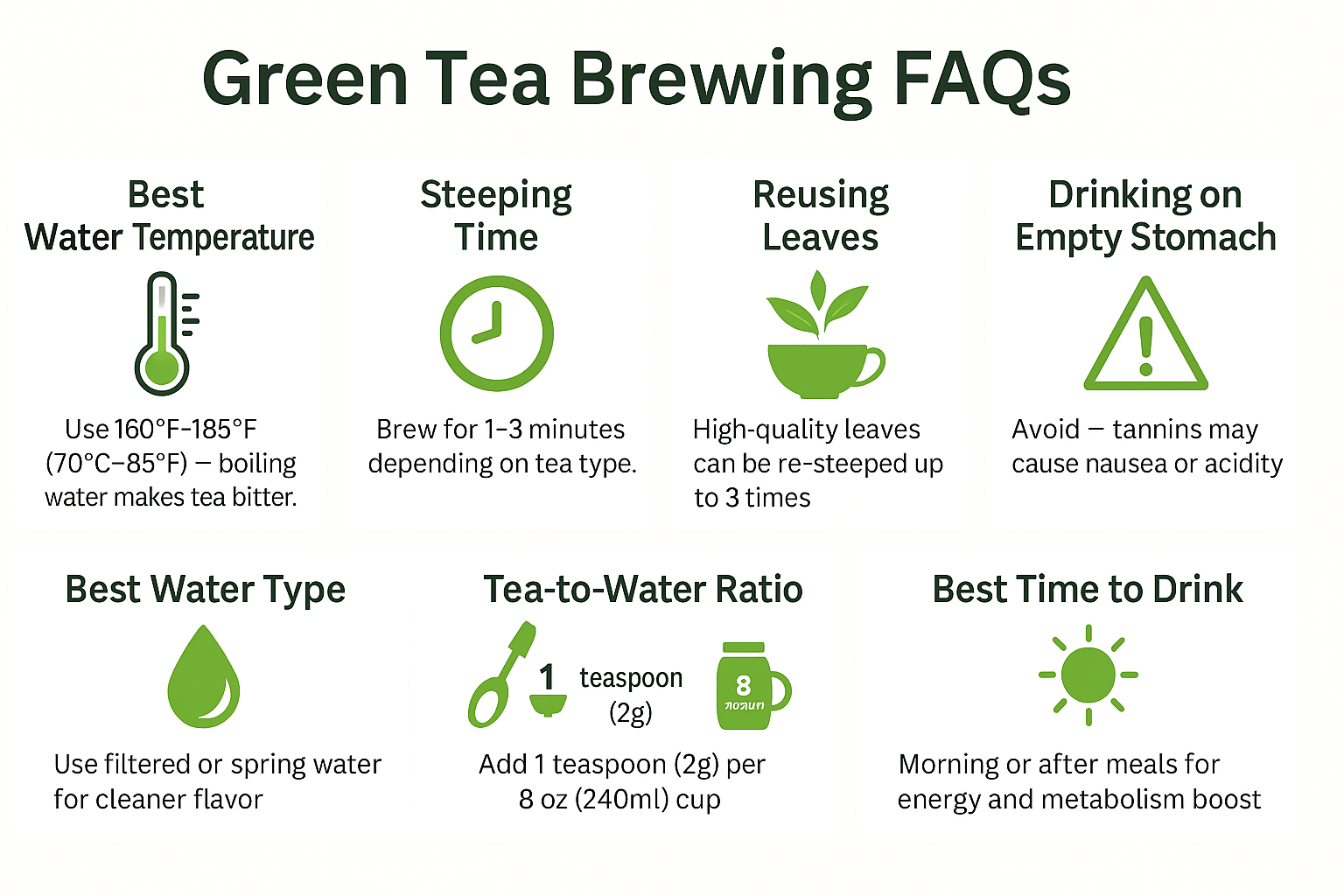
The ideal temperature is between 160°F and 185°F (70°C–85°C). Boiling water can burn the delicate leaves and make the tea bitter.
Steep for 1 to 3 minutes, depending on the variety. Japanese teas like sencha or gyokuro need shorter times, while Chinese teas can handle slightly longer.
Yes — high-quality loose-leaf green tea can be re-steeped up to two or three times. Each infusion brings out a different flavor profile.
Absolutely. Filtered or spring water improves taste by removing chlorine and minerals that can dull the tea’s aroma.
Use 1 teaspoon (2 grams) of loose leaves per 8-ounce (240 ml) cup for best balance between strength and flavor.
It’s best to avoid it. Green tea contains tannins that may cause nausea or acidity if consumed before meals.
Morning or 30–45 minutes after meals is ideal for energy and metabolism. Avoid drinking it right before bed due to caffeine content.
Conclusion
Brewing green tea properly isn’t complicated — it’s about precision and patience. Every step, from water temperature to steeping time, affects its taste and nutrition. When brewed correctly, green tea offers a bright, grassy flavor with subtle sweetness and a rich antioxidant profile that supports metabolism, skin health, and mental focus.
Think of green tea as a ritual rather than a rush. Use filtered water, avoid boiling temperatures, and respect the short steep time. Whether it’s a bold Japanese Sencha or a delicate Chinese Dragonwell, taking these extra seconds can turn an ordinary drink into a moment of calm clarity.
If you treat the leaves right, they’ll reward you — cup after cup.