
Cold Brew Green Tea: Benefits and How to Make It at Home
If you think green tea can only be enjoyed hot, you’re missing out on one of the most refreshing and potentially healthier ways to drink it. Cold brew green tea has gained tremendous popularity in recent years, particularly in Japan where “mizudashi” (water-steeped tea) has been a summer tradition for generations. This gentle brewing method produces a remarkably smooth, naturally sweet beverage that’s easy to make at home.
Unlike traditional iced tea, which is brewed hot and then chilled, cold brewing steeps tea leaves in cold or room temperature water over several hours. This slow extraction process creates a fundamentally different drink—one that many find more enjoyable and potentially more beneficial. This article explores the unique advantages of cold brew green tea, what the research says about its benefits, and exactly how to make the perfect batch at home.
What Is Cold Brew Green Tea?
Cold brew green tea is made by steeping tea leaves in cold or room temperature water for an extended period, typically 6-12 hours. Rather than using heat to rapidly extract compounds from the leaves, cold brewing relies on time. The result is a tea with a distinctly different flavor profile and chemical composition compared to hot-brewed versions.
The science behind cold brewing centers on how different temperatures affect compound extraction. Hot water quickly pulls out caffeine, catechins, and tannins—including the bitter compounds that can make improperly brewed green tea taste astringent. Cold water extracts these compounds much more slowly and selectively, drawing out more of the sweet amino acids while leaving behind much of the bitterness.
In Japan, cold-brewed sencha has been enjoyed for centuries as a refreshing summer beverage. The practice has spread globally as people discover that cold brewing offers a gentler, more forgiving way to prepare green tea—one that’s nearly impossible to over-steep into bitterness.
Cold Brew vs. Hot Brew: Key Differences
Understanding the differences between cold and hot brewing helps explain why each method produces such distinct results.
| Characteristic | Cold Brew | Hot Brew |
|---|---|---|
| Water Temperature | Cold or room temp | 160-180°F (70-80°C) |
| Steeping Time | 6-12 hours | 1-3 minutes |
| Caffeine Content | 30-40% less | Higher extraction |
| Bitterness | Minimal | Can be pronounced |
| Flavor Profile | Smooth, sweet, delicate | Robust, grassy, astringent |
| Catechin Extraction | Different profile | Higher EGCG |
| Convenience | Requires planning | Ready quickly |
The most noticeable difference is taste. Cold brew green tea is remarkably smooth, with natural sweetness from amino acids like L-theanine and virtually no bitterness. Hot-brewed green tea, while more robust in flavor, can easily become bitter if water temperature is too high or steeping time too long.
Benefits of Cold Brew Green Tea
Cold brew green tea contains the same beneficial compounds found in traditionally brewed green tea, including catechins, L-theanine, and various antioxidants. However, the cold brewing method alters the concentration of certain compounds and produces a beverage with unique characteristics.
Below are the key benefits of cold brew green tea, along with what the scientific evidence demonstrates.
1. May Preserve More Antioxidants
Research suggests that cold brewing may actually preserve certain antioxidants better than hot brewing. A study published in the journal Food Chemistry found that cold infusion extracted higher levels of healthy molecules with less degradation compared to hot brewing. Italian researchers discovered that hot water destroys some catechins during extraction, while cold water extracts these compounds without damaging them.
A 2025 study found that brewing green tea at 20°C for 12 hours with distilled water led to exceptionally high antioxidant capacity, along with higher yields of vitamin C, vitamin B2, epicatechin, and epigallocatechin compared to any high-temperature brewing method. However, researchers note that cold brewing extracts less EGCG (epigallocatechin gallate), the most studied catechin, while extracting more of other beneficial compounds like EGC (epigallocatechin).
Evidence level: Moderate evidence from laboratory studies comparing extraction methods; cold brew shows higher retention of certain antioxidants but lower extraction of others like EGCG.
2. Lower Caffeine Content
Cold water extracts significantly less caffeine than hot water. Research indicates that cold brew green tea typically contains 30-40% less caffeine than hot-brewed tea, and some studies suggest the reduction can be as much as 60-70% depending on brewing parameters.
This makes cold brew an excellent option for people who are caffeine-sensitive, those who want to enjoy tea later in the day without disrupting sleep, or anyone looking to reduce their overall caffeine intake while still enjoying tea’s benefits. A typical cup of cold brew green tea contains roughly 15-25mg of caffeine, compared to 30-50mg in hot-brewed green tea.
Evidence level: Strong evidence from multiple studies confirming reduced caffeine extraction at lower temperatures; the exact reduction depends on tea type and brewing time.
3. Smoother, Less Bitter Taste
The most immediately noticeable benefit of cold brewing is the taste. Tannins and bitter catechins extract much more slowly in cold water, resulting in a tea that’s naturally smooth and sweet without any astringency. Many people who find hot-brewed green tea too bitter discover they love the cold brew version.
The amino acid L-theanine, which contributes to tea’s umami and sweet notes, extracts readily in cold water. Meanwhile, the compounds responsible for bitterness remain largely in the leaves. This creates a flavor profile that’s delicate, refreshing, and often doesn’t require any added sweetener.
Evidence level: Strong evidence from sensory studies; cold-brewed teas consistently rate higher in taste tests for smoothness and lower in bitterness and astringency.
4. May Support Heart Health
Green tea consumption has been consistently associated with cardiovascular benefits, including reduced risk of heart disease and stroke. A comprehensive review analyzing data from over 850,000 participants found that drinking 3 or more cups of tea daily was associated with an 11% lower risk of developing heart disease.
The flavonoids in green tea may help improve blood vessel function, reduce LDL cholesterol oxidation, and support healthy blood pressure. While most research has been conducted on hot-brewed tea, the catechins and antioxidants present in cold brew would be expected to provide similar benefits.
Evidence level: Moderate to strong evidence for green tea’s cardiovascular benefits from large population studies; specific research on cold brew is limited but benefits likely apply.
5. May Support Weight Management
Green tea catechins, particularly EGCG, have been studied for their potential effects on metabolism and fat oxidation. Research suggests that green tea compounds may modestly increase energy expenditure and promote fat burning, particularly when combined with exercise.
Cold brew green tea provides these beneficial catechins, though potentially in different proportions than hot brew. It’s important to maintain realistic expectations—green tea is not a miracle weight loss solution, but it can be a helpful component of an overall healthy lifestyle, especially as a zero-calorie alternative to sugary beverages.
Evidence level: Limited to moderate evidence; some studies show modest metabolic effects from green tea catechins, but weight loss benefits are small without accompanying diet and exercise changes.
6. Contains L-Theanine for Calm Focus
L-theanine is a unique amino acid found almost exclusively in tea that promotes relaxation without drowsiness. Research shows that L-theanine can increase alpha brain wave activity, associated with a state of calm alertness. A systematic review found that 200-400mg daily of L-theanine may help reduce stress and anxiety in people under stressful conditions.
Cold brewing extracts L-theanine efficiently, and the combination of L-theanine with the lower caffeine content in cold brew creates a gentle, balanced effect—alert but calm, focused but relaxed. This makes cold brew green tea an excellent choice for sustained concentration without the jitters that coffee can cause.
Evidence level: Moderate evidence from human trials showing L-theanine promotes relaxation and focus; cold brew preserves this amino acid well during extraction.
7. Gentle on the Stomach
The reduced tannin content in cold brew green tea makes it gentler on the digestive system. Some people find that hot-brewed tea, especially on an empty stomach, can cause discomfort or nausea. The lower concentration of astringent compounds in cold brew minimizes this issue.
Cold brew is also less acidic than hot-brewed tea, which may benefit those with acid sensitivity or reflux. While scientific studies specifically comparing digestive tolerance are limited, the reduced extraction of irritating compounds makes cold brew a logical choice for sensitive stomachs.
Evidence level: Limited direct evidence; based on the known reduced extraction of tannins and bitter compounds that can irritate the digestive tract.
8. Convenient and Hydrating
Beyond its health benefits, cold brew green tea is remarkably convenient. You can prepare a large batch in advance, store it in the refrigerator, and have refreshing tea ready whenever you want it. There’s no need for special equipment—just a jar, water, and tea leaves.
Cold brew also encourages hydration, particularly during warm months when people tend to drink more cold beverages. Unlike many flavored drinks, unsweetened cold brew green tea contains zero calories while providing flavor, antioxidants, and a gentle energy boost. It counts toward your daily fluid intake and makes staying hydrated more enjoyable.
Evidence level: Not applicable—this is a practical benefit rather than a health claim requiring clinical evidence.
How to Make Cold Brew Green Tea at Home
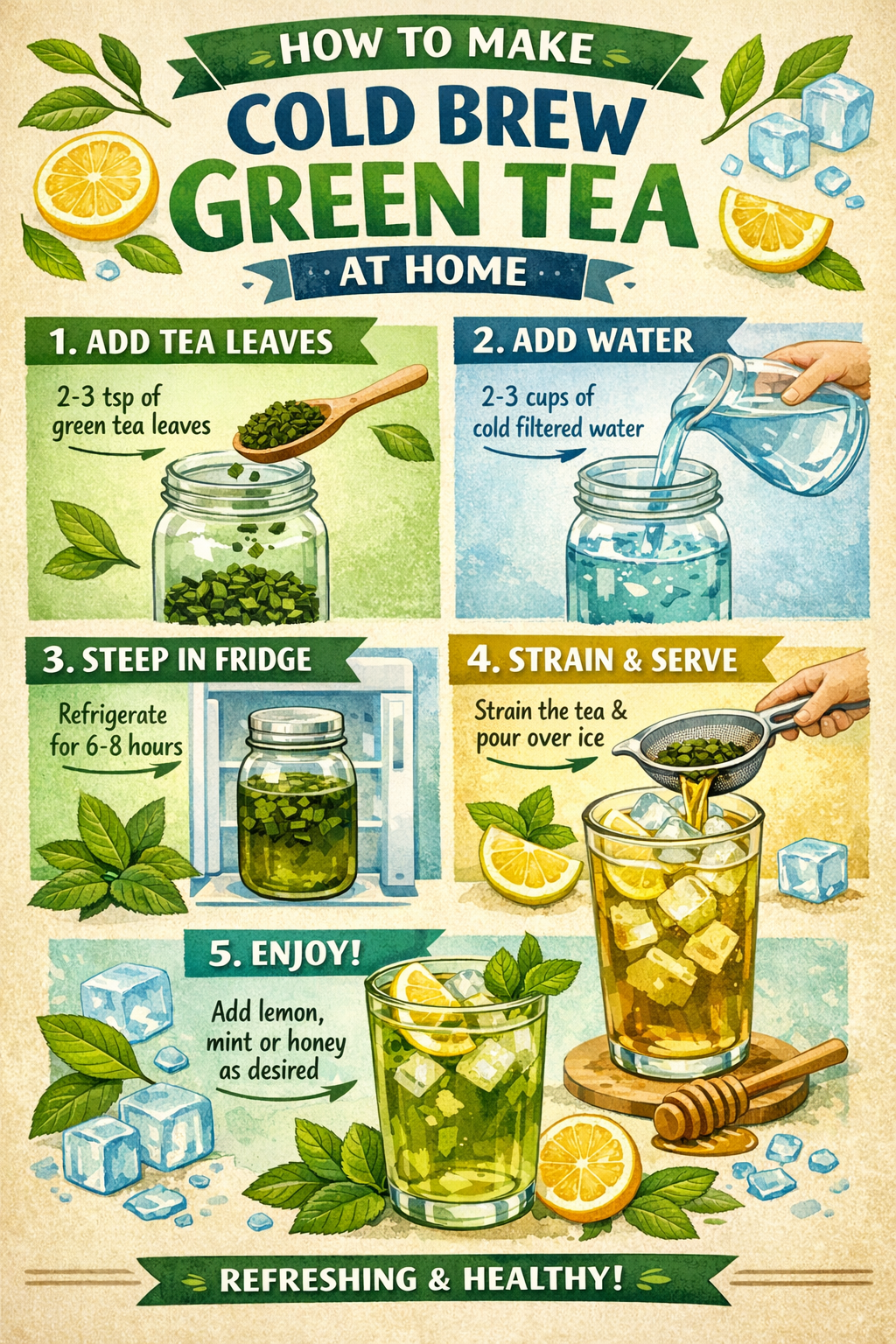
Making cold brew green tea requires minimal equipment and almost no effort—just a bit of patience.
What You’ll Need:
- Green tea (loose leaf or tea bags)
- Cold or room temperature filtered water
- A glass jar, pitcher, or cold brew bottle
- A fine mesh strainer (if using loose leaf)
Basic Ratio:
- Loose leaf: 1-2 teaspoons per 8 oz (240ml) water
- Tea bags: 1-2 bags per 8 oz water
- For a pitcher (1 liter): 2-3 tablespoons loose leaf or 3-4 tea bags
Step-by-Step Instructions:
- Add tea to your container. Place loose leaf tea directly in the container or use an infuser basket if you prefer easier straining.
- Pour cold or room temperature water over the tea. Filtered water produces the cleanest taste, as chlorine and minerals in tap water can affect flavor.
- Cover and refrigerate for 6-12 hours. Overnight brewing works perfectly—prepare it before bed and enjoy it in the morning.
- Strain and serve. Remove the tea leaves or bags and pour over ice if desired. Cold brew is ready to drink immediately from the refrigerator.
Steeping Time Guidelines:
| Desired Strength | Steeping Time |
|---|---|
| Light and delicate | 4-6 hours |
| Standard strength | 6-8 hours |
| Full-bodied | 8-12 hours |
| Maximum extraction | 12-24 hours |
Unlike hot brewing, cold brew is very forgiving. Over-steeping won’t produce the same harsh bitterness, though very long steeps (beyond 24 hours) may eventually become slightly astringent.
Best Green Teas for Cold Brewing
While any green tea can be cold brewed, certain varieties excel with this method:
Sencha is the classic choice—Japan’s most popular green tea produces a refreshing, grassy cold brew with subtle sweetness. Gyokuro, a shade-grown premium tea, creates an exceptionally sweet, umami-rich cold brew. Hojicha, a roasted green tea, makes a nutty, toasty cold brew with very low caffeine. Genmaicha, green tea blended with toasted rice, offers a unique nutty flavor that’s particularly refreshing cold.
Quality matters more with cold brewing because the gentler extraction doesn’t mask flaws the way hot brewing can. Invest in decent loose leaf tea for the best results—you’ll taste the difference.
Tips for the Best Cold Brew
Use filtered water for the cleanest taste. Start with shorter steep times and adjust to your preference. Keep your cold brew refrigerated and consume within 3-5 days for optimal freshness. Don’t squeeze tea bags when removing them, as this releases more tannins. Room temperature water can speed extraction slightly if you’re short on time.
Flavor Variations: Add fresh mint leaves, citrus slices, cucumber, or fresh ginger to the brewing water for naturally flavored variations. A light drizzle of honey after brewing adds sweetness if desired. For a refreshing spritzer, mix cold brew with sparkling water.
How Long Does Cold Brew Green Tea Last?
Properly stored cold brew green tea keeps well in the refrigerator for 3-5 days, though it’s best consumed within the first 2-3 days for optimal flavor and freshness. Store it in an airtight container to prevent absorption of refrigerator odors.
Signs your cold brew has gone past its prime include cloudiness, off-odors, or a stale taste. When in doubt, make a fresh batch—the simplicity of preparation makes this easy. Never leave cold brew at room temperature for extended periods after brewing is complete, as this can encourage bacterial growth.
Takeaways
Cold brew green tea offers a smooth, naturally sweet alternative to hot-brewed tea with potentially higher retention of certain antioxidants and significantly lower caffeine content. The brewing method is nearly foolproof—just combine tea and cold water, wait several hours, and enjoy a refreshing beverage that requires no special equipment or skills.
While the health benefits largely mirror those of traditionally brewed green tea, cold brewing may be gentler on sensitive stomachs and more palatable for those who find hot-brewed tea too bitter. Experiment with different tea varieties and steeping times to discover your perfect brew. Whether you’re looking to reduce caffeine, avoid bitterness, or simply enjoy a delicious way to stay hydrated, cold brew green tea delivers on all fronts.
Frequently Asked Questions
Neither method is definitively “healthier”—they simply extract different compounds in different proportions. Cold brewing may preserve more vitamin C and certain catechins while extracting less EGCG and caffeine. Hot brewing extracts more EGCG but may degrade some heat-sensitive compounds. Both methods produce a beverage with meaningful health benefits. Choose based on your taste preference and caffeine sensitivity.
For most green teas, 6-8 hours produces a well-balanced brew. Lighter steeps (4-6 hours) create a more delicate flavor, while longer steeps (8-12 hours) intensify the taste. Unlike hot brewing, cold brew is very forgiving—you won’t ruin it by steeping a bit too long. Start with 8 hours (overnight) and adjust from there based on your preference.
Yes, you can typically get a second brew from quality loose leaf tea, though it will be lighter in flavor and contain fewer beneficial compounds. The second brew may require slightly longer steeping time. Tea bags generally don’t reuse as well as loose leaf. For maximum benefit, use fresh tea for each batch.


