Japanese Green Tea: Varieties, Brewing and Benefits
Japan’s relationship with tea spans more than a thousand years, evolving from a medicinal drink consumed by Buddhist monks into an integral part of daily life and an art form celebrated worldwide. What began as tea seeds brought from China in the 9th century has transformed into a distinctive tea culture that stands apart from its Chinese origins, defined by unique processing methods, specialized varieties, and a philosophy that elevates the simple act of drinking tea into something profound.
The key difference between Japanese and Chinese green tea lies in one critical processing step: while Chinese tea producers typically pan-fire their leaves in a hot wok to halt oxidation, Japanese tea makers steam their leaves immediately after harvest. This steaming process, lasting anywhere from 20 seconds to over a minute depending on the desired result, preserves the vivid green color, enhances the grassy and vegetal flavors, and creates a taste profile that is unmistakably Japanese.
This guide covers everything you need to know about Japanese green tea, from understanding the major varieties and how they differ, to mastering proper brewing techniques, exploring the substantial body of research on health benefits, and appreciating the cultural traditions that have shaped this remarkable beverage.
The History of Japanese Green Tea
The earliest references to tea consumption in Japan appear in records from the Nara period, around the 8th century, when Japanese diplomats and Buddhist monks traveling to Tang Dynasty China brought back tea seeds along with knowledge of Chinese culture and practices. The Buddhist monks Kūkai and Saichō are credited with bringing the first tea seeds to Japan around 805, planting them near temples where the monks found that tea helped them remain alert during long meditation sessions.
Tea gained imperial endorsement when the monk Eichu personally prepared tea for Emperor Saga in 815, an event recorded in the Nihon Kōki (Later Chronicles of Japan). Impressed by the beverage, the emperor encouraged tea cultivation in the Kinki region of western Japan, and the practice spread among the nobility. However, this early tea culture declined over the following centuries.
The true turning point came in 1191 when the Zen monk Eisai returned from studying in China and brought back tea seeds along with the Rinzai Zen Buddhist teachings. Eisai planted these seeds on Mount Sefuri and gave some to the monk Myōe, who cultivated them at Kōzan-ji temple near Kyoto. These plantings became the foundation for Japan’s renowned Uji tea region.
In 1211, Eisai wrote “Kissa Yōjōki” (Drinking Tea for Health), the first Japanese treatise on tea, which promoted tea’s medicinal properties and helped popularize the beverage beyond the temples. According to historical accounts, Eisai even served tea to the shogun Minamoto no Sanetomo to cure his hangover, introducing the warrior class to tea’s benefits.
Tea remained primarily a powdered form (similar to modern matcha) whisked in hot water until the 18th century, when the development of sencha—loose leaf tea steeped in hot water—democratized tea drinking. The monk Baisao championed this informal approach to tea, contrasting it with the rigid rituals of the traditional matcha ceremony. By the 19th and 20th centuries, industrialization transformed Japanese tea production into a highly efficient operation, and today Japan produces approximately 80,000 to 85,000 tonnes of tea annually.
How Japanese Green Tea Is Made
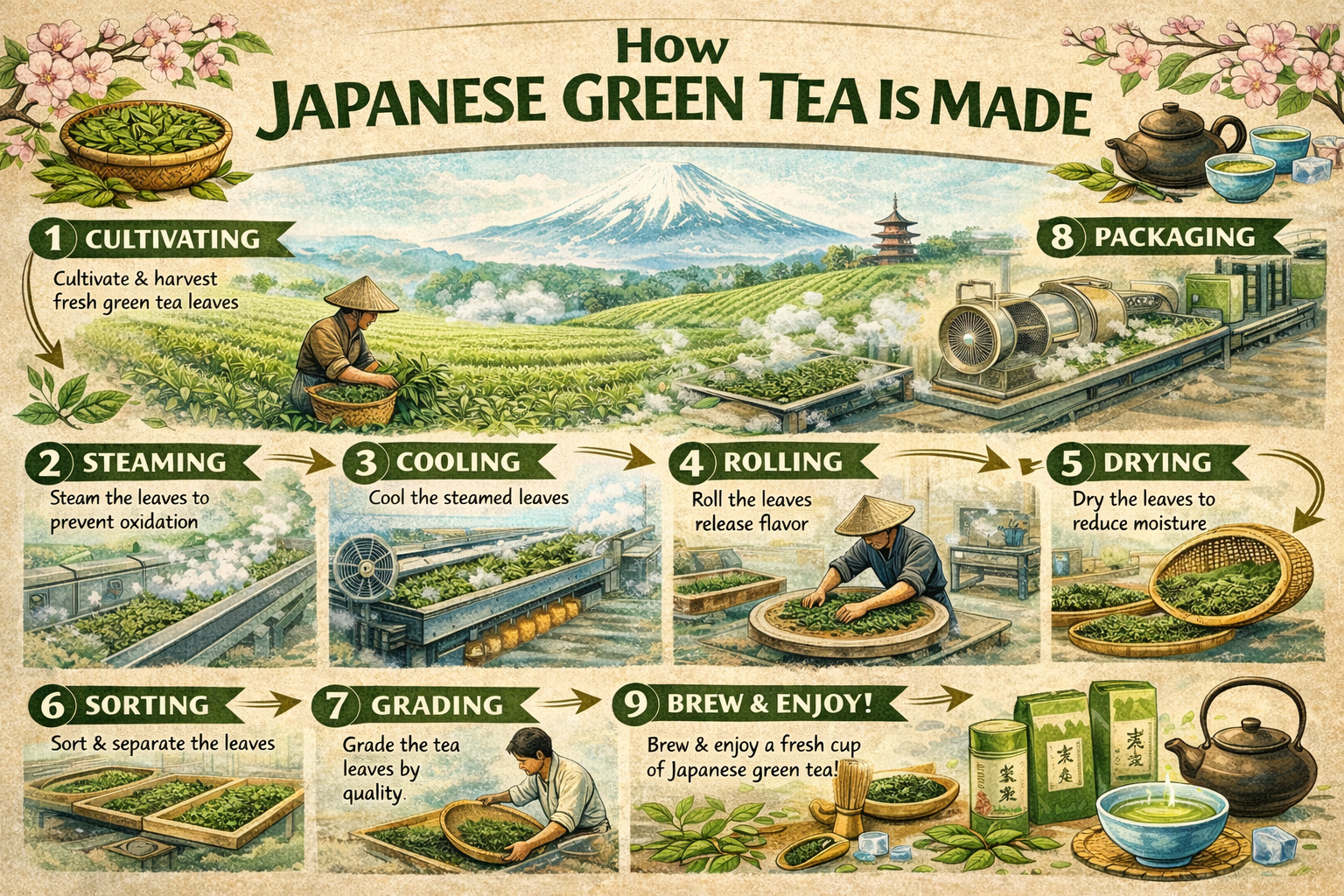
All Japanese green tea comes from the same plant—Camellia sinensis—but the remarkable diversity of flavors and characteristics arises from differences in cultivation methods, harvest timing, and processing techniques.
Harvesting and Flushes
Tea harvesting in Japan follows a seasonal rhythm that significantly affects quality and price. The first harvest of the year, called ichibancha or shincha (new tea), occurs from late April through May. These early spring leaves, tender after the plant’s winter dormancy, contain the highest concentrations of amino acids and produce the most prized and expensive teas.
Second flush (nibancha) follows in June and July, producing leaves with more astringency and less sweetness. Third flush (sanbancha) occurs in summer, and some regions harvest a fourth autumn flush (akibancha). Later harvests yield the coarser leaves used for everyday teas like bancha.
The Steaming Process
What truly distinguishes Japanese green tea is the steaming step that occurs within hours of harvest. Fresh leaves are subjected to hot steam to deactivate the enzymes that would otherwise cause oxidation. This preservation of the leaf’s natural state results in the characteristic bright green color and vegetal, umami-rich flavor profile that Japanese tea is known for.
Steaming duration creates distinct tea categories. Asamushi (light-steamed) teas are steamed for approximately 20-30 seconds, producing more intact leaves with a lighter, more delicate taste and clear, pale green liquor. Chumushi (medium-steamed) represents the balanced standard. Fukamushi (deep-steamed) teas undergo 40-60 seconds or more of steaming, breaking down the leaf structure to create smaller particles that brew into a darker, richer, cloudier tea with reduced astringency and a more full-bodied flavor. Shizuoka Prefecture is particularly renowned for its fukamushi sencha.
Rolling and Drying
After steaming, leaves undergo a series of rolling and drying steps that shape them and reduce moisture content. The rolling process breaks down cell walls, releasing flavor compounds and giving Japanese teas their characteristic needle-like shape. Final drying brings moisture content to approximately 5%, ensuring the tea remains shelf-stable.
Japanese Tea Growing Regions
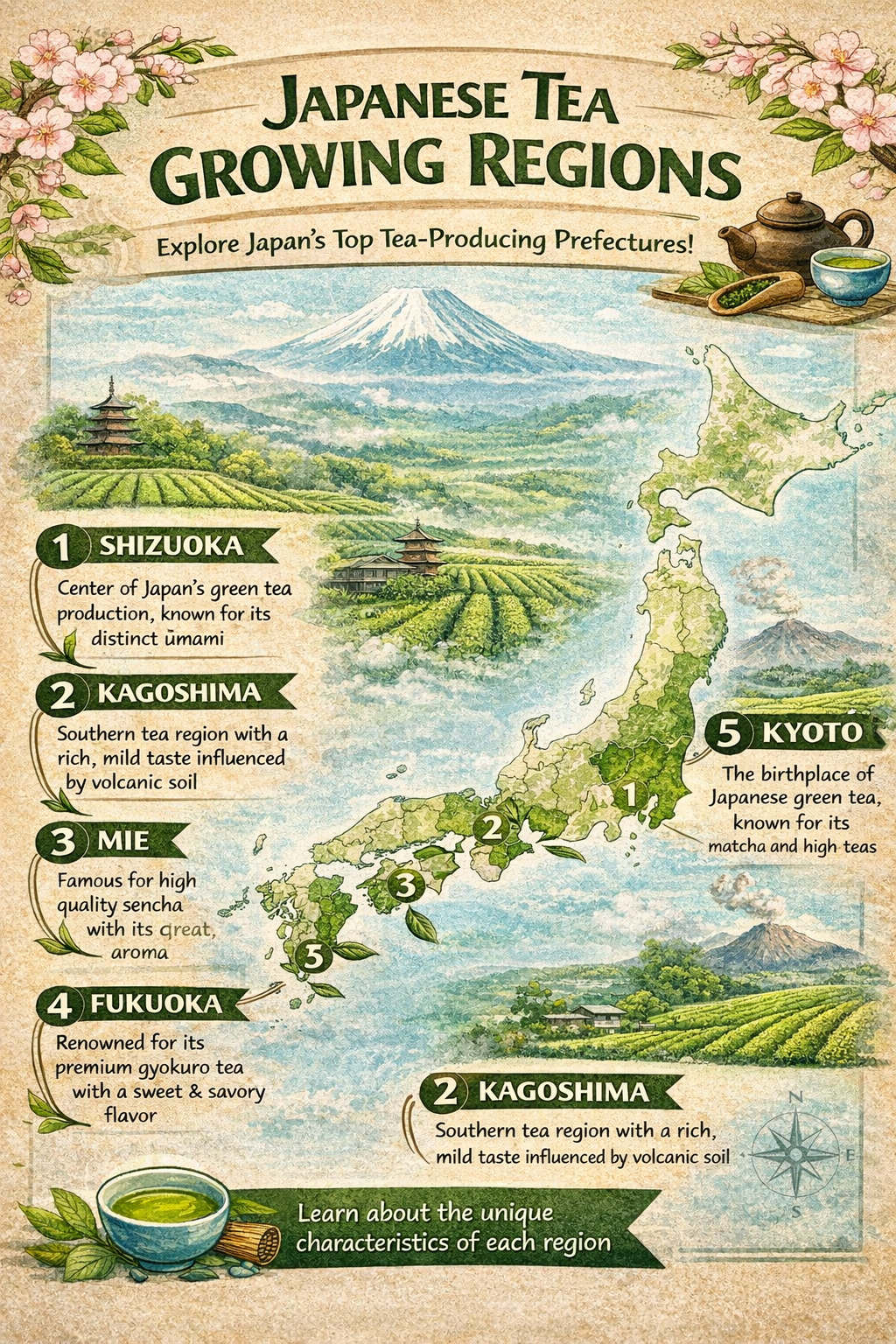
Japan’s tea cultivation extends from Akita in the north (latitude 40°N) to Okinawa in the south (26°N), though the majority of production concentrates in the warmer central and southern prefectures.
Shizuoka Prefecture
As Japan’s largest tea-producing region, Shizuoka accounts for approximately 40% of the nation’s tea output and is often called the “Kingdom of Green Tea.” Located along the central coast with views of Mount Fuji, Shizuoka benefits from mineral-rich volcanic soil, abundant water, and diverse microclimates. The region is particularly famous for fukamushi sencha. Within Shizuoka, sub-regions like Honyama, Kawane, and Tenryū each produce teas with distinctive characteristics influenced by their mountainous terrain and microclimate variations.
Kagoshima Prefecture
Located on the southern tip of Kyushu, Kagoshima has emerged as Japan’s second-largest tea producer, contributing roughly 20% of national production—and by some recent measures may have overtaken Shizuoka in volume. The region’s volcanic ash soil (called shirasu), subtropical climate, longer growing season, and flatter terrain allow for highly efficient mechanized harvesting. Kagoshima produces a broad variety of green teas, with Chiran and Kirishima being notable production areas known for quality sencha.
Uji (Kyoto Prefecture)
Though accounting for only about 3-4% of national production, Uji holds legendary status as one of Japan’s most prestigious tea regions. Tea cultivation here dates back over 800 years to the seeds planted by Myōe at Eisai’s instruction. The region’s inland terroir, protected from oceanic weather and blessed with misty conditions from nearby rivers and Lake Biwa, creates ideal growing conditions. Uji is particularly renowned for shade-grown teas—matcha and gyokuro—that command premium prices for their exceptional quality.
Mie Prefecture
Ranking third in production at approximately 7% of national output, Mie is Japan’s largest producer of kabusecha (lightly shaded tea) and supplies significant quantities of tea for culinary use. The region between the Suzuka mountain range and Ise Bay provides favorable growing conditions.
Fukuoka Prefecture (Yame)
The Yame region of Fukuoka produces some of Japan’s finest gyokuro, rivaling Uji in prestige for shade-grown tea. The area’s misty mountain valleys and careful cultivation practices result in gyokuro with exceptional umami character.
Types of Japanese Green Tea
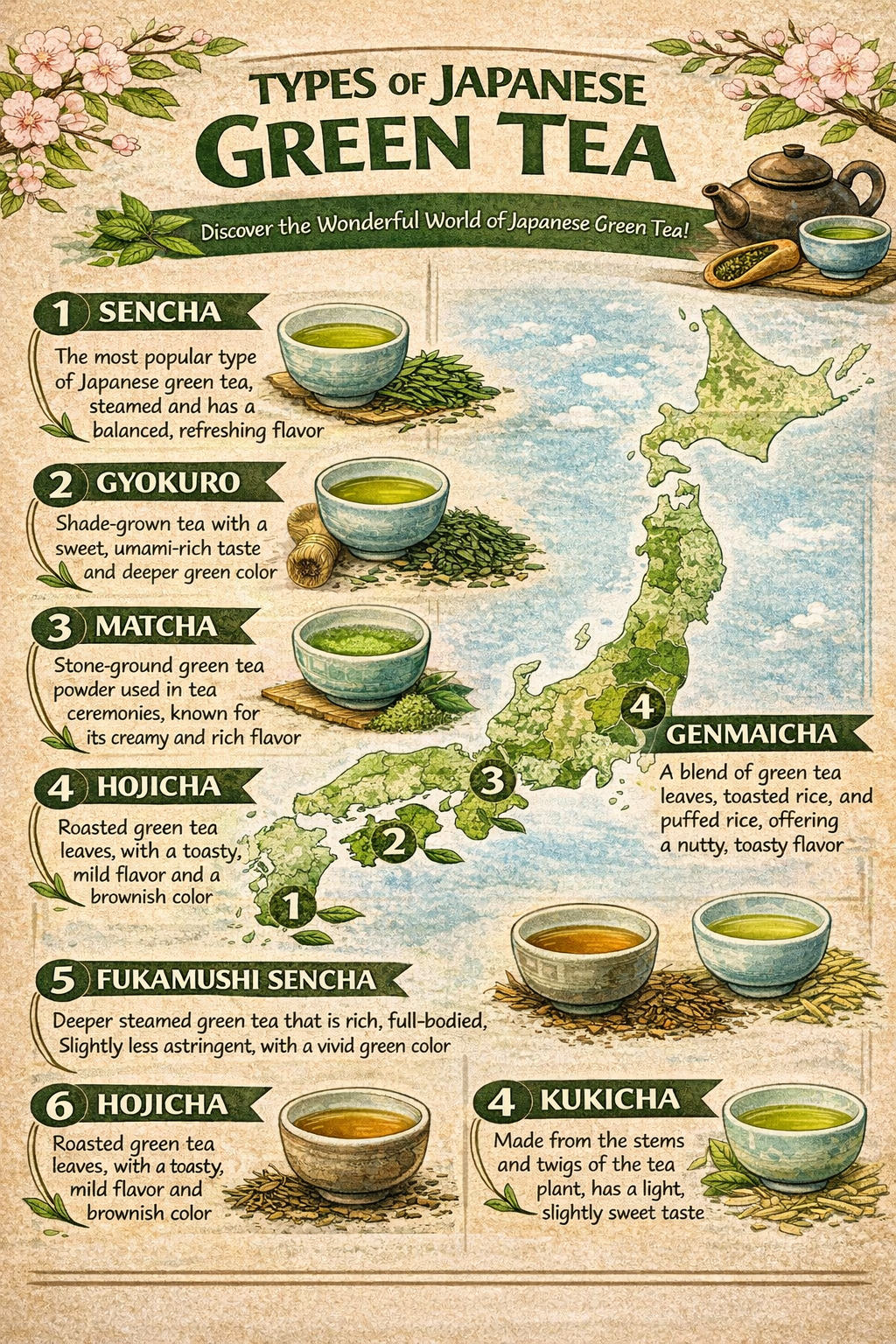
All Japanese green teas derive from the same Camellia sinensis plant, but cultivation methods, harvest timing, shading practices, and processing techniques create a diverse family of teas, each with distinctive characteristics.
Sencha (煎茶)
Sencha is Japan’s most popular green tea, accounting for approximately 60-70% of total production. This is the tea most Japanese households drink daily and the one served in restaurants and offices throughout the country.
Grown in full sunlight, sencha leaves are harvested, steamed, rolled, and dried to create the characteristic needle-shaped leaves. The best sencha comes from the first spring flush, using only the tender new shoots.
Flavor profile: Sencha offers a refreshing balance of grassy, vegetal notes with underlying sweetness and mild astringency. The taste can range from light and delicate to robust and savory depending on the cultivar, growing region, and steaming duration.
Steaming variations:
- Asamushi (light-steamed): More intact leaves, lighter body, clearer liquor, delicate grassiness
- Chumushi (medium-steamed): Balanced flavor and appearance
- Fukamushi (deep-steamed): Richer, more full-bodied, darker cloudy liquor, reduced bitterness
Caffeine content: Approximately 30-50mg per cup, varying with leaf quality and brewing parameters.
Brewing: Water temperature 70-80°C (158-176°F), steep for 60-90 seconds.
Gyokuro (玉露)
Known as “Jade Dew,” gyokuro represents the pinnacle of Japanese leaf tea production and commands premium prices for its labor-intensive cultivation.
The defining characteristic of gyokuro is shade growing. For approximately 20 days or more before harvest, tea plants are covered with reed screens or cloth to block sunlight. This shading process triggers significant changes in the leaves’ chemistry: with reduced photosynthesis, the amino acid L-theanine (responsible for umami flavor) is preserved rather than converting to catechins (which create astringency), and chlorophyll production increases, resulting in a deeper green color.
Flavor profile: Gyokuro delivers an intensely savory, umami-rich experience often compared to seaweed or vegetable broth. The sweetness is pronounced, bitterness minimal, and the aftertaste lingers pleasantly.
Caffeine content: Approximately 35-55mg per cup—higher than sencha due to the shading process.
Brewing: Gyokuro requires careful preparation. Use cooler water (50-60°C / 122-140°F), more leaves (5g per 80ml), and a longer steeping time (90-120 seconds). This concentrated brewing method produces small, intensely flavored servings meant to be savored slowly.
Matcha (抹茶)
Matcha stands unique among teas because you consume the entire leaf, ground to a fine powder and whisked into water rather than steeped and strained.
Like gyokuro, the tea plants used for matcha are shade-grown for approximately 20 days before harvest. The harvested leaves are steamed and dried without rolling to produce tencha, the precursor to matcha. Tencha is then stone-ground into the fine, vibrant green powder that defines matcha.
Grades:
- Ceremonial grade: Highest quality, meant for drinking straight; bright green color, smooth texture, sweet with minimal bitterness
- Culinary grade: Lower grades suitable for cooking, baking, and lattes; more bitter, less vibrant color
Flavor profile: Quality matcha delivers a complex interplay of vegetal sweetness, pronounced umami, slight bitterness, and a creamy, almost frothy texture when properly whisked.
Caffeine content: Approximately 70mg per serving (2g matcha)—higher because you’re consuming the whole leaf rather than an infusion.
Preparation: Sift 1-2g of matcha into a bowl (chawan), add approximately 70ml of water at 70-80°C (158-176°F), and whisk vigorously with a bamboo whisk (chasen) in a “W” or “M” motion until a layer of fine foam forms on the surface.
Hojicha (ほうじ茶)
Hojicha is green tea that has been roasted over high heat after the initial processing, transforming both its appearance and flavor profile completely.
The roasting process, which occurs at temperatures around 200°C (392°F), turns the leaves from green to reddish-brown and creates an entirely different taste experience. Roasting also sublimes (evaporates) much of the caffeine, making hojicha one of the lowest-caffeine Japanese teas.
Hojicha is typically made from bancha, kukicha (stem tea), or lower-grade sencha, though premium versions made from quality sencha or even gyokuro stems (called hojicha karigane) also exist.
Flavor profile: Roasted, nutty, toasty with caramel undertones; smooth with almost no astringency or bitterness; earthy and warming.
Caffeine content: Very low, approximately 7-20mg per cup, making it suitable for evening drinking and for children.
Brewing: Unlike most Japanese green teas, hojicha tolerates—and even benefits from—near-boiling water (90-100°C / 194-212°F). Steep for 30-60 seconds.
Genmaicha (玄米茶)
Genmaicha combines green tea (typically bancha or sencha) with toasted brown rice, creating a distinctive blend that balances tea’s vegetal character with the rice’s nutty, toasty warmth.
Historically, genmaicha originated as a way to stretch expensive tea leaves, making it affordable for common people. Today, it’s appreciated for its unique flavor and lower caffeine content. Some versions include puffed rice kernels that resemble popcorn, giving genmaicha its nickname “popcorn tea.”
A popular variation, matcha-iri genmaicha, adds matcha powder to the blend, enhancing the green tea flavor and adding vibrant color.
Flavor profile: Nutty, toasty, slightly sweet with a mild tea backbone; comforting and easy to drink.
Caffeine content: Lower than straight sencha due to the rice dilution.
Brewing: Water at 80-90°C (176-194°F), steep for 60-90 seconds.
Bancha (番茶)
Bancha, meaning “common tea,” is made from mature leaves harvested later in the growing season—the second, third, or even fourth flushes. These larger, coarser leaves contain fewer amino acids but more minerals and catechins than the tender spring shoots.
Flavor profile: More robust and astringent than sencha, with earthy notes and less sweetness. Despite its lower status, bancha has its fans who appreciate its straightforward, unpretentious character.
Caffeine content: Lower than sencha, approximately 10-30mg per cup.
Brewing: Tolerates higher temperatures (90-100°C / 194-212°F), steep 30-60 seconds.
Kukicha (茎茶)
Also called “twig tea” or “stem tea,” kukicha is made from the stems, stalks, and twigs that are typically separated out during sencha or gyokuro processing. Rather than waste, these parts produce a distinctive, enjoyable tea.
When kukicha comes from gyokuro production, it may be called karigane, reflecting its premium origin.
Flavor profile: Light, mild, slightly sweet with a creamy mouthfeel; nutty undertones; very approachable.
Caffeine content: Among the lowest of Japanese teas due to the lower caffeine content of stems compared to leaves.
Brewing: Water at 80-90°C (176-194°F), steep 60-90 seconds.
Kabusecha (かぶせ茶)
Kabusecha occupies the middle ground between sencha and gyokuro. The plants are shaded for approximately 7-14 days before harvest—longer than sun-grown sencha but shorter than gyokuro’s 20+ days.
This moderate shading produces tea with more umami and sweetness than sencha while remaining more affordable than gyokuro.
Flavor profile: Sweeter and more umami-rich than sencha, less astringent, with a deeper green color, but not as intense as gyokuro.
Brewing: Water at 60-70°C (140-158°F), steep 60-90 seconds.
Shincha (新茶)
Shincha, meaning “new tea,” refers specifically to the very first harvest of the year, typically picked in April and May. While technically the same as first-flush sencha, shincha is processed and sold immediately without the months of aging that regular sencha undergoes.
Flavor profile: Exceptionally fresh, vibrant, with pronounced sweetness and a lively, grassy character that fades as the tea ages.
Shincha is highly seasonal and celebrated in Japan, with tea lovers eagerly anticipating each year’s first harvest.
Other Varieties
Konacha (粉茶): Fine tea particles and dust leftover from sencha and gyokuro processing. Brews quickly into a strong, bold cup. Commonly served in sushi restaurants.
Funmatsucha (粉末茶): Regular green tea (typically sencha) ground to powder. Less expensive than matcha and with a different flavor profile, but useful for cooking and quick preparation.
Kamairicha (釜炒り茶): A rare exception in Japanese tea—pan-fired rather than steamed. This traditional method, brought from China in the 16th century, persists mainly in Kyushu (particularly Saga and Nagasaki prefectures). The leaves have a curled shape rather than needle-like, and the flavor is milder with toasty, nutty notes.
Understanding Tea Grades and Quality
Factors Affecting Quality
Several factors influence the quality and price of Japanese green tea:
Harvest timing: First flush (ichibancha) teas from April-May command the highest prices. These young, tender leaves are richest in amino acids and sweetest in flavor. Later harvests produce increasingly robust, astringent teas.
Leaf selection: The finest teas use only the bud and youngest leaves. Lower grades include more mature leaves and stems.
Cultivar: While Yabukita dominates Japanese tea production (accounting for 80-85% of plantings), specialty cultivars like Saemidori, Okumidori, Asahi, and Samidori offer distinctive flavor profiles that command premium prices.
Growing region and terroir: Renowned regions like Uji command higher prices due to their established reputation for quality. Within any region, altitude, soil composition, and microclimate affect the tea.
Processing skill: The skill of the processor in controlling steaming duration, rolling technique, and drying significantly impacts the final quality.
How to Identify Quality Japanese Green Tea
Dry leaf appearance: Quality sencha should have uniformly shaped, needle-like leaves with a deep, vibrant green color. Broken leaves, excessive dust, or dull coloring suggest lower quality.
Aroma: Fresh, high-quality tea emits a pronounced, sweet, vegetal aroma. Stale tea smells flat or musty.
Liquor color: Quality sencha produces a clear, yellow-green to bright green liquor. Fukamushi will be cloudier but still vibrant. Dull or brownish liquor indicates aged or poor-quality tea.
Taste: The finest teas offer complexity—a balance of sweetness, umami, mild astringency, and lingering aftertaste without excessive bitterness.
Wet leaf appearance: After brewing, quality leaves should unfurl completely and show intact, vibrant green leaf structure.
Storage
Japanese green tea is delicate and degrades quickly when exposed to air, light, heat, moisture, or strong odors.
Store tea in an airtight, opaque container in a cool, dark location. Once opened, consume within one to two months for optimal freshness. Unopened vacuum-sealed tea keeps for approximately one year.
Some tea enthusiasts refrigerate or freeze unopened tea to extend freshness, but the tea must come to room temperature before opening to prevent condensation from moisture damage.
Brewing Japanese Green Tea
Why Proper Brewing Matters
More than perhaps any other tea type, Japanese green tea demands attention to brewing parameters. The delicate compounds that create its character—amino acids, catechins, caffeine—each extract differently at different temperatures and durations. Using water that’s too hot or steeping too long will pull excessive tannins and caffeine, producing bitter, astringent tea that masks the subtleties you’re paying for.
Essential Equipment
Kyusu (急須): The traditional Japanese teapot, typically featuring a side handle and built-in strainer. Kyusu are often made from clay, with varieties from Tokoname (red-brown clay that may reduce astringency) and Banko (purple clay) being particularly prized. The clay retains heat efficiently, allowing for the shorter steeping times Japanese tea requires.
Yunomi (湯呑み): Japanese tea cups, typically handleless and sized for modest servings.
Yuzamashi (湯冷まし): A water-cooling pitcher used to lower water temperature from boiling to the appropriate brewing temperature.
For matcha preparation:
- Chawan (茶碗): A wide tea bowl that allows room for whisking
- Chasen (茶筅): Bamboo whisk, essential for properly preparing matcha
- Chashaku (茶杓): Bamboo scoop for measuring matcha
While specialized equipment enhances the experience, you can brew excellent Japanese tea with any vessel that allows leaves to expand and a fine strainer.
Water Temperature and Quality
Temperature is the most critical variable in brewing Japanese green tea.
Hot water extracts more caffeine and catechins (the compounds responsible for astringency and bitterness). Cooler water extracts more amino acids, particularly L-theanine, which contributes sweetness and umami. By adjusting temperature, you control the balance of flavors in your cup.
Temperature guidelines:
| Tea Type | Temperature | Steeping Time |
|---|---|---|
| Gyokuro | 50-60°C (122-140°F) | 90-120 seconds |
| Kabusecha | 60-70°C (140-158°F) | 60-90 seconds |
| Sencha | 70-80°C (158-176°F) | 60-90 seconds |
| Fukamushi Sencha | 70-80°C (158-176°F) | 40-60 seconds |
| Matcha | 70-80°C (158-176°F) | Whisk immediately |
| Genmaicha | 80-90°C (176-194°F) | 60-90 seconds |
| Kukicha | 80-90°C (176-194°F) | 60-90 seconds |
| Bancha | 90-100°C (194-212°F) | 30-60 seconds |
| Hojicha | 90-100°C (194-212°F) | 30-60 seconds |
Cooling water without a thermometer: Each time you pour water from one vessel to another, the temperature drops approximately 10°C (18°F). Pour boiling water into your cup, then into another cup, then into the teapot to reach approximately 80°C (176°F)—suitable for sencha.
Water quality: Use filtered or spring water with minimal mineral content. Hard water, tap water with chlorine, or distilled water can negatively affect flavor.
Brewing Techniques
Standard Sencha Preparation (for 2-3 servings):
- Measure 4-5g of tea leaves (approximately 2 teaspoons) into your kyusu
- Boil water, then cool to 75-80°C by pouring into cups first
- Pour the cooled water from the cups over the leaves (approximately 150-200ml)
- Steep for 60-90 seconds without disturbing the leaves
- Pour into cups in rotation—a little into each cup, then repeat—to ensure even distribution of flavor
- Empty every last drop from the kyusu to prevent over-brewing
Gyokuro Preparation:
Gyokuro demands more concentration: more leaves, less water, cooler temperature, longer steeping.
- Use 5g of leaves per 60-80ml of water
- Cool water to 50-60°C (122-140°F)
- Steep for 90-120 seconds
- Pour slowly into small cups
- Subsequent infusions: Increase temperature slightly (55-60°C) and reduce time (30 seconds)
Multiple Infusions:
Quality Japanese green tea can be steeped multiple times, with each infusion revealing different aspects of the tea’s character.
- First infusion: Sweet, umami-rich, most delicate
- Second infusion: Often considered the best—balanced sweetness and astringency
- Third infusion: More astringent, fuller-bodied; increase temperature and decrease time
Between infusions, remove the kyusu lid to let leaves cool slightly and prevent continued extraction.
Cold Brewing
Cold brewing (mizudashi) produces smooth, sweet tea with reduced bitterness and lower caffeine.
Place 10-15g of tea leaves per liter of cold water in a pitcher. Refrigerate for 6-12 hours. Strain and serve cold. Sencha and gyokuro work particularly well for cold brewing.
Common Mistakes
- Water too hot: The most common error. Even slightly excessive heat pulls out bitterness.
- Steeping too long: Japanese tea requires surprisingly short infusion times.
- Using too little tea: Insufficient leaves result in weak, watery tea.
- Using stale tea: Old tea loses its aromatics and develops off-flavors.
- Not emptying the pot completely: Leaving liquid in the pot over-brews the leaves for subsequent infusions.
- Agitating the leaves: Stirring or swirling releases bitterness. Let leaves steep undisturbed.
Health Benefits of Japanese Green Tea
Japanese green tea has been studied extensively for its potential health benefits. The bioactive compounds in green tea—particularly catechins, L-theanine, and caffeine—have demonstrated various effects in laboratory, animal, and human studies.
Key Compounds
Catechins: These polyphenolic antioxidants represent 25-35% of dry tea leaf weight. The most abundant and studied is epigallocatechin-3-gallate (EGCG), which accounts for 50-80% of green tea’s total catechins. Other catechins include epicatechin (EC), epicatechin gallate (ECG), and epigallocatechin (EGC).
L-theanine: This amino acid, almost unique to the tea plant, contributes to tea’s umami flavor and has calming properties. Shade-grown teas (matcha, gyokuro) contain higher concentrations because shading prevents L-theanine from converting to catechins.
Caffeine: Green tea contains moderate caffeine (approximately 20-50mg per cup compared to 95-200mg in coffee), providing alertness without the intensity of coffee.
Other compounds: Chlorophyll (especially abundant in shade-grown teas), vitamins (C, B2, E), and minerals (manganese, potassium) contribute to green tea’s nutritional profile.
Potential Health Benefits of Japanese Green Tea
1. Rich in Antioxidants
Green tea’s catechins are potent antioxidants that help neutralize cell-damaging free radicals. EGCG has demonstrated antioxidant activity exceeding that of vitamins C and E in laboratory studies. These antioxidant properties form the foundation for many of green tea’s proposed health benefits.
Evidence level: Strong evidence from extensive laboratory research confirms antioxidant activity; human clinical data on specific health outcomes remains more limited.
2. May Support Heart Health
Population studies, particularly in Japan, have associated regular green tea consumption with reduced cardiovascular disease risk. Research suggests green tea catechins may help lower LDL (“bad”) cholesterol, reduce blood pressure, and improve blood vessel function.
A large Japanese cohort study found that drinking five or more cups of green tea daily was associated with lower mortality from cardiovascular disease. The flavonoids in tea may help keep blood vessels flexible and improve blood flow.
Evidence level: Moderate to strong observational evidence from large population studies; some controlled clinical trials support modest effects on cardiovascular risk factors.
3. May Support Cognitive Function
The combination of caffeine and L-theanine in green tea appears to enhance cognitive performance without the jitteriness associated with coffee. L-theanine promotes alpha brain wave activity—the same brain waves stimulated during meditation—creating a state of calm alertness.
A 2020 study found that regular green tea drinkers had a 64% lower chance of cognitive impairment compared to non-tea drinkers. EGCG can cross the blood-brain barrier and may have neuroprotective effects, though research on preventing neurodegenerative diseases is still emerging.
Evidence level: Moderate evidence from both mechanistic research and human observational studies; more clinical trials needed for definitive claims about neuroprotection.
4. May Aid Weight Management
Green tea catechins, particularly when combined with caffeine, may modestly increase metabolic rate and fat oxidation. Some research suggests green tea can enhance fat burning, especially when combined with exercise.
However, expectations should be realistic. While studies show measurable effects on metabolism, the impact on actual weight loss in humans is modest and requires maintaining healthy diet and exercise habits. Green tea is not a magic weight loss solution.
Evidence level: Limited to moderate. Laboratory and some human studies show effects on metabolism, but practical weight loss outcomes are modest.
5. May Support Blood Sugar Regulation
Some research indicates that green tea consumption may improve insulin sensitivity and help regulate blood sugar levels. A 2021 cohort study of over 500,000 Chinese adults found associations between tea consumption and reduced risk of type 2 diabetes.
However, a 2020 review found that while green tea may reduce fasting blood sugar in the short term, long-term effects on blood sugar and insulin remain unclear.
Evidence level: Limited to moderate. Population studies show associations; clinical evidence for blood sugar management is mixed.
6. May Promote Oral Health
Green tea catechins demonstrate antibacterial properties in laboratory studies, including activity against Streptococcus mutans, the primary bacteria responsible for dental cavities. Some research suggests green tea may help reduce bad breath and support gum health.
Evidence level: Moderate in vitro (laboratory) evidence; limited clinical human studies.
7. May Support Immune Function
The antioxidant and anti-inflammatory properties of green tea catechins may help support immune system function. EGCG has shown effects on various immune cells in laboratory studies.
Evidence level: Limited. Mechanistic evidence exists, but direct clinical evidence for immune benefits is sparse.
8. May Support Skin Health
Green tea’s antioxidants may help protect skin from oxidative stress and UV damage. Some research suggests potential anti-aging benefits, though most evidence comes from laboratory and animal studies.
Evidence level: Limited. Promising laboratory research, but clinical evidence remains preliminary.
9. May Promote Longevity
Large Japanese population studies have associated regular green tea consumption with increased lifespan and reduced all-cause mortality. The Okinawan population, known for longevity, consumes significant amounts of green tea.
However, it’s difficult to separate the effects of tea from other lifestyle factors common in tea-drinking populations.
Evidence level: Moderate observational evidence from large cohort studies; causation difficult to establish.
Matcha: A Special Case
Because matcha involves consuming the entire tea leaf rather than an infusion, it provides higher concentrations of all green tea compounds. Matcha contains substantially more catechins, L-theanine, and chlorophyll than brewed sencha.
However, this concentration means matcha also delivers more caffeine per serving, so moderation is advised. Research suggests limiting intake to approximately 2-4 teaspoons (2-4 grams) of matcha per day.
Caffeine Considerations
Caffeine content varies significantly across Japanese green tea types:
| Tea Type | Approximate Caffeine (per cup) |
|---|---|
| Matcha (2g) | 60-70mg |
| Gyokuro | 35-55mg |
| Sencha | 30-50mg |
| Bancha | 10-30mg |
| Kukicha | 10-25mg |
| Hojicha | 7-20mg |
Those sensitive to caffeine or seeking low-caffeine options should consider hojicha, kukicha, or bancha. The L-theanine in green tea modulates caffeine’s effects, typically resulting in a smoother, less jittery energy boost compared to coffee.
Safety Considerations
For most adults, moderate green tea consumption (3-5 cups daily) is considered safe and potentially beneficial. However:
- Pregnancy and breastfeeding: Limit caffeine intake to 200mg daily. Consult a healthcare provider about appropriate green tea consumption.
- Iron absorption: Green tea tannins can reduce iron absorption. Those with iron deficiency may want to consume tea between meals rather than with food.
- Medication interactions: Green tea can interact with certain medications, including blood thinners and some heart medications. Consult your healthcare provider if you take prescription medications.
- High-dose supplements: Green tea extract supplements at high doses have been associated with liver damage. Drinking tea is safer than taking concentrated supplements.
Japanese Tea Culture
The Japanese Tea Ceremony (Chanoyu)
The Japanese tea ceremony—known as chanoyu (茶の湯, “hot water for tea”) or sadō/chadō (茶道, “The Way of Tea”)—transforms the simple act of making and drinking matcha into a profound aesthetic and spiritual practice.
Rooted in Zen Buddhism, the tea ceremony emphasizes mindfulness, aesthetic sensitivity, and human connection. Every movement, utensil selection, and element of the tea room carries meaning.
Sen no Rikyū and the Way of Tea
Sen no Rikyū (1522-1591) stands as the most influential figure in tea ceremony history. Serving as tea master to powerful warlords Oda Nobunaga and Toyotomi Hideyoshi, Rikyū revolutionized tea culture by championing wabi-cha—a style emphasizing rustic simplicity over the ornate displays of wealth that had characterized earlier tea gatherings.
Before Rikyū, tea ceremonies were often elaborate affairs in large halls with expensive Chinese utensils meant to impress guests with the host’s status. Rikyū introduced tiny, humble tea houses (sometimes only two tatami mats in size), prized imperfect, handmade Japanese and Korean tea bowls over polished Chinese porcelain, and insisted that even powerful lords enter through a small door that required them to bow low and leave their swords outside.
The Four Principles
Rikyū identified four fundamental principles underlying the tea ceremony:
- Wa (和) – Harmony: Balance between host and guests, among guests, and between people and nature
- Kei (敬) – Respect: Sincere respect for all participants and every element of the gathering
- Sei (清) – Purity: Cleanliness of space, implements, and mind
- Jaku (寂) – Tranquility: Inner peace that comes from practicing the other three principles
Wabi-Sabi Aesthetics
Central to the tea ceremony is wabi-sabi, a worldview that finds beauty in imperfection, impermanence, and incompleteness. A tea bowl valued for its irregular glaze, a flower arrangement with a single wild bloom, the weathered wood of an old tea house—these embody wabi-sabi’s appreciation for the authentic and natural over the polished and artificial.
This philosophy extends beyond the tea room, influencing Japanese arts from ceramics to garden design, and offering lessons about finding contentment in simplicity and accepting the transient nature of all things.
Modern Practice
Today, three main schools descended from Rikyū’s lineage—Omotesenke, Urasenke, and Mushakōjisenke—continue teaching the tea ceremony throughout Japan and worldwide. While mastering the ceremony requires years of study, experiencing a tea ceremony as a guest offers profound insights into Japanese aesthetics and hospitality.
Tea in Daily Japanese Life
Beyond the formal ceremony, tea permeates everyday Japanese life. Sencha or genmaicha accompanies meals in homes and restaurants. Offices and workplaces maintain communal tea supplies. Hojicha is given to children and the elderly for its low caffeine and gentle character. Bottled green tea drinks have become ubiquitous in vending machines and convenience stores, representing a significant portion of modern tea consumption.
Tea also carries cultural significance as a gift. High-quality tea from prestigious regions remains a respected present for business occasions, holidays, and life events.
Japanese Tea Ware
The vessels used for Japanese tea have developed alongside the tea culture, with regional styles carrying distinct characteristics:
Kyusu types: Tokoname (red-brown clay, may reduce astringency), Banko (purple clay), Arita (porcelain), and various ceramic styles each offer different aesthetic and functional qualities.
Caring for tea ware: Rinse kyusu with hot water after use; avoid soap, which can leave residue and affect flavor. Clay teapots develop a patina over time that enhances the tea experience. Handle with care, as many pieces are handcrafted and irreplaceable.
Frequently Asked Questions
The fundamental difference lies in processing: Japanese green teas are steamed to halt oxidation, while Chinese green teas are typically pan-fired in a hot wok. This produces distinct flavor profiles—Japanese teas taste more vegetal, grassy, and umami-rich, while Chinese teas tend toward nutty, toasty, and lighter characteristics. Japanese teas also typically have a more vibrant green color.
Shade-grown teas (matcha and gyokuro) contain the most caffeine because shading increases caffeine production in the leaves. Matcha delivers the highest amount per serving because you consume the entire leaf. Roasted teas like hojicha have the lowest caffeine because roasting sublimes (evaporates) much of it. Kukicha (stem tea) is also very low in caffeine.
Matcha delivers higher concentrations of all green tea compounds—catechins, L-theanine, caffeine, and chlorophyll—because you consume the whole leaf rather than an infusion. This means more antioxidants but also more caffeine. Whether this makes it “healthier” depends on individual needs. Those sensitive to caffeine may do better with regular sencha; those seeking maximum antioxidant intake might prefer matcha.
Most research suggests 3-5 cups of green tea daily is safe and may offer health benefits for most adults. For matcha, limiting intake to 2-4 grams (about 2-4 teaspoons of powder) daily keeps caffeine within reasonable limits while providing benefits.
Traditionally, Japanese green tea is consumed without additions. The flavors are designed to be appreciated pure. However, hojicha and matcha adapt well to lattes made with milk. If you prefer sweetness, a small amount of honey can complement some teas. Avoid adding milk to sencha or gyokuro, as it will mask the subtle flavors.
Bitterness almost always results from water that’s too hot or steeping too long. Try reducing your water temperature by 10°C and cutting steeping time in half. Quality also matters—stale or low-grade tea will be more bitter regardless of preparation.
Pregnant women should limit caffeine intake to 200mg per day. A few cups of sencha would typically fall within this limit, but consult your healthcare provider for personalized advice. Hojicha and kukicha offer lower-caffeine options.
Sencha provides an excellent introduction to Japanese green tea—widely available, moderately priced, and representative of the classic Japanese tea taste. Genmaicha’s toasted rice softens the vegetal edge and appeals to those transitioning from other beverages. Hojicha’s roasted, mellow character suits those who find green tea too “grassy.”
How do I know if my Japanese green tea is authentic?
Buy from reputable specialty tea retailers who can provide information about origin, harvest date, and producer. Authentic Japanese tea should list the prefecture of origin (Shizuoka, Kagoshima, Uji, etc.). Exceptionally cheap prices suggest blending with non-Japanese tea. Quality Japanese green tea has a vibrant green color (for unroasted types), fresh vegetal aroma, and complex flavor.
Can I reuse Japanese green tea leaves?
Yes. Quality Japanese green tea—particularly gyokuro, kabusecha, and good sencha—can produce two to three delicious infusions. Increase water temperature slightly and decrease steeping time for subsequent brews. Use leaves promptly; don’t let them sit wet for extended periods between infusions.
Takeaways
Japanese green tea offers a remarkable diversity of flavors and experiences from a single plant, shaped by centuries of cultivation expertise and cultural refinement. From the everyday refreshment of sencha to the meditative depth of matcha in the tea ceremony, these teas reflect Japanese values of craftsmanship, seasonality, and appreciation for subtle beauty. Understanding the differences between varieties—why gyokuro demands shade-growing and cool brewing temperatures, why hojicha can handle boiling water, how harvest timing affects sweetness—transforms tea drinking from routine to mindful practice.
The substantial body of research on green tea’s bioactive compounds supports its reputation as a health-promoting beverage, though realistic expectations are important. Regular, moderate consumption of quality Japanese green tea, prepared properly to maximize its character while minimizing bitterness, offers both pleasure and potential wellness benefits. Whether you’re drawn by flavor, health, culture, or simple curiosity, the world of Japanese green tea rewards exploration. Start with a quality sencha, pay attention to water temperature, and discover why this ancient beverage continues to captivate tea lovers worldwide.